
Hatha yoga is a gentle, traditional style that combines slow poses, breathing and rest. It is one of the most common starting points for beginners. Classes last about an hour, poses are held for a few breaths and a good teacher offers easier options. Ready to go deeper? Read our complete hatha yoga beginner guide.
This is general education, not medical advice. If you have an injury, are pregnant or have a health condition, check with your doctor before starting yoga.
What is hatha yoga?
Hatha yoga is a gentle, traditional style that combines physical poses, breathing practices and rest, and it is the base of most yoga classes taught today. The word hatha is often used for any yoga that works with the body. A hatha class is usually slow, with poses held for a few breaths. That makes it a good fit for beginners. Our guide to the eight limbs of yoga explains where physical practice fits in the wider tradition.
What happens in a hatha class?
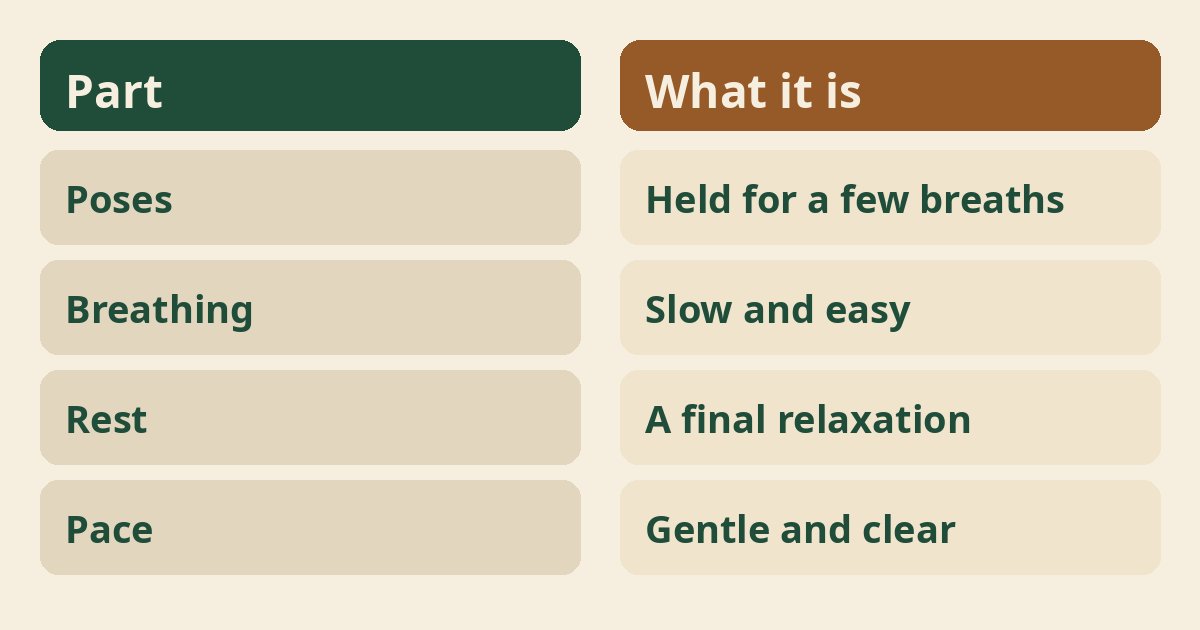
A typical class begins with a short settling, moves through gentle warm ups and standing and floor poses, includes some breathing practice and ends with rest. Classes last about an hour. The teacher explains each pose and offers easier choices. You hold poses for several breaths and rest between them. Our guide to savasana explains the final rest.
How is hatha different from other styles?
Hatha is usually slower and more gentle than flowing styles, with more time to learn each pose. Flowing styles link poses with the breath in a continuous movement. Our guide to sun salutation shows a flowing sequence. Hatha classes pause in each pose, which helps you learn alignment.
Is hatha good for beginners?
Yes. Its slower pace, clear instructions and simple poses make it one of the most common starting points. You can learn the names and shapes of the main poses without rushing. Many studios label classes as hatha or gentle. The National Center for Complementary and Integrative Health describes yoga as a mind and body practice and notes hatha is among the most commonly taught styles.
What poses will you learn?
Common poses include mountain, tree, warrior, downward dog, cat and cow, child’s pose and bridge. Our guides to tree pose, warrior pose and downward dog explain how to begin each one. You will practise them slowly and with support.
How does hatha use breathing?
Hatha classes often include slow breathing, matching movement with breath and sometimes simple pranayama. Our guide to pranayama explains common breathing practices. Breathe through the nose and never strain. If a breath pattern makes you dizzy, return to normal breathing.
How does hatha compare with kriya yoga?
Kriya yoga is a different path with its own techniques, while hatha mainly focuses on poses, breath and rest. Our guide to kriya yoga vs hatha yoga explains the difference. Both are part of the wider yoga tradition. Beginners often start with hatha.
How long is a class and how often should you go?
Classes usually last an hour, and one or two classes a week is a good start. Our guide to how often to do yoga gives more ideas. Add short home practice when you feel ready.
What do you need to bring?
A mat, comfortable clothes and a water bottle are enough. Studios often lend mats and props. Our yoga mat guide explains how to choose a mat. Leave shoes at the door.
What should you know about class manners?
Arrive early, tell the teacher you are new, give others space and rest whenever you need. Our guide to yoga class etiquette explains what to expect. Teachers welcome questions.
Can you practise hatha at home?
Yes. You can follow a video or a simple routine, but a class helps you learn good form. Our guide to starting a home yoga practice shows how to set up. Start with short sessions.
What are the possible benefits?
Many people find hatha helps them feel more flexible, balanced and calm, though results vary. Our guide to the benefits of yoga explains what regular practice may offer. Yoga is not a cure for any condition.
What about flexibility?
You do not need to be flexible to start, because flexibility grows slowly with gentle, regular practice. Our guide to yoga for flexibility explains safe stretching. Use props and never force a pose.
What about strength and balance?
Holding poses builds strength in the legs, core and back, and standing poses build balance. Move slowly and hold only as long as you can breathe smoothly. Use a wall or chair for support while you learn.
Is hatha a religion?
Hatha yoga as taught in most classes is a physical and breathing practice, and you do not need to follow any religion to take part. Yoga has roots in Indian traditions, and some teachers share its philosophy. You can choose how much of that you want. Our guide to whether kriya yoga is a religion explores a related question.
What about the spiritual side?
Some classes include chanting, meditation or reflection, but you can join as you like or just listen. Our guide to om chanting explains one common practice. Take what feels right and leave the rest.
Is hatha safe?
It is safe for most healthy people when practised gently, with a qualified teacher and within your limits. Tell your teacher about injuries or conditions. Our guide to yoga with a bad back explains safe habits. Stop if you feel pain.
What about pregnancy and health conditions?
Speak with a doctor first if you are pregnant or have a health condition, and choose a teacher with the right training. Our guide to prenatal yoga explains yoga in pregnancy. This guide is general education, not medical advice.
How do you choose a teacher?
Look for a qualified, patient teacher who explains poses clearly, offers options and respects your limits. Ask about their training and experience. Try a class before you commit. Trust how you feel afterwards.
What should you expect in the first month?
Expect to learn names, find your breath and feel a little stiff at first, which is normal. Be patient. Go to classes regularly. Notice small changes. Keep a short note after each class.
What mistakes do beginners make?
Pushing too hard, comparing themselves with others, holding the breath and skipping rest are common mistakes. Go slowly. Use props. A smaller version of a pose is still hatha yoga.
How can hatha lead to other styles?
Once you know the basics you can try flowing, restorative or meditation focused classes. Our guide to how to meditate is a good next step. There is no rush. Explore at your own pace.
When should you see a doctor?
See a doctor before starting if you have an injury, health condition, pregnancy or any concern. Stop if you feel chest pain, dizziness or sharp pain. This guide is general education, not medical advice.
What does a simple home hatha session look like?
Begin with a minute of easy breathing, move through gentle warm ups, hold three or four standing and floor poses, then finish with a short rest. Keep the session to fifteen or twenty minutes at first. Hold each pose for about five slow breaths. Rest between poses whenever you need. Finish lying down for a couple of minutes so the body can settle before you get up.
How can you track your progress?
Notice how you feel rather than how deep your poses go, and write a line or two after each class. Progress in hatha shows up as easier breathing, steadier balance and less stiffness over weeks. Photos and comparisons are not needed. A short note such as how long you held a pose or how calm you felt is enough to see your own pattern.
What if you miss a few classes?
Simply return when you can, start gently and do not try to make up for lost time. Everyone misses classes. Your body keeps some of what it learned. Take the first session slower, use props and let your breath guide you. Consistency over months matters more than any single week.
Does hatha help with stress?
Many people find the slow pace and steady breathing helpful for feeling calmer, though it is not a treatment for any condition. Slow breathing and quiet attention are part of every hatha class. Try them on their own for a minute after a busy day. If stress feels heavy or lasts, speak to a doctor or a qualified professional.
Where to read next
For a calm, beginner-friendly start, Ranjana Sinha’s Begin Where You Are is written for people who want simple steps. Our guide to starting a home yoga practice adds a gentle routine you can follow at home.
Frequently asked questions
What is hatha yoga in simple words?
A gentle style of yoga with slow poses, breathing and rest.
Is hatha yoga good for beginners?
Yes. Its slow pace makes it a common starting point.
How long is a hatha yoga class?
Usually about an hour.
What is the difference between hatha and vinyasa?
Hatha is slower with held poses, while vinyasa links poses in a flow.
Do I need to be flexible?
No. Flexibility grows slowly with gentle practice.
The bottom line
Hatha yoga offers a slow, clear way to learn the basics. Go gently, use props and choose a patient teacher.

