
Savasana, or final relaxation, is a resting pose where you lie on your back and let the body settle at the end of a yoga session. Rest for five to ten minutes, with props if you wish, and roll to one side before sitting up.
This is general education, not medical advice. If you are pregnant or have a back or heart condition, low blood pressure or anxiety, check with your doctor and adapt the pose.
What is savasana?
Savasana, often called corpse pose or final relaxation, is a resting pose where you lie on your back and let the body and mind settle at the end of a yoga session. It looks simple, but many people find it one of the hardest poses because it asks you to do nothing. It gives the body time to absorb the practice and the mind a chance to quiet. It is often the last pose in a class. Our guide to the benefits of yoga explains why rest is part of the practice.
How do you do savasana step by step?
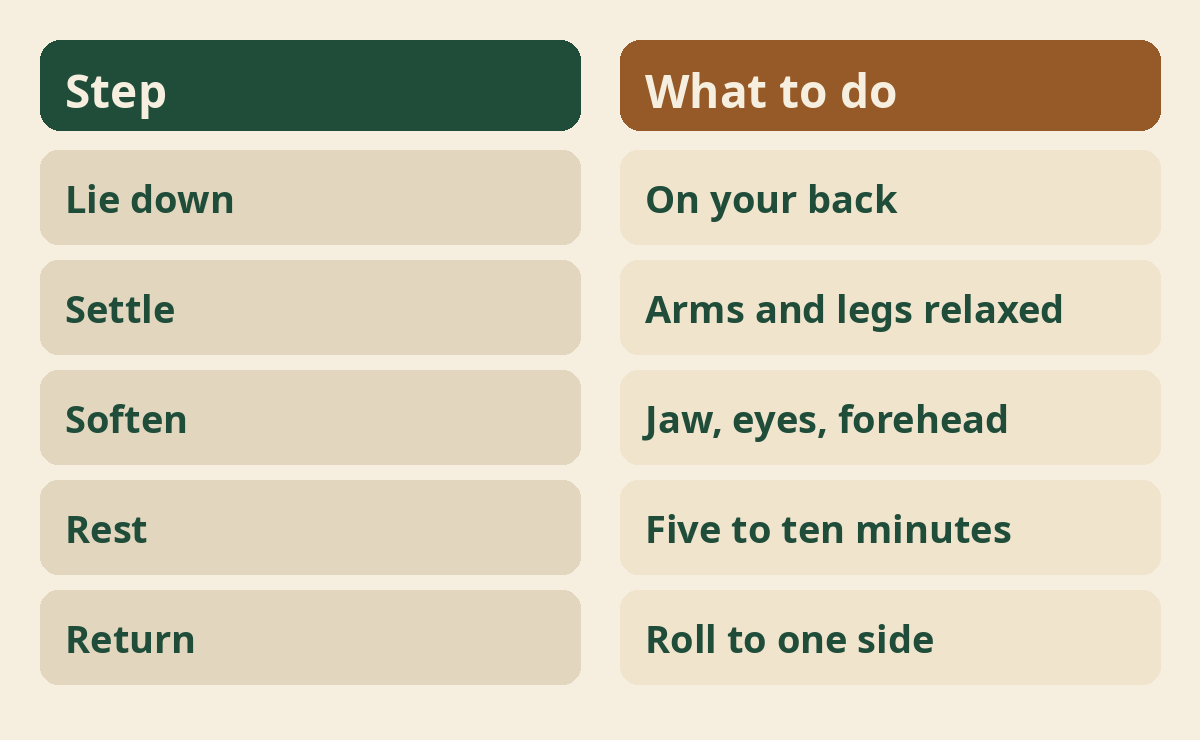
Lie on your back, let your legs and arms fall open, soften your face and breathe naturally for five to ten minutes. Set yourself up for comfort before you begin.
- Lie on your back on a mat, with a folded blanket under your head if you like.
- Let your feet fall open and rest your arms a little away from your body, palms up.
- Close your eyes or cover them with a soft cloth.
- Soften your jaw, tongue, eyes and forehead.
- Let your breath return to its natural rhythm.
- Scan the body and release any tension you notice.
- When you are ready, deepen your breath, wiggle fingers and toes and roll to one side before sitting up.
How long should you stay?
Five to ten minutes is a good length, though even two minutes helps if you are short on time. Many classes allow about five minutes at the end. If you practise at home, set a gentle timer so you are not watching the clock. Longer rests can be nice on relaxed days. Do not skip the pose just because you feel busy.
Why is it important?
It gives the body time to rest after movement and helps you notice how you feel. The National Center for Complementary and Integrative Health describes yoga as a mind and body practice that combines poses, breathing and meditation. Rest at the end is a common feature. Many people find it a calm way to close a session. It is not a treatment, but it is a pleasant habit.
What if you cannot lie flat?
Place a bolster or cushion under your knees, or rest with your calves on a chair or couch seat. If lying flat strains your back, bend your knees with your feet on the mat, or lie on your side. If you are pregnant, lie on your left side with a pillow between your knees and ask your doctor about positions. Comfort comes first.
What if you feel cold?
Cover yourself with a blanket, wear socks and keep the room comfortably warm. Your body temperature can drop when you rest after movement. Keep a blanket close before you start. A soft cloth over the eyes also helps some people feel cosy and calm.
What if your mind will not settle?
A busy mind is normal, and you can use the breath or a body scan to give it something to follow. Count a few breaths or move your attention through the body. Do not scold yourself for thinking. Our guide to body scan meditation offers a simple way to relax. If you feel restless, try a shorter rest and build up.
What if you fall asleep?
It happens, and it is fine if you needed rest, but practise earlier in the day if you want to stay alert. Falling asleep in savasana is common, especially in the evening. If you want to stay awake, keep your eyes slightly open or add a gentle body awareness. You can also practise sitting up. It does not mean you did it wrong.
What if you feel restless or fidgety?
Make small adjustments, move your fingers and toes slowly, and give yourself permission to stay still for a short time only. Restlessness often shows up when we slow down. Breathe into it. Try a shorter rest at first and add a minute each week. A rolled blanket under the knees can help. If the feeling is strong, you can sit up and breathe for a moment.
What are common mistakes?
Common mistakes include skipping the pose, checking the phone, lying with tense shoulders and rushing up at the end. Another is trying too hard to relax. Let go gently. Roll to your side before you sit. Rushing can make you dizzy. If you are in a class, stay until the end rather than leaving early.
Can you practise savasana on its own?
Yes, you can lie down for a few minutes at any time as a rest break, though it works well after movement. A short rest in the afternoon can be a pleasant pause. Do not use it to replace medical care for exhaustion or sleep problems. Our guide to yoga nidra describes a longer lying-down practice.
How does it fit into a routine?
Put it at the end, after poses and breathing practices, and give yourself time before you go back to daily tasks. A morning routine can end with a short rest, as in our morning yoga routine. An evening routine can end with a longer one, as in our evening yoga routine. Adjust the length to your day.
Should you use props?
A blanket under the head, a bolster under the knees and an eye cover can all make the pose more comfortable. Props are helpful and not cheating. Choose what lets you relax with little effort. Keep a blanket close to stay warm. If you use a bolster, make sure it supports your lower back comfortably.
Can you do savasana in a chair?
Yes, you can rest in a supported chair posture, with feet flat, hands on your lap and eyes closed. This works for those who cannot lie on the floor. See our guide to chair yoga for ideas. Keep your spine supported and your breath natural.
How can breathing help?
Natural, slow breathing with a slightly longer exhale can help you ease into rest. Do not force the breath. Notice it moving in your belly or chest. Our guide to box breathing offers a simple pattern before rest if you wish. Stop any breathing practice if you feel dizzy.
Who should be careful?
People who are pregnant, have back or heart conditions, low blood pressure or anxiety should check with a doctor and adapt the pose. Some people feel uneasy with closed eyes or stillness. If that happens, keep your eyes open or choose a different pose. This guide is general education and not medical advice.
How can you come out of the pose gently?
Deepen your breath, move your fingers and toes, stretch slowly, roll to one side and push up to sit. Stay seated for a moment before standing. Notice how you feel. Take a sip of water if you like. Moving slowly helps you avoid dizziness and lets you carry some of the calm with you.
How can you create a good rest space?
Dim the lights, keep noise low, use a blanket and silence your phone. A calm space makes it easier to let go. If you are at home, tell others you need a few minutes. If you are in a class, choose a spot where you feel safe and comfortable.
What should you expect over time?
You may find it easier to relax and enjoy the pose, but results vary, and it is not a cure for any condition. Some people feel calmer after a few weeks. Others find it takes longer. Keep your expectations modest. If you have ongoing stress, pain or sleep problems, speak with a doctor. Our guide to meditating correctly offers another quiet practice.
Why is it called corpse pose?
The name comes from the stillness of the pose, and it is meant to symbolise letting go, not anything morbid. Some teachers prefer the name final relaxation. The idea is to rest deeply, as if you are putting down the effort of the day. You do not need to share any belief to enjoy the pose.
Where to read next
For a calm, beginner-friendly start, Ranjana Sinha’s Begin Where You Are is written for people who want simple steps. Our guide to starting a home yoga practice adds a gentle routine you can follow at home.
Frequently asked questions
How long should savasana last?
Five to ten minutes is good. Even two minutes helps.
Can I skip savasana?
You can, but it is worth keeping, because rest is part of the practice.
What if I cannot relax?
Use a body scan or count your breath, and try a shorter rest at first.
Is it okay to fall asleep?
Yes, if you needed rest. Practise earlier if you want to stay alert.
Can I do savasana when pregnant?
Ask your doctor. Many people rest on the left side with a pillow.
The bottom line
Savasana is simple but not always easy. Keep it comfortable, use props and give yourself a few quiet minutes at the end of practice.

