
Mindfulness is paying attention to the present moment with kindness. Meditation is a formal practice that trains that attention. They overlap, and you can use both: a short daily sit and small mindful moments through the day.
This is general education, not medical advice. If you have trauma, severe anxiety or a mental health condition, speak with a doctor or qualified teacher before starting.
What is mindfulness?
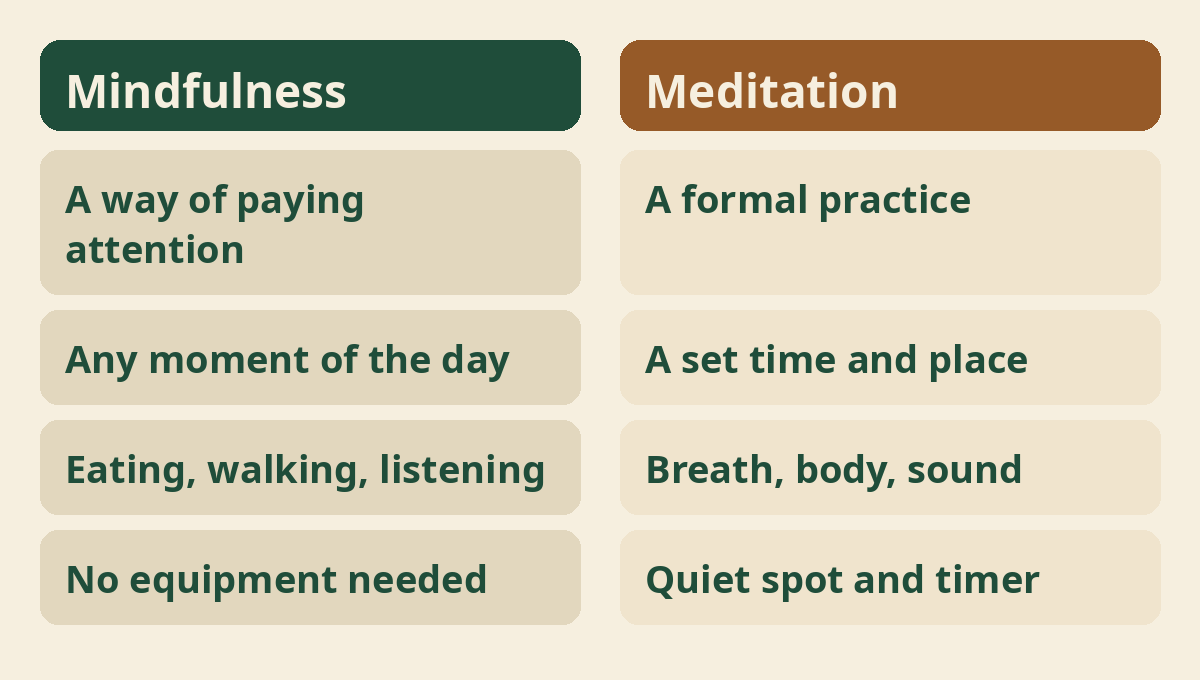
Mindfulness is paying attention to the present moment on purpose, with a kind and open attitude toward whatever you notice. You can be mindful while eating, walking, washing dishes or listening to someone. It is a way of being aware rather than a special activity. The National Center for Complementary and Integrative Health describes mindfulness as a practice that has roots in Buddhist traditions and has been adapted in many forms.
What is meditation?
Meditation is a group of practices that train attention and awareness, usually done for a set time in a quiet place. Meditation can include focusing on the breath, a word, a sound or the body. Mindfulness meditation is one style. Our guide to how to meditate correctly explains the simplest way to begin.
What is the main difference?
Mindfulness is a quality of attention you can bring to any moment, while meditation is a formal practice you set aside time for. You can think of meditation as training and mindfulness as using that training in daily life. They overlap, and many people use the words together. You do not need to choose one over the other.
How do they overlap?
Many meditation practices build mindfulness, and mindfulness can be practised during a short meditation. For example, sitting and noticing your breath is both meditation and mindfulness. A short walk where you notice each step is mindfulness and can be meditation too. Our guide to walking meditation shows how they blend.
Can you practise mindfulness without meditating?
Yes, you can be mindful in daily activities without sitting down to meditate. Try eating slowly and noticing taste, or listening fully in a conversation. Take three slow breaths before you open your messages. Small moments of attention add up. They are a gentle way to start if sitting practice feels hard.
Can you meditate without being mindful?
Some meditation styles focus on a single point, such as a word or sound, rather than open awareness. Even then, you are training attention. Different practices suit different people. If one style does not suit you, try another. Our guide to grounding meditation and loving-kindness meditation show other styles.
Which should a beginner start with?
Start with a few minutes of breath-focused meditation, and add mindful moments in daily life. Five minutes a day is a good start. Pick a regular time. Add a short mindful pause during routine tasks. See our guide to morning meditation for an easy habit. Keep it simple.
How does yoga fit in?
Yoga includes meditation and mindful movement, so it can be a natural way to practise both. In the yoga tradition, concentration and meditation are part of the path, described in our guide to the eight limbs of yoga. Gentle poses with attention to the breath are a form of mindfulness in movement.
What does research say?
Research on mindfulness and meditation shows that they may help some people with stress and wellbeing, but studies vary in quality and results differ between people. The National Center for Complementary and Integrative Health notes that more high-quality research is needed. Treat these practices as helpful tools, not treatments or cures. If you have a health condition, follow your doctor’s advice.
How long should you practise?
Five to ten minutes is a good beginning, and you can add time when it feels easy. Short, regular sessions are better than rare long ones. Our guide to how long to meditate gives a simple plan. If you feel strained, shorten the session.
What are common misunderstandings?
Common myths include that you must empty your mind, sit cross-legged, feel calm or follow a religion. In truth, thoughts are normal, a chair is fine, feelings vary and you can practise without any belief. The aim is a kind, steady awareness. Be patient with yourself.
How can you be mindful in daily life?
Pick one routine activity a day, such as brushing your teeth, and give it your full attention. Notice the sensations, sounds and movements. When your mind wanders, return to the activity. Our guide to meditating at work has short pauses you can use during the day. Keep these practices light and curious.
Is it safe for everyone?
It is generally safe for healthy people, but it may bring up difficult feelings for some. If you have a history of trauma, severe anxiety or other mental health difficulties, speak with a doctor or qualified teacher first. If a practice makes you feel worse, stop. This guide is general education, not medical advice.
Do you need an app or teacher?
No, you can begin with a quiet spot and a timer, but a teacher or app can help you stay consistent. Choose resources that are clear and calm and that do not promise cures. A local class can offer personal guidance. Try different options and keep what works.
What if your mind is very busy?
A busy mind is normal, and noticing that it is busy is already mindfulness. Breathe, feel your feet on the floor and return to your anchor. Our guide to common obstacles to meditation has useful tips. Shorter sessions can also help.
How can you build a habit?
Pick a regular time, keep it short and link it to something you already do. Try two minutes after you wake up or before a meal. Track your days. If you miss a day, begin again. Small steps build a lasting habit.
Can children or older adults practise?
Yes, with shorter, simple sessions and a playful or gentle approach. Use short breath games for children and chair-based practices for older adults. Keep sessions comfortable. If there are health concerns, ask a doctor first.
How do you choose between them?
You do not need to choose, because you can use both: a short daily meditation and small mindful moments through the day. Notice what feels natural. If sitting still is hard, start with mindful walking or eating. If daily life is busy, a short sit may help. Adjust over time.
What should you expect over time?
You may notice yourself more aware of thoughts and feelings, but results vary, and neither is a cure for any condition. Be patient and kind with yourself. If you have ongoing stress, anxiety or low mood, speak with a doctor in addition to using these practices.
How can you practise a mindful meal?
Eat one meal or snack slowly, without screens, and notice colour, smell, texture and taste. Put down your fork between bites. Chew slowly. Notice when you feel full. This simple practice shows how often we eat without noticing. If your mind wanders, return to the next bite. It is a friendly way to try mindfulness without sitting down to meditate. Do not use it to judge your eating, and speak with a doctor if you have a health condition related to food.
How can you practise a mindful walk?
Walk slowly, feel your feet touching the ground and notice sounds and sights around you. Start with five minutes outdoors or indoors. Keep your gaze soft. Notice the shift of weight in each step. If your mind wanders, bring it back to your feet. Our guide to walking meditation gives a longer version with step-by-step instructions.
How can you pause during a busy day?
Take three slow breaths before a task, such as before you answer a call or open email. These short pauses give you a moment to reset. Feel your feet on the floor and relax your shoulders. You can do this in a meeting, on a commute or in a queue. Our guide to meditating at work has other ideas. Short pauses add up over a day.
Where to read next
For a calm, beginner-friendly start, Ranjana Sinha’s Begin Where You Are is written for people who want simple steps. Our guide to starting a home yoga practice adds a gentle routine you can follow at home.
Frequently asked questions
Are mindfulness and meditation the same thing?
They overlap. Mindfulness is a quality of attention, and meditation is a formal practice that trains it.
Which is easier for beginners?
Mindful moments in daily life are easy to start. Short breath meditation is also simple.
Do I need to sit still to be mindful?
No. You can be mindful while walking, eating or doing chores.
How long should I practise?
Five to ten minutes a day is a good start.
Is mindfulness a religion?
It has roots in Buddhist traditions but is practised by people of all backgrounds without any belief.
The bottom line
You do not have to pick one. Mindfulness is the quality, meditation is the training and both can be simple. Start small and be patient.

