
Grounding meditation is a simple practice where you bring attention to your body and the ground under you, for example by feeling your feet on the floor and breathing slowly for two to ten minutes. It can help you feel steadier, but it is a calming pause, not a treatment.
This is general education, not medical advice. If you feel distressed or have a history of trauma, practise with a qualified teacher or health professional.
What is grounding meditation?
Grounding meditation is a simple practice that brings your attention to the body and the ground beneath you, so you feel steadier and more present. It uses physical sensations, such as the feeling of your feet on the floor, to anchor your attention in the here and now. It is a gentle practice used by many teachers and counsellors. The National Center for Complementary and Integrative Health describes meditation and mindfulness practices as ways of training attention and awareness, and grounding is one easy, body-based version.
How do you do it step by step?
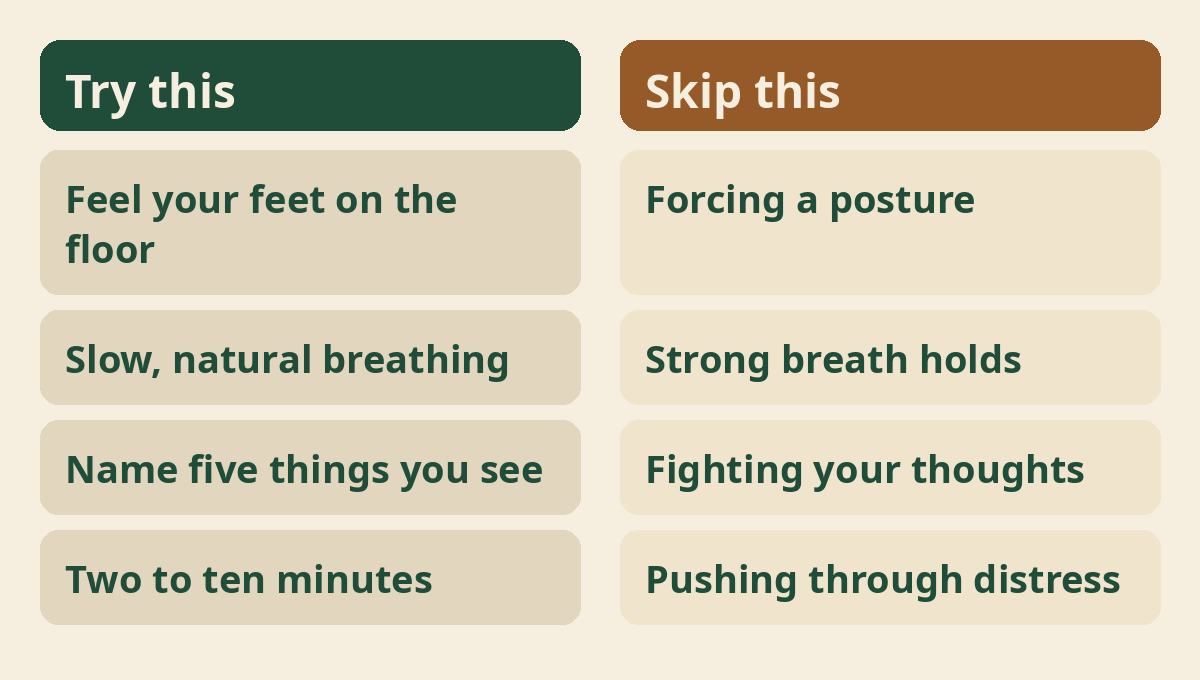
Sit or stand with your feet on the floor, feel their contact with the ground and let your breath settle for a few minutes. Take your time. There is nothing to achieve.
- Sit on a chair with your feet flat, or stand with your knees soft.
- Notice the weight of your body being held by the chair or the floor.
- Feel the soles of your feet, including toes, heels and arches.
- Breathe naturally and imagine each out-breath settling your weight downward.
- Name three things you can feel, such as clothing, air on skin and the floor.
- When thoughts pull you away, return to your feet.
- Finish by opening your eyes and looking around the room.
When is grounding meditation useful?
It helps when you feel scattered, rushed or overwhelmed and want a quick way to steady yourself. Many people use it before a meeting, after a stressful call or during a busy day. It is easy to do with your eyes open, so it can be practised almost anywhere. It is not a treatment for any condition, but it can be a calm pause alongside other healthy habits.
What is the five senses exercise?
It is a common grounding technique where you notice five things you see, four you feel, three you hear, two you smell and one you taste. Move slowly through the senses and name each item silently. This pulls attention out of racing thoughts and into the room. It takes only a minute or two, and it can be done in a queue, at a desk or before sleep.
How long should you practise?
Two to ten minutes is enough for most people. Short and regular sessions are better than long, strained ones. You can add a few minutes of seated breathing afterward if you want a longer sitting. Our guide on how long you should meditate has a simple plan for building up.
Can you ground yourself while walking?
Yes, slow walking with attention on each footstep is a form of grounding. Feel your heel, the ball of the foot and your toes touching the ground. Our guide to walking meditation explains the steps in detail. It is a good option if sitting still makes you restless.
How does posture help?
An upright but relaxed posture, with feet flat and shoulders soft, helps you feel supported. If you sit on a chair, keep your knees roughly level with your hips and avoid crossing your legs tightly. If you stand, keep your weight evenly across both feet. Good posture lets your breath move freely. Our guide on chair yoga offers simple seated movements that help.
Is grounding the same as breathing practice?
They are related but not the same: grounding focuses on body contact, while breathing practice focuses on the breath. The two work well together. Many people begin with a few grounding breaths and then continue with their breathing practice. Our pranayama for beginners guide offers gentle breathing practices.
What if you feel dizzy or uneasy?
Open your eyes, look around the room, press your feet into the floor and breathe normally. If the feeling continues, stop and rest. Anyone who feels distressed or has a history of trauma should be careful and consider practising with a qualified teacher or health professional. This guide is general education, not medical advice.
How can you use it before sleep?
A short grounding practice in bed, noticing the weight of your body on the mattress, can help you unwind. Pair it with slow, easy breathing. Avoid bright screens beforehand. Our guide to meditating before bed gives a full bedtime routine.
How does it fit into yoga?
Yoga uses grounding in many postures, especially standing poses, where you press through the feet and feel steady. Traditional yoga sees steadiness and ease as the foundation of practice. Our guide to the eight limbs of yoga shows how posture supports breath and attention. Grounding meditation is a simple, modern way to bring that steadiness into daily life.
Can you practise grounding outdoors?
Yes, standing on grass, soil or a safe patch of ground and feeling your feet can be a pleasant practice. Choose a clean, safe spot. Wear shoes if the ground is rough or hot. Let sounds and breeze be part of the experience. Even a few minutes outside can feel refreshing.
What is the difference between grounding and relaxing?
Relaxing aims to loosen the body, while grounding aims to make you feel present and supported. Both can feel calming, and they often overlap. Grounding gives your attention something solid to hold onto, such as your feet or the chair. If a relaxation exercise makes you drowsy, a grounding exercise with open eyes can feel more alert. Choose whichever suits the moment.
Can children or older adults use it?
Yes, in a short, simple form with a trusted adult or carer nearby. For children, a game of naming five things they can see and feel works well. Older adults can practise seated, with a hand on the arm of a chair for support. Anyone with balance problems or health conditions should check with a doctor first, and keep sessions brief and comfortable.
How do you know it is helping?
You may notice a slightly slower breath, relaxed shoulders and a clearer sense of the room around you. Do not look for dramatic change. Small shifts add up. A short note after each session helps you spot patterns over a few weeks, such as which times of day work best and which cues help you return to your feet.
Common myths about grounding meditation
A few ideas can confuse beginners. Here are some to rethink.
- Myth: you must sit on the floor. A chair works well.
- Myth: you must close your eyes. Open eyes are fine.
- Myth: it cures anxiety. It is a calming pause, not a cure.
- Myth: it takes a long time. Two minutes counts.
What if your mind keeps racing?
Return to the feeling of your feet each time you notice your thoughts. Do not try to stop the thoughts. The practice is the returning. If it is too hard, try counting your breaths or naming sensations out loud. Our guide on common obstacles to meditation offers more ideas.
When should you seek help?
See a doctor or mental health professional if anxiety, panic or low mood is affecting your daily life. Grounding is a self-help tool, not a replacement for care. If a technique brings up strong feelings, pause and ask for guidance. You deserve proper support, and there is no need to manage everything alone.
How can you make grounding a habit?
Attach it to a daily moment such as standing at a sink, waiting for a kettle or getting out of bed. Take three breaths and feel your feet each time. After a few weeks, the pause becomes natural and easy. A morning sitting can also help, as in our guide to morning meditation.
Where to read next
For a calm, beginner-friendly start, Ranjana Sinha’s Begin Where You Are is written for people who want simple steps. Our guide to starting a home yoga practice adds a gentle routine you can follow at home.
Frequently asked questions
What is grounding meditation?
A simple practice of bringing attention to your body and the ground beneath you to feel steadier and more present.
How long should I do it?
Two to ten minutes is enough.
Can I do it with eyes open?
Yes. Soften your gaze and look at a plain spot or around the room.
What is the five senses exercise?
Notice five things you see, four you feel, three you hear, two you smell and one you taste.
Can grounding help anxiety?
It may help some people feel calmer, but it is not a treatment. See a doctor if anxiety affects your life.
Can I do grounding lying down?
Yes. Notice the weight of your body on the surface and breathe slowly.
The bottom line
Grounding meditation is a quick, gentle way to feel steadier. Feel your feet, breathe slowly, and return whenever your mind runs ahead.

