
You can meditate at work with a two to five minute pause at your desk: sit tall, soften your gaze or close your eyes and follow slow breaths. Keep it quiet, short and regular, and return to the breath whenever work thoughts pull you away.
This is general education, not medical advice. If stress or low mood is affecting your health, speak with a doctor or mental health professional.
Can you meditate at work?
Yes, a few minutes of quiet breathing at your desk or in a calm corner can help you reset during a busy day. You do not need a special room or a cushion. Short pauses of two to five minutes fit into most workdays. The National Center for Complementary and Integrative Health describes meditation and mindfulness as practices that train attention, and many people use short versions to take a break from tension and screens.
How do you meditate at your desk?
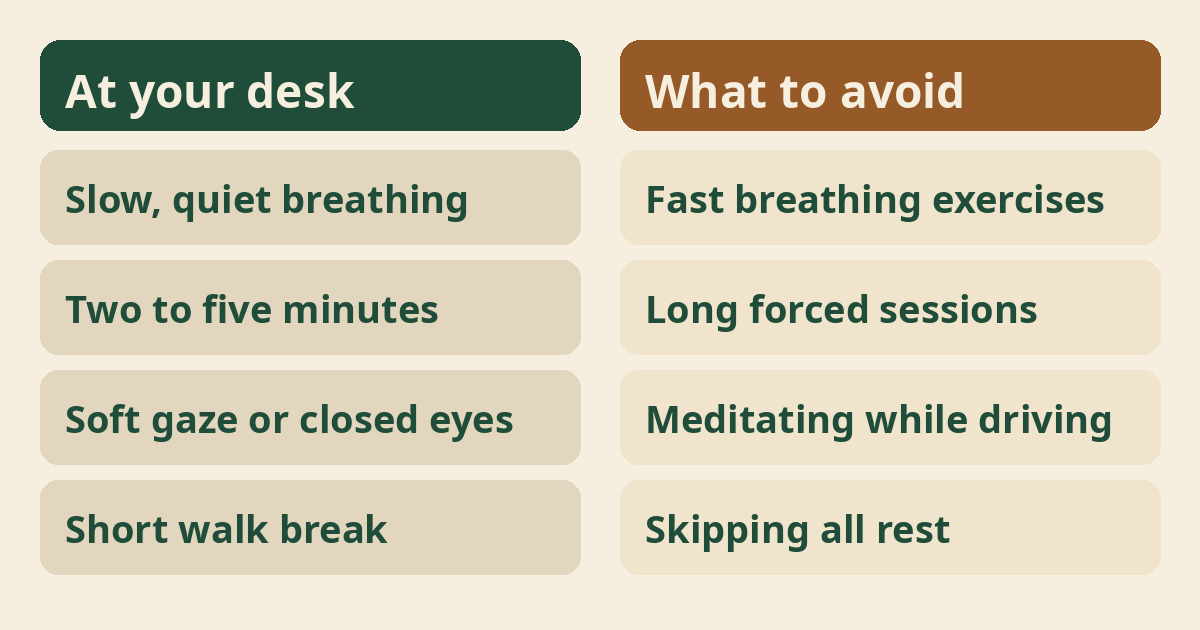
Sit upright, rest your feet on the floor, soften your gaze or close your eyes and follow your breath for a few minutes. Keep it simple and discreet.
- Push your chair back a little and sit tall.
- Place your feet flat and your hands on your lap.
- Take a slow breath in through the nose and out through the mouth.
- Rest your attention on the feeling of breathing.
- When your mind drifts to work, return to the breath.
- After two to five minutes, stretch your shoulders and carry on.
When is the best time during the workday?
Use natural breaks such as before a meeting, after lunch or when you feel tension building. A short pause before an important call can help you feel steadier. A pause after lunch can ease afternoon sleepiness. You can also set a quiet reminder once or twice a day. Choose times you will keep, and keep the practice small.
What if you have an open-plan office?
Use headphones, find a quiet corner or take a short walk, and practise with your eyes open if needed. Open-eye practice works well in public spaces, since you only soften your gaze on a plain spot. Our guide to meditating with your eyes open explains how. A short walk around the block can also double as walking meditation, as in our walking meditation guide.
Which breathing practice suits the office?
Slow, quiet breathing with a slightly longer out-breath is calm and does not draw attention. Try breathing in for four counts and out for six, without strain. Stop if you feel dizzy. Avoid strong or fast breathing exercises at work, since they can make you feel light-headed. Our pranayama for beginners guide covers gentle options for home.
How long should a work meditation last?
Two to five minutes is enough, and ten minutes on a lunch break is a bonus. Longer is not necessary. Regular tiny breaks tend to beat one long session you cannot keep up. If you like it, build a longer habit at home. Our guide on how long you should meditate explains how to extend time gradually.
Can a stretch break help too?
Yes, a few gentle movements loosen the neck, shoulders and back after long sitting. Roll your shoulders, turn your head slowly side to side and stretch your arms overhead. If you like a longer routine, our guide to chair yoga for beginners has seated movements that work in a small space.
What if your mind is busy with deadlines?
A busy mind is normal, and the practice is simply to notice it and return to the breath. You can jot down the main tasks on a notepad before you start so that they are not floating in your head. Then give yourself permission to be off for a few minutes. Our guide on common obstacles to meditation covers wandering and restlessness.
Is it appropriate to meditate in front of colleagues?
In most workplaces a few quiet breaths at your desk draws no attention, and a quiet room is better for longer sittings. If your workplace has a wellness room or a quiet space, ask about using it. Be considerate of others and keep to your own space. Avoid meditating when you need to stay alert, such as when driving or using machinery.
What can you do on a remote or home workday?
Use the same short pauses, and take advantage of the extra privacy to sit properly or stretch. Working from home makes it easy to sit on a cushion for five minutes between tasks, or to step outside for a slow walk. The risk is that the day blurs together, so use a pause as a clear marker between work and rest. A short sitting at the end of the day can help you switch off.
How can you reset after a stressful meeting?
Take three slow breaths, drop your shoulders, and name what you feel without judging it. Then decide on the next small step. This quick reset keeps one hard meeting from colouring the rest of the day. If you can, step away for a minute, sip water and look out of a window. You are not fixing anything, only giving your body a moment to settle.
What if you feel sleepy at your desk?
Open your eyes, sit upright and take a few brisk but gentle breaths, then stand and stretch. Afternoon dips are common, and a short pause with fresh air or a drink of water can help more than another coffee. If you are tired all the time, look at your sleep and see a doctor if it does not improve. A bedtime routine, like the one in our guide to meditating before bed, can support better rest.
What are the possible benefits?
Many people report feeling calmer and more focused after short breaks, though results vary and meditation is not a treatment. Research on mindfulness at work is still growing. Short pauses may help some people manage stress and attention, and they pair well with regular breaks, good sleep and exercise. If stress feels overwhelming, talk to your doctor or a mental health professional.
How can you make it a habit?
Link it to something you already do, such as sitting down at your desk or making a cup of tea. Start with one pause a day for a week, then add another. Keep a simple tick list in your notebook. A morning session at home can also help set the tone, as in our guide to morning meditation.
Common myths about meditating at work
A few ideas hold people back. Here are some to rethink.
- Myth: you need a quiet room. You can practise with eyes open at a desk.
- Myth: it takes too long. Two minutes counts.
- Myth: it will make you less productive. A short pause often helps focus.
- Myth: it replaces help for burnout. It does not.
How does it fit into yoga?
Yoga treats breath and attention as skills to train, and short, regular pauses are a practical way to do that. Our guide to the eight limbs of yoga shows how breath control and concentration support each other. A short workday pause is a small, real-life application of those ideas.
When should you avoid it?
Skip the practice and rest if you feel unwell, dizzy or very distressed, and talk with a professional if you are struggling. Meditation should feel calm and steady. If it brings up anxiety or sadness, stop and seek support. This guide is general education only and does not replace medical advice.
What else helps with work stress?
Regular breaks, a short walk, water, good sleep and talking to a friend or colleague all help. Meditation is one tool among many. Look at workload, boundaries and rest as well. Give yourself small, practical steps rather than trying to fix everything at once. If stress affects your health, see a doctor.
Where to read next
For a calm, beginner-friendly start, Ranjana Sinha’s Begin Where You Are is written for people who want simple steps. Our guide to starting a home yoga practice adds a gentle routine you can follow at home.
Frequently asked questions
Can you meditate at work?
Yes. A few minutes of quiet breathing at your desk is enough. Keep it discreet and short.
How long should I meditate at work?
Two to five minutes. Ten minutes on a lunch break is a bonus.
Where can I meditate at the office?
At your desk, in a quiet corner, a wellness room or on a short walk.
Can I meditate with my eyes open at work?
Yes. Use a soft gaze on a plain spot.
Does meditation reduce work stress?
It may help some people feel calmer, but it is not a treatment. See a doctor if stress is overwhelming.
What if I cannot stop thinking about work?
That is normal. Notice the thought and return to the breath. Jot down tasks first.
The bottom line
A short, quiet pause at work is a simple way to reset. Keep it small, keep it regular and pair it with real breaks, sleep and movement.

