
To meditate correctly, sit comfortably with a tall spine, breathe naturally and rest your attention on the breath for five to ten minutes. When your mind wanders, which it will, gently return. That returning is the practice, and there is no perfect way.
This is general education, not medical advice. If you have a mental health condition or feel distressed during meditation, speak with a doctor or qualified teacher.
What does it mean to meditate correctly?
Meditating correctly means sitting comfortably, paying steady attention to one thing such as your breath and gently returning when your mind wanders. There is no perfect way, and a wandering mind does not mean you are doing it wrong. The National Center for Complementary and Integrative Health describes meditation as a group of practices that train attention and awareness, with many different styles. The common thread is a calm, patient return of attention.
How do you meditate step by step?
Find a quiet place, sit comfortably, breathe naturally and rest your attention on the breath for five to ten minutes. This simple method suits most beginners.
- Choose a quiet spot and a time when you will not be disturbed.
- Sit on a chair or cushion with a tall, relaxed spine.
- Rest your hands on your lap and close your eyes or soften your gaze.
- Breathe naturally through the nose.
- Feel the breath at the nostrils, chest or belly.
- When your mind wanders, notice it and gently return to the breath.
- After five to ten minutes, open your eyes and sit for a moment.
What is the right posture?
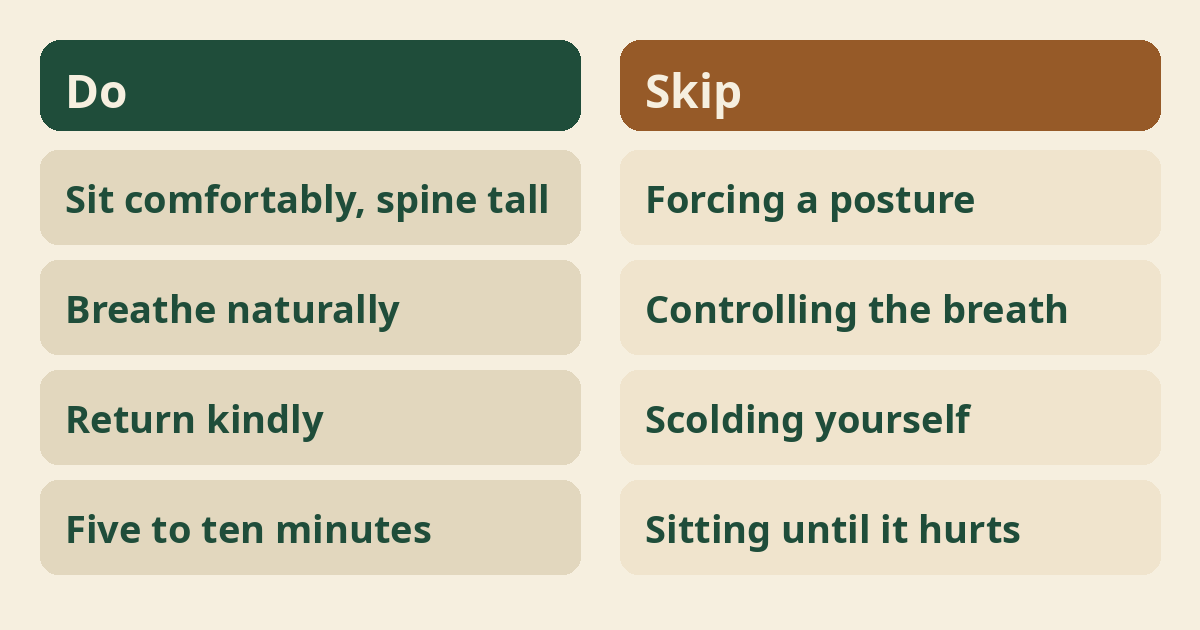
An upright but relaxed posture that you can hold without pain is right. You can sit on a chair, a cushion or the floor. Keep your back tall, shoulders soft and chin slightly down. Knees should be at or below hip level if possible. If sitting is hard, lie down or try walking. Our guides to chair yoga and walking meditation offer easy options.
Should your eyes be open or closed?
Either is fine, so use whichever helps you stay calm and present. Closed eyes reduce distractions, while open eyes help if you feel sleepy or uneasy. Our guide to meditating with your eyes open explains the soft-gaze method.
How long should you meditate?
Start with five to ten minutes a day and add a minute or two when it feels easy. Short, regular sessions beat long, rare ones. Our guide on how long you should meditate gives a simple plan. If long sessions feel strained, see our piece on meditating for too long.
What should you do about thoughts?
Let thoughts come and go, and each time you notice you are lost in one, gently return to the breath. Thinking is normal. The practice is the noticing and the returning. You do not need to fight or judge your thoughts. A little patience and kindness toward yourself make the practice easier. Our guide on common obstacles to meditation has more help.
What is the best time of day?
Morning and evening are popular, but any quiet time you can keep is good. Many people like to meditate before the day starts. Our guide to morning meditation has ideas. If you prefer evenings, see our guide on meditating before bed.
How does breathing fit in?
Keep your breathing natural, and let it be your anchor rather than something you control. Do not force deep or slow breaths. If you want to practise breathing techniques, learn them separately and gently. Our pranayama for beginners guide explains easy options. Stop if you feel dizzy or tense.
What are common mistakes?
Common mistakes include trying too hard, expecting a blank mind, sitting too long and judging yourself. Another is sitting in a position that hurts. Choose comfort. Another is giving up after a few sessions because it feels boring or restless. Give it two to three weeks before you decide. Treat each session as practice, not a test.
Which style should you try first?
Breath awareness is the easiest place to begin, and you can explore other styles later. Other styles include body scan, walking, grounding, loving-kindness and gratitude meditation. Our guides to grounding meditation and loving-kindness meditation are good next steps. Try each for a week and keep what suits you.
Is meditation safe for everyone?
It is generally safe for healthy people, but it can bring up difficult feelings for some. If you have a mental health condition or a history of trauma, speak with your doctor or a qualified teacher before starting. If meditation makes you feel worse, stop and seek advice. This guide is general education, not medical advice.
What should you do before you sit?
Take a minute to settle: silence your phone, loosen tight clothes, drink some water and stretch gently. A few gentle neck and shoulder rolls can release tension. Decide how long you will sit and set a soft timer so you are not watching the clock. Avoid meditating right after a heavy meal, since you may feel sleepy. A short, regular routine before you sit teaches your mind that it is time to settle.
What if you feel restless or bored?
Restlessness and boredom are normal, and you can treat them as part of the experience rather than problems. Notice where you feel restless in the body, and breathe with it. If it is too strong, open your eyes, stretch, or switch to walking meditation for a few minutes. Shorter sessions can help. Boredom often fades when you stop expecting something exciting and simply watch the breath.
What if you feel emotional?
It is normal for feelings such as sadness or irritation to come up, and you can sit with them kindly or pause the practice. Meditation slows you down, so feelings that were hidden by busyness can appear. Take a few slow breaths and feel your feet on the floor. If feelings are strong or last, stop and speak with a trusted person, a counsellor or a doctor. You do not need to push through.
How do you know you are making progress?
Signs are small: you notice your mind wandering sooner, you return more easily and you feel a little steadier in daily life. Progress is quiet and uneven. Some days feel good and others feel scattered, and both count. A short note after each session helps you see change over weeks. Avoid comparing yourself with others or with an ideal. Meditation is a skill that grows with regular, patient practice.
Do you need an app, music or a teacher?
No, you can begin with nothing more than a quiet spot and a timer, though some people like guidance. A guided recording can help when you are new, and a teacher can answer questions about posture or difficult feelings. If you use an app, choose a simple one with no pressure to compete. Silence works just as well. Try a few options over a month and keep whichever helps you practise regularly, without making it feel like a chore.
What does yoga say about meditation?
In traditional yoga, meditation grows out of ethics, posture, breath and concentration. Our guide to the eight limbs of yoga explains where meditation sits in the whole path. It is a gradual practice, not a quick skill, and that is a helpful way to view it.
How can you build the habit?
Choose a fixed time, keep it short and track your sessions on a calendar. Attach meditation to something you already do, such as after brushing your teeth. Missing a day is fine. Begin again without guilt. After a few weeks, the habit often sticks. If you want a calm place to start, read Ranjana Sinha’s book linked below.
Common myths about meditating correctly
A few beliefs make beginners worry. Here are some to rethink.
- Myth: you must clear your mind. You only need to return.
- Myth: you must sit cross-legged. A chair is fine.
- Myth: you must feel calm. Feelings vary.
- Myth: you need a long time. Five minutes counts.
Where to read next
For a calm, beginner-friendly start, Ranjana Sinha’s Begin Where You Are is written for people who want simple steps. Our guide to starting a home yoga practice adds a gentle routine you can follow at home.
Frequently asked questions
How do I meditate correctly?
Sit comfortably, breathe naturally, rest your attention on the breath and gently return when your mind wanders.
How long should a beginner meditate?
Five to ten minutes a day. Add a minute or two when it feels easy.
Should I close my eyes?
Either is fine. Choose what helps you stay calm and present.
What if my mind keeps wandering?
That is normal. Notice it and return to the breath. The returning is the practice.
Is there a best time?
Morning or evening. Choose a time you can keep.
Can I meditate lying down?
Yes, but you may fall asleep. Sitting upright helps you stay alert.
The bottom line
Meditation does not need to be perfect. Sit comfortably, follow your breath and return kindly. Keep it short, keep it regular and be patient with yourself.

