
Yes, most healthy people can do yoga every day if the practice is gentle, varied and includes rest. Start with ten to twenty minutes, mix stronger and gentler days, and ease back if you feel pain or tiredness.
This is general education, not medical advice. If you have an injury, health condition or are pregnant, speak with your doctor before starting a daily practice.
Can you do yoga every day?
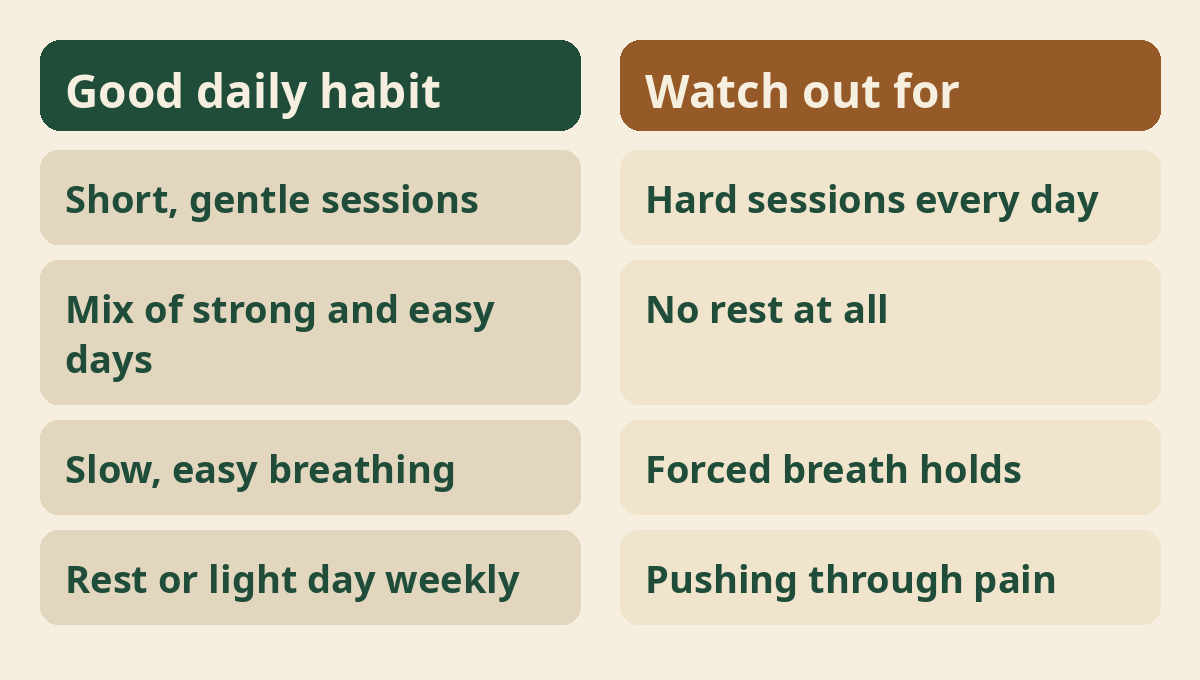
Yes, most healthy people can do gentle yoga every day, as long as the practice varies in intensity and includes rest. Daily yoga is common in many traditions. The key is how you practise, not only how often. A short, gentle session each day is easy to sustain, while a hard session every day can lead to strain. The National Center for Complementary and Integrative Health says yoga is generally safe for most healthy people when practised carefully with proper instruction.
Is daily yoga good for beginners?
Daily practice can help beginners build a habit, but the sessions should be short and gentle at first. Ten to twenty minutes of easy movement and breathing is enough. Avoid deep stretches and long holds until your body is used to them. If you are very new, a few days a week plus gentle movement on other days is also fine. Our guide to starting a home yoga practice explains a simple routine.
How should you vary your daily practice?
Mix stronger days with gentle days, and include breathing and relaxation on all of them. A simple pattern helps you recover while keeping the habit.
- Day one: a moderate flow with standing poses.
- Day two: gentle stretching and breathing.
- Day three: a moderate practice, perhaps with a little strength work.
- Day four: restorative poses and a short meditation.
- Day five: a moderate flow again.
- Day six: a walk and gentle movement.
- Day seven: rest or a very light session.
Do you need a rest day?
Most people benefit from at least one lighter day each week, even if they keep a daily habit. Rest allows muscles and joints to adapt. A rest day can still include breathing and meditation. If you feel sore, tired or flat, treat that as a sign to ease back. Our guide on doing Ashtanga every day explains why rest matters, especially with demanding styles.
What are signs you are doing too much?
Lasting pain, joint soreness, constant fatigue, poor sleep and a lack of interest in practice are common signs. If you notice these, cut back to gentle sessions and give your body time. Sharp pain, numbness or pain that lasts into the next day should be checked by a doctor or physiotherapist. A good practice leaves you feeling steady and calm, not drained.
How long should a daily session last?
Ten to thirty minutes is plenty for most people. Short, regular sessions are easier to keep and kinder to the body. You can add longer sessions on weekends if you like. Our guide on the benefits of yoga explains what regular practice can offer, with realistic expectations.
What is a good time of day?
Morning or evening both work, so choose the time you can keep. A morning practice can set a calm tone, and an evening practice can help you unwind. If you are stiff in the morning, start with a longer warm-up. See our guide to morning meditation for a calm start, or meditating before bed for an evening wind-down.
Which styles suit daily practice?
Gentle styles such as Hatha, restorative and chair yoga are easy to do every day, while vigorous styles need more rest. Pick a style that matches your energy and health. Chair yoga is a good option for stiff days, as in our chair yoga guide. If you have a bad back, our guide to yoga with a bad back offers gentle tips.
Should breathing practice be daily too?
Gentle breathing can be daily, but strong breathing exercises should be built up slowly and avoided if they make you dizzy. Slow, easy breathing is a good daily habit. Our pranayama for beginners guide explains simple practices. Do not hold your breath forcefully, and stop if you feel light-headed.
Can you do yoga every day if you have a health condition?
It depends on the condition, so speak with your doctor first. Some conditions need modified poses or less intensity. Tell your teacher about any health issues, injuries or pregnancy. This is general information, not medical advice. Choose gentle practice and stop if you feel pain, dizziness or breathlessness.
How do you stay consistent?
Pick a regular time, keep your mat where you can see it and begin with a short session. A habit is easier when it is small. Tie it to something you already do, such as after brushing your teeth. Track your days on a calendar. If you miss a day, begin again the next day without guilt.
What should a daily warm-up include?
Start with a few minutes of easy joint movements, slow breathing and gentle stretches before any stronger poses. Roll your shoulders, circle your wrists and ankles, and move your spine gently in cat-cow. Warm muscles stretch more safely. If you only have five minutes, the warm-up alone is a worthwhile practice. Skipping it is a common reason for strain, so make it a fixed part of your routine.
How can you practise on busy or tired days?
Do a shorter, easier version rather than skipping altogether. Five minutes of breathing and a few gentle stretches keeps the habit alive. On tired days, restorative poses or lying with your legs on a cushion can feel better than a flow. Keeping the habit matters more than the amount. Aim for kindness over intensity, and do not turn yoga into another source of pressure.
What equipment helps?
A non-slip mat, a folded blanket, a cushion and a strap or belt are all you need. Props make poses safer and more comfortable. Use a cushion to raise your hips in seated poses, or a blanket under your knees. You do not need special clothing, only something that lets you move freely. Practise on a firm, flat surface where you will not be disturbed.
Can children, teens or older adults practise daily?
Yes, with age-appropriate gentle practice and supervision where needed. Children enjoy short, playful sessions. Older adults can use chairs and walls for support and should keep sessions shorter. Everyone should avoid forcing poses or holding the breath. If you have health concerns, speak with a doctor first, and look for teachers who have experience with your age group.
How do you know it is working for you?
You may notice easier movement, calmer breathing and better sleep, though everyone is different. Keep a short note every few days about your mood, sleep and body. Look back after a month. Small shifts count, and there is no need to compare yourself with others. If you feel worse, change the plan or speak with a teacher or doctor. The best sign is that you look forward to your practice and feel steady afterwards, rather than worn out or discouraged.
How does daily practice fit the yoga tradition?
Traditional yoga treats daily practice, or abhyasa, as a steady, patient effort, not a hard push. The tradition also stresses balance, contentment and non-harming. Our guide to the eight limbs of yoga explains how posture, breath and ethics work together. A calm daily habit fits this idea well.
Can daily yoga change your body?
Regular practice may improve flexibility, balance and a sense of ease over time, though results vary. Changes are usually gradual and depend on the style, your effort and your health. Avoid promises of quick transformation. Pair yoga with walking, good sleep and healthy food for a well-rounded routine.
Common myths about daily yoga
Some beliefs push people to extremes. Here are a few to rethink.
- Myth: you must practise for an hour. Ten minutes counts.
- Myth: more intense is better. Gentle days matter.
- Myth: you must never miss a day. Missing a day is fine.
- Myth: yoga cures illness. It does not.
Where to read next
For a calm, beginner-friendly start, Ranjana Sinha’s Begin Where You Are is written for people who want simple steps. Our guide to starting a home yoga practice adds a gentle routine you can follow at home.
Frequently asked questions
Can you do yoga every day?
Yes, most healthy people can, as long as sessions vary in intensity and include some rest.
How long should daily yoga be?
Ten to thirty minutes is plenty.
Do I need a rest day?
It helps to have at least one lighter day each week.
Is daily yoga good for beginners?
Yes, if it is short and gentle. Build up slowly.
What if I feel sore?
Ease back to gentle practice and rest. See a doctor for sharp or lasting pain.
What is the best time?
Morning or evening. Choose the time you can keep.
The bottom line
Daily yoga works best when it is short, gentle and varied. Listen to your body, include lighter days and keep the habit kind.

