
Yes, many people with a bad back can practise yoga, as long as it is gentle, slow and approved by their doctor. Choose small movements, support your body with props and stop if you feel sharp pain. Yoga may help with comfort and movement, but it does not cure back problems.
This is general education, not medical advice. Back pain has many causes. Speak with your doctor or physiotherapist before starting, especially if your pain is severe, new, or comes with numbness or weakness.
Is yoga safe if you have a bad back?
For many people with ordinary, non-specific back pain, gentle yoga is considered a reasonable option, but you should check with your doctor first. Reviews summarised by the National Center for Complementary and Integrative Health suggest yoga may help some people with low back pain, and that serious harm is uncommon. The key words are gentle and careful. A strong stretch or a deep forward bend can irritate a sensitive back, so the aim is movement within comfort, not a deep pose.
What should you do before you start?
Talk to your doctor or physiotherapist, especially if your pain is new, severe or comes with numbness, weakness or leg pain. Back pain has many causes, and a pose that suits one cause can aggravate another. Tell your teacher about your pain from the start so they can offer changes. Ask your doctor what movements you should avoid, such as deep twisting or heavy forward bending.
- Pain that follows an injury or fall.
- Numbness, tingling or weakness in the legs.
- Pain that wakes you at night or does not ease with rest.
- Loss of bladder or bowel control. This needs urgent medical help.
Which poses are usually gentle on the back?
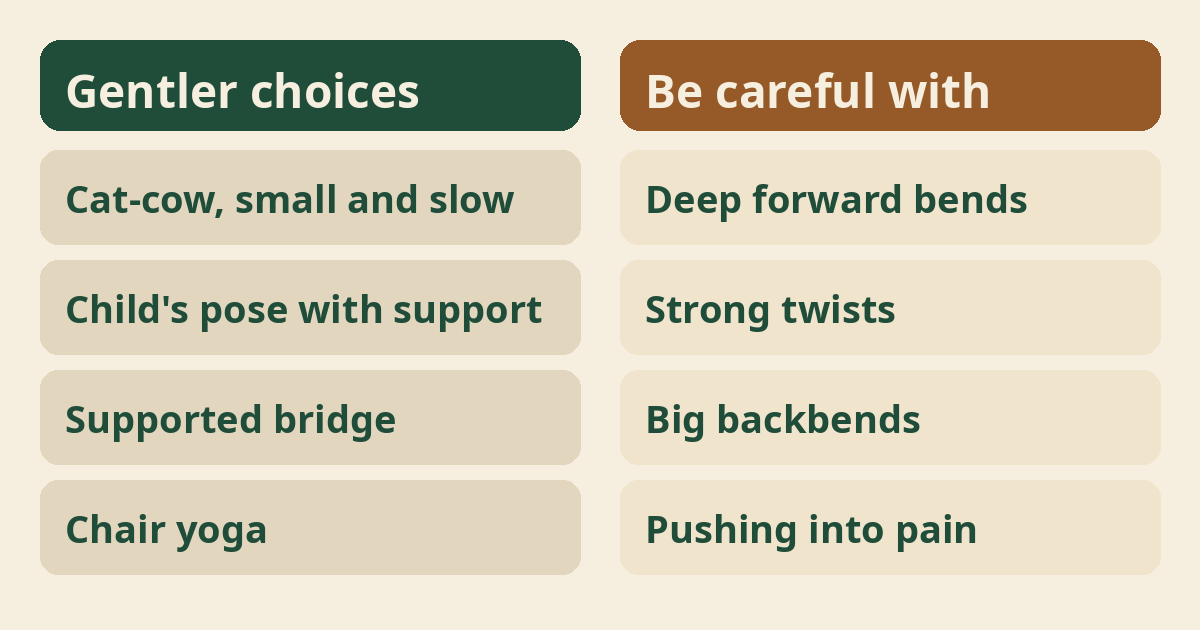
Slow, supported movements such as cat-cow, child’s pose, knee-to-chest and a supported bridge are common starting points. Keep the movement small and smooth. Move with your breath and stop at the first sign of sharp pain. If a pose feels pinchy, make it smaller or skip it. A folded blanket under the hips or a cushion under the knees can make a big difference.
- Cat-cow: slow, small movements on hands and knees.
- Child’s pose with a cushion under the chest if the floor feels far.
- Knee-to-chest, one leg at a time, lying on your back.
- Supported bridge with a low lift and a gentle hold.
- Rest lying down with your knees bent and your feet on the floor.
Which movements should you be careful with?
Deep forward bends, strong twists and big backbends are the ones that most often upset a sensitive back. This does not mean you can never do them. It means you build up slowly, with a teacher’s guidance, and only when your doctor agrees. Fast flowing styles and any pose that makes you hold your breath are better avoided until your back is steadier.
How often should you practise?
Short, regular sessions of ten to twenty minutes work better than one long, hard session. A daily gentle routine helps you notice what your back likes and dislikes. If your pain is worse the next day, you did too much. Next time, shorten the session or simplify the poses. Rest days are part of the plan.
Can breathing practice help a stiff back?
Slow, relaxed breathing can ease muscle tension and make movement feel calmer, even though it is not a treatment for back pain. Many people tighten their shoulders and belly when they are in pain. Easy breathing lets those muscles soften. Our pranayama for beginners guide explains simple breathing practices. Avoid strong breath holds if you feel dizzy or strained.
Is chair yoga a good option?
Yes, chair yoga is a good option when getting down to the floor is painful or you feel unsteady. You can practise gentle spinal movement, shoulder rolls and breathing while seated. Our guide to chair yoga for beginners shows a few simple movements that suit stiff backs and desk workers.
How can you set up your space?
A firm mat, a folded blanket, a cushion and a wall or sturdy chair give you the support you need. Practise on a surface that does not slide. Keep props within reach so that you do not twist or strain to get them. Wear clothes that let you move freely. Warm up with a few minutes of easy walking or gentle joint movements.
How do you know when to stop?
Stop when you feel sharp, shooting or worsening pain, numbness, or dizziness. A mild stretch is normal. Pain is a signal to back off. If pain continues after you stop, see your doctor. Do not push through pain to complete a routine or to match what others in the class are doing.
What else supports a healthy back?
Regular walking, good sleep, a comfortable chair and breaks from long sitting all help. Yoga works best as part of a wider plan. Short walks, gentle strength work as advised by your physiotherapist, and good sleep habits support recovery. Our yoga for back pain article offers more ideas, and the benefits of yoga gives the wider picture.
Common myths about yoga and back pain
Several myths can lead people to push too hard or avoid movement altogether. The points below are worth keeping in mind as you plan your practice.
- Myth: you must be flexible to start. You do not. Props and small movements are enough.
- Myth: rest is always best. Gentle movement often helps, unless your doctor says otherwise.
- Myth: a deeper stretch is a better stretch. For a sensitive back, smaller is safer.
- Myth: yoga cures back pain. It can support comfort, but it is not a cure.
What should a good beginner class look like?
A good class for a sore back is slow, small-group or one-to-one, and the teacher asks about your pain before you begin. Look for a teacher who offers props, shows easier options and never pushes you deeper into a pose. If the class is fast or competitive, it may not suit you right now. A calm, short routine at home, built with your doctor’s advice, is a good alternative. Ask how long the teacher has worked with people who have back pain, and whether they are comfortable adjusting poses for you.
Can desk workers use yoga for a stiff back?
Yes, short movement breaks through the workday can ease stiffness from long sitting. Every hour, stand up, roll your shoulders, take a few slow breaths and walk for a minute. A few gentle seated twists and side bends, done within comfort, can help you feel less tight. These small habits often matter more than one long weekend session.
What if yoga makes your back feel worse?
Stop the practice that caused the discomfort, rest and speak with your doctor. A little soreness after a new activity can be normal, but sharp or lasting pain is not. Return to simpler movements only when your doctor agrees. Keep a short note of which poses felt fine and which did not, so you can share it with your teacher. Progress with a sensitive back is slow, and that is fine.
How does yoga philosophy fit in?
Traditional yoga begins with ethics and self-care, and the first of these is non-harming. Applying non-harming to your own body means listening to it and not forcing poses. Our guide to the eight limbs of yoga explains how posture is only one part of the path.
Where to read next
For a calm, beginner-friendly start, Ranjana Sinha’s Begin Where You Are is written for people who want simple steps. Our guide to starting a home yoga practice adds a gentle routine you can follow at home.
Frequently asked questions
Is yoga good for a bad back?
For many people with general back pain, gentle yoga may help with comfort and movement. Check with your doctor first and avoid pushing into pain.
Which yoga poses should I avoid with back pain?
Deep forward bends, strong twists and deep backbends are the usual ones to be careful with. Ask your doctor or a qualified teacher what suits you.
How long should I practise with a sore back?
Ten to twenty minutes of gentle movement is a good start. Stop if pain increases.
Can yoga cure back pain?
No. Yoga may support comfort and movement, but it is not a cure. See a doctor for lasting or severe pain.
Is chair yoga good for back pain?
It can be a gentle option when floor poses are hard. Keep movements small and stop if you feel sharp pain.
When should I see a doctor?
See a doctor if pain follows an injury, comes with numbness or weakness, or does not improve.
The bottom line
You can practise yoga with a bad back if you keep it gentle, use support and listen to your body. Check with your doctor first, begin with short sessions and stop at any sharp pain. Treat yoga as one part of a wider plan, not a cure.

