If your lower back aches after a long day at a desk, you are in very large company. Lower back pain is one of the most common reasons people in their 30s, 40s and 50s start looking for yoga in the first place. The good news: a short, gentle, regular practice can make a real difference for most everyday back pain – the kind that comes from sitting too much, moving too little, and muscles that have quietly switched off.
This guide walks you through why your back hurts, what yoga can (and cannot) do about it, and 10 gentle poses you can start tonight at home, with a simple 15-minute routine at the end. No experience needed. No equipment beyond a mat or a carpet.
Why your lower back hurts in the first place
Most everyday lower back pain is not caused by an injury. It is caused by habits:
- Long hours of sitting. When you sit, your hip flexors shorten and your glutes – the big muscles that should support your lower back – go to sleep. Your back ends up doing a job it was never meant to do alone.
- A weak core. Your “core” is not just abs. It is the whole belt of muscles around your middle. When it is weak, your lower back takes the strain of every bend, lift and twist.
- Poor movement habits. Rounding the spine to pick things up, slumping into the sofa, craning the neck toward a screen – small things, repeated hundreds of times a week.
- Stress. Tension lives in the body. Tight shoulders, a clenched jaw and shallow breathing all feed into a tight, tired back.
The pattern matters because it points to the fix: not rest, not pills, but gentle movement, a stronger core, and muscles that learn to share the load again. That is exactly what a beginner yoga practice builds.
Can yoga really help back pain? What the research says
Here is the honest version, without the hype.
Yoga is not a magic cure, and anyone who promises you one is selling something. But for chronic, non-specific lower back pain – the everyday kind most of us have – the evidence is genuinely encouraging. The American College of Physicians includes yoga in its recommended non-drug options for chronic low back pain, and several large studies have found that people who practice gentle yoga regularly report less pain and better movement than people who simply wait it out.
What yoga seems to do well:
- Loosens tight hips, hamstrings and back muscles that pull on your spine
- Strengthens the deep core muscles that support your lower back
- Re-teaches posture and body awareness, so you stop feeding the problem during the day
- Calms the nervous system, which turns down the “volume” of pain signals
What it cannot do: fix a slipped disc, heal a fracture, or replace a doctor when something is genuinely wrong. Which brings us to the part nobody should skip.
Safety first: read this before you start
Yoga for back pain should feel like relief, not effort. A few ground rules:
- See a doctor first if your pain shoots down your leg, comes with numbness or tingling, started after a fall or accident, wakes you at night, or comes with fever, weight loss or bladder changes. Those are not “do a few stretches” situations.
- Mild stretching discomfort is fine; sharp pain is not. The rule is simple: if it hurts in a way that makes you wince, back off immediately. Never push into pain, especially in forward bends.
- Go slower than you think you need to. The poses below are gentle by design. Rushing them is how people turn a helpful practice into a sore week.
- Disc problems need modifications. If you have a diagnosed disc issue or sciatica, practice under a teacher’s guidance and skip deep forward bends until you are cleared for them.
10 gentle yoga poses for lower back pain
Do these in order. Move with your breath, hold each pose for the time mentioned, and rest in Child’s Pose (pose 2) whenever you need a break.
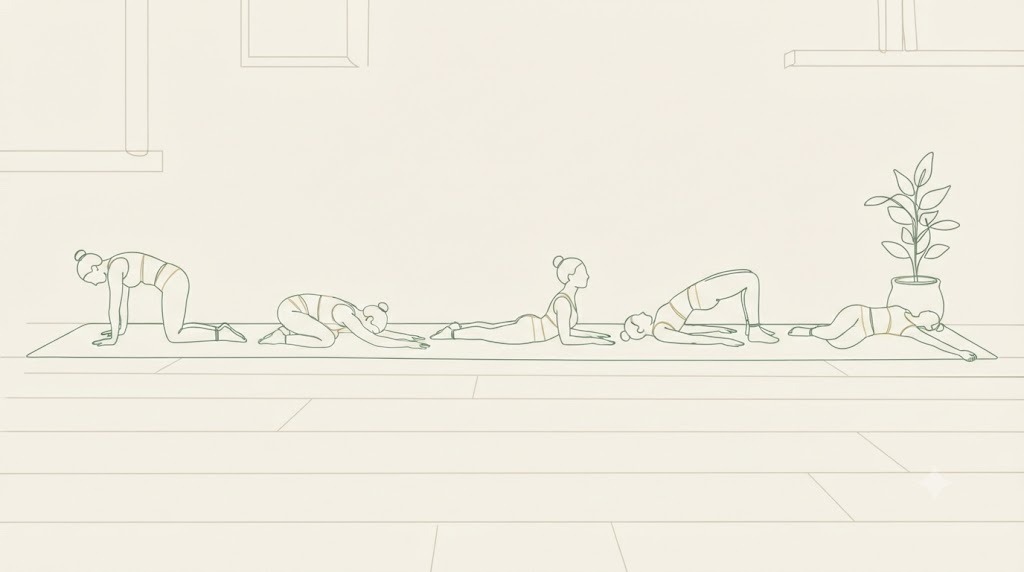
1. Cat-Cow (Marjaryasana-Bitilasana)
How to do it: Come onto your hands and knees, wrists under shoulders, knees under hips. As you breathe in, drop your belly and lift your chest and tailbone (Cow). As you breathe out, round your spine gently toward the ceiling (Cat). Flow slowly between the two for 8 to 10 breaths.
Why it helps: This is the single best warm-up for a stiff back. It wakes up the spine segment by segment and tells your back muscles that movement is safe again.
Watch out for: Keep the movement smooth and small. This is a massage for your spine, not a stretch contest.
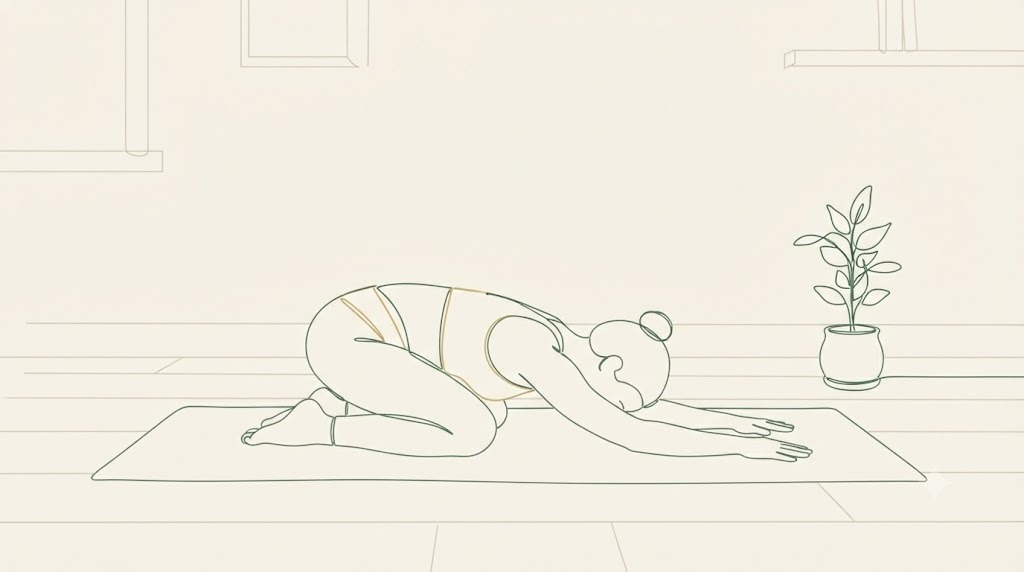
2. Child’s Pose (Balasana)
How to do it: From hands and knees, bring your big toes together, widen your knees, and sit your hips back toward your heels. Stretch your arms forward and rest your forehead on the mat. Breathe into your lower back for 45 to 60 seconds.
Why it helps: A gentle, passive release for the whole lower back. It lengthens the spine and gives the muscles along it permission to let go.
Watch out for: Tight hips or knees? Put a folded blanket between your hips and heels, or under your chest. Comfort is the point.
3. Supine Knee-to-Chest (Apanasana)
How to do it: Lie on your back, knees bent, feet on the floor. Hug one knee toward your chest, hold 20 to 30 seconds, then switch. Finish by hugging both knees for 30 seconds, rocking gently side to side if that feels good.
Why it helps: Releases the lower back and sacrum while your spine rests safely on the floor. It is often the first pose physiotherapists give for back stiffness, and for good reason.
Watch out for: Keep your tailbone heavy on the mat. If your hips lift and strain, ease the knee a little away from your chest.
4. Sphinx Pose (Salamba Bhujangasana)
How to do it: Lie on your stomach, legs long behind you. Place your elbows under your shoulders and forearms flat on the mat. Lift your chest gently, keeping your lower belly and hips on the floor. Hold for 5 to 8 slow breaths, then rest your cheek on your hands.
Why it helps: Most of us spend the day bent forward. Sphinx is a mild, supported backbend that does the opposite – it strengthens the muscles along the spine and can ease the ache of slouching.
Watch out for: If you feel any pinching in your lower back, walk your elbows further forward to lower the arch. Gentle is the whole game here.
5. Bridge Pose (Setu Bandhasana)
How to do it: Lie on your back, knees bent, feet hip-width apart and close to your hips. Press into your feet and lift your hips until your body makes a soft ramp from shoulders to knees. Hold 20 to 30 seconds, lower slowly, repeat once or twice.
Why it helps: This is your core-and-glute strengthener. It wakes up the exact muscles that are supposed to support your lower back – the ones sitting switches off.
Watch out for: Do not crank your hips to the ceiling. A low, steady bridge held well beats a high one held with strain.
6. Supine Twist (Supta Matsyendrasana)
How to do it: Lie on your back and hug your knees in. Drop both knees to the left, turn your head to the right, and stretch your right arm out. Hold 30 to 45 seconds, then switch sides.
Why it helps: Twists wring out the muscles along the spine and release the deep rotators that get locked up from sitting. Most people feel this one working immediately – in a good way.
Watch out for: Keep both shoulders on the mat. If your knees do not reach the floor, put a pillow under them instead of forcing them down.
7. Standing Forward Fold, Bent Knees (Uttanasana variation)
How to do it: Stand with feet hip-width apart. Bend your knees generously – really bend them – and fold forward from the hips, letting your head and arms hang heavy. Hold 30 seconds, swaying gently if it feels nice. Roll up very slowly.
Why it helps: With the knees bent, the stretch moves out of the lower back and into the hamstrings, where it belongs. Tight hamstrings pull on the pelvis and are one of the sneakiest causes of back pain.
Watch out for: Skip this one (or keep hands on a chair) if you have a disc issue – deep forward bends are the pose most likely to aggravate it.
8. Half Lord of the Fishes, Seated Twist (Ardha Matsyendrasana)
How to do it: Sit with legs stretched out. Cross your right foot over your left knee, sit tall, and twist gently to the right, hugging your knee with your left arm. Hold 5 breaths, switch sides.
Why it helps: An upright twist that builds spinal mobility while also stretching the outer hip – another hidden contributor to lower back strain.
Watch out for: Sit on a folded blanket if your lower back rounds when you sit tall. Height under the hips makes the twist safer and easier.
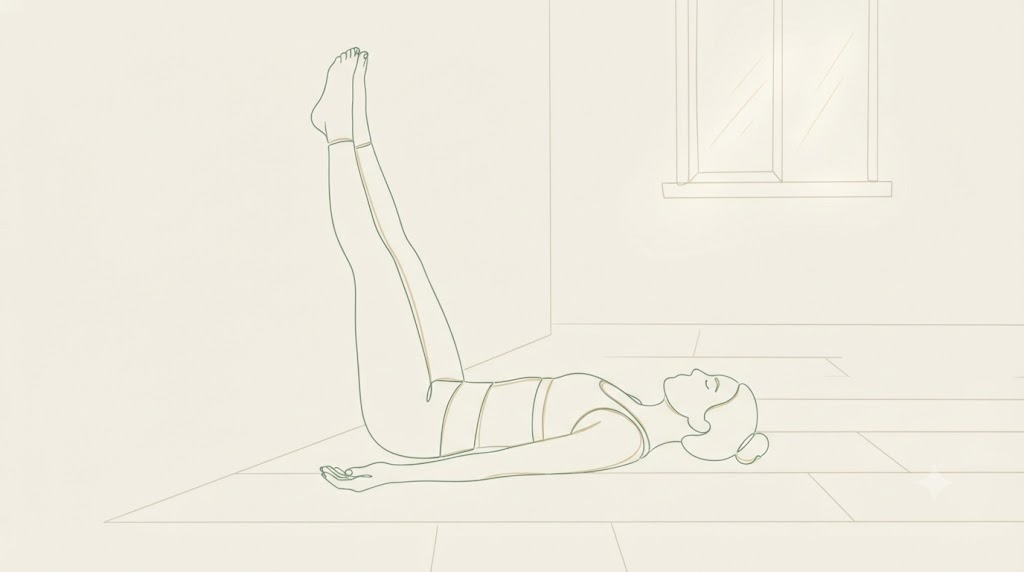
9. Legs-Up-The-Wall (Viparita Karani)
How to do it: Sit sideways next to a wall, swing your legs up it, and lie back so your body makes an L-shape. Rest your arms by your sides, close your eyes, and stay for 3 to 5 minutes, breathing slowly.
Why it helps: Pure recovery. It drains heaviness from the legs, eases pressure off the lower back, and calms the nervous system. Many people with desk jobs call this the best five minutes of their day.
Watch out for: Slide a cushion under your hips if your hamstrings pull. If your legs tingle, bend your knees a little.
10. Crocodile Rest with Belly Breathing (Makarasana)
How to do it: Lie on your stomach, stack your hands under your forehead, legs comfortably apart. Breathe slowly into your belly so your lower back rises and falls against the floor. Stay for 2 to 3 minutes.
Why it helps: It looks like doing nothing, but this is where the practice lands. Belly breathing switches on the relaxation response and releases the deep, involuntary tension that keeps a back guarded and sore.
Watch out for: Nothing, really. If lying on your stomach is uncomfortable, do the same breathing on your back with your knees bent.
A 15-minute daily routine for a healthier back
Here is the whole practice, put together. Do it once a day – morning or evening, whenever you will actually do it.
| Order | Pose | Time |
|---|---|---|
| 1 | Cat-Cow | 2 minutes |
| 2 | Child’s Pose | 1 minute |
| 3 | Knee-to-Chest | 2 minutes |
| 4 | Sphinx Pose | 1 minute |
| 5 | Bridge Pose | 2 minutes |
| 6 | Supine Twist (both sides) | 2 minutes |
| 7 | Forward Fold, bent knees | 1 minute |
| 8 | Seated Twist (both sides) | 1 minute |
| 9 | Legs-Up-The-Wall | 2 minutes |
| 10 | Crocodile Rest + breathing | 1 minute |
Fifteen minutes. That is shorter than the time most of us spend scrolling before bed – and unlike scrolling, it pays you back the next morning.
Common mistakes that make back pain worse
- Bouncing into stretches. Your back protects itself by tensing up. Slow, steady holds are what release it.
- Locking the knees in forward bends. Bent knees are not cheating – they are how you protect your lower back while your hamstrings slowly open.
- Only stretching, never strengthening. Flexibility without strength is how backs stay fragile. Bridge Pose and a strong, engaged core matter as much as any stretch.
- Practicing hard once a week instead of gently every day. Ten to fifteen minutes daily will do more for your back than a heroic 90-minute session every Sunday.
- Ignoring the other 23 hours. Stand up every 30 to 45 minutes. Your yoga mat cannot undo eight unbroken hours in a chair.
How often should you practice, and when will it work?
Aim for the 15-minute routine daily, or at minimum five days a week. Most people notice their back feeling “looser” in the first week. Real, lasting change – fewer bad mornings, less end-of-day ache – typically shows up over four to six weeks of consistent practice. That is not the slow option; it is the one that lasts.
And if you would rather be guided through it: practicing with a teacher means someone watches your form, adjusts the poses to your body, and keeps you honest on the days motivation runs out. That is exactly what our live online classes are built for.
Frequently asked questions
Is yoga safe for lower back pain?
For everyday muscular back pain, gentle yoga is widely considered safe and is even recommended by physicians as a non-drug option. If your pain comes with leg numbness, followed an injury, or is severe, see a doctor before starting anything.
Which yoga pose is best for lower back pain?
Child’s Pose and Knee-to-Chest are the safest places to start – they release the lower back without asking anything of it. For long-term change, Bridge Pose is the quiet hero because it strengthens the muscles that protect your back.
Can yoga make back pain worse?
Yes, if you push into pain, force deep forward bends with a disc problem, or treat it like exercise to win at. Gentle and consistent keeps you safe; aggressive and occasional is how people get hurt.
Should I do yoga when my back is actively hurting?
For mild, familiar aches, gentle movement usually helps more than bed rest. For sharp, new or worsening pain, rest and get it checked first. When in doubt, ask a doctor – not a yoga blog, including this one.
Start tonight, gently
Your back does not need intensity. It needs attention – a few quiet minutes of the right movement, repeated most days. Roll out a mat (or a carpet), try the first three poses tonight, and notice how your back feels tomorrow morning.
Want the guided version? Join a live online yoga class with Ranjana – beginner-friendly, small groups, and every pose adjusted to real bodies, not perfect ones. And if you are just beginning, our free Yoga and Meditation PDF Library has illustrated guides you can download and keep, including Foundations of Home Practice and a 30-day beginner plan to build the habit. If you are new to practice at home, our step-by-step guide on how to start a home yoga practice pairs perfectly with this routine, and chair yoga is a gentle option on days when even the mat feels like too much.