
Hatha yoga mainly works with the body through postures, breath and cleansing habits, while Kriya yoga is a set of practices aimed at steadying the mind, often through breath, focus and meditation. The two are not rivals. Hatha yoga is widely taught as posture classes, and Kriya yoga is usually a quieter, more inward practice. This guide explains the difference in plain words and helps you choose where to start.
This is general education, not medical advice. If you have a health condition, an injury, are pregnant, or feel unsure, speak with your doctor before starting a new practice.
What is hatha yoga?
Hatha yoga is the branch of yoga that uses physical postures, breath control and cleansing practices to prepare the body and mind. Most yoga classes today, from gentle stretching to stronger flows, come from the hatha tradition. The word joins “ha” and “tha”, often explained as sun and moon, or as a balance of effort and ease.
A typical hatha class includes warm-up, standing and seated postures, a little breathing and a short rest. If you are new to it, our guide to starting a home yoga practice shows a simple way to begin.
What is Kriya yoga?
Kriya yoga is a group of practices aimed at settling the mind, and “kriya” means action or practice. In the Yoga Sutras it names three habits: self-discipline, self-study and surrender. In some lineages it names a set of breath and meditation techniques. Our guide to Kriya yoga for beginners explains both meanings.
What is the main difference between Kriya yoga and hatha yoga?
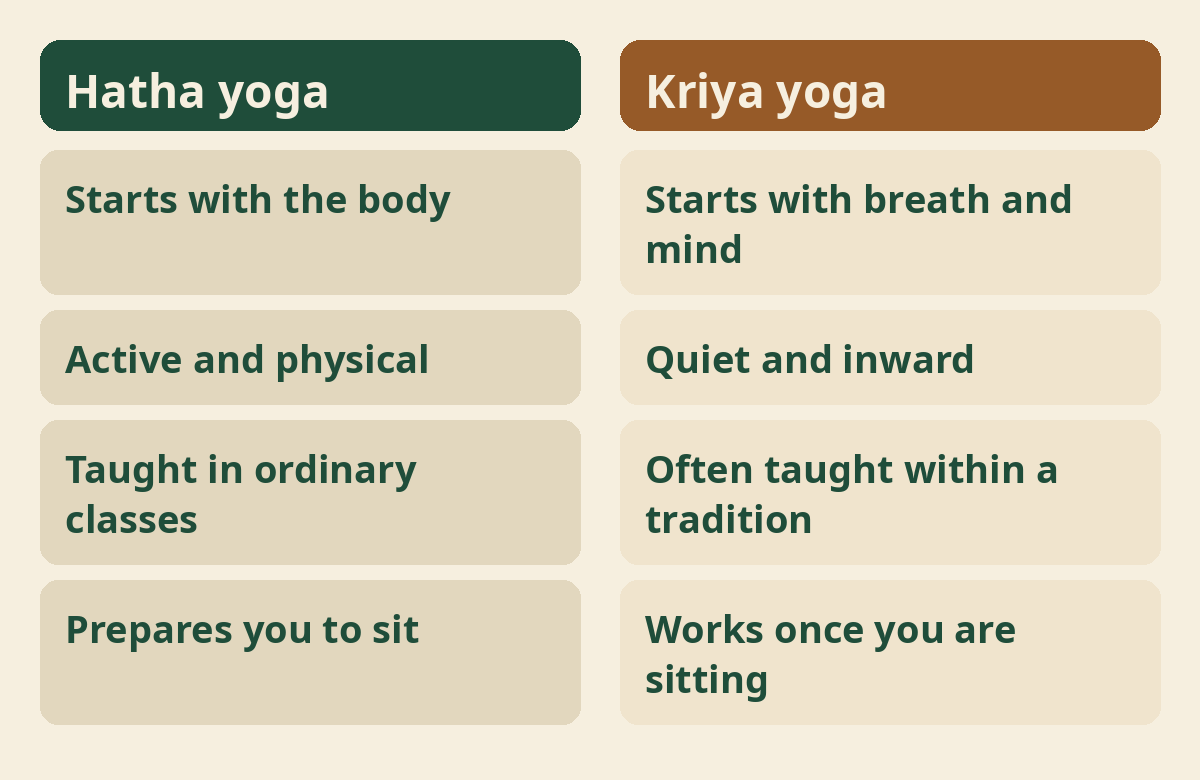
The main difference is focus. Hatha yoga starts with the body, and Kriya yoga starts with the breath and the mind. Think of hatha as preparing the body to sit comfortably, and Kriya as what you do once you are sitting.
- Starting point. Hatha begins with posture. Kriya begins with breath, attention and discipline.
- What you do. Hatha is active and physical. Kriya is quiet and inward.
- Where you learn it. Hatha is taught in ordinary classes. Specific Kriya techniques are often taught within a tradition.
- Typical session. A hatha class is often an hour or more. A Kriya practice can be short or long, depending on the school.
Do the two overlap?
Yes. Hatha yoga includes breath work and relaxation, and Kriya practice often assumes a steady, comfortable body. Many teachers use hatha postures to get a student ready for sitting. The overlap is the reason some people treat them as one path.
The older texts describe hatha as a preparation for deeper practice, which fits the idea of kriya as the inner work that follows. Our article on the eight limbs of yoga shows where posture, breath and meditation sit in the classical path.
Which is better for a beginner?
For most beginners, a gentle hatha class is the easier way in, because it is widely available and easy to follow. You can see the teacher, copy the shapes and feel the effect on your body. Kriya practices can come later if you feel drawn to them and have a teacher you trust.
If you prefer a quiet start at home, easy breathing and short sitting practice are a gentle bridge. Read our guide on Kriya yoga and pranayama and check whether Kriya yoga is safe for beginners before trying stronger breath techniques.
How do they feel different in practice?
Hatha usually feels like gentle exercise followed by calm, while Kriya usually feels like settling into stillness. After a hatha class you may notice warmth, looser muscles and an easier breath. After a quiet breathing and sitting session you may notice a slower pace of thought. Neither feeling is a test. Both vary from day to day.
Some people enjoy doing both in one routine: a few postures first, then five minutes of sitting. That is a natural, low-risk way to see how they fit together.
How to try both in one short session
- Warm up with gentle neck, shoulder and spine movements for two minutes.
- Do two or three easy postures you already know, such as cat-cow or a seated twist.
- Sit on a chair or cushion with a tall spine.
- Breathe in for four counts and out for four to six, for five rounds.
- Sit quietly for three to five minutes, watching the breath.
- Stop any step that causes pain, dizziness or anxiety.
Which needs a teacher?
Both are easier with a good teacher, but Kriya techniques are more likely to need one. A hatha teacher can fix posture and prevent strain. A Kriya teacher can explain breath techniques and notice when a practice is not suiting you. Choose someone who is open, welcomes questions and takes health seriously, and avoid anyone who pressures you to pay, join or keep secrets.
What does the research say?
Research on yoga and meditation is still developing. The National Center for Complementary and Integrative Health summarises findings on yoga effectiveness and safety and on meditation and mindfulness. These pages describe general findings, not results for one named technique.
Who should be careful?
People with injuries, heart, lung or blood pressure conditions, and pregnant women should speak with a doctor before starting postures or breath practice. Move within a comfortable range, never force a stretch, and stop if you feel pain, dizziness or strain. Gentle practice is the safest place to begin.
Can you do both in the same week?
Yes. A simple week can include two or three gentle hatha sessions and a few short sitting practices. Many people find that postures make sitting easier, and sitting makes postures calmer. Keep the plan small enough that you can follow it. Our guide to how long to meditate helps you choose a sitting length.
- Two or three days: a gentle posture session of twenty to thirty minutes.
- Most days: five to ten minutes of easy breathing and quiet sitting.
- Once a week: a short note on what helped.
What does each one ask of your time?
Hatha usually asks for a set class time, while Kriya practice can fit into a few quiet minutes at home. A typical posture class takes thirty to sixty minutes plus travel if you go to a studio. A short breathing and sitting practice can take five to fifteen minutes in your own room. That difference matters if your days are busy.
The better choice is the one you will keep doing. A short practice done daily helps more than a long one done rarely. If you can only manage ten minutes, spend them on easy breathing and quiet sitting, and add postures on days when you have more time.
What do the traditional texts say about hatha and kriya?
Traditional hatha texts describe postures and breath as preparation for meditation, and the Yoga Sutras describe kriya yoga as a set of practical habits for steadying the mind. They come from different strands of the tradition, which is why the words are used differently by different teachers. You do not need to learn Sanskrit to benefit. It helps only to know that the labels are old, flexible and sometimes overlapping.
When two sources disagree, check what the author means by each word. Many arguments about yoga come from people using the same term for different things.
How do you choose a first class or practice?
Choose the option that feels safe, calm and easy to repeat. If you like movement, try a gentle hatha or beginner class. If you prefer stillness, try a short breathing and sitting practice at home. If you are unsure, try one of each for two weeks and notice which one you look forward to.
- Pick a teacher who explains each step and offers easier options.
- Avoid classes that push you past comfort.
- Tell the teacher about injuries or health conditions.
- Give any new practice at least two weeks before judging it.
Common myths
- “Hatha yoga is only exercise.” It also includes breath and rest, and its older purpose was to prepare for meditation.
- “Kriya yoga is more advanced, so it is better.” It is different, not better. Gentle basics are a sound foundation.
- “You must choose one.” Many people combine postures with a little sitting.
- “You need to be flexible.” Flexibility is a result of practice, not a requirement.
Where to read next
For a calm starting point, Ranjana Sinha’s Begin Where You Are is written for beginners, and The Journey of Yoga Through Time explains how these styles developed. Our guide to chair yoga for beginners is a gentle way to try postures if you have limited mobility.
Frequently asked questions
Is Kriya yoga the same as hatha yoga?
No. Hatha yoga works mainly with postures and breath. Kriya yoga is a set of practices aimed at steadying the mind, often through breath and meditation.
Is hatha yoga a good start before Kriya yoga?
For many people, yes. Hatha builds comfort in the body, which makes sitting easier later.
Does Kriya yoga include postures?
Some lineages include a few postures as preparation. The main focus is on breath, attention and meditation.
Which is harder, hatha or Kriya yoga?
It depends on the person. Hatha is more physical. Kriya asks for patience and regular quiet practice.
Can I practise both together?
Yes. A few gentle postures followed by short sitting is a common, low-risk combination.
Do I need a teacher for hatha yoga?
Not strictly, but a good teacher helps with posture and safety, especially at the start.
The bottom line
Hatha yoga prepares the body, and Kriya yoga works with breath and mind. Start with gentle basics, move at your own pace and add depth when you feel ready.

