
Kriya yoga is generally considered safe for healthy adults when practised gently, with natural breathing and without strain. The risks come from forcing the breath, holding it too long, practising too much too soon, or ignoring a health condition. This guide explains what makes Kriya different from ordinary yoga, who should be careful, which warning signs matter, and how to start in a calm, low-risk way.
This is general education, not medical advice. If you have a heart, lung, blood pressure, eye or mental health condition, are pregnant, or are unsure, speak with your doctor before you begin any breathing-based practice.
What is Kriya yoga, in plain words?
Kriya yoga is a set of yoga practices that combine focused breathing, concentration and meditation to settle the mind. The word “kriya” means action or practice. In the Yoga Sutras of Patanjali, “kriya yoga” is described as three habits: self-discipline, self-study and surrender to something larger than yourself. Later teachers, especially in the twentieth century, used the same name for specific breath and meditation techniques that are usually taught step by step by a teacher.
So when someone asks “is Kriya yoga safe”, they might mean two different things. The broad idea of disciplined, thoughtful practice is very safe. The specific breath techniques deserve more care, because the breath directly affects your body and your mood. If you are new to the topic, our guide to Kriya yoga for beginners covers the meaning and first steps in more detail.
Why people ask if it is dangerous
Search for the topic and you will find strong opinions, some of them fearful. Most of the worry comes from three things.
- Breath control. Some techniques ask you to breathe fast, slow, deep or with pauses. Done aggressively, these can cause dizziness, tingling, a racing heart or anxiety in some people.
- Long sitting and intense focus. Sitting for long periods with eyes closed can bring up strong feelings, restlessness or discomfort in the body.
- Stories and secrecy. Some groups present Kriya as a powerful, almost secret method that must never be changed. That framing can push people to practise harder than their body or mind is ready for.
None of these makes the practice harmful by itself. They are reasons to be sensible. The same is true of many safe activities, from running to cold showers.
What the research says about yoga and meditation safety
Large health bodies describe yoga as generally low risk for healthy people when it is done properly and with a qualified teacher. The US National Center for Complementary and Integrative Health notes that yoga is generally considered safe, and also lists injuries and specific cautions, for example for people who are pregnant or have certain conditions. You can read it on the NCCIH yoga safety page. The same organisation has a page on meditation and mindfulness safety, which says that meditation is generally safe, and that some people may have unpleasant experiences, especially when they have a history of mental health difficulties.
Kriya combines both areas, so the sensible reading is simple: gentle practice is fine for most people, and anything intense should be approached slowly and with advice.
Who should be extra careful
Check with a doctor or qualified professional first if any of these apply to you.
- Heart conditions or high or low blood pressure. Breath holds and fast breathing change blood pressure and heart rate.
- Lung conditions such as asthma. Forceful breathing can set off symptoms.
- Pregnancy. Avoid breath holding and fast breathing unless a prenatal specialist approves.
- Eye conditions, recent surgery or a history of seizures. Strain and pressure changes can matter.
- Anxiety, panic attacks, trauma or depression. Intense breathing or long silent meditation can sometimes bring up strong feelings. Go slowly, keep sessions short, and consider guidance from a mental health professional.
- Children and older adults. Keep everything gentle and short.
Warning signs to stop
Stop the practice, return to normal breathing and rest if you notice any of the following.
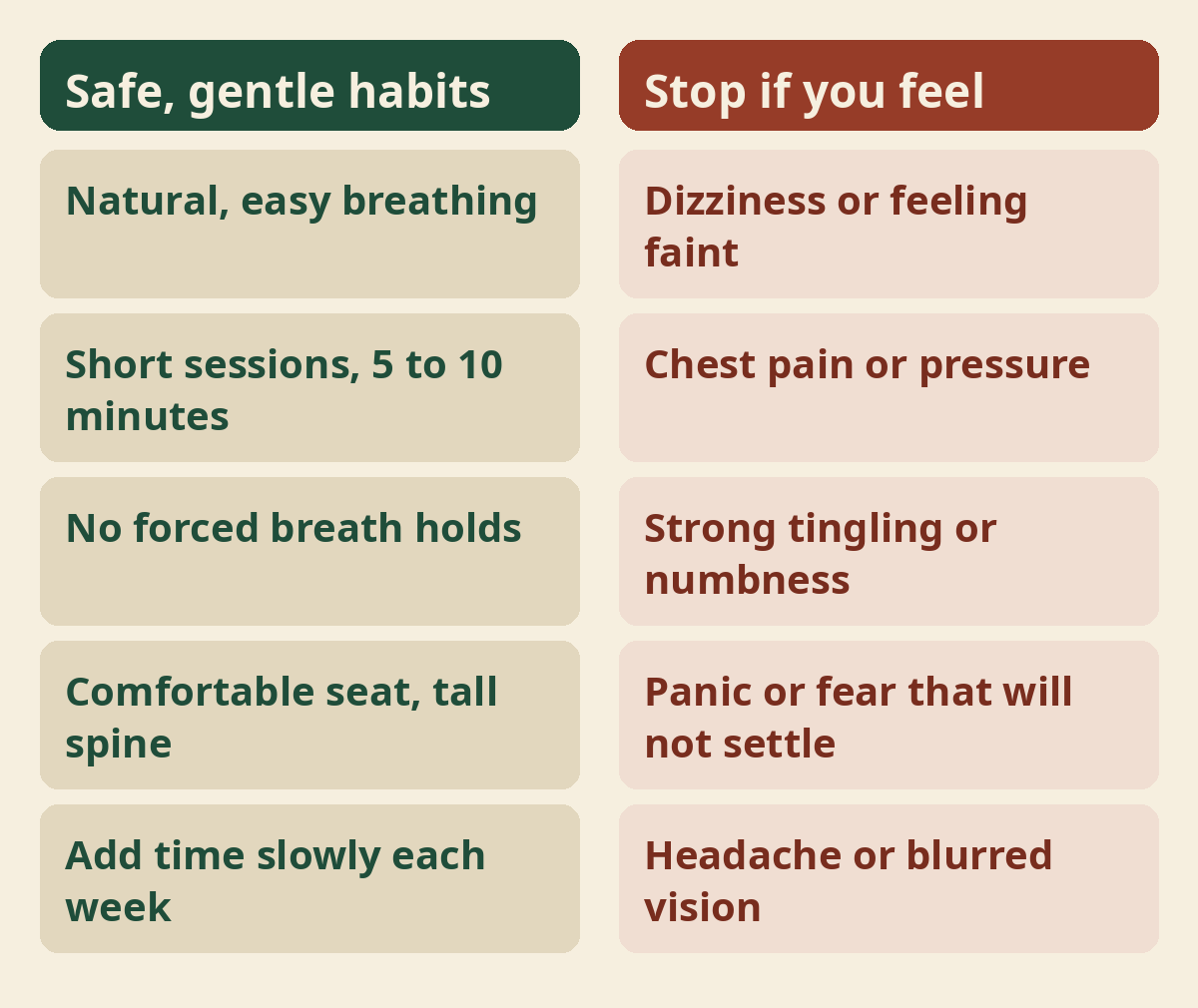
- Dizziness, light-headedness or feeling faint
- Chest pain or pressure, or a heartbeat that feels wrong
- Strong tingling or numbness in hands, feet or face
- Panic, fear or a feeling of unreality that does not settle in a few minutes
- Headache, blurred vision or pain behind the eyes
If symptoms are strong or do not pass, seek medical help. Never push through. A good practice should leave you steadier, not shaken.
Ten simple rules for practising Kriya safely
- Start with natural breathing. Spend the first weeks just noticing your breath without changing it.
- Keep sessions short. Five to ten minutes is plenty at first. Our guide on how long to meditate helps you pick a sensible length.
- Never force a breath hold. If you feel any strain, shorten or skip it.
- Breathe through the nose in a relaxed way unless a technique clearly says otherwise.
- Sit comfortably. Use a chair if the floor hurts. Your spine should be tall but not stiff.
- Build the base first. Learn simple breathing with pranayama for beginners before anything advanced.
- Practise on an empty or light stomach and in a quiet, ventilated place.
- Increase slowly. Add a minute or two a week, not a big jump in a day.
- Learn from a teacher you can question. Be careful of anyone who discourages questions, promises miracles or asks for large payments or total secrecy.
- Keep life in balance. Sleep, food, movement and friends matter as much as any technique.
Kriya yoga and the wider path
Kriya is not a stand-alone trick. In the classical picture of yoga, breath and meditation sit inside a wider path that also includes ethics, daily habits and posture. Our plain-English guide to the 8 limbs of yoga shows how these parts fit together. Thinking this way takes pressure off. You do not need to chase a dramatic experience. A calm, regular practice that fits your life is already the point.
If you want a gentle, structured way to build a home practice before exploring more advanced breathing, the beginner guide Begin Where You Are is written for exactly that. For the story of how these ideas developed over time, The Journey of Yoga Through Time gives helpful background.
Is Kriya yoga safe to learn from books or videos?
You can learn the ideas from books and videos, and that is a good way to understand what you are getting into. For the breath techniques themselves, a live teacher is better because they can watch your posture and breathing and tell you when to slow down. If you do practise alone, stay with the gentlest versions and follow the ten rules above.
A calm first week
If you want to try something today, this is a safe beginning.
- Day 1 to 3: Sit comfortably for five minutes and watch your natural breath. Nothing else.
- Day 4 to 5: Add a slow, easy count: in for four, out for four, without holding.
- Day 6 to 7: Sit for eight to ten minutes, ending with a minute of quiet. Notice how you feel afterwards.
If it feels good, continue at that level for a few weeks. If it feels uncomfortable, scale back or speak with a professional.
Frequently asked questions
Is Kriya yoga dangerous?
Not when practised gently. Problems usually come from forcing the breath, holding it too long, practising for too long, or ignoring a health condition. Keep it simple, stop if something feels wrong, and get advice when unsure.
Can beginners do Kriya yoga?
Beginners can start with the basics: relaxed breathing, short sitting practice and simple concentration. Leave advanced breath techniques until you have a steady base and, ideally, a teacher.
How long should I practise each day?
Five to ten minutes is enough to start. Add time slowly. Regular short sessions are safer and more useful than occasional long ones.
Can Kriya yoga cause anxiety or panic?
For some people, strong breathing or long silent meditation can bring up uncomfortable feelings. If that happens, return to normal breathing, shorten your sessions and consider talking to a professional.
Is it safe during pregnancy?
Breath holding and fast breathing are usually avoided in pregnancy. Ask your doctor or a prenatal yoga specialist before practising any breath technique.
Do I need an initiation or teacher?
Some traditions teach Kriya only through initiation. You can learn general breathing and meditation without one. For specific advanced techniques, choose a teacher who is open, answers questions and never pressures you.
What is the difference between Kriya yoga and regular yoga?
Regular yoga classes usually focus on postures with breathing. Kriya focuses more on breath and meditation practices, often in a set order.
The bottom line
Kriya yoga does not need to be frightening. Keep your breath easy, your sessions short, and your expectations modest. Treat any dizziness, pain or panic as a signal to stop, and speak with a doctor if you have a health condition. Slow and steady is both the safest and the most effective way to begin.
Written by Ranjana Yoga Class. This article is for general information and does not replace medical advice.

