
An evening yoga routine is a short, slow sequence of gentle stretches and breathing to help you unwind. Keep the lights low, move slowly, finish with a few minutes of rest and avoid strong poses close to bedtime.
This is general education, not medical advice. If you have back pain, high blood pressure, pregnancy, an injury or a health condition, check with your doctor before starting.
What is an evening yoga routine?
An evening yoga routine is a short, slow sequence of gentle stretches and breathing that helps you unwind at the end of the day. It is quieter than a morning practice. The aim is to release tension from sitting, standing or screen time and prepare for rest. Fifteen to twenty minutes is enough. Our guide to the benefits of yoga explains why many people like a daily habit.
What does a simple evening sequence look like?
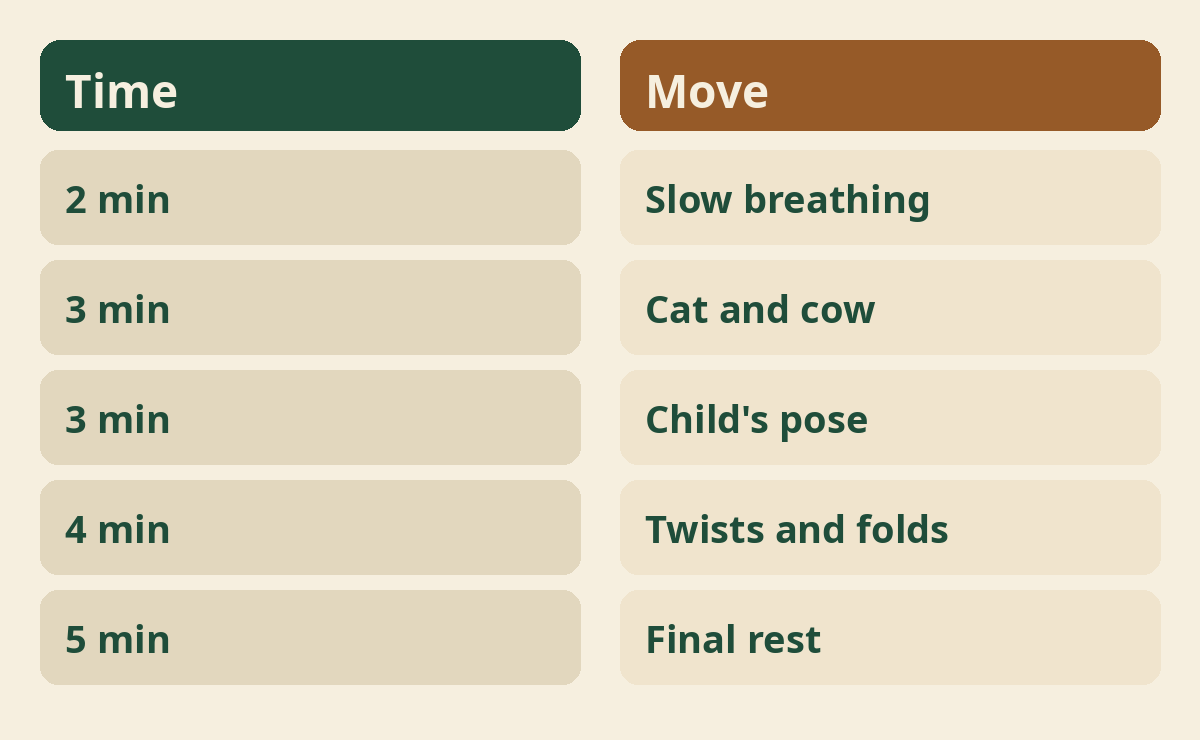
A simple sequence includes slow breathing, cat and cow, child’s pose, a gentle twist, a forward fold and a final rest lying down. Keep the pace slow and the lights low.
- Sit or lie quietly and breathe slowly for two minutes.
- Move through cat and cow for a few slow rounds.
- Rest in child’s pose for five to ten breaths.
- Take a gentle lying or seated twist on each side.
- Fold forward while sitting, with soft knees and a strap if needed.
- Lie on your back with your legs resting on a chair or cushion.
- Finish with five minutes of quiet rest.
Why practise in the evening?
The body is warmer and looser later in the day, and a calm routine can help you separate work from rest. Evening yoga gives your mind a signal that the day is ending. It also gives you time for deeper stretches than a morning session. Do not do anything too strong close to bedtime if you find it wakes you up.
How soon before bed should you practise?
Aim to finish at least thirty to sixty minutes before you want to sleep, and keep the movement gentle. Strong or fast sequences can leave you feeling alert. Choose slow poses and quiet breathing. If you feel sleepy, that is fine. Our guide to meditating before bed has more ideas for winding down.
Which poses suit the evening?
Child’s pose, supine twist, seated forward fold, legs up the wall, cat and cow and reclining butterfly are calm choices. Avoid strong back bends, fast flows and long holds that feel intense. See our guides to child’s pose and yoga for flexibility for safe stretching tips. Use props such as cushions and blankets for comfort.
How can you set up the space?
Dim the lights, silence your phone, keep the room comfortably warm and have a blanket and cushion ready. A tidy corner helps. Soft light and a quiet room invite relaxation. Some people like gentle music, others prefer silence. Keep water nearby. Put your mat out before dinner so it is easy to start.
Can evening yoga help you sleep?
It may help some people feel relaxed before bed, but it is not a treatment for sleep problems. The National Center for Complementary and Integrative Health describes yoga as a mind and body practice. Research on sleep varies. If you have ongoing trouble sleeping, speak with a doctor. Our guide to yoga nidra for sleep offers a lying-down relaxation practice.
What breathing practice can you use?
Slow, natural breathing with a slightly longer exhale is a gentle choice in the evening. Try breathing in for a count of three and out for a count of four, without strain. Our guide to box breathing and pranayama explain more. Avoid fast or forceful breathing before bed.
What if you are tired after work?
Keep it extra gentle, practise lying down or in a chair and shorten the routine. Even five minutes of slow stretching is worthwhile. Our guide to chair yoga is useful if you feel too tired to get on the floor. Do not force yourself. Rest is also valuable.
What if your mind is busy?
Let the movement and breath give your mind a simple focus, and gently return to the breath each time you notice you are thinking. A busy mind is normal at the end of a day. Writing a few lines in a notebook before you begin can help you set thoughts aside. Our guide to meditating correctly shows how to deal with wandering thoughts.
What are common mistakes?
Common mistakes include doing a strong workout too late, forcing stretches on tired muscles and checking your phone mid-practice. Another is skipping the final rest. The rest is part of the practice. Keep the movements small and slow. If you feel any pain, ease out. Try to end with a few minutes of stillness.
Who should be careful?
People with back pain, high blood pressure, pregnancy, injuries or health conditions should check with a doctor first. If you feel dizzy when you come up from a fold, rise slowly. Our guides to yoga for back pain and doing yoga every day cover related points. Stop if you feel unwell.
How long should you stay in each pose?
Stay for five to ten slow breaths in most poses, and longer in supported rest poses if they feel comfortable. Slow holds let the muscles soften. Do not force a deeper stretch. If a pose feels uncomfortable, come out. Props can make long holds easier. Our sun salutation guide is better for morning, so keep the evening to slow poses.
Can you combine yoga with other relaxation?
Yes, a warm bath, light reading or a short body scan fit well with an evening routine. Choose one or two calm habits and keep them regular. Avoid bright screens for a while before bed. A herbal tea may be soothing for some people. Keep the sequence of habits the same each night, so your body learns the pattern.
How can you build the habit?
Pick a regular time, such as after dinner, lay out your mat and start with just five minutes. Tie the habit to something you already do. Track your days. If you miss one, start again the next day without guilt. A gentle, regular routine is more useful than a perfect, rare one.
How can you adapt it for stiff hips or tight shoulders?
Use cushions under your knees or hips, bend your knees in folds and keep twists small. Support is your friend. A rolled blanket under the knees in a seated pose eases the hips. A strap helps you reach your feet. Stay within a comfortable range. If you have pain, speak with a doctor or physiotherapist.
Can you practise with a partner or family?
Yes, gentle evening yoga can be a calm way to spend time together, as long as the pace suits everyone. Choose slow, simple poses. Keep the room quiet. Children and older adults may prefer shorter sessions. Make sure everyone feels comfortable and has space. Our guide to starting a home yoga practice shares simple setup tips.
What should you do afterwards?
Stay lying down for a minute, drink some water and move slowly into your bedtime routine. Do not rush back to bright screens. Note how you feel. If you feel calm, keep the lights low. If you still feel restless, try a few more slow breaths.
What should you expect over time?
You may feel more relaxed in the evenings, but results vary, and yoga is not a cure for any condition. Some people notice changes within weeks, others need longer. Be patient. If you have ongoing stress, pain or sleep problems, talk with a doctor. Yoga can be one gentle part of a balanced routine.
How does an evening routine differ from a morning one?
An evening routine is slower, quieter and aimed at relaxation, while a morning routine is lighter and aimed at waking up. Our guide to a morning yoga routine covers the other side. You can use both on different days. Choose the one that fits your schedule and energy.
Where to read next
For a calm, beginner-friendly start, Ranjana Sinha’s Begin Where You Are is written for people who want simple steps. Our guide to starting a home yoga practice adds a gentle routine you can follow at home.
Frequently asked questions
How long should an evening yoga routine be?
Fifteen to twenty minutes is plenty. Even five minutes helps.
Can I do yoga right before bed?
Yes, if it is gentle. Finish thirty to sixty minutes before you want to sleep.
Which poses are best at night?
Child’s pose, supine twist, seated forward fold and legs up the wall.
Will evening yoga help me sleep?
It may help some people relax, but it is not a treatment. See a doctor for persistent sleep problems.
Do I need props?
A cushion, a blanket and a strap are helpful but not essential.
The bottom line
An evening routine is a calm way to close the day. Move slowly, breathe easily and end with rest. A gentle habit is easier to keep than a hard one.

