
Yoga combines poses, breathing and meditation, while pilates focuses on controlled exercises for core strength and posture. Both can be gentle and both suit beginners. Choose by your goals, try a class of each and ask your doctor first if you have health concerns.
This is general education, not medical advice. If you have an injury, back pain, pregnancy or a health condition, check with your doctor before starting either practice.
What is the difference between yoga and pilates?
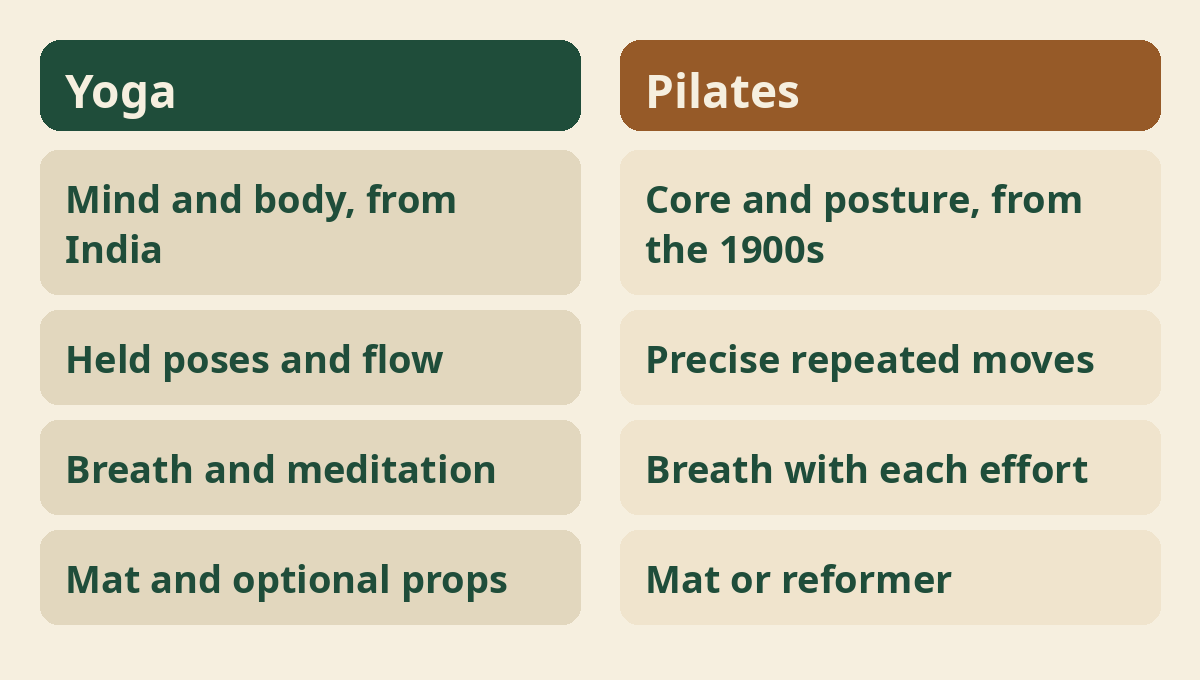
Yoga is a mind and body practice from India that combines poses, breathing and meditation, while pilates is a system of controlled exercises focused on core strength, posture and alignment. Both involve slow, controlled movement and breathing, and both can be gentle. Yoga draws on a long tradition that includes philosophy and meditation. Pilates was developed in the early twentieth century as a form of physical conditioning. Our guide to the benefits of yoga explains what yoga offers.
Where do they come from?
Yoga comes from ancient India, and pilates was created by Joseph Pilates in the early 1900s. Yoga has many styles and a spiritual and philosophical side, described in our guide to the eight limbs of yoga. Pilates grew out of exercises designed for rehabilitation and fitness. Knowing the origin helps you see why the two feel different.
How do the movements differ?
Yoga uses held poses and flowing sequences, while pilates uses repeated, precise movements, often on a mat or special equipment. In yoga you might hold a pose for several breaths. In pilates you may repeat a small movement many times. Yoga includes seated and standing poses and often balance work. Pilates tends to emphasise the core, with exercises done lying down, sitting or on a reformer machine.
How does breathing differ?
Yoga often uses slow breathing with the movement and may include separate breathing practices, while pilates usually coordinates breath with each exercise, often with a rib-focused inhale. Our guide to pranayama explains yoga breathing. In pilates, you might breathe in through the nose and out through the mouth with effort. Both styles teach awareness of the breath.
What is the focus of each?
Yoga focuses on flexibility, balance, calm and awareness, while pilates focuses on core strength, control and posture. This is a general picture, not a strict rule. Some yoga styles are strong and some pilates classes are gentle. Both can help you move better. The choice often comes down to what you enjoy and what your goals are.
Which is better for flexibility?
Yoga usually involves more stretching and longer holds, so it is often chosen for flexibility. Pilates includes stretching too, but its main aim is strength and control. See our guide to yoga for flexibility for safe stretching tips. Whichever you choose, go slowly and avoid forcing.
Which is better for strength?
Pilates is known for core work, while some yoga styles build strength through holds, but neither replaces a full strength routine. If you want to build more muscle, you may add weights or other training. Both practices can support strength in a gentle way. Our guide to ashtanga yoga covers a stronger yoga style.
Which is better for beginners?
Both can suit beginners, and the right choice depends on your goals, health and the quality of the teacher. Choose a beginner class with a trained teacher. Try both and see which feels better. Our guide to starting a home yoga practice explains how to begin yoga at home.
Which is better for the back?
Both may help some people with back comfort, but neither is a treatment, so talk to your doctor first if you have back pain. Gentle core strength can support posture, and gentle stretching can feel pleasant. Our guides to yoga for back pain and yoga with a bad back cover related points. Stop if anything hurts.
Which is better for stress and relaxation?
Yoga often places more emphasis on relaxation and meditation, though pilates can be calming too. Yoga classes often end with rest, as in our guide to savasana. Pilates classes may end with stretching. The National Center for Complementary and Integrative Health describes yoga as a mind and body practice that includes breathing and meditation.
Do you need equipment?
Yoga needs a mat and optionally props, while pilates uses a mat or special machines such as a reformer. Mat pilates and yoga both need little equipment. Reformer pilates uses a sliding platform with springs, usually in a studio. Our guide to chair yoga shows a yoga option with a chair.
Can you do both?
Yes, many people combine them, using yoga for stretching and relaxation and pilates for core work. Do not overload yourself. Space sessions with rest days. Listen to your body. If you feel sore, take a day off. A varied routine can feel interesting and balanced.
How do the classes feel?
Yoga classes can feel flowing or slow and may include chanting or meditation, while pilates classes tend to be structured and focused on form. Try a trial class of each. Notice the teacher’s style, the pace and the atmosphere. The right class makes you feel safe and welcome.
Which burns more calories?
It depends on the style, intensity and your body, and neither is mainly about burning calories. A fast, strong class of either type may use more energy than a slow one. If weight loss is your goal, talk to a doctor or dietitian. Use movement you enjoy and can keep up.
Is either one safe for everyone?
Both are generally safe for many people when done with care, but anyone with an injury, pregnancy or health condition should ask a doctor first. Tell the teacher about any concerns. Move within a comfortable range. Stop if you feel pain, dizziness or numbness. Our guide to prenatal yoga explains how yoga can change in pregnancy.
What are common mistakes?
Common mistakes include choosing a class that is too advanced, ignoring pain and comparing yourself with others. Another is expecting quick results. Start small, rest well and be consistent. Ask the teacher for modifications.
How do you choose?
Think about what you want, such as calm, flexibility or core strength, and try a trial class of each. Consider cost, location and schedule. Ask about the teacher’s training. Notice how you feel after the class. If you enjoy it, you will keep going.
How often should you practise?
Two or three sessions a week is a good start for either, with rest days in between. Add sessions slowly. Our guide to doing yoga every day explains how to listen to your body. Variety helps.
What should you expect over time?
You may feel stronger, steadier and more at ease, but results vary and neither is a cure. Be patient. If you have ongoing health concerns, speak with a doctor. Enjoy the practice for its own sake.
What should you wear to each class?
Wear comfortable, stretchy clothing that stays in place when you bend, and go barefoot or wear grip socks. Yoga classes are usually barefoot. Pilates studios often ask for grip socks, especially for reformer classes. Avoid loose tops that fall over your face and heavy jewellery. Ask the studio what they recommend. Bring a water bottle and a small towel if you tend to sweat.
How can you find a good teacher?
Look for a teacher with recognised training, clear instructions and a friendly, safe approach. Read reviews and ask about their experience. A good teacher offers options for different bodies and asks about injuries before class. Be wary of anyone who promises cures or pushes you into poses. Observe a class if you can. Trust your own sense of comfort.
What if you have a health condition?
Talk to your doctor before you start, and tell the teacher about your condition so they can adjust the class. Some conditions need extra care, such as osteoporosis, high blood pressure, joint problems or pregnancy. A small, beginner or therapeutic class may suit you. Private sessions can also help. Never ignore pain, and do not stop medical treatment to practise either.
Where to read next
For a calm, beginner-friendly start, Ranjana Sinha’s Begin Where You Are is written for people who want simple steps. Our guide to starting a home yoga practice adds a gentle routine you can follow at home.
Frequently asked questions
Is yoga or pilates better for beginners?
Both suit beginners. Choose a beginner class with a trained teacher and see which you enjoy.
Is pilates harder than yoga?
It depends on the class. Some classes of each are gentle and some are strong.
Can I do yoga and pilates in the same week?
Yes, with rest days and a gentle build-up.
Which is better for back pain?
Neither is a treatment. Ask your doctor before starting either.
Do I need a studio?
No. You can start both on a mat at home with a good beginner video or class.
The bottom line
Neither is better for everyone. Try both, notice how you feel and pick the one you will enjoy. Many people happily combine them.

