
Tree pose is a standing balance pose where you rest one foot on your ankle, calf or inner thigh and bring your hands together. Place the foot below the knee, fix your gaze on a still point, hold five to eight breaths and use a wall for support.
This is general education, not medical advice. If you have balance problems, dizziness, joint injuries or are pregnant, check with your doctor before practising.
What is tree pose?
Tree pose, or vrksasana, is a standing balance pose where you stand on one leg and rest the other foot against the standing leg, with the hands together at the chest or raised overhead. It is one of the best-known beginner balance poses. It asks you to stay steady and focused, which many people find calming. It also builds strength in the legs and ankles. You can practise it near a wall at first, as described in our guide to warrior pose.
How do you do tree pose step by step?
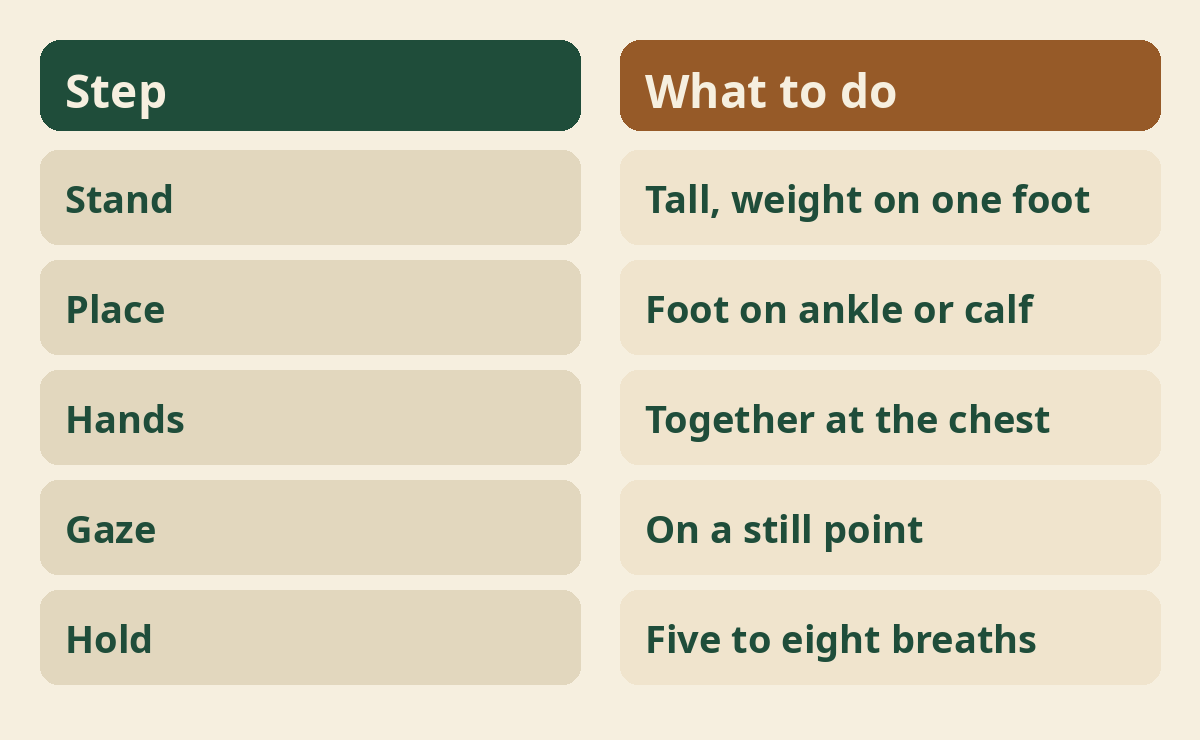
Stand tall, shift your weight onto one foot, place the other foot on your ankle, calf or inner thigh and bring your hands to your chest. Go slowly and use a wall if you need support.
- Stand in mountain pose with your feet hip-width apart.
- Shift your weight onto your left foot and keep the knee soft.
- Lift your right foot and place the sole on your left ankle, calf or inner thigh, but never on the knee.
- Press the foot and leg gently into each other.
- Bring your hands together at your chest.
- Fix your eyes on a still point in front of you.
- Hold for five to eight breaths, then lower the foot and switch sides.
Where should you place the foot?
Place the foot on the ankle, calf or inner thigh, and avoid pressing directly on the side of the knee. Beginners often find the ankle easiest. The foot can also rest on the floor with the toes touching, called the kickstand. Choose the height that lets you stay steady. Pressing the foot into the knee can strain the joint.
What should you feel?
You should feel steady work in the standing leg and foot, and a sense of balance in the core. Small wobbles are normal. Your standing foot makes tiny adjustments all the time. If you feel pain in the knee or hip, lower the lifted foot. The pose should feel steady, not forced.
Why do people practise balance poses?
Balance poses can build focus and leg strength, and many people enjoy the calm attention they need. The National Center for Complementary and Integrative Health describes yoga as a mind and body practice that includes poses and breathing. Balance practice is one part of many classes. It is not a treatment for any condition, but it can be a pleasant challenge.
How can you stay steady?
Pick a fixed point to look at, press evenly through your standing foot and breathe slowly. A steady gaze helps balance. Spread your toes. Engage your core gently. If you wobble, simply breathe and find your balance again. Try practising near a wall or chair at first.
What if you keep falling out of the pose?
Use a wall or chair for support, lower the lifted foot and shorten the hold. Balance changes from day to day. Falling out is not failure. Smile and try again. A kickstand version, with the toes on the floor, is a good place to start. Be patient and practise a little every day.
What are common mistakes?
Common mistakes include pressing the foot into the knee, leaning to one side, locking the standing knee and holding the breath. Another is looking down. Keep your hips level and your chest lifted. Soften the standing knee. Breathe smoothly. If your hip hikes up, lower the foot.
What are easy variations?
Place the foot on the ankle, rest the toes on the floor, hold a wall, or practise seated with one foot resting against the other leg. A chair version is useful if balance is a concern. Keep one hand on the back of the chair. See our guide to chair yoga for more seated ideas.
How long should you hold?
Five to eight slow breaths on each side is enough for beginners. Shorter holds are fine at first. Build up slowly. Rest in mountain pose between sides. Do the same on each side so that you stay balanced. Stop if you feel tired or unsteady.
How does breathing help?
Slow, steady breathing keeps the body relaxed and helps the mind stay focused. If your breath becomes short, lower the foot and rest. Our pranayama guide explains simple breathing practices. Do not hold your breath in the pose.
What if your ankle or knee hurts?
Lower the lifted foot, check your alignment and stop if the pain continues. Do not push the foot into the knee. If you have a joint injury, speak with a doctor or physiotherapist before practising. Keep your standing leg soft, not locked.
Is tree pose safe for everyone?
It is gentle for many people, but those with balance problems, dizziness, joint injuries or pregnancy should take care and check with a doctor. Practise beside a wall. Wear no socks for grip. Keep the space around you clear. Our guide to prenatal yoga covers pregnancy. This guide is general education and not medical advice.
How can tree pose help with focus?
It gives your mind a single task, staying steady, which can help you practise attention. Many people find the pose a short exercise in concentration. Combine it with a minute of quiet breathing. Our guide to mindfulness and meditation explains related practices.
Where does it fit in a sequence?
Tree pose often comes after standing poses such as mountain or warrior, and before a gentle forward fold or rest. A simple order is mountain, warrior pose, tree pose and a forward fold. Keep breathing steady between poses. End with a short rest.
Can you do tree pose with arms overhead?
Yes, once you feel steady, you can raise your arms like branches, keeping the shoulders relaxed. Raising the arms makes balance harder. Keep them wide and soft. If your shoulders tense, lower your hands back to your chest. Do not strain.
How can you practise at home?
Use a non-slip surface, practise near a wall and give yourself a few minutes each day. Short, regular practice helps balance. Try it while waiting for the kettle. Do both sides. Wear comfortable clothing. Our guide to starting a home yoga practice has more tips.
What if you feel nervous about balance?
Start with support and stay close to a wall, and practise on a firm surface. Feeling nervous is common. Take your time and use props. Slow breathing can help. If you feel dizzy or unsteady, stop. A teacher can guide you safely.
What should you expect over time?
You may find your balance improves, but results vary, and tree pose is not a cure for any condition. Be patient and enjoy the process. If you have ongoing balance problems or dizziness, speak with a doctor.
What other poses build balance?
Eagle pose, warrior three and standing leg lifts build on the same skills. Learn them gradually, one at a time. Always use support as needed. Balance practice can also include walking slowly with attention, as in our guide to walking meditation.
What should you do after practising?
Stand in mountain pose, take a few natural breaths and notice your legs and feet. Shake out your legs gently. Stretch if you like. Drink water. Notice if one side was easier than the other. That is normal and may change from day to day.
What should you wear and where should you practise?
Wear fitted, comfortable clothes so you can see your leg, practise barefoot on a non-slip mat and keep a wall within reach. Bare feet give the best grip and let you feel the floor. Avoid slippery socks. A mat on a flat surface is ideal. Clear the area around you in case you step out of the pose. Practise where you feel calm and safe, and give yourself a few quiet minutes.
What does the pose mean in the yoga tradition?
The name vrksasana means tree pose, and the image of a steady tree rooted in the ground is a common theme in yoga teaching. Teachers often invite you to feel your standing foot as a root and your body as a trunk rising up. You do not need any belief to enjoy this image. It is a gentle way to help you feel grounded and steady. Many students find it a helpful picture when balance is tricky.
Where to read next
For a calm, beginner-friendly start, Ranjana Sinha’s Begin Where You Are is written for people who want simple steps. Our guide to starting a home yoga practice adds a gentle routine you can follow at home.
Frequently asked questions
Where should I put my foot in tree pose?
On the ankle, calf or inner thigh, but not on the side of the knee.
How long should I hold tree pose?
Five to eight breaths on each side.
Why do I keep wobbling?
Wobbling is normal. Use a wall, keep your gaze on a fixed point and breathe.
Can I do tree pose with a chair?
Yes. Hold the back of a chair for support.
Is tree pose good for beginners?
Yes, with support and a low foot placement.
The bottom line
Tree pose rewards patience. Use a wall, keep your foot low and breathe. Wobbling is part of learning.

