
You signed up for a class because a friend swore by it, and now you are staring at the word “hatha” on the schedule and wondering if it is right for you. It probably is. Hatha yoga is the slow, steady style built around simple poses, calm breathing, and rest. This guide walks you through what it is, what to expect, and how to begin at your own pace.
This guide is general education about yoga and is not medical advice. If you have an injury, a health condition, or any worry about moving your body, check with your doctor before you begin.
What Is Hatha Yoga?
Hatha yoga is a style of yoga that joins physical poses, breathing, and rest into one slow practice. Most classes move at an easy pace and hold each pose for several breaths. That gives you time to learn the shape, notice how your body feels, and adjust. Many people see it as the classic starting point for yoga. It asks for patience more than strength. Once you know hatha, almost any other style feels familiar.
Where Does Hatha Yoga Come From?
Hatha yoga grew out of old yoga traditions in India, where teachers shared poses and breath practices by hand over many generations. The modern version you meet in studios is a simplified form of those teachings. It keeps the focus on posture, breath, and calm attention. Details differ from teacher to teacher and from school to school. You do not need to know the history to enjoy a class, though many students like learning it over time.
What Does the Word Hatha Mean?
The word hatha is often explained as “force” in Sanskrit, and also read as a pairing of sun and moon. Many teachers use the pairing as a picture of balance between effort and ease. One side asks you to work, the other asks you to soften. That idea shows up in nearly every hatha class. You hold a pose with steady effort, then you let go and rest. The goal is balance, not struggle.
How Is Hatha Different From Other Styles?
Hatha is usually slower and simpler than styles that flow quickly from one pose to the next. In a fast class you may change poses every breath, which can feel like a workout. In hatha you stay longer in each pose and pause between them. Names like vinyasa, power, or hot yoga often mean more speed or more heat. Hatha is a common label for a calm, basic class. If the schedule is unclear, ask the studio how fast the class moves.
Why Do People Choose Hatha Yoga?
People choose hatha yoga because it feels approachable, quiet, and kind to a beginner’s body. Some want a calmer evening routine after a busy day. Others hope for looser shoulders, easier movement, or a break from screens. Many simply like having a set time to slow down. Results vary from person to person, and no one has to chase a goal. Showing up and paying attention is a fine reason to start.
Is Hatha Yoga Good for Complete Beginners?
Yes, hatha is one of the most common starting points for people who have never done yoga. The slow pace lets you watch the teacher, copy the shape, and ask questions. Poses can be made smaller or easier with props and small changes. You will not be asked to twist into anything dramatic on day one. Everyone starts somewhere, and most rooms include at least a few first timers. Go in curious and the class will meet you there.
What Happens in a Typical Class?
A typical hatha class runs from about 45 to 75 minutes and follows a calm, predictable order. It often begins with a short rest and a few slow breaths. Next come warm up movements, then standing and seated poses held for several breaths. Near the end you lie down in a long rest. Some teachers close with a short quiet sit or a few words. Knowing this order makes your first visit feel much less strange.
What Do You Need to Start?
You need very little: a soft floor space, comfortable clothes, and a willingness to move slowly. A yoga mat is helpful because it keeps your hands and feet from sliding. A towel or a folded blanket can work if you do not own one yet. Studios usually lend or rent mats for a small fee. Skip the pricey gear until you know you enjoy the practice. Your attention matters far more than your equipment.
What Should You Wear?
Wear clothes that let you bend, reach, and sit without tugging or slipping. Stretchy pants or shorts and a fitted or relaxed top both work well. Very loose shirts can fall over your face in forward folds, so try something snug at the waist. Most people practice barefoot, which helps your feet grip the mat. Keep a warm layer nearby for the final rest, since your body may cool down. Comfort is the only real dress code.
Which Props Help Most?
A mat, a block, a strap, and a folded blanket cover nearly every beginner need. Blocks bring the floor closer to your hands, a strap extends your reach, and a blanket cushions knees or lifts your hips. You can swap in a sturdy book, a belt, and a bed pillow at home. Props are tools, not signs of weakness. Our guide to simple props that make poses easier shows how to set each one up. Use them freely and you will feel more at ease.
Where Should You Practice?
Practice anywhere you have a flat, quiet spot big enough to lie down with your arms out. A bedroom corner, a living room, or a covered porch all work. Clear away sharp furniture so you can move without worry. Turn your phone to silent so the session stays yours. If your floor is slick, place the mat on a rug or against a wall. A calm space helps your mind settle as much as your body.
When Is the Best Time to Practice?
The best time is the one you can keep, whether that is early morning, a lunch break, or just before bed. Morning sessions can feel stiff at first, so move more slowly and warm up longer. Evening sessions often feel loose and calming. Try to wait an hour or two after a big meal so your stomach is comfortable. Pick a time and stick with it for a couple of weeks. Routine matters more than the clock.
How Do You Start Your First Session?
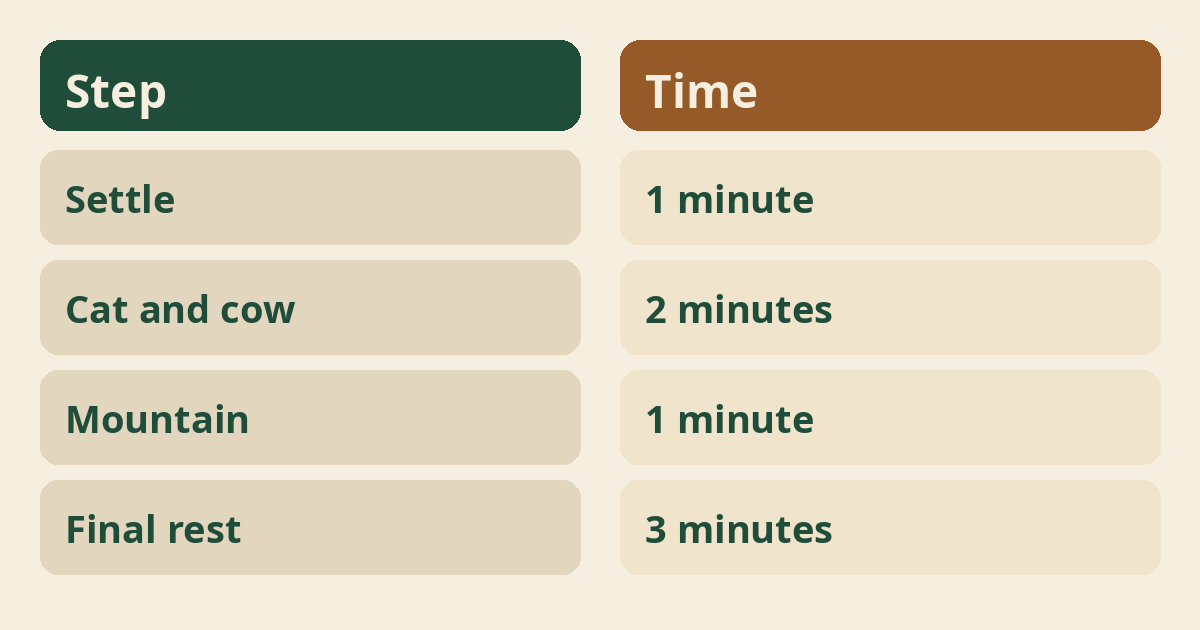
Start with a short, simple routine of about 15 minutes that you can repeat several times in a row. Lay out your mat, set a quiet timer, and read through the steps once before you begin. Move slowly and stop if anything hurts. You do not need to finish every pose or hold it for long. A short session you enjoy beats a long one you dread. The next six sections give you an easy order to follow.
Step 1: Arrive and Settle
The first step is to sit or lie down and let your breathing slow for about a minute. Close your eyes if that feels comfortable, or rest your gaze on the floor. Notice where your body touches the mat and where you feel tight. There is nothing to fix right now. Just watch a few breaths come and go. This small pause tells your body that the session has begun.
Step 2: Warm Up the Spine
Warm up your back with slow cat and cow movements on your hands and knees. Breathe in as you lift your chest and tailbone, and breathe out as you round your back toward the ceiling. Move at the speed of your breath, about five to eight rounds. Our page on cat and cow pose explains the shape in detail. Keep your wrists under your shoulders and your knees under your hips. Stop if your wrists feel sore and try resting on your forearms.
Step 3: Stand Tall
Next, stand with your feet hip width apart and learn the basic upright shape of mountain pose. Press all four corners of each foot into the floor and let your arms hang by your sides. Lengthen the top of your head toward the ceiling without puffing out your chest. This simple stance teaches posture you will use in many other poses. You can read more in our mountain pose walkthrough. Hold for five slow breaths and notice how steady you feel.
Step 4: Open the Hips
Sit on the floor and bring your soles together to ease into a seated hip stretch. Let your knees fall out to the sides only as far as feels comfortable. If your hips are tight, sit on a folded blanket to lift them. Our butterfly pose guide shows ways to make it easier. Breathe slowly and avoid bouncing your knees. Stay for about eight breaths, then straighten your legs and shake them out.
Step 5: Rest in Child’s Pose
Kneel, sit back toward your heels, and fold forward to rest in child’s pose. Your forehead can touch the mat, a block, or your stacked fists. Spread your knees wide if that gives your belly more room. This pose is a pause you can return to at any time during a session. Our guide to child’s pose has options for tight knees or hips. Stay for as long as it feels good, usually five to ten breaths.
Step 6: Finish With Stillness
End every session by lying on your back and resting fully for a few minutes. Let your legs fall open, turn your palms up, and release any effort to hold your body in place. This rest is a normal part of hatha yoga, not a bonus. Your breathing can return to its natural rhythm. If you feel chilly, cover up with a blanket. When you are ready, roll to one side and sit up slowly.
How Does Breathing Work in Hatha Yoga?
In hatha yoga you breathe slowly through your nose and let each breath guide the pace of your movement. Many teachers ask you to breathe into your belly rather than lifting your shoulders. Our short guide to belly breathing is a good place to practice on its own. Try a count of four in and four out. If you feel dizzy, go back to your natural breath and rest. Never strain or hold your breath.
How Long Should a Session Last?
A beginner session can last anywhere from 10 to 30 minutes, and a full studio class usually runs about an hour. Short sessions at home are easy to repeat and less likely to leave you sore. Add a few minutes as your body gets used to the poses. Do not count the minutes too closely. Quality attention matters more than the number on the clock. If you only have five minutes, a few breaths and one stretch still count.
How Often Should You Practice?
Two or three sessions a week is a realistic start for most beginners. That rhythm gives your body time to adjust and gives you space to build a habit. Some people enjoy a few minutes every day, which is fine too if it feels good. Our article on how often to do yoga walks through different schedules. Rest days are part of the plan. Listen to your body and adjust week by week.
What Are the Most Common Beginner Mistakes?
The most common mistakes are rushing, forcing a stretch, and holding the breath. New students also compare themselves to the person on the next mat or to a video. Others skip the final rest because it looks like nothing is happening. Each of these habits is easy to change once you notice it. Slow down, breathe, and keep your attention on your own body. Small corrections add up faster than you might expect.
Should You Push Into Pain?
No, a stretch should feel like mild tension, never sharp, hot, or pinching pain. If something hurts, back out of the pose right away and rest. Soreness a day later is common, but joint pain is a signal to stop and ask for advice. Your edge is the place where you feel the stretch and can still breathe smoothly. Stay a little short of that line. Patience protects your joints and keeps yoga enjoyable.
Who Should Be Careful?
People with injuries, pain, or health conditions should speak with their doctor before starting yoga. The same goes for anyone who is pregnant, recovering from surgery, or managing blood pressure, balance, or joint concerns. Our pages on yoga with a bad back and prenatal versus regular yoga cover two common situations. Tell any teacher about your concerns before class begins. A qualified teacher can suggest safer options. When in doubt, ask first and begin later.
Is Hatha Yoga a Treatment?
No, hatha yoga is not a treatment for any medical condition, and it should never replace care from a doctor. It is a movement and relaxation practice that many people enjoy. It does not diagnose or fix illness. If you are managing a health problem, keep following your doctor’s plan. Yoga may sit alongside that plan as a calm routine if your doctor agrees. Be wary of claims that promise miracle results.
What Benefits Might You Notice?
Many people find that regular hatha yoga leaves them feeling calmer, looser, and more aware of their bodies, though results vary. Some notice easier movement in the shoulders, hips, and back after a few weeks. Others say they sleep more comfortably or feel less rushed during the day. Research on yoga is still developing, and you can read balanced overviews from National Center for Complementary and Integrative Health. Do not expect the same changes as anyone else. Enjoy what you notice and let go of what you do not.
Can It Help With Flexibility?
Many people find their range of motion feels better after several weeks of steady, easy stretching. Flexibility changes slowly and differs a lot from person to person. Holding poses for several breaths gives muscles time to relax. Our guide to flexibility for beginners offers a calm sequence to try. Skip bouncing and never force a stretch. Consistency matters more than depth.
Can It Help With Balance?
Slow standing poses may help you feel steadier on your feet over time, although results vary. Balance is a skill, and like any skill it improves with short, regular practice. Keep a wall or chair within reach so you can catch yourself. Fix your eyes on one still spot on the floor. Our page on yoga for balance lists easy poses to start with. Wobbling is normal and not a failure.
Can It Help With Stress?
Many people find that slow breathing and quiet movement help them feel more relaxed afterward. A hatha session gives your mind one simple job: follow the breath and the pose. That break from planning and worrying can feel like relief. It is not a fix for anxiety or any condition. If stress feels heavy or constant, talk with a doctor or counselor. Our guide on yoga for stress relief shares a short routine you can try on a hard day.
Can You Practice at Work?
Yes, a few seated stretches at your desk can break up a long stretch of sitting. Roll your shoulders back, turn your head slowly side to side, and reach your arms overhead. These small moves take about two minutes. Our ideas for yoga at your desk and neck and shoulder stretches fit into a busy day. Keep your feet flat and your back supported. Stand up and walk around every hour or so too.
How Do You Progress?
You progress by adding time, holding poses a little longer, and learning new shapes one at a time. Do not add everything at once. Stay with a simple routine for a few weeks, then swap in one new pose. Pay attention to how your body responds the next day. Easy poses may feel different as your strength and balance grow. Progress in yoga is quiet and personal.
Which Other Poses Come Next?
After the basics, many students try floor and low squat poses that build comfort in the hips and knees. Garland pose is a deep squat that you can support with a block. Thunderbolt pose is a kneeling seat that helps you sit tall and breathe. Puppy pose stretches the shoulders and spine from a kneeling position. Try our walkthroughs of garland pose, thunderbolt pose, and puppy pose. Add them one at a time.
How Do You Choose a Teacher?
Choose a teacher who explains clearly, offers options, and never pushes you past your comfort. Look for someone with training from a recognized program and ask about their experience with beginners. Watch a class or try a trial session before you commit. A good teacher welcomes questions and encourages you to rest when you need to. Be wary of anyone who dismisses pain or makes health promises. Trust how you feel in the room.
Should You Use Videos or Classes?
Both work, and many beginners mix a weekly class with short home sessions. A live teacher can spot problems and give personal tips. Videos are cheap, flexible, and easy to pause. If you use videos, pick ones made for beginners and keep a slow pace. Avoid videos that rush or skip basic cues. Try each option for a few weeks and notice which keeps you coming back.
What Mindset Helps Most?
A patient, curious mindset helps more than any physical talent. See each session as practice, not a test. You will have stiff days and easy days, and both are fine. Let go of the idea that a pose has to look a certain way. Notice what you feel without judging it. This attitude makes yoga something you look forward to instead of something you have to get right.
How Do You Track Progress?
Track progress by noticing small, real changes rather than chasing a perfect pose. Keep a short note after each session about how you felt before and after. Over a month you may see patterns, such as easier breathing or less stiffness in the morning. Photos and measurements are not required. Celebrate showing up. Small signs of ease are the real sign that the practice is working for you.
What If You Miss a Few Days?
If you miss a few days, simply start again with a short session and skip the guilt. Life gets busy, and a break does not erase what you have learned. Come back with an easy routine and give your body a day or two to warm up. Do not try to make up for lost time with a long session. Set a small goal, like ten minutes, to rebuild the habit. Kind restarts keep yoga a pleasure.
What Are Common Myths About Hatha Yoga?
A few myths keep beginners away: that you must be flexible, that it is only stretching, or that it requires a certain belief. In truth, flexibility grows from practice, not before it. Hatha also includes breathing, balance, and rest, not just stretching. You can practice as a simple exercise and relaxation routine without taking on any belief. Everyone is welcome at their own level. Do not let a myth keep you off the mat.
What Is Your Next Step?
Your next step is to pick one short routine from this guide and try it this week. Choose a time, clear a small space, and set a timer for ten minutes. Move slowly, breathe, and finish with a rest. Afterward, write down one thing you noticed. Repeat the routine two or three times over the next week. That is all a beginner needs to get started.
Where to read next
For a calm, beginner-friendly start, Ranjana Sinha’s Begin Where You Are is written for people who want simple steps. Our guide to starting a home yoga practice adds a gentle routine you can follow at home.
Frequently asked questions
Is hatha yoga the same as regular yoga?
Hatha is a broad, classic style, and many studio classes called simply yoga are built on it.
Do I need to touch my toes to begin?
No, you can start exactly where your body is and use props to bring the floor closer.
What if I feel dizzy during a session?
Return to normal breathing, rest in a comfortable position, and stop if the feeling continues.
Can I learn hatha yoga without going to a studio?
Yes, many people begin at home with short, beginner level routines and add a class later.
Is it normal to feel sore after my first class?
Mild muscle soreness can happen, but sharp or lasting pain is a reason to rest and ask a professional.
The bottom line
Go slowly, breathe, and let hatha yoga grow at the pace that suits you.

