
Gentle yoga stretches can help a stiff neck and shoulders feel looser after long hours of sitting. Try shoulder rolls, gentle ear-to-shoulder tilts, seated cat and cow and slow breathing. Move slowly, stay pain-free and see a doctor for pain or numbness.
This is general education, not medical advice. If you have neck pain, numbness, an injury, disc problems, osteoporosis, dizziness or high blood pressure, check with your doctor first.
Why do the neck and shoulders get tight?
Long hours at a desk or phone, stress and holding the same position for a long time can leave the neck and shoulders feeling stiff. Many people lean the head forward and lift the shoulders without noticing. Over the day, this can feel tiring. Gentle yoga stretches and breaks may help you feel looser and more aware of posture. They are not a treatment for pain. Our guide to the benefits of yoga explains what regular practice can offer.
What is a simple neck and shoulder routine?
A simple routine includes shoulder rolls, gentle neck tilts, seated cat and cow, thread the needle and a few slow breaths. Take your time and move within a comfortable range.
- Sit or stand tall and take three slow breaths.
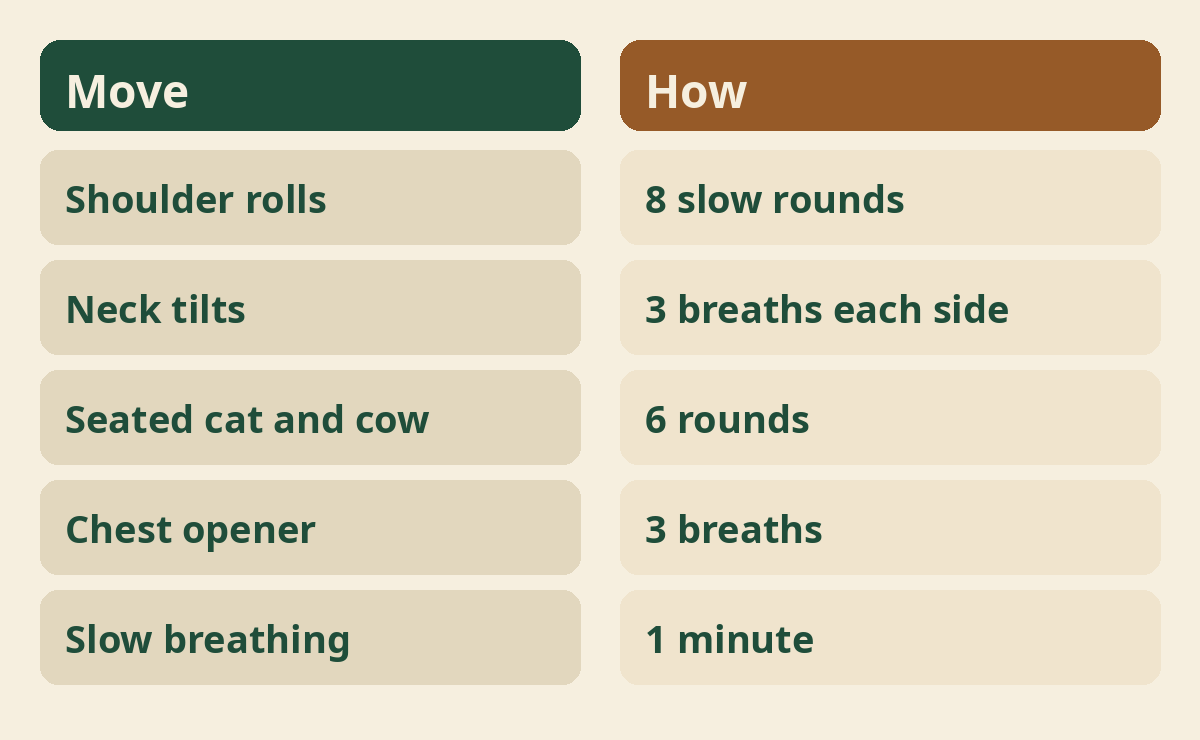
- Roll your shoulders back and down for eight slow rounds.
- Tilt your right ear toward your right shoulder, hold for three breaths and switch.
- Turn your head slowly from side to side, only as far as is comfortable.
- Do seated cat and cow with your hands on your knees for six rounds.
- Interlace your hands behind your back and lift gently, if comfortable.
- Finish with three slow breaths and relax the jaw.
How should it feel?
You should feel a mild stretch and release, not pain, pinching or tingling. Move slowly and never force the neck. Do not drop your head back. If you feel dizziness or tingling, stop. A gentle tug is enough. Keep your breathing smooth.
How long should you hold each stretch?
Hold each for about five slow breaths, or twenty to thirty seconds, and repeat once or twice. Short, gentle holds are safest for the neck. Avoid rapid or jerky movements. Do not hold your breath. If a stretch feels strong, shorten it.
How often should you practise?
A few minutes several times a day, or once or twice a day, is usually enough. Short, regular breaks work better than occasional long sessions. Set a reminder. Our guide to meditating at work has more tips for short breaks. Combine stretching with a short walk.
Which poses help?
Cat and cow, child’s pose, thread the needle, eagle arms and gentle seated twists all work the upper back and shoulders. Our guides to cat and cow and child’s pose explain two useful movements. Choose three or four poses and repeat them. Keep the movements slow.
How can you improve posture?
Set up your workspace so the screen is at eye level, your feet are flat and your shoulders are relaxed, and take breaks every thirty to sixty minutes. Yoga can build awareness of posture, but your environment matters too. Sit tall without forcing your shoulders back. Our guide to chair yoga shows seated movements you can do during the day.
What if you have neck pain?
Speak with a doctor or physiotherapist before stretching, and stop any movement that makes pain worse. Neck pain can have many causes. Gentle movement helps some people, but it is not a replacement for medical advice. Seek advice if you have numbness, weakness, headache with fever, or pain after an injury.
What are common mistakes?
Common mistakes include pulling on the head, stretching too far, holding the breath and shrugging the shoulders. Another is ignoring discomfort. Keep movements small. Do not do neck circles with force. Relax the jaw and tongue. If something pinches, stop.
Can you do it at your desk?
Yes, many of the movements are easy to do in a chair, in a few minutes. Sit near the front of the chair with your feet flat. Keep your eyes open. Do not do anything that makes you dizzy. Our guide to a short break at work suggests ways to add calm to your day.
How can breathing help?
Slow breathing can help you notice and release tension in the shoulders. Breathe into the back of the ribs and let the shoulders soften on each exhale. Our guide to box breathing is an easy option. Avoid forced breathing.
What props help?
A folded towel under the head when lying down, a block under the hand or a cushion behind the back can add comfort. In a lying position, a small rolled towel under the neck can feel good. Do not use anything that pushes your head forward. Choose support that feels natural.
Who should be careful?
People with neck injuries, disc problems, osteoporosis, dizziness, high blood pressure or recent surgery should check with a doctor first. Avoid strong neck bends or inversions without guidance. This guide is general education and not medical advice. Stop if you feel unwell.
Is yoga good for tension headaches?
Gentle movement may help some people feel more relaxed, but it is not a treatment, and headaches should be checked by a doctor if they are frequent or severe. The National Center for Complementary and Integrative Health describes yoga as a mind and body practice. Research varies. Take breaks, drink water and sleep well. See a doctor for persistent headaches.
How does stress relate to shoulder tension?
Stress often leads to raised shoulders and a clenched jaw, and slowing down with breathing and gentle movement can help you notice and release this. Our guide to meditation for stress explains simple practices. Keep your expectations modest. Good sleep and breaks matter as well.
What about a longer evening stretch?
In the evening, add a few slow poses such as child’s pose and a supine twist, and end with rest. Our evening yoga routine offers a calm sequence. Keep the lights low. Do not push into deep stretches.
How can you build a habit?
Pair stretching with an existing habit, such as after you make tea or before you switch off your laptop. Set a gentle reminder. Keep it to two or three minutes. Track your days. Our guide to starting a home yoga practice shows how to build a small routine.
What should you expect over time?
You may feel looser and more aware of your posture, but results vary, and yoga is not a cure for any condition. Be patient and gentle. If you have ongoing pain or numbness, speak with a doctor or physiotherapist. Enjoy the small moments of release.
When should you stop?
Stop if you feel sharp pain, numbness, tingling, dizziness or any symptom that worries you. Rest and, if the symptom continues, speak with a doctor. Never push through pain. Gentle movement should feel comfortable throughout.
What should you wear and where should you practise?
Wear loose clothing that does not pull on the neck and practise in a quiet spot where you can sit or stand comfortably. A chair with a firm seat and a mat are enough. Keep water nearby. Take off a heavy scarf or tight collar. Make sure the room is comfortably warm because cold can make muscles feel tighter. Give yourself a few minutes without interruption so you can move slowly and notice how you feel.
What should you avoid?
Avoid forcing the neck, rolling it in fast full circles, dropping it far back, or pulling on the head with your hands. Also avoid holding stretches that cause tingling. Do not stretch through acute pain. If you have had a neck injury, ask a doctor before starting. If you feel lightheaded when moving your head, stop. Gentle and slow is the rule for the neck.
How can you ease tension through the day?
Take short breaks, change position often, drink water and check whether your shoulders have crept up toward your ears. Set a gentle reminder to drop the shoulders and unclench the jaw. Stand up and walk for a minute every hour if you can. Stretch your wrists and eyes too. Small habits through the day often matter more than one long stretching session.
Where to read next
For a calm, beginner-friendly start, Ranjana Sinha’s Begin Where You Are is written for people who want simple steps. Our guide to starting a home yoga practice adds a gentle routine you can follow at home.
Frequently asked questions
How long should I stretch my neck?
About five slow breaths per stretch, once or twice.
Are neck circles safe?
Slow half-circles are gentler than full circles. Avoid dropping the head back, and stop if dizzy.
Can yoga help a stiff neck from desk work?
Gentle stretches may feel good, but see a doctor if you have pain or numbness.
How often should I do it?
A few minutes once or twice a day, or short breaks through the day.
Can I do these in a chair?
Yes, most are easy to do seated.
The bottom line
Small, gentle stretches through the day can ease a stiff neck and shoulders. Move slowly, breathe and stop if anything hurts.

