
Belly breathing is a slow way of breathing where the belly gently rises as you breathe in and falls as you breathe out. It is simple, needs no equipment and is a good starting point for beginners. This guide shows how to practise it step by step.
This is general education, not medical advice. If you have a lung or heart condition, are pregnant or have any health concern, check with your doctor before trying breathing practices.
What is belly breathing?
Belly breathing, also called diaphragmatic breathing, is a slow way of breathing where the belly gently rises as you breathe in and falls as you breathe out. The diaphragm is a large muscle under the lungs. When it works well, the lower ribs and belly move softly with each breath. Many people breathe high in the chest when busy or tense. Belly breathing is a simple way to practise a slower, fuller pattern. The National Center for Complementary and Integrative Health lists breathing practices among mind and body approaches that people use to relax.
Why do people practise it?
People practise belly breathing to slow down, settle their attention and feel calmer. It takes no equipment and can be done anywhere. A few minutes can be a pleasant pause in a busy day. It is not a treatment for any condition, but many people find it a helpful habit. Our guide to pranayama for beginners explains other breathing practices.
How do you start?
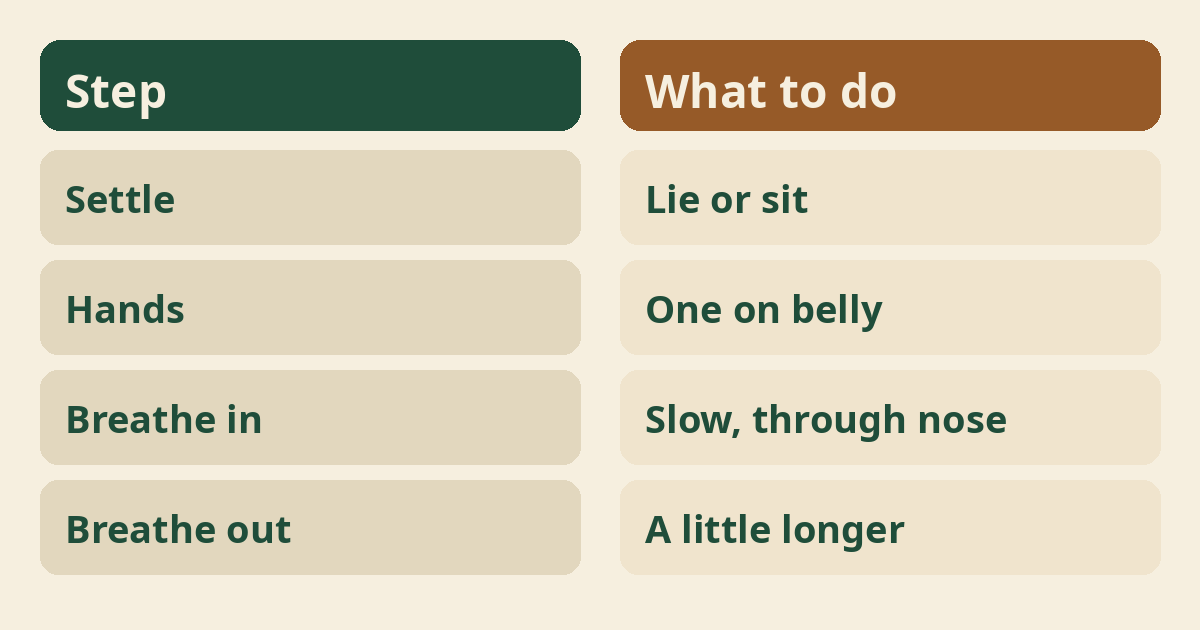
Lie on your back with the knees bent, place one hand on the chest and one on the belly, and breathe slowly through the nose. The aim is for the belly hand to rise more than the chest hand. Do not push the belly out. Let it happen softly. If it feels strange, that is normal at first. Practise for two or three minutes.
What if you cannot feel the belly move?
Try a small cushion or light book on the belly and watch it rise and fall, or breathe into the hands placed low on the ribs. Some people find it hard at first because they are used to chest breathing. Be patient. Move slowly. After a few sessions most people notice the movement more easily.
What does a good breath feel like?
A good breath feels smooth, quiet and unforced, with no gasping or strain. The in breath is gentle and the out breath is slightly longer. You do not need a big breath. If you feel dizzy or tense, go back to normal breathing. Our guide to box breathing shows another smooth pattern.
How do you breathe in through the nose?
Close the lips softly and draw air slowly through the nose, letting the belly expand. Nose breathing helps warm and filter air. If your nose is blocked, breathe through the mouth gently. Do not force it. Keep the shoulders relaxed.
How long should the out breath be?
Let the out breath be a little longer than the in breath, such as in for four and out for six. Count silently if it helps. Do not strain for long counts. If you run out of breath, shorten the count. Comfort matters more than numbers.
Where should you practise?
Choose a quiet spot where you can lie down or sit comfortably, and keep your clothes loose around the waist. A mat, bed or sofa works. A chair is fine too. Our guide to meditation seats shows comfortable ways to sit.
Can you do it sitting?
Yes. Sit tall in a chair with feet on the floor and one hand on the belly. Once you can feel the movement lying down, try it sitting. Keep the spine long without stiffness. Our guide to chair yoga shows seated practice.
Can you do it standing or walking?
Yes. Once you are comfortable, you can breathe this way while standing in a queue or walking slowly. Our guide to walking meditation shows how to link breath with steps. Keep the breath gentle and natural.
How often should you practise?
Practise for two to five minutes once or twice a day, and add a minute as it feels easy. Short regular sessions work better than long ones. Try a session when you wake up or before bed. Our guide to yoga for better sleep shows an evening routine.
How does it fit into yoga?
Belly breathing is often the base for yoga breathing and many classes begin with it. Once the belly breath feels natural, you can add other practices. Our guide to hatha yoga shows how breath fits into a class.
Is it good for stress?
Many people find slow breathing helps them feel calmer, but it is not a treatment for stress or anxiety. Our guide to yoga for stress relief and meditation for stress give more ideas. If stress or worry feels heavy or lasts, speak to a doctor or qualified professional.
Can it help you sleep?
Slow breathing at bedtime can be a calm part of a wind down routine, though results vary. Try five minutes lying in bed with a hand on the belly. If your mind wanders, return to the breath. Our guide to yoga nidra explains a longer rest practice.
Can it help at work?
A few slow breaths between tasks can be a quick reset at your desk. Our guide to how to meditate at work and yoga at your desk show easy breaks. Keep it quiet and simple.
Does it increase lung capacity?
Slow breathing is a healthy habit, but claims about big changes in lung capacity need careful reading. Our guide on whether breathing exercises can increase lung capacity explains what is and is not known. Speak to a doctor about lung concerns.
What mistakes do beginners make?
Pushing the belly out too hard, taking breaths that are too big, holding the breath and trying too hard. Keep it gentle. The belly should move softly. If you notice tension in the neck or jaw, relax and start again. There is no perfect breath.
What if you feel dizzy?
Stop, breathe normally and rest until the feeling passes. Dizziness can happen if you breathe too deeply or quickly. Shorten the breath. If it happens often, speak to a doctor.
What if your mind wanders?
Notice it kindly and return your attention to the belly rising and falling. Wandering is normal and is part of the practice. Each time you return, you are training attention. Do not scold yourself.
Who should be careful?
People with lung or heart conditions, high blood pressure, pregnancy or panic attacks should speak to a doctor before trying breathing practices. Gentle belly breathing is usually mild, but personal advice matters. Stop if it feels uncomfortable. This guide is general education, not medical advice.
Can children practise?
Yes, in a playful way, such as breathing with a soft toy on the belly. Keep sessions short and fun. Our guide to yoga for kids has more ideas. Never force a child to breathe in a set way.
How can you build the habit?
Link it to something you already do, such as brushing your teeth or sitting down with a drink. Set a reminder. Keep a note of how you feel. Small habits grow slowly. Missing a day is fine.
A simple three minute practice
Spend one minute settling, two minutes breathing in for four and out for six, and finish with a breath of normal rhythm. Lie down or sit. Place a hand on the belly. Notice how you feel at the end. Repeat daily for a week.
When should you see a doctor?
See a doctor before starting if you have a lung or heart condition, pregnancy, panic attacks or any health concern. Stop if you feel pain, dizziness or breathlessness. This guide is general education, not medical advice.
How does posture affect your breath?
Sitting or standing tall gives the diaphragm room to move, while slumping makes the breath shallow. Check your posture before you begin. Lift the chest slightly without stiffening, and let the shoulders drop. Our guide to yoga for posture explains simple habits. Small changes make breathing feel easier.
What about breathing in everyday moments?
Notice your breath while waiting, walking or washing up, and let it soften without trying to change it much. This is a gentle way to bring awareness into the day. Over time you may catch yourself holding the breath and learn to release it. It needs no extra time and no special place.
How do you track how you feel?
Write one line after each session about how your body and mind feel, with no need to judge it. Notes such as calmer or restless are enough. After a couple of weeks you may see a pattern. Do not chase a perfect result. The practice is about paying attention, not performing.
Where to read next
For a calm, beginner-friendly start, Ranjana Sinha’s Begin Where You Are is written for people who want simple steps. Our guide to starting a home yoga practice adds a gentle routine you can follow at home.
Frequently asked questions
What is belly breathing?
A slow breath where the belly gently rises as you breathe in.
How long should I practise?
Two to five minutes, once or twice a day.
Is belly breathing good for beginners?
Yes. It is simple and gentle.
Should I breathe through the nose or mouth?
Nose if you can, mouth if your nose is blocked.
Can belly breathing cure anxiety?
No. It may help you feel calmer, but it is not a treatment.
The bottom line
Belly breathing is a small, kind habit. Keep it gentle, practise a little each day and speak to a doctor if you have concerns.

