
Gentle, playful yoga can be a fun way for children to move, breathe and rest. Keep sessions to five to fifteen minutes, use animal shapes and stories, never force poses and let the child lead. Ask a doctor if you have any health concerns.
This is general education, not medical advice. If your child has a health condition, an injury or you have concerns about their movement or mood, check with a doctor first.
Is yoga good for children?
Gentle, playful yoga can be a fun way for children to move, breathe and pay attention, as long as it is short, safe and never forced. Children learn through play. Yoga for kids often uses animal shapes, stories and simple breathing games. The National Center for Complementary and Integrative Health describes yoga as a mind and body practice and notes it is generally low impact. Our guide to the benefits of yoga explains what regular practice may offer adults and children alike.
What age can children start?
Many children enjoy simple stretching and breathing games from the preschool years, and older children can join gentle classes. Young children cannot hold poses for long, so keep sessions to a few minutes. Older children can follow instructions for longer. Always match the activity to the child, and let them stop whenever they like.
What are the aims of kids yoga?
The aims are fun, movement, body awareness and a moment of calm, not perfect poses. Do not turn it into a lesson or a test. Praise effort. Let the child lead where possible. A relaxed, cheerful tone matters more than correct shapes.
How long should a session be?
Five to fifteen minutes is plenty for most children, depending on age and mood. Little ones may manage only a few minutes. End on a happy note, not when interest has gone. Our guide to how often to do yoga gives general ideas for adults that you can scale down.
What are good animal poses?
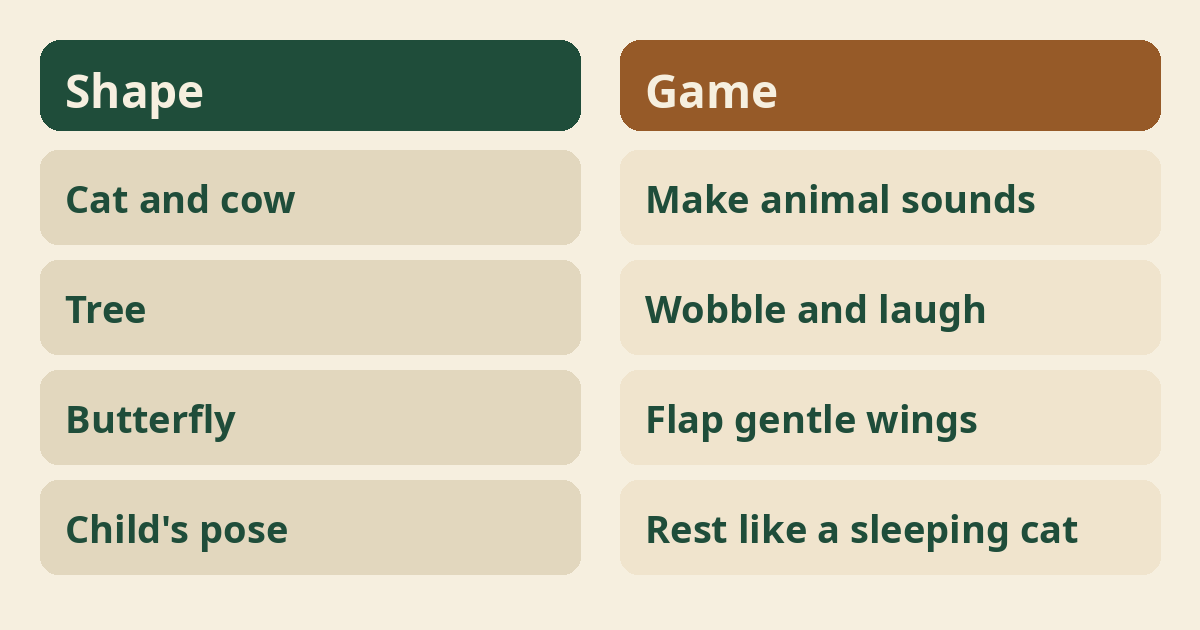
Cat, cow, dog, tree, butterfly and frog are classic shapes children enjoy copying. Our guide to cat and cow works well as a game. Let children make the animal sounds. Keep the shapes easy and playful, and avoid pushing into stretches.
How can you teach balance?
Simple balance games, such as standing like a tree on one foot near a wall, help children build steadiness and focus. Our guide to tree pose shows a gentle version. Let them hold a wall or your hand. Let them wobble and laugh. Wobbling is part of learning.
How do breathing games work?
Simple games such as smelling a flower and blowing out a candle teach slow breathing in a playful way. Ask the child to breathe in through the nose as if smelling a flower and out slowly as if blowing a candle. Our guide to box breathing is for older children and adults. Keep it short and never force a breath hold.
What about stories and themes?
Stories turn poses into an adventure, which keeps children engaged and imaginative. You might pretend to walk through a forest, climb a mountain and rest by a river. Each part of the story can be a pose. Let the child add ideas. This makes the time fun for both of you.
How can you include rest?
End with a short rest, such as lying like a starfish or a sleeping cat, to help children settle. Our guide to savasana explains the adult version. For children, make it short and playful. Dim the lights or play soft music if it helps.
What about screen time?
A short yoga break can be a pleasant change from screens, and children may enjoy following a video or a parent. Our guide to reducing screen time offers ideas for adults and families. Sit and play together when you can.
How can parents join in?
Doing yoga together is a lovely way to connect, so join in and let the child lead sometimes. Children copy adults. A calm parent who laughs at wobbles makes it easier. Our guide to starting a home yoga practice shows how to set up a space.
What props can help?
A soft mat, a few cushions and a scarf for games are all you need. A bright mat makes the space feel special. Avoid slippery floors. Keep the area clear of toys and sharp objects. Our yoga mat guide explains how to choose a mat.
What should children wear?
Comfortable clothes that stretch easily, and bare feet on a non-slip surface. Avoid tight clothes and slippery socks. Let the child choose a favourite outfit if that helps them join in.
How can yoga help focus at school age?
Short breathing and stillness games can help children practise paying attention, though results vary. Try a one minute quiet game before homework. Ask the child to notice sounds in the room. Keep it light, and do not use it as punishment or a way to control behaviour.
What about children who feel anxious?
Gentle breathing and movement may help some children feel calmer, but ongoing worry needs a doctor or counsellor. Do not use yoga as a replacement for professional help. If a child seems very anxious or sad for a long time, speak with a doctor or school counsellor. This guide is general education, not medical advice.
What about children with special needs?
Many children enjoy adapted yoga, but ask a doctor or therapist about what is suitable. Use clear, simple steps and visual cues. Keep sessions short and predictable. Follow the child’s cues.
How can you keep it fun?
Use music, stories, props, and let children choose poses and take turns being the teacher. Change the activity before they get bored. Laugh often. Keep the mood light. Fun matters more than form.
What should you avoid?
Avoid forcing poses, deep stretches, long holds, headstands and competition. Children’s joints and muscles are still growing. Keep everything gentle. Never push a child into a pose or compare them with others.
How do you keep children safe?
Watch closely, keep the space clear and stop if the child feels pain or dizziness. Teach them to move slowly and stop when something does not feel right. A trained kids yoga teacher can also be a good guide.
How often can children practise?
A few short sessions a week, or a little each day if they enjoy it, is plenty. Let the child decide. Do not make it a chore. A gentle habit that feels like play will last.
How do you pick a class?
Look for a teacher who is experienced with children, keeps groups small and makes sessions playful. Ask to watch a class first. A good teacher is patient and flexible. Trust your child’s response.
What about older children and teens?
Teens may enjoy longer, more active sessions, and a calm routine can help them wind down. Give them choice. Let them pick poses and music. Our guide to yoga for flexibility is suitable for teens when taught with care. Do not force it.
What mistakes should adults avoid?
Pushing too hard, correcting too much, expecting stillness and turning it into a performance are common mistakes. Relax. Expect giggles. Celebrate any effort. A few minutes of play is a success.
How can you tell it is helping?
Look for a child who enjoys the time, breathes more slowly and feels proud of trying. Small signs such as a smile, a calmer breath or asking to play again are good signs. Keep the focus on joy.
When should you see a doctor?
Speak with a doctor if your child has a health condition, an injury, or you have any concerns about their movement or mood. Stop if the child feels pain, dizziness or distress. This guide is general education, not medical advice.
What does a five minute kids routine look like?
Start with three smelling-a-flower breaths, move through cat and cow, try tree pose near a wall, flap butterfly wings and finish with a sleeping cat rest. Keep the pace easy and let the child choose the order. If they lose interest after two shapes, stop and try again another day. The goal is a happy memory of moving together, not a full routine. Praise their effort, not their shapes, and finish with a smile.
Where to read next
For a calm, beginner-friendly start, Ranjana Sinha’s Begin Where You Are is written for people who want simple steps. Our guide to starting a home yoga practice adds a gentle routine you can follow at home.
Frequently asked questions
At what age can kids start yoga?
Many children enjoy simple stretches and breathing games from preschool age.
How long should a kids yoga session be?
Five to fifteen minutes, depending on age and mood.
Is yoga safe for children?
Gentle, playful yoga is generally safe when supervised and never forced.
What are good beginner poses for kids?
Cat, cow, tree, butterfly and child’s pose.
Can yoga help a child who is anxious?
It may help some children feel calmer, but ongoing worry needs professional advice.
The bottom line
Keep it short, playful and gentle. Joy matters more than perfect poses, and a few minutes of play is a good start.

