
Short, gentle yoga breaks can help desk workers release tension and move more. Take a minute every half hour to stretch your neck, shoulders and hips and take slow breaths. Keep stretches mild and see a doctor for pain that lasts.
This is general education, not medical advice. If you have pain, numbness, tingling or any health concern, check with your doctor before starting a new routine.
Can yoga help desk workers?
Short, gentle yoga breaks can help desk workers move more, release tension and feel more comfortable during a long day, though they do not replace regular movement or medical care. Sitting for hours can leave the neck, shoulders, back and hips feeling stiff. Brief stretches and slow breaths give the body a change. The National Center for Complementary and Integrative Health describes yoga as a mind and body practice. Our guide to yoga for posture adds more ideas for sitting and standing well.
What problems come with sitting all day?
Long sitting often brings stiff hips, tight shoulders, a sore neck, tired eyes and a wandering mind. These are common and usually mild, but they can add up. Small, regular breaks help more than one big stretch at the end of the day. If you have pain that lasts, speak with a doctor.
How often should you take breaks?
Aim to stand, stretch and breathe for about a minute every half hour, if your work allows. Set a gentle timer. Even a thirty second pause helps. Our guide to reducing screen time offers ideas for taking real breaks from screens.
What is a good seated neck stretch?
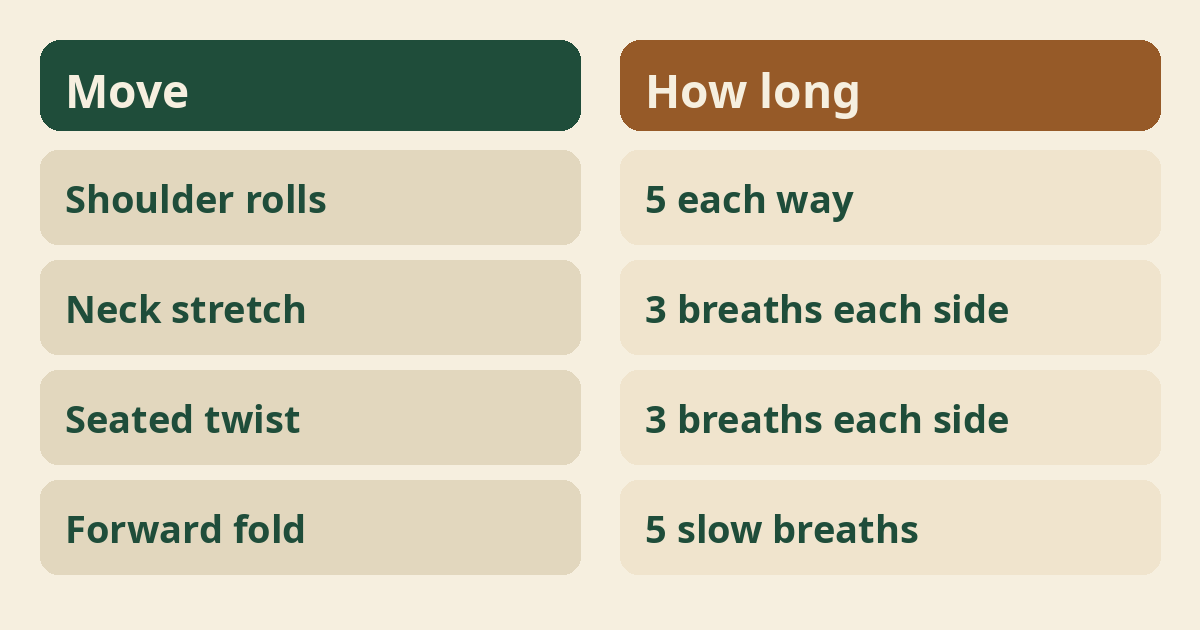
Sit tall, drop one ear slowly towards the shoulder, breathe for a few breaths and change sides. Keep the opposite shoulder relaxed. Do not pull on the head. Our guide to neck and shoulder stretches shows more gentle options.
What is a seated twist?
A gentle seated twist turns the upper body slowly to one side while the hips stay facing forward. Hold the chair back or your knee lightly. Lengthen the spine as you breathe in and turn a little as you breathe out. Go only as far as comfortable and change sides. Keep the neck easy.
What about shoulder rolls?
Slow shoulder rolls loosen the upper back and neck and are easy to do anywhere. Roll the shoulders up, back and down in slow circles, five times each way. Breathe smoothly. Keep your arms relaxed. Stop if you feel any pinching.
What about a seated forward fold?
From the chair, let the chest rest gently over the thighs, with the arms hanging, and breathe slowly. This eases the lower back and rests the neck. Come up slowly to avoid dizziness. Keep the knees comfortable and the feet flat. If you have back or blood pressure concerns, check with a doctor first.
What helps the hips?
A seated figure four, with one ankle crossed over the opposite knee, stretches the outer hip. Our guide to yoga for hips gives more gentle ideas. Keep the back long. Never force the knee down. Change sides.
What about standing breaks?
Stand up, reach your arms overhead, take a slow breath and then fold gently forward with soft knees. Our guide to sun salutation shows how these movements connect. Keep movements small if you are in an office. Stand near your chair for support.
How can you rest your eyes?
Look away from the screen at something far away every so often, and blink slowly. Cup your warm palms gently over closed eyes for a moment. Do not press. A short pause lets the eyes rest. If eye strain continues, speak with an eye professional.
What about wrists and hands?
Gently open and close the hands, and stretch each wrist with the palm facing forward. Typing and mouse use can tire the hands. Move slowly and stop if you feel tingling or pain. If pain or numbness lasts, see a doctor.
How does breathing help during work?
A few slow breaths can help you reset when you feel rushed or tense. Our guide to box breathing and meditating at work give simple options. Breathe in through the nose, out slowly. Never strain.
Is there a short desk routine?
Try shoulder rolls, a neck stretch, a seated twist, a seated forward fold and three slow breaths, about five minutes in all. Do it mid morning and mid afternoon if you can. Move slowly and stay within comfort. A short routine you repeat is better than a long one you skip.
How can you set up your desk?
Keep your screen at eye level, feet flat on the floor and elbows close to your sides. Sit with your hips back in the chair. A small cushion may support the lower back. Change position often. The best posture is the next one.
What about standing desks?
A standing desk lets you change position, but standing all day is also tiring, so alternate. Move between sitting, standing and walking. Wear comfortable shoes. Take breaks whichever way you work.
What about walking breaks?
A short walk, even around the room, is one of the best breaks you can take. Our guide to walking meditation shows how to pay attention to your steps. Take the stairs and walk during calls if you can.
What about stress at work?
A minute of slow breathing and a few stretches can help you reset, though ongoing stress needs support. Our guide to yoga for stress relief offers gentle ideas. If stress is affecting your health, speak with a doctor.
How can you build the habit?
Link a break to something you already do, such as finishing an email or boiling the kettle. Put a note on your screen. Invite a colleague to join. Be kind when you forget and simply begin again.
What should you wear and where can you stretch?
Wear comfortable clothes and use a quiet corner, a meeting room or your seat. You do not need a mat. Keep the movements small and discreet. Ask for a quiet space if you want to do a longer break.
What about back pain?
If you have back pain, see a doctor or physiotherapist and choose gentle movements. Our guide to yoga with a bad back explains safe habits. Stop if you feel sharp pain.
What mistakes should you avoid?
Stretching too hard, holding the breath, skipping breaks and sitting in one position for hours are common mistakes. Keep stretches mild. Change position often. A calm, small habit is better than a big plan.
How long before you notice change?
Many people feel a little looser within a few days of regular breaks, though results vary. Be patient. Notice how you feel at the end of the day. Keep a short note for a week.
What about evening recovery?
A gentle evening routine can help you wind down after a long day at a desk. Our evening yoga routine offers an easy sequence. Choose slow movements and finish with rest.
When should you see a doctor?
See a doctor if you have pain, numbness, tingling, headaches that persist or any health concern. Stop if you feel dizziness, chest pain or sharp pain. This guide is general education, not medical advice.
How can you make your breaks feel restful?
Close your eyes for a few breaths, relax the jaw, let the shoulders drop and notice how your body feels in the chair. A good break is not another task. Put the phone down, look away from the screen and let your attention settle in the body. Even thirty seconds of quiet can feel like a reset. Over a day, these tiny pauses add up and may help you finish work feeling less drained.
What if you work from home?
Working from home makes it easier to move, so keep a mat nearby and use short breaks for a full stretch or a walk. Without a commute, you may move less. Plan a few breaks to step outside or walk through the house. A short flow between tasks can mark the change from one thing to the next. Keep your space tidy so the mat is easy to use.
What about long meetings and calls?
Sit tall, keep both feet on the floor, breathe slowly and shift position now and then during long calls. If the call is audio only, stand up or walk. Roll your ankles under the desk. Keep your jaw loose. Small movements can be done without anyone noticing, and they help you stay alert and comfortable.
Where to read next
For a calm, beginner-friendly start, Ranjana Sinha’s Begin Where You Are is written for people who want simple steps. Our guide to starting a home yoga practice adds a gentle routine you can follow at home.
Frequently asked questions
What are the best yoga stretches at a desk?
Neck stretches, shoulder rolls, a seated twist and a seated forward fold.
How often should I stretch at work?
About a minute every half hour, if your work allows.
Can yoga fix back pain from sitting?
It may help you feel more comfortable, but see a doctor for pain that lasts.
Do I need a mat at work?
No. Most desk stretches can be done in a chair or standing.
How long should a desk break be?
Even thirty seconds to two minutes helps.
The bottom line
Small, regular breaks matter more than a big stretch at the end of the day. Move gently, breathe easily and ask for help if pain lasts.

