
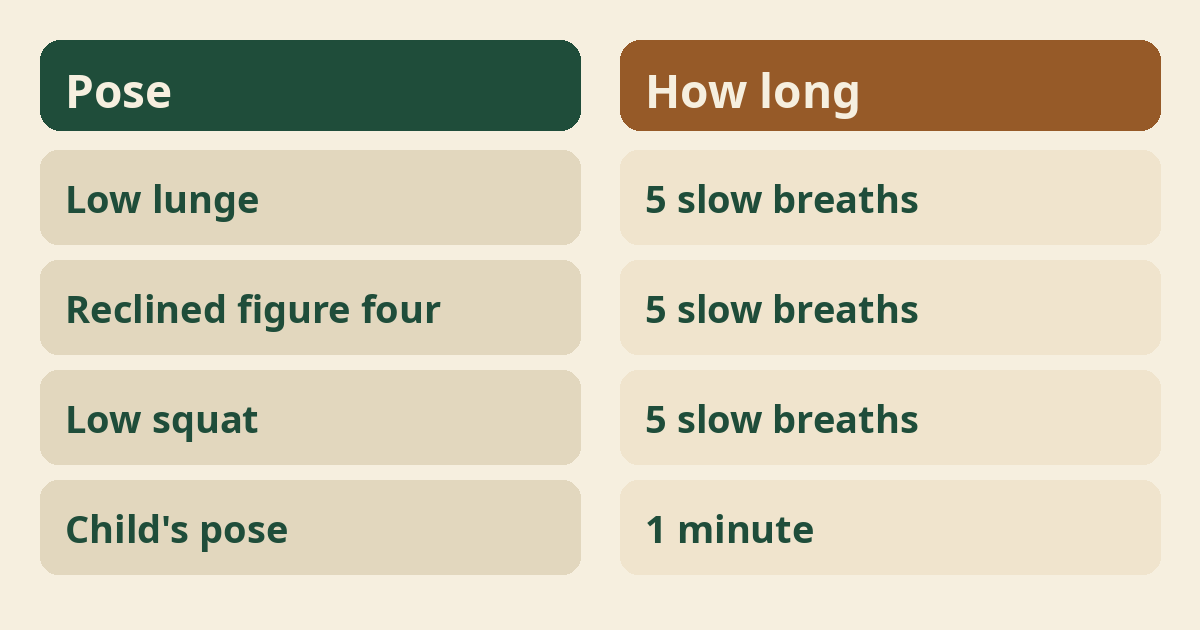
Yoga for hips uses gentle stretches such as a low lunge, a reclined figure four and a low squat, held for about five slow breaths. Go slowly, use props, never force a stretch and stop if you feel sharp pain. Two or three short sessions a week are a good start.
This is general education, not medical advice. If you have hip or knee pain, a past injury, a replacement or are pregnant, check with your doctor before starting yoga.
Why do hips get tight?
Hips often feel tight because many of us sit for long hours, which keeps the hip muscles short and the joints moving in a small range. Long sitting, little walking and stress can all play a part. Gentle, regular movement may help you feel looser over time. Our guide to yoga for flexibility explains how to stretch with care.
What does yoga for hips involve?
Yoga for hips uses gentle stretches and slow movements that ask the hip joints and the muscles around them to move through their natural range. Poses include lunges, seated twists, low squats and reclined stretches. Breathing slowly helps the muscles soften. The National Center for Complementary and Integrative Health describes yoga as a mind and body practice, and most beginner programmes are gentle.
Where should a beginner start?
Start with a few easy poses held for a few breaths each, on a mat, in comfortable clothes, after a short warm up. Begin with ten minutes. Walk around the room first or do gentle cat and cow. Our guide to cat and cow is a good warm up. Stay within comfort.
What is a gentle low lunge?
In a low lunge you step one foot forward, lower the back knee to the mat and let the front hip move forward a little. Place a folded blanket under your back knee. Keep your front knee over your ankle. Breathe for five slow breaths and change sides. Stop if you feel pain in the knee.
What is a reclined figure four?
Lying on your back, you cross one ankle over the opposite knee and draw the legs gently towards you. This stretches the outer hip. Keep your head and shoulders on the floor. Hold for five slow breaths and change sides. If it is too much, keep the foot on the floor and just cross the ankle.
What about pigeon pose?
Pigeon is a deeper hip opener, so beginners should use props or choose an easier version first. Our guide to pigeon pose explains safe options, including a reclined version. Go slowly and never force the knee.
What is a low squat or garland pose?
In a low squat you bend your knees and sit close to the floor with your feet apart, which opens the hips and groin. Rest your heels on a folded blanket if they lift. Place your hands together at the chest. Hold for a few breaths. If your knees complain, sit on a block or cushion.
How does child’s pose help?
Child’s pose is a restful position that lets the hips sink back towards the heels while the back relaxes. Our guide to child’s pose shows how to use a pillow for comfort. It is a good way to rest between stronger poses.
What about seated stretches?
A simple seated position with legs crossed and a tall spine can stretch the hips, and sitting on a cushion makes it easier. If your knees rise above your hips, sit higher. Switch the cross of your legs halfway through. Sit tall and breathe slowly.
How long should you hold each pose?
Hold each pose for about five slow breaths, or about thirty seconds, and stop sooner if it feels uncomfortable. Do not bounce. Long, steady holds that feel mild are better than short, intense ones. Come out slowly. Relax between poses.
How often can you practise?
Two or three short sessions a week are a good start, and you can add more as your body feels comfortable. Our guide to how often to do yoga gives more ideas. Take rest days and listen to how your hips feel the next day.
What is a simple ten minute hip routine?
Try cat and cow, low lunge on each side, reclined figure four on each side, low squat and child’s pose to finish. Move slowly, spend about a minute on each, and finish with a short rest. Our guide to savasana shows how to rest at the end.
How can you protect your knees?
Keep your knees pointing in the same direction as your toes, use props and avoid forcing the legs into a position. If you feel pain at the knee, back out. Pain at the knee often means the hip is not ready to move that far. Use a blanket or block and go gently.
What props can help?
A folded blanket, a cushion, a block and a strap can make hip poses easier and safer. Sit on a cushion, place a block under your hand or hold a strap around your foot. Props let you stay comfortable and relax into the stretch.
How does breathing help?
Slow breathing gives your mind something to focus on and may help muscles feel less tense. Breathe in through the nose and let the breath out slowly. Our guide to box breathing is one simple pattern. Relax your jaw and shoulders.
How does sitting at a desk affect the hips?
Long sitting can leave hips feeling stiff, so breaks to stand and walk help as well as stretching. Stand up every half hour if you can. Do a gentle lunge at a desk. Our guide to neck and shoulder stretches can also be done at a desk.
What about hips and back comfort?
Gentle hip movement may help some people feel more comfortable in the lower back, but pain needs a doctor’s advice. Our guide to yoga with a bad back explains safe habits. Do not push through pain. Stop if you feel sharp pain.
Who should be careful?
People with hip pain, a past hip injury, hip replacement, pregnancy or joint conditions should check with a doctor first. This guide is general education and not medical advice. Tell your teacher about any condition. Our guide to prenatal yoga explains yoga in pregnancy.
What mistakes should you avoid?
Forcing the stretch, bouncing, holding the breath and comparing yourself with others are the common mistakes. Move slowly. Keep the breath smooth. A mild stretch is enough. Your range will differ from your neighbour’s, and that is fine.
How long before you notice change?
Many people notice small changes in comfort within a few weeks of regular, gentle practice, though results vary. Be patient. Notice how you feel getting out of a chair or walking. Keep a short note after each session. Progress can be subtle.
Is it okay to feel a stretch?
A mild, steady stretch is normal, but sharp, pinching or burning pain is a sign to stop. The right feeling is mild and manageable, and it fades when you come out. If something hurts, ease off, change the pose or rest.
Can you do hip stretches before sleep?
Gentle hip stretches in the evening can be a calm way to end the day, but keep them soft. Our evening yoga routine shows an easy sequence. Choose slow, restful poses rather than strong ones.
How do you keep it enjoyable?
Choose a few poses you like, play calm music if it helps and keep sessions short. If you dread practice, make it smaller. Even five minutes counts. Enjoyment helps you keep going, which matters more than depth.
How can you track progress safely?
Notice how easily you sit, stand and walk, rather than how deep you can stretch. Practical comfort is a better sign than a photo of a deep pose. If you wish, note the date and how you felt after each session.
What about warming up first?
A short warm up, such as a gentle walk or a minute of cat and cow, makes hip stretches feel easier and more comfortable. Cold muscles resist stretching. Walk around the room, march on the spot or roll your shoulders and hips in slow circles. Then begin with the mildest pose. This small step helps most beginners feel safer and less stiff, and it only takes a few minutes.
How should you finish a hip session?
End with a minute of lying still on your back with your knees bent or legs straight, breathing slowly. Notice how your hips feel compared with when you began. Let the breath return to normal and rest without trying to change anything. A calm finish helps your body settle and makes the session feel complete.
Where to read next
For a calm, beginner-friendly start, Ranjana Sinha’s Begin Where You Are is written for people who want simple steps. Our guide to starting a home yoga practice adds a gentle routine you can follow at home.
Frequently asked questions
What is the best yoga pose for tight hips?
A gentle low lunge or reclined figure four are good starters, with props if needed.
How long should I hold hip stretches?
About five slow breaths, or around thirty seconds, in a mild stretch.
Is pigeon pose safe for beginners?
Use an easier or reclined version first and never force the knee.
Can yoga help with sitting all day?
Gentle stretching and regular breaks may help you feel looser, though results vary.
When should I see a doctor?
If you have hip pain, injury, replacement or any health condition, ask first.
The bottom line
Gentle, regular hip stretches with slow breathing can help you feel looser. Use props, listen to your body and stop if it hurts.

