
Yoga can help you notice how you sit and stand, and gentle strengthening and stretching may make an upright, relaxed posture feel easier. Start with mountain pose, cat and cow and short desk breaks. Change is gradual, so be patient and see a doctor for pain.
This is general education, not medical advice. If you have pain, numbness, a curved spine or a recent injury, check with your doctor before starting yoga.
Can yoga help your posture?
Yoga may help you become more aware of how you sit and stand, and gentle strengthening and stretching can support easier, more upright posture. Posture is a habit built over years. Yoga does not give a perfect shape overnight, but it teaches you to notice slouching and to adjust. The National Center for Complementary and Integrative Health describes yoga as a mind and body practice. Our guide to the benefits of yoga explains what regular practice may offer.
What is good posture?
Good posture is a relaxed, balanced alignment where the head sits over the shoulders, the shoulders over the hips and the weight is spread evenly through both feet. It should feel easy, not stiff. Standing tall like a soft thread is lifting the crown of the head is a good image. There is no single perfect posture, so move often and change positions.
Why does posture slip?
Long hours of sitting, looking at screens, carrying bags and tiredness all pull the body into a rounded position. Weak muscles in the upper back and tight chest and hip muscles may add to it. Our guide to reducing screen time can help you take breaks from screens.
Where should you begin?
Begin by noticing how you sit and stand, then add a few gentle poses each day. Set a reminder to check your posture once an hour. Roll your shoulders back and down. Take a deep breath. A small, regular check is more helpful than a strict rule.
What is mountain pose?
Mountain pose is a simple standing position that teaches you to feel your feet, level your hips and lengthen your spine. Stand with feet hip width apart, weight even, knees soft and arms by your sides. Lengthen the back of the neck and relax the shoulders. Breathe slowly for five breaths.
How does cat and cow help?
Cat and cow gently moves the whole spine, which can feel good after sitting for a long time. Our guide to cat and cow shows how to do it on hands and knees. Move with the breath and keep the movement small and smooth.
What about child’s pose?
Child’s pose gives the back a rest and lets the spine lengthen without effort. Our guide to child’s pose shows how to use a pillow. Stay for a few slow breaths and let the back relax.
What helps the neck and shoulders?
Gentle neck and shoulder stretches release tension that often pulls the head forward. Our guide to neck and shoulder stretches can be done at a desk. Move slowly and never force the neck.
What about the chest?
Opening the chest gently can help counter the rounded shoulders that come from desk work. Clasp your hands behind your back and lift slightly, or lie over a rolled towel placed along the spine. Keep the movement mild. Stop if you feel any pinching.
How do you strengthen the upper back?
Gentle poses such as a small cobra or a supported bridge build the muscles that help you stay upright. Keep the lift low and the neck long. Hold for a few breaths and rest. Strength in the upper back works best with regular, gentle practice.
Why do hips matter for posture?
Tight hips can tilt the pelvis and affect the lower back, so hip stretches may support easier standing and sitting. Our guide to yoga for hips explains safe, gentle stretches. Move slowly and use props.
How can you sit better at a desk?
Sit with your feet on the floor, hips back in the chair, screen at eye level and elbows near your sides. Take breaks to stand and stretch every half hour. A small cushion behind the lower back may help. Change position often, because the best posture is the next one.
How can you stand better?
Spread your weight across both feet, soften your knees and let your arms hang loose. Avoid locking the knees or tilting the pelvis. Check yourself while you queue or wait. Take a slow breath and lengthen the spine.
What about walking?
Walk with your head up, shoulders relaxed and arms swinging, and look ahead, not down. Walking is a simple way to improve how you feel. Our guide to walking meditation shows how to pay attention to your steps.
What about carrying bags?
Switch sides often and keep the load light so one shoulder does not carry everything. Use a bag with two straps if you can. Check your posture after carrying a heavy load and roll your shoulders back.
How does breathing help?
Slow breathing helps you notice tension and lets the ribs and belly move freely. Our guide to pranayama explains gentle breathing practice. Sit tall and breathe low into the belly.
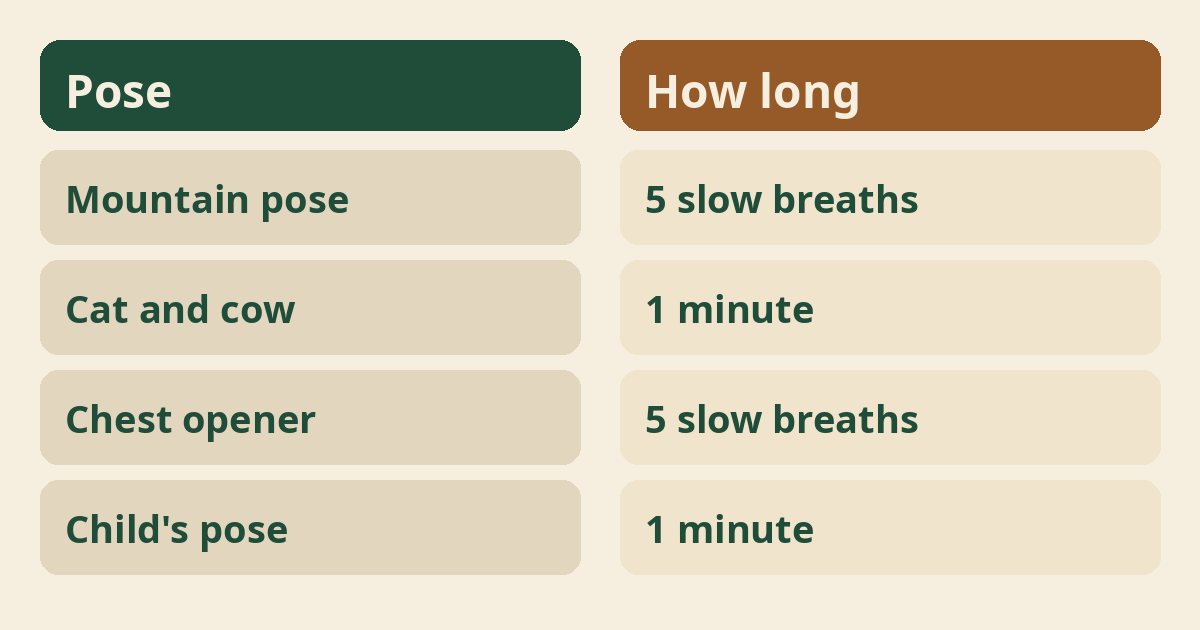
What is a simple five minute posture routine?
Try mountain pose, cat and cow, a gentle chest opener and child’s pose, spending about a minute on each. Do it after a long period of sitting. Move slowly and finish with three slow breaths. Our morning yoga routine has a similar flow.
How often should you practise?
A few minutes each day or three short sessions a week is enough to start. Our guide to how often to do yoga gives a simple plan. Small, regular steps build awareness.
What about back pain?
If you have back pain, speak with a doctor or physiotherapist before starting, and choose gentle movements. Our guide to yoga with a bad back explains safe habits. Stop if you feel pain.
What about children and teens?
Young people can enjoy simple movement breaks and gentle stretches, with encouragement to play and move often. Keep it fun and short. A teacher can guide posture without pressure. Avoid telling children they are doing it wrong.
What about older adults?
Older adults can practise gently with a chair or wall, focusing on balance and comfort. Our guide to chair yoga is a good start. Check with a doctor if you have bone or joint concerns.
What mistakes should you avoid?
Forcing a stiff, military posture, pulling the shoulders too far back and holding your breath are common mistakes. Stay soft and easy. Posture is about comfort and balance, not rigidity. Check in gently.
How long before you notice change?
Many people notice greater awareness within a few weeks, but changes in posture itself are gradual and vary. Be patient. Notice how you sit through the day. A small shift each day adds up.
When should you see a doctor?
See a doctor if you have pain, numbness, a curved spine, a recent injury or any health concern. This guide is general education, not medical advice. Stop if you feel sharp pain or tingling. A professional can advise on conditions such as scoliosis.
Why does awareness come first?
You cannot change a habit you do not notice, so the first step is simply watching how you sit and stand through the day. Pause at different times and ask yourself where your head, shoulders and weight are. Most people find they slump when tired or focused on a screen. Noticing without blaming yourself is a calm, useful start, and it is the heart of yoga practice.
How can small breaks help?
A one minute break every half hour, to stand, breathe and roll the shoulders, helps more than one long stretch at the end of the day. Set a gentle timer. Stand up, reach your arms overhead, take a slow breath and let your shoulders drop. These tiny breaks add up and cost almost no time, so they are easy to keep.
How can you make it a habit?
Link posture checks to something you already do, such as boiling the kettle or opening your laptop. A cue makes the habit stick. Keep your mat visible so you remember to use it. Be kind to yourself when you forget, and simply begin again, because a gentle habit lasts longer than a strict one.
Where to read next
For a calm, beginner-friendly start, Ranjana Sinha’s Begin Where You Are is written for people who want simple steps. Our guide to starting a home yoga practice adds a gentle routine you can follow at home.
Frequently asked questions
Can yoga fix bad posture?
It may help you notice and improve habits, but it is gradual and not a guaranteed fix.
What is the best yoga pose for posture?
Mountain pose, cat and cow and gentle chest openers are good starters.
How long does it take to improve posture?
Awareness can come within weeks. Physical change is gradual and varies.
Can I do posture yoga at a desk?
Yes. Seated stretches and short breaks help.
When should I see a doctor?
If you have pain, numbness, a curved spine or a recent injury.
The bottom line
Notice, breathe and move often. Small daily habits and gentle yoga can make a relaxed, upright posture feel more natural over time.

