
Good yoga class manners are simple: arrive early, tell the teacher you are new, give your neighbours space, keep your phone silent, move at your own pace and rest whenever you need. A kind, quiet attitude is all most teachers ask for.
This is general education, not medical advice. If you have an injury, are pregnant or have a health condition, tell your teacher and check with your doctor before class.
What is yoga class etiquette?
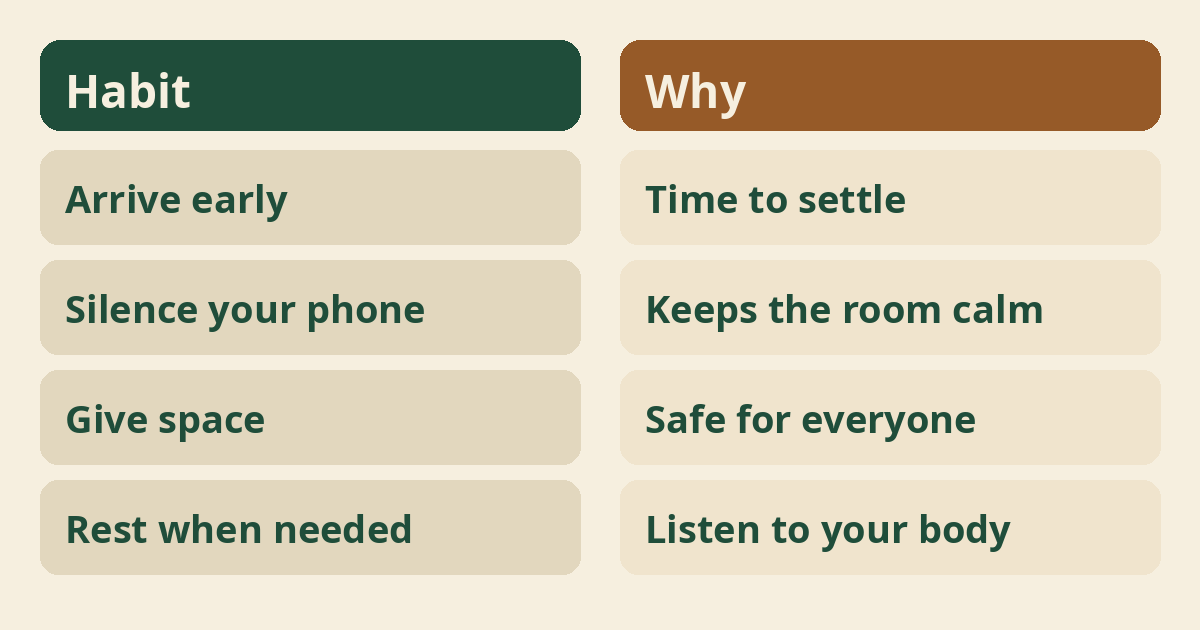
Yoga class etiquette is a set of simple, kind habits that keep the room calm and safe for everyone, such as arriving on time, respecting space and listening to your body. You do not need to know every rule before your first class. Teachers welcome beginners and expect questions. A few basics will help you feel at ease. Our guide to starting a home yoga practice is another way to learn the basics before you go.
When should you arrive?
Arrive ten to fifteen minutes early for your first class so you can sign in, set up your mat and speak with the teacher. Arriving late can disturb a quiet room, especially during the opening breathing or relaxation. If you are late, enter quietly and join in at the pace of the class. If the teacher closes the door, wait for the next session.
What should you tell the teacher?
Tell the teacher you are new and mention any injury, pregnancy or health condition before class begins. This helps them offer safe options. Our guide to yoga with a bad back shows why this matters. A good teacher will not judge you and will guide you gently.
Where should you place your mat?
Place your mat with space on each side so you do not touch your neighbour, and choose a spot where you can see the teacher. Beginners often like a spot near the middle or back, which makes it easy to watch others. Leave a clear path to the door if you may need to leave early. Our yoga mat guide explains how to choose a mat.
What should you wear?
Wear comfortable clothes that stretch and stay in place, and practise barefoot unless the studio says otherwise. Avoid strong perfume, which can bother others in a closed room. Remove shoes at the door. Keep jewellery light so it does not catch or scratch.
What should you bring?
Bring a mat, a water bottle and a small towel, and ask if the studio provides props. Many studios lend mats, blocks and straps. Keep your bag at the side or back of the room. Keep your phone on silent or leave it outside.
Should you use your phone?
Switch your phone off or to silent and keep it away from the mat so the room stays calm. A ringing phone breaks the quiet for everyone. If you need to be reachable, tell the teacher and place the phone on vibrate near your bag.
How should you behave before class starts?
Keep your voice low, rest or sit quietly and avoid chatting loudly. Many people use the time before class to settle. A quiet room helps everyone arrive. If you want to speak with the teacher, do it before the class begins.
How do you follow the teacher?
Listen to the instructions, watch for demonstrations and move at your own pace rather than copying others. Poses are offered in different levels. If a version feels too much, choose an easier one. Our guide to downward dog shows how to adapt a common pose.
Is it okay to rest?
Yes. Resting in child’s pose at any time is always allowed and shows good self awareness. Our guide to child’s pose explains how. A teacher would rather you rest than push through pain. You are never required to keep up.
How should you treat your neighbours?
Respect their space, avoid comments about their practice and do not compare yourself with others. Everyone is on their own path. Do not stare or offer unasked advice. A kind, quiet attitude makes the room feel safe.
What about talking during class?
Avoid chatting while the teacher is speaking, and save questions for a quiet moment or after class. If you need help, raise your hand or whisper to the teacher during movement. Keep the room calm, especially during breathing and rest.
What about breathing noises and sounds?
Soft breathing sounds are normal, so do not worry about them, and avoid loud sighs that might distract others. Our guide to pranayama explains breathing practice. Some classes include gentle chanting. Join in if you like, or simply listen.
What if you need to leave early?
Tell the teacher before class, place your mat near the door and leave quietly. Try not to leave during the final rest. If you must go, walk softly. Our guide to savasana explains why the final rest matters.
Why is the final rest important?
The final rest, called savasana, lets your body and mind settle, so please stay for it if you can. It is often the quietest part of the class. Leaving during it can disturb others. Lie still and let your breath soften.
What about touch and adjustments?
Some teachers offer hands-on adjustments, so tell them before class if you prefer not to be touched. A good teacher will always ask. You can say no at any time without giving a reason. Your comfort comes first.
Is it fine to take photos?
Do not take photos or videos of others without asking, and check with the studio before filming. Respect everyone’s privacy. Studios often have their own rules. Put the camera away during class.
How should you clean up?
Wipe your mat and any props you used, put things back and leave the space tidy. A tidy room is kind to the next class. Take your water bottle and towel with you. Thank the teacher if you wish.
What about hygiene?
Wash your hands and feet, wear clean clothes and wipe shared mats. Avoid class if you feel unwell. Cover any open cuts. A clean mat keeps everyone comfortable.
What about payment, booking and cancellation?
Book ahead if the studio asks, and let them know early if you cannot attend so someone else may take your place. Read the studio’s rules. Be polite if you need to cancel. Ask questions at the desk before class if anything is unclear.
What if you feel dizzy or unwell?
Stop, rest in a comfortable position, drink water and tell the teacher if needed. Do not push through. Our guide to how often to do yoga explains the value of rest. If symptoms continue, leave quietly and speak with a doctor.
What if you feel emotional?
It is common to feel calm, tired or even emotional after practice, and that is okay. Be gentle with yourself. Take a moment before leaving. Our guide to body scan meditation offers a quiet way to check in.
What common mistakes do beginners make?
Arriving late, comparing themselves with others, pushing too hard and forgetting to tell the teacher about an injury are common mistakes. Go gently and ask questions. Everyone was a beginner once. Teachers love to see someone try something new.
How can you feel more at ease?
Try a class with a friend, choose a beginner level and remind yourself that nobody is watching you closely. Most people are focused on themselves. Feel free to smile at the teacher. Your first class does not have to be perfect to be a good start.
Why do these habits matter?
They keep the room calm, protect you and others from strain and make learning easier for everyone. Yoga is described by the National Center for Complementary and Integrative Health as a mind and body practice. A quiet, respectful room supports that focus. When everyone follows simple habits, the teacher can spend more time helping each person and less time managing the room.
What if you forget something?
Nobody expects perfection, so if you forget a rule, simply smile and carry on. Teachers see new faces all the time. If you arrive without a towel or forget to silence your phone, just fix it quietly. A kind attitude matters far more than getting every detail right on the first day. You will learn the habits naturally after a few classes.
Where to read next
For a calm, beginner-friendly start, Ranjana Sinha’s Begin Where You Are is written for people who want simple steps. Our guide to starting a home yoga practice adds a gentle routine you can follow at home.
Frequently asked questions
What should I do in my first yoga class?
Arrive early, tell the teacher you are new, follow along and rest whenever you need.
Can I leave a yoga class early?
Yes, but tell the teacher first and leave quietly.
Do I have to stay for savasana?
It is polite to stay, but if you must leave, go quietly before it begins.
Is it rude to use props?
No. Props are normal and help everyone.
What if I cannot do a pose?
Choose an easier version or rest in child’s pose.
The bottom line
Arrive early, be kind, keep the room calm and listen to your body. These small habits make your first class easy and enjoyable.

