
The best sitting position for meditation is one that is steady and comfortable for you. You can sit on a chair, a cushion or a folded blanket. This guide explains simple seats, how to use support and how to avoid aches.
This is general education, not medical advice. If you have joint pain, an injury, are pregnant or have a health condition, check with your doctor before starting.
Why does sitting posture matter?
A steady, comfortable seat lets the spine stay tall and the breath move freely, so you can focus on the practice rather than on aches. If you slump or strain, attention goes to discomfort. A good posture is stable without being stiff. You do not need to sit like a statue. The goal is to be alert and at ease. Our guide to how to meditate explains the wider practice.
Do you have to sit on the floor?
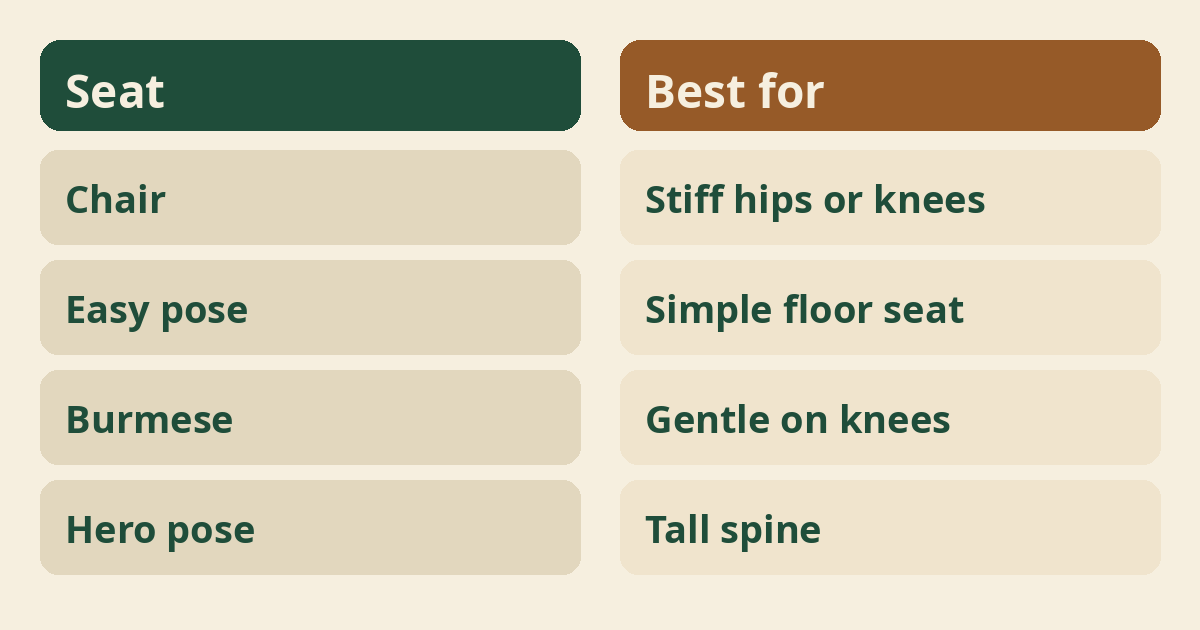
No. A chair is a perfectly good seat for meditation and breathing practice. Many people sit on chairs, especially those with stiff hips or knees. Our guide to chair yoga shows how to sit well. What matters is that you are steady and comfortable, not that you look like a picture.
How do you sit in a chair?
Sit toward the front of a firm chair, place both feet flat on the floor, and let the spine rise naturally. Keep the knees about hip width apart. Rest the hands on the thighs. Let the shoulders drop and the chin stay level. If your feet do not reach the floor, place a book or cushion under them.
What is easy pose?
Easy pose is a simple cross legged seat where you sit with shins crossed in front of you and the knees relaxed. Sit on a folded blanket so the hips are higher than the knees. If the knees float high, place cushions under them. Switch which shin is in front from time to time to keep things balanced.
What is half lotus?
Half lotus places one foot on the opposite thigh while the other foot rests under the opposite leg. It needs open hips, so do not force it. Our guide to yoga for hips shows gentle ways to prepare. Skip it if you feel pain in the knees.
What is hero pose?
Hero pose has you kneel with the buttocks resting between or on a block above the heels. Place a block or cushion between the feet if the floor is far away. Use a folded blanket behind the knees. If your knees hurt, move to another seat. Our guide to yoga for knees has more on knee care.
What is diamond pose?
Diamond pose has you kneel and sit back on your heels with the knees together and the spine tall. It is simple and steady. Place a cushion between the heels and the hips if it feels strained. Come out slowly and shake the legs out if they feel numb.
What is a Burmese seat?
A Burmese seat places both feet flat on the floor in front of you, one in front of the other, with knees resting low. Sit on a cushion to lift the hips. It is gentler on the knees than lotus. Many beginners find it a good middle ground.
How high should your cushion be?
Choose a height that lets the knees sit lower than the hips so the spine can stay long without effort. If your lower back rounds, raise the cushion. If your hips feel tight, add height. Fold blankets or use a firm cushion. Our guide to yoga props has more ideas.
How should you place your hands?
Rest the hands on the thighs or in the lap, palms up or down, whichever feels easy. Keep the shoulders soft. Some people like a gentle hand position such as palms up for openness or palms down for calm. Pick one and let it be.
Where should you look?
Close the eyes softly or rest a gentle gaze a little in front of you on the floor. Do not stare. If you close the eyes and feel sleepy or dizzy, open them. Keep the face and jaw relaxed.
How should you hold the head and neck?
Keep the chin slightly tucked and the back of the neck long, so the head feels balanced on top of the spine. Imagine a string lifting the crown of the head. Avoid poking the chin forward. Our guide to yoga for posture explains good alignment.
What if your back aches?
Lift the hips higher, lean against a wall or sit on a chair, and take short breaks to stretch. A bit of effort is normal at first. Sharp pain is not. Our guide to yoga for back pain explains gentle habits. Speak to a doctor if pain persists.
What if your legs go numb?
Change your position, stretch the legs out and shake them gently, then return when it feels comfortable. Numbness can happen when circulation is limited. Use more support or a different seat. Do not push through it.
How long should you sit?
Start with five minutes and add a minute or two each week as it feels comfortable. Short, regular sessions help more than a long session once in a while. Our guide to meditation for stress shows simple short sessions.
Should you warm up first?
A few gentle stretches before sitting help the body settle and make the seat easier. Try cat and cow, a seated twist or a forward fold. Our guide to a morning yoga routine has a simple warm up.
Can you meditate lying down?
Yes, but you may fall asleep, so it works better for rest than for training attention. Our guide to savasana explains lying practice. If you want to stay alert, choose a seat.
Can you meditate while walking?
Yes. Walking is a good option for people who find sitting hard. Our guide to walking meditation explains how to begin. Walk slowly and notice each step.
How should you breathe in these seats?
Breathe through the nose, let the belly move gently and keep the breath smooth and quiet. Our guide to box breathing is a simple pattern. Do not force the breath.
How do you come out of a seat?
Stretch the legs out, shake them gently, roll the ankles and wait a moment before standing. Move slowly. Rolling to one side before standing can help if you feel lightheaded.
What mistakes do beginners make?
Sitting too low, forcing the legs into a cross, holding the breath and trying too hard to be still. Use props, choose an easier seat and let the body move a little. Ease is more important than shape.
How can you build a habit?
Pick the same time and place each day, keep your cushion ready and start with a few minutes. Our guide to starting a home practice shows how to set up. A small daily habit grows naturally.
When should you see a doctor?
See a doctor before starting if you have joint pain, an injury, a health condition or pregnancy. Stop if you feel pain or dizziness. This guide is general education, not medical advice.
How can you set up a quiet space?
Choose a corner with soft light, little noise and enough room to sit without touching furniture. Keep your cushion and blanket in the same spot so the place itself becomes a cue. Turn off notifications. A small, tidy space is enough. Over time the corner starts to feel calm just because you use it for quiet practice.
What should you wear?
Wear loose, soft clothes that do not pinch at the waist, hips or knees. Layers help because body temperature can drop when you sit still. Keep a shawl or blanket nearby. Bare feet or warm socks are both fine. Comfort lets you forget about your clothes and notice your breath.
How do you deal with fidgeting?
Notice the urge, adjust once if you need to, and then return to the breath without scolding yourself. Restlessness is normal, especially at the start. A small, slow shift is better than sitting in discomfort. Over weeks the body settles. Do not treat movement as failure.
Does posture change with practice?
Yes. As the hips and back grow more used to sitting, you may find you can sit lower or longer without effort. Keep using support as long as it helps. There is no need to move to a harder seat. Many long time practitioners still sit on chairs or high cushions.
Where to read next
For a calm, beginner-friendly start, Ranjana Sinha’s Begin Where You Are is written for people who want simple steps. Our guide to starting a home yoga practice adds a gentle routine you can follow at home.
Frequently asked questions
What is the best sitting position for meditation?
The one that is steady and comfortable for you, including a chair.
Do I need to sit cross legged?
No. A chair or kneeling seat works well.
How high should my cushion be?
High enough that the knees sit lower than the hips.
What if my knees hurt?
Use more support, change the seat or sit on a chair.
How long should I sit as a beginner?
Start with five minutes.
The bottom line
A steady seat makes quiet practice easier. Choose comfort first and let the shape come second.

