
A gentle evening yoga routine can help you unwind before bed. Slow stretches, quiet breathing and a few minutes of rest may help your body and mind settle. This guide shares a simple ten to twenty minute routine for beginners, plus safety tips and when to speak to a doctor.
This is general education, not medical advice. Yoga is not a treatment for sleep disorders. If you have ongoing sleep problems, a health condition or are pregnant, check with your doctor first.
Can yoga help you sleep better?
Many people find a gentle evening yoga routine helps them unwind, though yoga is not a treatment for sleep problems and results vary from person to person. Sleep is shaped by many things, including light, food, stress and daily habits. A calm routine before bed gives your body a clear signal that the day is over. Slow stretches and quiet breathing are easy to add to that routine. The National Center for Complementary and Integrative Health describes yoga as a mind and body practice that people often use to relax. Treat yoga as one helpful habit among several, not a cure.
Why does an evening routine matter?
A regular wind down routine teaches your body when it is time to rest, which can make falling asleep feel easier. Your mind and body like patterns. If you do the same few calming things each night, they start to act as a cue. Dim the lights, put screens away and move slowly. Our guide to reducing screen time has ideas for the hour before bed.
When should you practise?
Practise about thirty to sixty minutes before bed, in a quiet space with soft light. Give yourself time to settle afterwards. Avoid strong, sweaty or fast practice late at night, because it can leave you feeling alert. Keep the session short, between ten and twenty minutes, and finish in bed or on a mat close to it.
What do you need?
You need a mat or a soft rug, a pillow or folded blanket and loose, comfortable clothes. Keep the room warm and quiet. A bolster or a stack of pillows is helpful for supported poses. Our yoga mat guide explains how to choose a mat that feels comfortable under your knees and back.
Start with a few slow breaths
Sit or lie down, breathe in gently through the nose, let the breath out a little longer and repeat for about two minutes. Do not force the breath. Let the belly rise and fall. Longer out breaths feel calming for many people. If you feel dizzy, go back to normal breathing. Our guide to box breathing shows another simple pattern.
Child’s pose
Kneel, sit back toward your heels, fold forward and rest your forehead on the mat or a cushion for five to ten slow breaths. Spread the knees if that is more comfortable. Place a pillow under your chest if it helps. Rest your arms by your sides or in front of you. Stay as long as it feels easy. If your knees hurt, skip this pose or place a folded blanket behind them.
Cat and cow
Move on hands and knees, round the back as you breathe out and gently lift the chest as you breathe in, for about eight slow rounds. This is a gentle way to loosen the spine after a day of sitting. Keep the movement small and smooth. Our guide to yoga for back pain has more on easing the back safely.
Seated forward fold
Sit with legs extended, bend the knees as much as you like and fold forward over your legs while breathing slowly. Place a pillow on your thighs to rest your head. Do not pull or force. The aim is a slow release, not a deep stretch. Stay for eight to ten breaths and then sit up slowly.
Supine twist
Lie on your back, draw the knees toward the chest, lower them to one side and rest for five breaths before switching. Keep the shoulders soft and open the arms wide. Place a pillow under the knees if they do not reach the floor. A twist can feel good after sitting, but move slowly and stop if you feel pain.
Legs up the wall
Lie on your back with your hips near a wall and rest your legs up the wall for three to five minutes. Place a folded blanket under the hips if it feels comfortable. This is a popular restful pose. Skip it, or ask a doctor first, if you have glaucoma, serious heart or blood pressure concerns, or if it feels uncomfortable.
Reclining bound angle
Lie on your back, bring the soles of the feet together, let the knees fall open and support them with pillows. Rest your hands on the belly and breathe slowly. This is gentle for the hips and inner thighs. Stay for two to five minutes. If you feel any strain in the groin or knees, raise the support or bend the knees less.
Finish with savasana
Lie flat, let the arms rest by your sides, close your eyes and let the body feel heavy for several minutes. Our guide to savasana explains the final rest in detail. If you feel sleepy, that is fine. You can slide into bed and carry on from there.
Try a short body scan
Bring your attention to each part of the body in turn, from the feet to the head, and let each part soften. A body scan gives the mind something quiet to follow. Our guide to yoga nidra for better sleep explains a longer guided rest practice. If your mind wanders, gently return to the body.
What if your mind is racing?
Slow your breathing, name what you hear or feel, and let thoughts pass without arguing with them. Racing thoughts are common at night. Try writing tomorrow’s list on paper before your routine. Our guide to meditation for stress has simple methods for calming the mind.
A sample ten minute routine
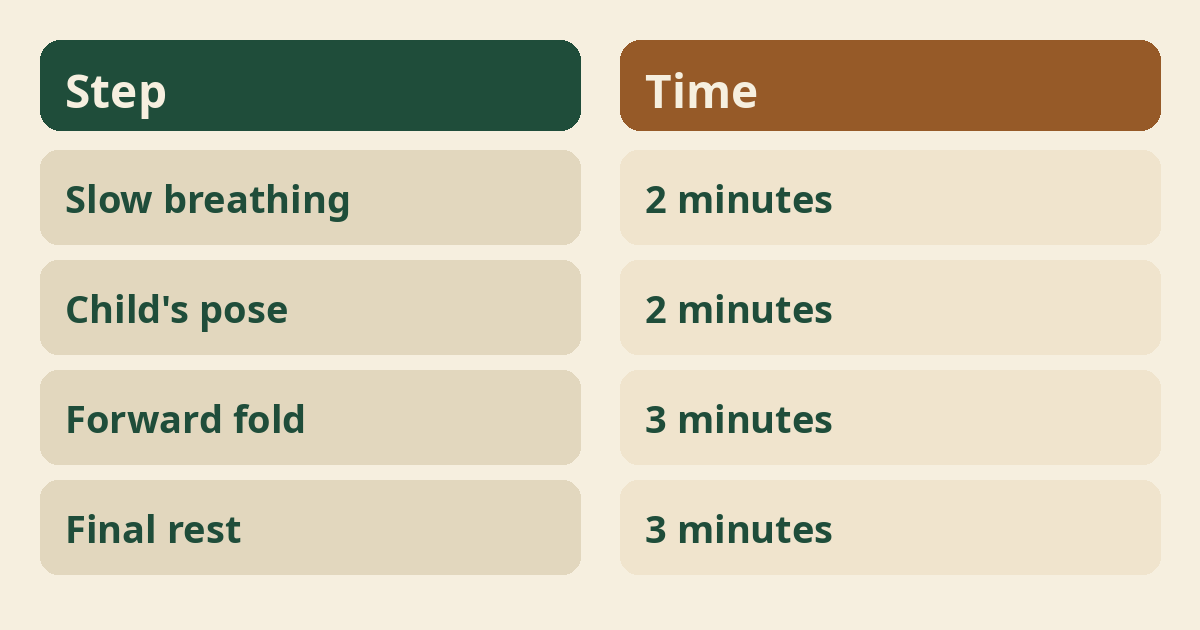
Spend two minutes on breath, two on child’s pose and cat and cow, three on a forward fold and twist, and three on rest. Keep it simple. Move slowly. You can repeat the same routine every night. Familiar steps are easier to do when you are tired, and repetition helps the body learn the pattern.
What helps beyond yoga?
A regular bedtime, a dark and cool room, less caffeine late in the day and fewer screens all support better sleep. Yoga works best alongside these habits. Our guide to simple calming breaks shows how short pauses in the day can ease tension before evening.
What should you avoid?
Avoid strong stretches, fast flows, hot rooms, heavy meals and bright screens in the hour before bed. Do not push into pain. If a pose makes you feel more awake, drop it from your routine and choose a slower one.
Can you do this every night?
Yes, a gentle routine can be done most nights, and even a few minutes counts. Missing a night does not matter. Consistency over weeks is more helpful than a long session once in a while. Our guide on how often to do yoga gives more guidance.
What about snoring, pain or restless legs?
Speak to a doctor, because these can be signs of a condition that needs proper care. Yoga is not a substitute for medical care. Persistent poor sleep, loud snoring with pauses in breathing, or daytime exhaustion should be checked by a qualified professional.
Is it safe in pregnancy or with health conditions?
Check with your doctor first if you are pregnant or have a health condition, and avoid lying flat or inverted poses if advised. Our guide to prenatal yoga explains special care in pregnancy. This guide is general education, not medical advice.
How long until you notice a change?
Some people feel calmer the first night, while for others it takes a few weeks of regular practice. Be patient and keep notes on how you feel in the morning. If nothing changes after several weeks, keep the habit if you enjoy it and speak with a doctor about your sleep.
When should you see a doctor?
See a doctor if poor sleep lasts for weeks, affects your day or comes with other symptoms such as pain, low mood or breathing problems. Stop any pose that causes pain, dizziness or breathlessness. This guide is general education, not medical advice.
Where to read next
For a calm, beginner-friendly start, Ranjana Sinha’s Begin Where You Are is written for people who want simple steps. Our guide to starting a home yoga practice adds a gentle routine you can follow at home.
Frequently asked questions
Is yoga good for sleep?
Many people find gentle evening yoga helps them relax, but it is not a treatment for sleep problems.
What is the best yoga pose before bed?
Child’s pose, a supported forward fold and legs up the wall are common choices.
How long should a bedtime yoga routine be?
Ten to twenty minutes is enough.
Should I do yoga in bed?
You can do some gentle stretches and breathing in bed, but a mat gives better support.
When should I see a doctor about sleep?
If poor sleep lasts for weeks or affects your daily life.
The bottom line
A short, calm routine each night is a kind habit for your body. Go gently, keep it simple and speak to a doctor if sleep problems persist.

