
A short morning yoga routine can help you wake up gently, loosen stiff muscles and start the day calm. Ten to fifteen minutes of slow breathing, simple stretches and standing poses is enough for beginners. This guide gives a clear routine with safety tips. Want the full practice? Read our complete morning yoga for beginners guide.
This is general education, not medical advice. If you have an injury, are pregnant or have a health condition, check with your doctor before starting yoga.
Why try yoga in the morning?
A short morning routine can help you wake up gently, loosen stiff muscles and start the day with a calm mind. After a night of lying still, many people feel stiff. A few slow stretches and easy breaths help the body move again. Morning practice also builds a habit, because it happens before the day gets busy. Our guide to the benefits of yoga explains what regular practice may offer.
How long should a morning routine be?
Ten to fifteen minutes is enough for beginners, and even five minutes counts. Choose a length you can repeat on busy days. A short routine done daily is more helpful than a long one done rarely. You can add time as you build the habit. Our guide on how often to do yoga gives more ideas.
When should you practise?
Practise after you wake, use the bathroom and have a glass of water, and wait until you feel awake and steady. Avoid practising right after a heavy meal. If you want to eat first, keep it light and wait a little. Some people like to move before breakfast, while others prefer to wait. Choose what feels comfortable.
How should you prepare?
Lay out a mat, wear loose clothes and open a window or turn on a soft light the night before. Making it easy to start removes excuses. Keep your phone away. Our yoga mat guide helps you choose a mat. A rolled towel or cushion works as a prop.
Start with three slow breaths
Stand or sit, breathe in through the nose, breathe out slowly and repeat three times before you move. This helps you arrive in the body. Let the shoulders drop. If you want a longer breathing practice, see our guide to pranayama for beginners.
Neck and shoulder rolls
Roll the shoulders back slowly five times, then forward five times, and tilt the head gently from side to side. These small movements loosen stiff areas. Move slowly and keep the jaw soft. Our guide to yoga for neck and shoulders has more gentle ideas. Stop if you feel sharp pain.
Cat and cow
On hands and knees, round the back as you breathe out and lift the chest as you breathe in, for eight slow rounds. This wakes up the spine. Keep your wrists under your shoulders and knees under your hips. Place a folded blanket under the knees if they feel sore.
Child’s pose
Sit back toward your heels, fold forward, rest your forehead down and breathe for five slow breaths. This is a calm pause in the middle of the routine. Widen the knees if it feels better. Skip it if your knees hurt, and try a pillow between hips and heels.
Downward dog
From hands and knees, lift the hips up and back, keep the knees soft and press gently into the hands for three to five breaths. Our guide to downward dog explains how to make it comfortable. Bend the knees as much as you need. If you have wrist pain, high blood pressure or other concerns, ask your doctor first.
Low lunge
Step one foot forward between your hands, lower the back knee and let the hips sink gently for three breaths on each side. This opens the front of the hips that tighten with sitting. Keep the front knee over the ankle. Put a blanket under the back knee. Our guide to yoga for hips has more.
Standing forward fold
Stand with feet hip width apart, bend the knees and fold forward, letting the head hang for five breaths. Keep the knees soft. Place your hands on your shins or a chair if the floor is far away. Come up slowly to avoid dizziness.
Mountain pose
Stand tall with feet hip width apart, arms by your sides, and breathe slowly for five breaths. This is a simple way to feel your posture. Our guide to yoga for posture explains how to stand well. Keep the knees soft and the shoulders relaxed.
Tree pose
Shift weight onto one foot, rest the other foot on your calf or ankle and hold for five breaths on each side. Our guide to tree pose explains safe variations. Keep a wall or chair close for support. Avoid placing the foot on the knee.
Standing side stretch
Raise one arm overhead and lean gently to the opposite side, breathing slowly for three breaths on each side. This opens the sides of the body. Keep both feet grounded. Move within a comfortable range.
Gentle seated twist
Sit tall and turn gently to one side, with a hand on the opposite knee, for three breaths each way. Lengthen the spine before you twist. Never force the turn. Stop if you feel pain in the back.
Finish with a short rest
Lie down or sit quietly for one to two minutes and let the breath settle. Our guide to savasana explains how to rest well. If you are short of time, a few quiet breaths are enough.
Set an intention for the day
Choose one calm thought, such as moving slowly or being kind, and carry it into the day. This is optional. A simple intention can help you stay steady when the day gets busy. Our guide to how to meditate shows a short way to start.
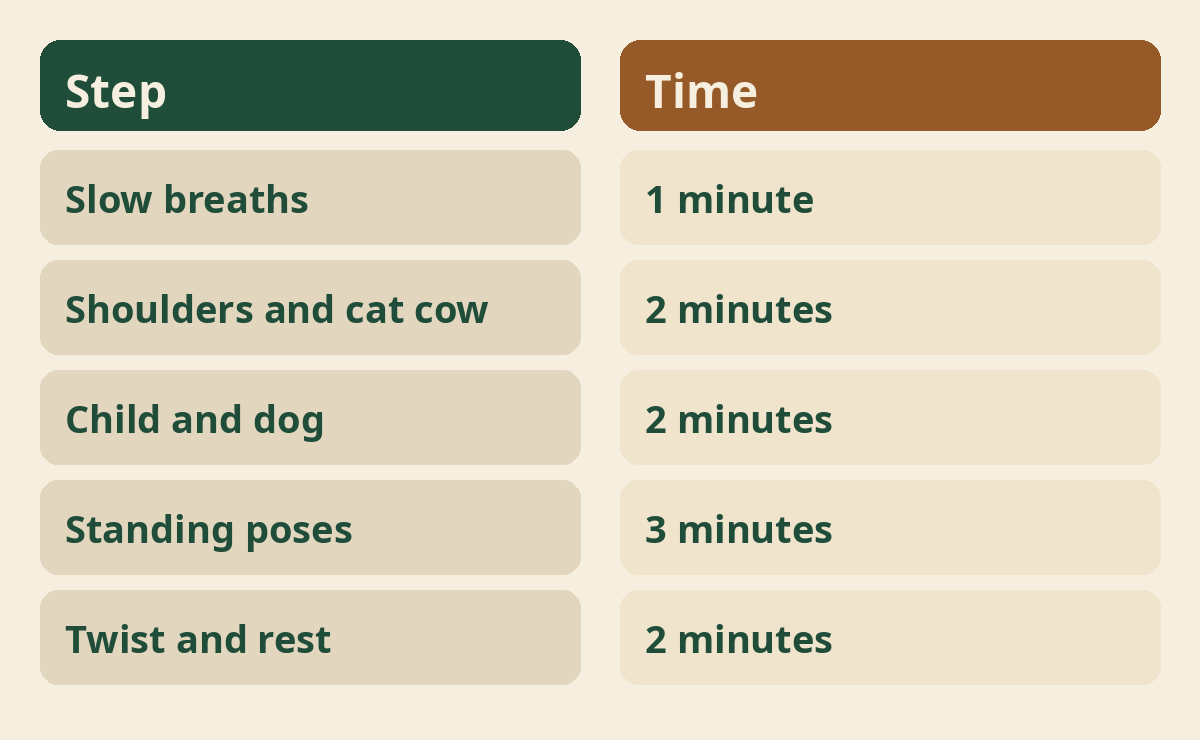
A sample ten minute routine
Spend one minute on breath, two on shoulders and cat and cow, two on child’s pose and dog, three on standing poses and two on a twist and rest. Move at your own pace. Repeat the same routine for a week and notice how it feels. You can swap poses to match your energy.
What if you are not a morning person?
Start with five minutes and move your practice later if mornings do not suit you. The best time is the one you will keep. Some people prefer a midday break or an evening routine. Our guide to yoga for better sleep covers an evening version.
What mistakes should you avoid?
Do not rush, force stretches while cold, hold your breath or compare yourself with others. Your body is stiffer in the morning, so warm up gently. Use props and modify poses. A smaller version of a pose still counts.
Is a morning routine safe?
It is safe for most healthy people when done gently, but check with a doctor if you have a health condition or injury or are pregnant. Stop if you feel chest pain, dizziness or sharp pain. Our guide to yoga with a bad back explains safe habits. This guide is general education, not medical advice.
How can you build the habit?
Practise at the same time each day, keep the mat visible and tick off each day on a calendar. Start small and keep it pleasant. Missing a day is fine, so simply begin again the next morning. After a few weeks the routine starts to feel natural.
When should you see a doctor?
See a doctor before starting if you have an injury, a long term condition, pregnancy or any health concern. Stop if you feel unwell. This guide is general education, not medical advice.
What if you feel stiff or sore?
Go slower, use fewer poses and spend more time on breathing, because stiffness often eases after a few gentle minutes. Morning stiffness is common. Warm up with shoulder rolls and cat and cow before any deeper stretch. A warm shower first can help some people. If soreness lasts or feels sharp, rest and speak with a doctor.
How can you make it more enjoyable?
Play soft music, open a window, and pick poses that feel good rather than ones you think you should do. Enjoyment keeps the habit alive. Try practising near a window or outdoors. Change the order of poses from time to time so it does not feel dull. A friendly, relaxed attitude matters more than perfect form.
Should you track progress?
A simple note each morning about how you felt is enough to see your own progress over weeks. Write one line, such as easier breathing or less stiffness. Avoid chasing poses or comparing with others. Small signs like waking up less stiff are worth noticing.
Where to read next
For a calm, beginner-friendly start, Ranjana Sinha’s Begin Where You Are is written for people who want simple steps. Our guide to starting a home yoga practice adds a gentle routine you can follow at home.
Frequently asked questions
How long should a morning yoga routine be?
Ten to fifteen minutes is enough for beginners.
Should I do yoga before or after breakfast?
Either works. Avoid practising right after a heavy meal.
What are good morning yoga poses?
Cat and cow, child’s pose, downward dog, low lunge and a standing forward fold.
Can I do morning yoga every day?
Yes, a gentle routine can be done most days.
Is morning yoga safe for beginners?
Yes when done gently, but check with a doctor if you have health concerns.
The bottom line
A gentle morning routine is an easy way to start your day well. Keep it short, go slowly and build the habit one morning at a time.

