You have probably heard that meditation could help you feel calmer, sleep better, or focus more easily, and maybe you have even tried it once or twice. Then your mind wandered, your back ached, or you wondered if you were doing it wrong, and the habit quietly died. That experience is almost universal, and it is exactly what this guide is for. Meditation is a simple skill, not a talent, and beginners can learn it in a few minutes a day with no equipment, no apps, and no special beliefs. Below you will find what meditation actually is, which type suits you, a step-by-step first session, and honest answers to the questions every beginner asks.
What is meditation, really?
Meditation is the practice of training your attention. That is the whole definition. You choose something to rest your attention on, such as your breath, sounds, bodily sensations, or a repeated phrase. Your attention wanders, because that is what minds do. You notice it wandered, and you gently bring it back. Each return is one repetition of the exercise, the way one lift is a repetition at the gym.
This framing matters because most beginners believe meditation means stopping thoughts or feeling blissful. It does not. A busy mind during meditation is not failure; it is the very material you work with. The person who notices their wandering mind a hundred times in ten minutes has done a hundred successful repetitions. Once this clicks, the practice stops feeling like a test you keep failing.
Meditation is also ancient and cross-cultural. It appears in Hindu, Buddhist, Jain, and many other traditions, and in recent decades it has been studied in universities and hospitals in secular forms. You can approach it as a spiritual practice, a mental fitness routine, or simply a way to pause. All three are valid, and the basic technique is the same.
What are the benefits of meditation?
Honesty first: meditation is not a cure for anything, and anyone promising dramatic transformation is overselling. What the research does suggest, across many studies, is that regular practice may support lower perceived stress, better attention, improved emotional regulation, and modest help with sleep quality for some people. Effects are usually gentle and build over weeks, not days. Our deeper overview of the benefits of meditation walks through the evidence carefully.
What beginners most often report is refreshingly ordinary: they react a little more slowly in arguments, notice stress earlier, fall back asleep more easily at night, and feel a few degrees less rushed during the day. Those small shifts are the real prize, and they are achievable with short daily practice.
Which type of meditation should a beginner start with?
There are dozens of meditation styles, but nearly all of them train the same basic skill with a different anchor for attention. Here are the most beginner-friendly options, and you can explore each in depth with our linked guides:
- Breath awareness: Rest attention on the natural feeling of breathing. Simple, portable, and the classic starting point. It is the method in the step-by-step session below.
- Body scan: Move attention slowly through the body from feet to head. Excellent for people who find the breath too subtle or who carry tension. See our body scan meditation for beginners.
- Guided meditation: A teacher’s voice leads you through the practice. Ideal if sitting in silence feels intimidating. Many beginners start here and graduate to unguided practice.
- Loving-kindness (metta): Silently repeat phrases of goodwill toward yourself and others. Helpful for self-criticism and for people who find breath focus dry. Our loving-kindness guide shows how.
- Walking meditation: Practice attention while walking slowly, feeling each step. Perfect for restless bodies. Try walking meditation for beginners.
- Gratitude meditation: Reflect on specific things you appreciate. A gentle entry point with an immediate mood lift, covered in gratitude meditation for beginners.
- Zen (zazen): Upright, eyes-open sitting with attention on posture and breath. Slightly more formal; see zen meditation at home.
If the labels confuse you, our explainer on mindfulness vs meditation clears up the two most mixed-up words. The honest advice: pick whichever type sounds least annoying to you, because the best meditation is the one you will actually do.
How do you meditate? Your first session, step by step
Set a timer for five minutes. That is enough for day one.
- 1. Sit down. A chair is fine. Sit toward the front edge, feet flat on the floor, hands resting on your thighs. Let your spine be upright without stiffness, as if a string gently lifts the crown of your head. A cushion, bench, or meditation seat also works; our guide to meditation seats covers the options.
- 2. Soften your gaze or close your eyes. If closing your eyes makes you sleepy or uneasy, keep them half-open, resting on the floor a few feet ahead. (Yes, eyes-open meditation is legitimate; we have a whole article on meditating with your eyes open.)
- 3. Feel your breath. Notice the physical sensation wherever it is clearest: the nostrils, the chest, or the belly. Do not control the breath. Just feel it.
- 4. Notice when you drift. Within seconds you will be thinking about something. The moment you realize “I am thinking,” that noticing is the practice. Silently label it “thinking” if that helps.
- 5. Return gently. Escort your attention back to the breath as you would guide a puppy back to its bed: without scolding, as many times as needed.
- 6. End kindly. When the timer sounds, take one deeper breath, notice how your body feels, and carry on with your day. Do not grade the session.
That is the entire technique. Everything else in meditation is refinement of these six steps.
How long should a beginner meditate each day?
Start with five minutes. Not twenty, not an hour. The research on habit formation is consistent: tiny, easy commitments stick; heroic ones collapse. After a week or two of daily five-minute sits, add a minute or two. Many long-term practitioners settle between ten and twenty minutes daily. Our detailed guide on how long you should meditate maps out a sensible progression. And yes, there is such a thing as overdoing it, especially in intensive retreat settings; can you meditate for too long explains the rare edge cases.
When is the best time to meditate?
The best time is the time you will keep. That said, two slots work especially well for most people. Morning practice happens before the day’s chaos begins, and many find it sets a calmer tone for everything after; our morning meditation routine shows a simple version. Evening practice helps some people unwind and transition toward sleep, though very tired beginners sometimes just doze off, which is fine too. If nights are your slot, see how to meditate before bed. Experiment for a week with each, then commit to one anchor: same time, same place.
Where should you meditate?
Any quiet corner works. You do not need a dedicated room, incense, or a view of the mountains. A chair in a parked car, a bench in a park, or the edge of your bed all count. Two things genuinely help: relative quiet (silence is not required, but a blaring television is hard mode) and a spot your brain learns to associate with practice. Even a specific cushion in a specific corner builds the habit faster.
Common myths that stop beginners
A few persistent myths deserve direct answers, because each one quietly discourages new students.
- “Meditation is religious, so it is not for me.” Meditation grew inside religious traditions, but the attention training itself is secular. Hospitals, schools, and sports teams teach it with no religious content at all. You can keep whatever beliefs you have, or none.
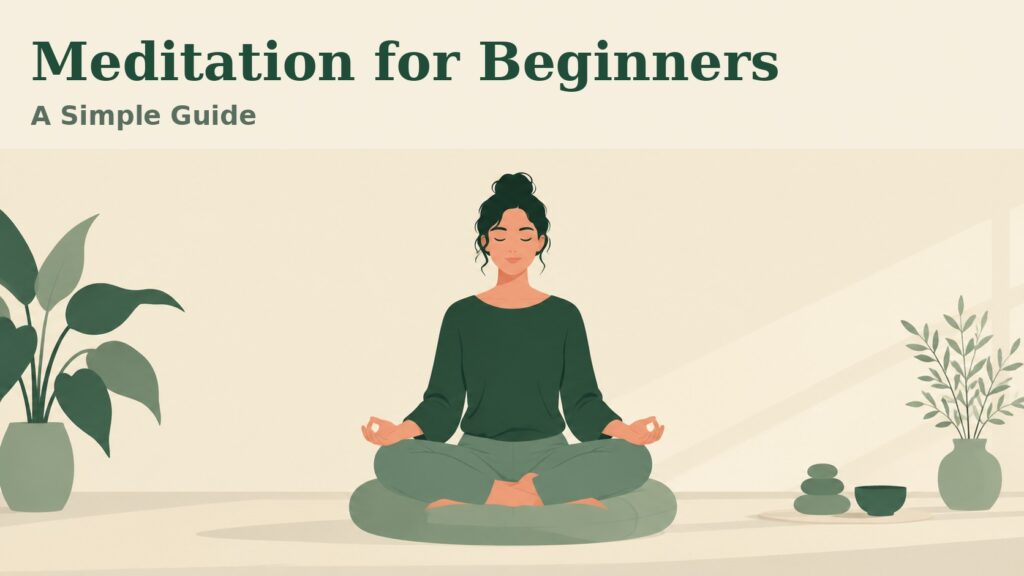
- “You must sit cross-legged on the floor.” Posture serves attention, never the reverse. A chair, a bench, or lying down all work. The cross-legged pose is traditional, not mandatory.
- “Some people simply cannot meditate.” Everyone’s mind wanders; that is the human default, not a personal defect. The practice works precisely because it trains the wandering mind. Nobody is disqualified.
- “Ten minutes occasionally beats five minutes daily.” Consistency is the active ingredient. Five minutes every day will outperform an occasional long session, because the skill builds through repetition, like any other training.
What about meditation for stress and anxiety?
Many people come to meditation because life feels loud. Regular practice may help you notice stress earlier and respond more deliberately, and there is reasonable evidence it can take the edge off everyday anxious feelings for some people. Our honest guide to meditation for stress and the answer to can meditation help with anxiety go deeper. Two cautions: meditation is not a replacement for professional care when anxiety is heavy or persistent, and occasionally sitting quietly with difficult feelings makes them feel bigger before they settle. If practice consistently leaves you feeling worse, shorten sessions, try walking meditation, or speak with a professional.
What are the most common beginner obstacles?
After teaching many beginners, the same five struggles appear again and again:
- “I can’t stop thinking.” You are not supposed to. Noticing thoughts and returning is the exercise itself.
- “I keep falling asleep.” You are probably tired. Try mornings, sit more upright, or open your eyes slightly.
- “My body hurts.” Adjust freely. Sit on a chair, support your knees, shift whenever needed. Comfort enables attention.
- “I’m bored.” Boredom is a feeling like any other; watching it curiously is advanced practice disguised as a problem.
- “I don’t have time.” You have five minutes. Attach meditation to an existing habit: after brushing teeth, before lunch, after parking the car.
Our full troubleshooting guide on overcoming obstacles to meditation covers each of these in depth.
Do you need apps, music, or special equipment?
No. Apps with guided sessions are genuinely useful for many beginners, and there is no purist penalty for using one. But they are training wheels, not requirements. A five-rupee timer works as well as a subscription. The same goes for cushions, benches, singing bowls, and incense: pleasant, optional. Meditation’s only true requirement is a few minutes and a willingness to begin again.
A simple 7-day starter plan
Here is a realistic first week. Keep sessions short enough that you never dread them.
- Day 1: Five minutes of breath awareness, following the six steps above.
- Day 2: Five minutes of breath awareness. Expect resistance; do it anyway.
- Day 3: Six minutes. Try counting breaths from one to ten, then starting over.
- Day 4: Six minutes. If focus feels impossible, switch to a guided session today.
- Day 5: Seven minutes. Add one minute of noticing sounds around you at the end.
- Day 6: Seven minutes. Try a short body scan instead, using our body scan guide.
- Day 7: Eight minutes of your favorite style from the week. Then decide: same time tomorrow?
After a month of roughly daily practice, you will know from the inside what meditation does for you, which no article can tell you.
How do you make meditation a habit that sticks?
Technique is the easy part; showing up is the real skill. Three tactics make an outsized difference. First, anchor the practice to something you already do without thinking: after brushing your teeth, after your morning chai, after you sit down at your desk. The existing habit becomes the trigger. Second, lower the bar until skipping feels sillier than doing it. Two minutes counts. Marking an X on a calendar for a two-minute sit keeps the chain alive, and most days you will naturally sit longer once you start. Third, decide your response to a missed day in advance: you simply sit the next day, with no catch-up debt and no self-scolding. Long-term meditators are not people who never miss; they are people who restart quickly and without drama.
It also helps to tell one person you are practicing, or to sit at the same time as a friend or partner even in different cities. Gentle accountability outperforms willpower.
How does meditation connect with yoga?
In classical yoga, meditation is not separate from yoga but its heart: physical poses were originally taught partly to make the body steady enough to sit. Many students find that a short yoga practice before sitting makes meditation noticeably easier, because restlessness has somewhere to go. If you practice yoga already, our yoga for beginners guide pairs well with this one, and the eight limbs of yoga explain where meditation sits in the bigger picture.
What is happening when meditation “works”?
You do not need neuroscience to meditate, but a simple model helps. Attention works a bit like a muscle with two jobs: holding focus on one thing, and noticing when focus has slipped. Meditation trains both. Each time you notice a wandering thought and return to the breath, you practice the exact mental move that, in daily life, lets you notice irritation before snapping, or notice distraction before an hour disappears. Researchers continue to study how practice changes the brain and stress responses, and early findings are interesting, but the honest summary is that the science is still developing. What you can verify yourself is simpler and more convincing: after a few weeks of daily sits, watch how you handle one difficult email, one traffic jam, one sleepless night. That self-observation is the traditional laboratory of meditation, and it needs no instruments.
What should you do after your first month?
Once daily practice feels ordinary, you have options. You can lengthen sessions toward fifteen or twenty minutes. You can explore a style that intrigued you, such as loving-kindness or zen, using the guides linked above. You can add a weekly longer sit on weekends. You can learn a gentle breath practice to settle the mind before sitting; our pranayama for beginners guide is a natural companion. Or you can simply keep five quiet minutes a day for the rest of your life, which is a complete and respectable practice. Meditation has no graduation ceremony. The beginner’s mind you start with is, in the end, what the whole practice is about.
Frequently asked questions
How do I know if I am meditating correctly?
If you sat down, paid attention to your anchor, noticed your mind wander, and returned, you meditated correctly. There is no special feeling to chase. Some sessions feel peaceful and others feel like wrestling a radio; both count equally.
Is it normal for my mind to wander constantly?
Completely normal, for beginners and for people who have practiced for decades. The goal was never an empty mind. The goal is noticing sooner and returning more kindly, and that improves with practice.
Can I meditate lying down?
Yes, especially for body scans or bedtime practice. The tradeoff is drowsiness, so if you keep falling asleep but want to stay alert, switch to sitting. For pure relaxation, lying down is perfectly valid.
How soon will I notice any benefits?
Many people feel a small settling effect right after a session. The broader benefits, like steadier attention and less reactivity, typically build over several weeks of regular practice. Think in terms of a month, not a day.
Do I need a teacher to learn meditation?
No, the basics in this guide are enough to begin safely. A teacher or class becomes valuable later, when questions arise that articles cannot answer. For now, short daily practice teaches you more than any explanation.