
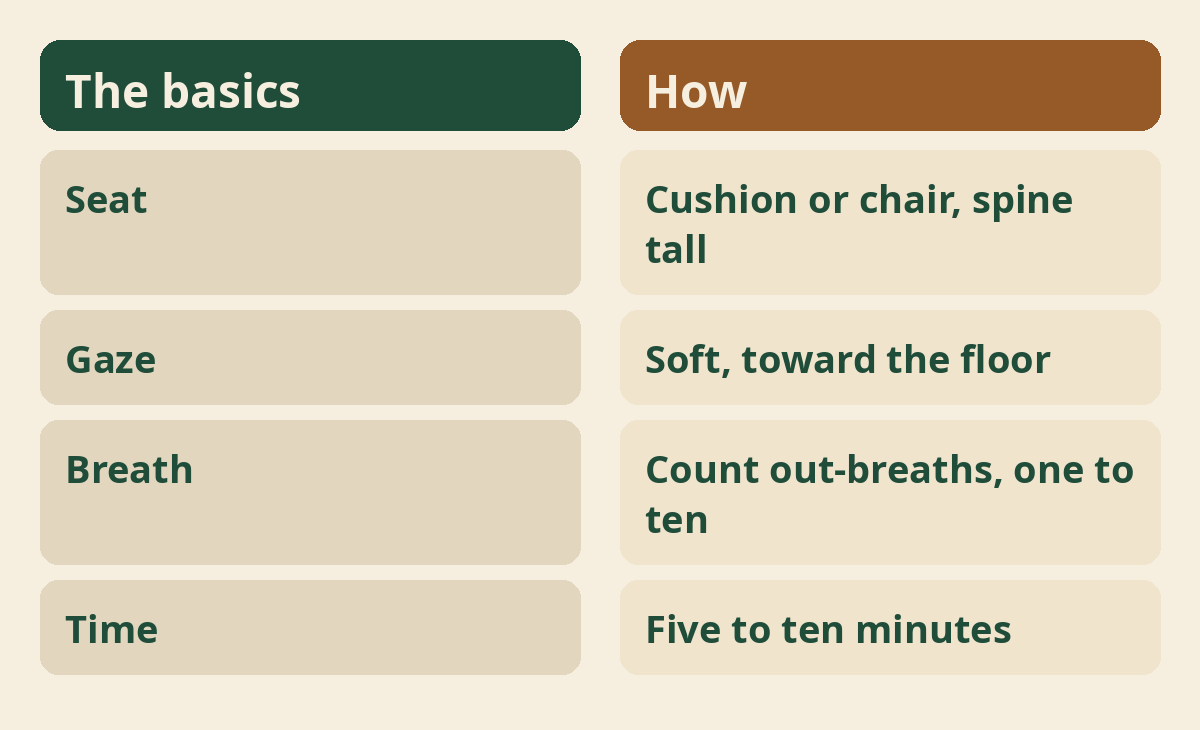
Zen meditation, or zazen, is simple: sit upright on a cushion or chair, soften your gaze toward the floor and count your out-breaths from one to ten. Start with five to ten minutes at home, and return to one whenever you lose count.
This is general education, not medical advice. If you have a mental health condition, trauma history or physical pain when sitting, speak with a doctor or qualified teacher first.
What is Zen meditation?
Zen meditation, called zazen, is a seated practice from Zen Buddhism in which you sit upright and follow your breath or simply sit with open awareness. It is known for its plain, quiet style: a steady posture, a calm breath and very little else. You do not need to be Buddhist to try it. The National Center for Complementary and Integrative Health describes meditation as a family of practices for training attention, and zazen is one long-standing example.
How do you practise Zen meditation at home?
Sit on a cushion or chair with a straight spine, rest your hands in your lap, soften your gaze toward the floor and follow the breath. Choose a quiet place and a time you can keep.
- Sit on a firm cushion or a chair, with your knees lower than your hips if you can.
- Keep your spine tall and your chin slightly tucked.
- Rest your hands in your lap, left hand over right with thumbs lightly touching.
- Lower your gaze to a spot on the floor about an arm’s length or two ahead, eyes half open.
- Breathe through the nose and count each out-breath from one to ten.
- When you lose count, simply start again at one.
- End with a slow breath and a gentle stretch.
Why are the eyes half open?
Half-open eyes help you stay awake and connected to the room, without getting lost in thought or sleepiness. The gaze is soft and unfocused, resting on the floor. If this feels strange, you can close your eyes. Our guide to meditating with your eyes open explains the soft-gaze approach in more detail.
What posture should you use?
An upright, balanced seat on a cushion or chair, with a straight but relaxed spine, is the aim. You do not have to sit in a full lotus. Many people sit on a cushion with legs crossed, or on a chair with feet flat. Use support so that your knees do not ache. If you have back, hip or knee trouble, check with your doctor and choose a chair. Comfort lets you stay for longer without strain.
How long should you sit?
Start with five to ten minutes and add a few minutes as it feels comfortable. In monasteries, sessions can last much longer, but those are built up over years. At home, shorter and regular is better. Our guide on how long you should meditate gives a simple plan, and our piece on meditating for too long explains the signs to watch.
How do you work with thoughts?
Let thoughts come and go without following them, and return to the breath each time you notice you have drifted. Zen teaching does not ask you to stop thoughts. It asks you to see them and let them pass like clouds. If you get stuck in a story, label it as thinking and come back to counting. Over time, the returning becomes easier. Our guide on common obstacles to meditation has more ideas.
What is breath counting?
Breath counting is a simple Zen method where you count each out-breath from one to ten and then begin again. If your mind wanders, return to one. The count gives the mind a light task, which makes it easier to stay with the breath. Keep your breathing natural. Do not try to control it. If you feel dizzy, stop and rest. Our pranayama for beginners guide offers other gentle breathing practices.
What about shikantaza, or just sitting?
Shikantaza means just sitting with open awareness, without a specific object, and it is usually taught after some experience. It is a quiet practice that asks for patience. Beginners often find counting the breath easier. If you want to try open awareness, do it briefly and return to the breath if you feel lost or restless. A qualified teacher can offer guidance.
How do you set up your space?
A quiet corner, a cushion or chair, a plain wall and soft light are all you need. Remove clutter from your line of sight. Silence your phone. Some people like a small candle or plant. Keep the space simple so that you can sit down without preparation. A regular spot also helps your mind recognise that it is time to settle.
How is Zen meditation different from other styles?
Zen is plain and upright, with little guided speech, while other styles may use guided words, mantras or visualisations. Some people prefer the quiet of Zen, and others prefer more structure. Neither is better. Many people try several styles to see what suits them. Our guide to the eight limbs of yoga shows how yoga’s own tradition places meditation in a wider path of ethics, posture and breath.
Can you do it as a beginner?
Yes, as long as you keep it simple and short. Start with a few minutes, count your breath and do not worry about doing it perfectly. If you have a mental health condition or a history of trauma, speak with your doctor or a qualified teacher first. Long sittings and intense retreats can be difficult for some people.
When is the best time?
Early morning is traditional, but any quiet time you can keep works. Many people sit before breakfast or before the day gets busy. Our guide to morning meditation offers ideas for building the habit. If you sit at night, keep it short and calm, as in our guide to meditating before bed.
What should you do about knee or back pain?
Adjust your seat, use a higher cushion or switch to a chair, and stop if pain is sharp. Pain is a signal, not a test. Raise your hips above your knees with extra cushions, or use a folded blanket under your knees. A chair with a firm seat is a good option. If pain continues, check with a doctor. Our guide to yoga for back pain offers gentle ideas for a stiff back, and our chair yoga guide shows simple seated movements.
How do you end a sitting?
Take a slow breath, let your gaze widen, move your fingers and toes, and stretch gently before standing. Do not jump up. Sit for a few seconds to notice how you feel. Then carry a little of the stillness into your next task. A quiet bow of the head is a traditional way to close, but it is optional.
Is a group or teacher necessary?
No, but a teacher or group can help with posture and encouragement. Many people begin at home and later try a local class or online sitting. If you do, choose a teacher who is calm, clear and respects your limits. Ask any questions you have about posture, pain or difficult feelings. Good teachers welcome them.
Common myths about Zen meditation
A few ideas can make it seem harder than it is. Here are some to rethink.
- Myth: you must clear your mind. You only need to notice and return.
- Myth: you must sit in lotus. A chair is fine.
- Myth: you must be Buddhist. Anyone can try it.
- Myth: it must be painful to be real. Pain is a signal to adjust.
What if you feel sleepy or restless?
Sit up straighter, open your eyes a little more, or try a few minutes of walking meditation. Sleepiness and restlessness are both normal. Our guide to walking meditation shows a gentle option that traditions often pair with sitting. Adjust the time of day if you are always tired.
How can you keep the habit?
Choose a fixed time, keep the session short and tick it off on a calendar. Missing a day is fine. Begin again without guilt. After a few weeks, the habit tends to stick. If you want guidance, look for a local teacher or a friendly group. This guide is general education only and does not replace professional advice.
Where to read next
For a calm, beginner-friendly start, Ranjana Sinha’s Begin Where You Are is written for people who want simple steps. Our guide to starting a home yoga practice adds a gentle routine you can follow at home.
Frequently asked questions
What is Zen meditation?
A seated practice called zazen, in which you sit upright and follow the breath or sit with open awareness.
How do I start Zen meditation at home?
Sit on a cushion or chair, keep your spine tall, soften your gaze and count your out-breaths from one to ten.
Should my eyes be open or closed?
Traditionally half open with a soft gaze on the floor. Closed is fine if it helps.
How long should I sit?
Five to ten minutes to start. Build up slowly.
Do I need to be Buddhist?
No. Anyone can try the practice.
Do I need to sit in lotus?
No. A chair or a cushion with comfortable legs is fine.
The bottom line
Zen meditation at home needs only a quiet corner, an upright seat and a calm count of the breath. Keep it short, keep it regular and let the practice be plain.

