
Meditation may help some people feel steadier and cope with anxious thoughts, but it is not a cure and does not replace medical care. Start with short, gentle practices such as grounding or slow breathing, and talk to a doctor if anxiety is strong or lasting.
This is general education, not medical advice. If you feel very anxious, have panic attacks or thoughts of self-harm, contact a doctor or local emergency services.
Can meditation help with anxiety?
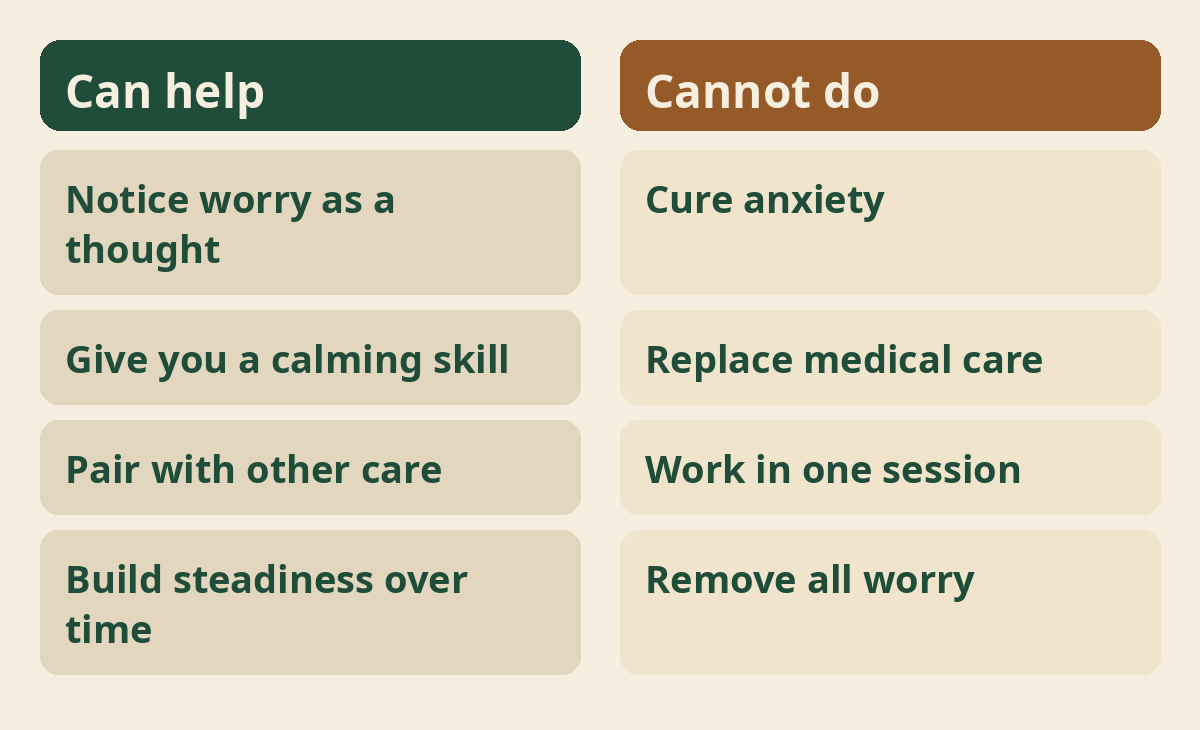
Meditation may help some people feel calmer and cope better with anxious thoughts, but it is not a cure or a replacement for medical care. Research on mindfulness and meditation for anxiety is promising but mixed. The National Center for Complementary and Integrative Health says mindfulness practices may help with anxiety and stress for some people, while noting that more high-quality research is needed and that meditation can sometimes bring up difficult feelings. Think of it as a supportive skill, not a treatment.
What does meditation actually do for anxious thoughts?
It trains you to notice worry as a passing thought, rather than a command you must obey. With practice, you may find a small gap between a worry and your reaction to it. That gap can make anxious moments feel less overwhelming. This takes weeks of regular practice, not one session, and some days will feel harder than others.
How do you start safely?
Begin with short, gentle sessions of three to five minutes, with eyes open if closing them feels uneasy. Sit comfortably, breathe naturally and rest attention on your feet or your breath.
- Sit on a chair with feet flat and back supported.
- Keep your eyes open, with a soft gaze, if closed eyes feel uncomfortable.
- Take a few slow breaths, letting the out-breath be a little longer.
- Feel the contact of your feet and your seat.
- When worry arises, silently say worrying, and return to your feet or breath.
- Stop at any time if you feel worse, and open your eyes.
Which techniques are gentlest?
Grounding, slow breathing and walking meditation are usually the easiest to begin with. They give your attention something concrete to hold. Our guides to grounding meditation, walking meditation and pranayama for beginners explain each practice in plain steps. Avoid strong breathing exercises or long silent sittings until you know how your body responds.
What if meditation makes anxiety worse?
Stop, open your eyes, feel your feet on the floor and breathe normally. Consider speaking with a professional. Some people feel more anxious when they sit in silence with their thoughts. This is not a failure. Try shorter sessions, eyes open, movement-based practice or a guided recording. If distress continues, talk with a doctor, counsellor or qualified teacher before going on.
How often should you practise?
Short, regular sessions most days work better than long, occasional ones. Five minutes a day is a good beginning. Build up slowly if it feels right. Our guide on how long you should meditate gives a simple plan, and our piece on meditating for too long explains the signs to watch.
When should you see a doctor?
See a doctor if anxiety is constant, causes panic, disturbs sleep or work, or comes with thoughts of self-harm. Anxiety is common and treatable, and help is available. Meditation can sit alongside professional care, but it should not replace it. If you are in crisis, contact local emergency services or a crisis line straight away.
Can meditation replace therapy or medicine?
No. Meditation can support well-being, but it does not replace therapy, medicines or advice from your doctor. If you take medication or see a therapist, tell them you are starting meditation. They can help you decide how it fits into your care. Do not stop any treatment without medical advice.
What about meditating before bed with anxiety?
Slow breathing and a gentle body scan can help you wind down, but keep it light and do not force sleep. Our guide to meditating before bed explains a calm routine. If worry keeps you awake, write down tasks earlier in the evening and keep screens away before bed.
Does movement help too?
Gentle movement such as walking or yoga can ease tension and often pairs well with meditation. Many people find movement easier than sitting still when they feel anxious. Our guide to chair yoga for beginners shows seated movements, and our article on the benefits of yoga gives a wider picture. Choose gentle options and stop if anything feels strained.
How does yoga think about anxiety?
Yoga sees the mind as something to steady through ethical living, breath, posture and attention. Our guide to the eight limbs of yoga explains this wider path. It is not a quick fix, and it is not medical treatment. It offers a way of living that many people find calming.
How can you use short pauses during the day?
A few slow breaths and a feel of your feet before a stressful moment can take the edge off. You can do this at a desk, in a queue or before a conversation. Our guide to meditating at work has more ideas, and our guide to meditation for stress covers a wider set of practices.
What can you do in the middle of a panic moment?
Slow your breathing, press your feet into the floor, name things you can see and remind yourself that the wave will pass. These steps are not a treatment, but many people find them steadying. If panic attacks happen often, see a doctor, since effective help exists. Try to practise grounding when you are calm, so that it is familiar when you need it.
How can family or friends support you?
Tell someone you trust what helps, such as a quiet walk or a few slow breaths together. Practising with a friend can feel easier than alone. Keep it gentle and non-judgemental. If you are helping someone else, listen first, avoid pushing a technique, and encourage them to speak with a professional if worry is heavy.
How do you track progress without pressure?
Write one line after each session about how your body and mind felt, and look back after two weeks. Notice small things, such as falling asleep a little faster or catching a worry sooner. Avoid scoring yourself. Some days will be rough, and a bad day is not a setback. A kind attitude toward the practice matters as much as the technique.
What lifestyle habits support you?
Regular sleep, daily movement, balanced meals, time with people you trust and limits on caffeine and screens all help. These habits do not replace professional care, but they make a difference over time. Start with one small change, such as a ten-minute walk after lunch. Small, steady steps are easier to keep.
Common myths about meditation and anxiety
Some ideas raise hopes too high or put people off. Here are a few to rethink.
- Myth: meditation cures anxiety. It does not.
- Myth: you must stop worrying. You learn to notice it.
- Myth: it is always relaxing. It can bring up feelings.
- Myth: you should push through distress. Stop and seek support instead.
How do you pick a teacher or class?
Look for someone calm, qualified and open to questions, who respects your limits. Ask whether they have experience with people who feel anxious. A good teacher will offer options, such as eyes open or shorter sessions. Avoid anyone who promises cures or tells you to stop medical treatment.
What is a realistic goal?
A realistic goal is to feel a little steadier and to have a calming tool when worry rises. Do not measure success by how few anxious thoughts you have. Measure it by how you respond to them. Over weeks and months, small changes add up. Be patient and kind with yourself, and celebrate small wins such as showing up to practise on a hard day.
Where to read next
For a calm, beginner-friendly start, Ranjana Sinha’s Begin Where You Are is written for people who want simple steps. Our guide to starting a home yoga practice adds a gentle routine you can follow at home.
Frequently asked questions
Can meditation help with anxiety?
It may help some people cope, but it is not a cure or a replacement for medical care.
How long should I meditate if I am anxious?
Start with three to five minutes, and build up slowly if it feels right.
What if meditation makes me more anxious?
Stop, open your eyes, feel your feet and breathe normally. Try shorter sessions or speak with a professional.
Which technique is best?
Grounding, slow breathing and walking meditation are usually gentlest.
Should I tell my doctor?
Yes, especially if you take medication or see a therapist.
When should I seek help?
If anxiety is constant, causes panic or affects sleep or work, see a doctor.
The bottom line
Meditation can be a supportive skill for anxious times. Go gently, keep sessions short and work with a doctor or therapist if anxiety is strong. It is a tool, not a cure.

