
You have heard friends talk about yoga, and you are curious but unsure where to begin. Good news: a first session can be as simple as ten quiet minutes on a rug. This guide walks you through what yoga is, what you need, how to move, and how to build a routine that fits real life. Take it one section at a time and go at your own pace.
This guide is for general education only and is not medical advice. If you have an injury, a health condition, or you are pregnant, talk with your doctor before you begin.
What is yoga?
Yoga is a practice that joins movement, breathing, and focused attention. It began in India thousands of years ago and now comes in many styles. Most classes in the US and around the world center on poses, called asanas, linked with steady breathing. Some also end with a short rest or a quiet sit. Think of it as moving slowly while noticing how you feel.
Why do people practice yoga?
People practice yoga for many reasons, from wanting to move more to wanting to feel calmer. Some start because their body feels stiff after long hours of sitting. Others want a quiet break from a busy day. Many simply like the way a slow stretch feels. Your reason can be small, and it can change over time.
Do you need to be flexible to start?
No, you can start exactly as you are. Flexibility is something that tends to grow with practice, not a ticket you need at the door. Poses can be adjusted to fit tight muscles, stiff joints, and different body shapes. A beginner who bends a knee is doing the pose just as well as anyone else. Comparing yourself to others is not part of the practice.
What are the main styles of yoga?
The main styles differ mostly in pace, effort, and focus. Hatha is a broad word for slower classes that teach basic poses. Vinyasa links poses in a flowing sequence, while Yin holds low floor poses for longer. Restorative uses props so you can rest deeply. For a first try, Hatha or a labeled beginner class is usually a friendly fit.
Which style should you try first?
Start with a slow, beginner-labeled style so you can learn the basics. A class described as Hatha, basics, or foundations tends to explain each pose and leave time to ask questions. Fast or heated classes can feel like a lot at first. You can always try them later once the shapes feel familiar. If one style does not suit you, try another before deciding yoga is not for you.
What do you need to get started?
You need very little: comfortable clothes and a bit of floor space. A mat helps with grip and cushioning, but a firm rug works for your first few sessions. Wear something that lets you bend and reach without tugging. Most people practice barefoot so their feet can grip the floor. A water bottle nearby is nice to have.
What props can make poses easier?
Props bring the floor closer to you and make poses more comfortable. Blocks, straps, blankets, and a sturdy chair are the most common ones. They are tools for support, not signs of weakness. If you are curious which ones are worth buying first, read about simple props that help new students. Household items such as a folded towel or a stack of books can fill in for a while.
Where should you practice?
Choose a quiet, clear spot where you have room to stretch your arms out wide. A living room corner, a bedroom, or even a patch of yard can work well. Keep pets and clutter out of the way. Soft light and a comfortable room temperature make it easier to relax. If you are tight on space, a mat-sized area is truly enough.
When is the best time of day?
The best time is whichever one you can repeat most easily. Mornings can feel refreshing, while evenings may help you slow down before bed. Many people find that practicing at the same hour each day turns it into a habit. Try to wait about two hours after a big meal, since twisting on a full stomach is uncomfortable. Test a few times and keep what feels good.
How do you breathe in yoga?
Breathe slowly through your nose, letting your belly and ribs expand as you inhale. Breath is the thread that ties every pose together. When a stretch is strong, try to keep the breath smooth instead of holding it. A simple rule is to move slowly enough that you can still breathe comfortably. For a first technique to try, belly breathing is an easy place to start.
Can you try a simple breathing exercise right now?
Yes, and it only takes one minute. Sit comfortably and rest one hand on your belly. Breathe in through your nose for a count of four, feeling your belly rise. Breathe out for a count of five or six, letting your shoulders drop. Repeat for about ten rounds, and stop if you feel dizzy.
How long should a beginner session be?
Ten to twenty minutes is plenty when you are new. Short sessions let your body adapt without feeling sore or worn out. As the poses feel more familiar, you can stretch your time to thirty or forty-five minutes. Quality matters more than length. A calm, focused ten minutes beats a rushed hour.
How often should you practice?
Two to three times a week is a realistic starting point for most beginners. Regular, shorter sessions tend to feel better than one long weekly effort. You can add days as your body and schedule allow. If you want a closer look at building a rhythm, see how to decide how many days fit your life. Rest days are a normal part of any routine.
How do you warm up?
Warm up with slow, small movements that wake up your joints. Roll your shoulders, circle your wrists and ankles, and tilt your head from side to side. A few minutes of easy walking in place can also raise your body temperature. Warm muscles tend to stretch more comfortably. Skipping the warm-up is a common reason beginners feel tight or unsteady.
How do you stand in Mountain Pose?
Mountain Pose is a tall, steady standing shape that teaches basic alignment. Stand with your feet hip-width apart, press evenly through all four corners of each foot, and let your arms hang by your sides. Lengthen the top of your head toward the ceiling without lifting your chin. Breathe slowly for five to ten breaths. You can learn the finer points in this walk-through of the pose.
How do you do Child’s Pose?
Child’s Pose is a resting pose where you kneel and fold forward over your thighs. Bring your knees apart, sit back toward your heels, and rest your forehead on the mat or a pillow. Let your arms stretch ahead or rest by your sides. Many people use it any time they need a pause. If your knees feel pinched, place a folded blanket between your calves and thighs, and see this guide to making it comfortable.
How do you move through Cat-Cow?
Cat-Cow is a slow movement on hands and knees that rounds and arches your spine. Place your hands under your shoulders and your knees under your hips. Inhale as you lift your chest and tailbone a little, then exhale as you round your back. Move at the pace of your breath for about eight rounds. A closer look is in this Cat-Cow tutorial.
What is Downward-Facing Dog?
Downward-Facing Dog is an upside-down V shape that stretches the back of your body. From hands and knees, tuck your toes and lift your hips up and back. Keep your knees as bent as you like so your back can stay long. Press the floor away and relax your head between your arms. Hold for three to five breaths, then lower down and rest.
How do you do a standing forward fold?
A forward fold is a standing bend that lets your upper body hang toward the floor. Hinge from your hips with soft knees, and let your head and arms hang heavy. You can hold your elbows or rest your hands on a block or a chair. There is no need to touch the floor. Come up slowly, rolling through your spine to avoid feeling lightheaded.
What does a basic sequence look like?
A simple sequence strings a few poses together in a calm, repeatable order. Try Mountain Pose, forward fold, Cat-Cow, Downward-Facing Dog, Child’s Pose, and a final rest. Spend five breaths in each one. Run through the list once or twice and you have a complete short session. Using the same order for a week or two helps the shapes become familiar.
How do you start a session step by step?
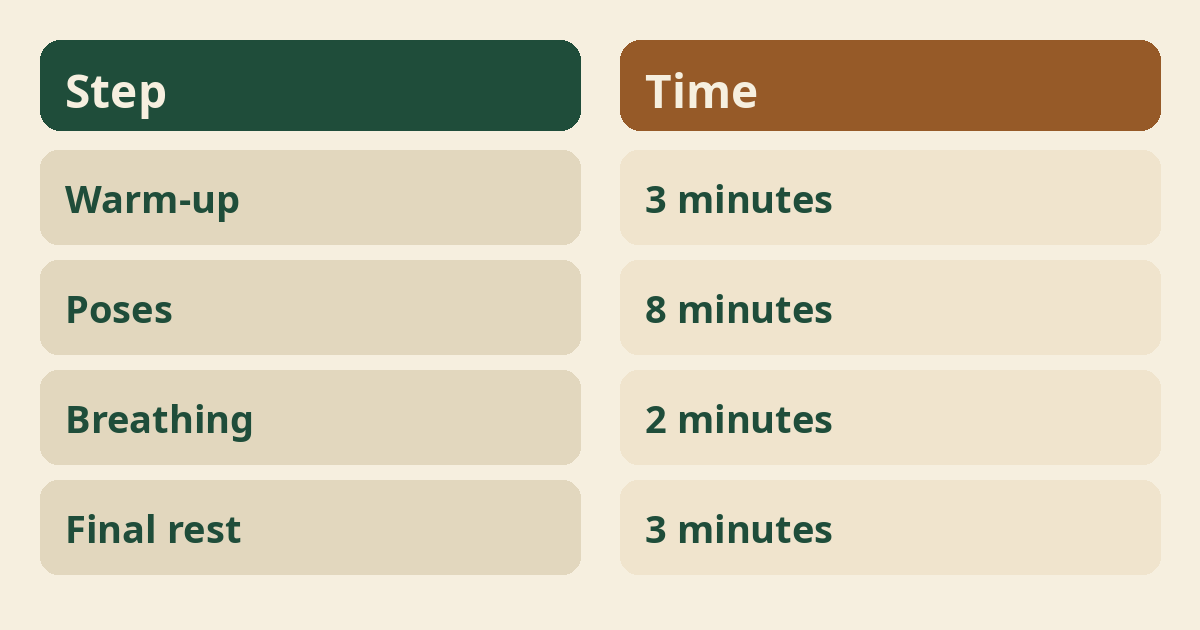
Start by setting a timer, finding your spot, and settling your breath. Step one is to pick a time and place. Step two is to sit or stand and take ten slow breaths. Step three is to move through your warm-up and a few poses. Step four is to finish with a rest and a note of how you feel, which helps you notice progress over time.
What helps with balance poses?
Balance gets easier when you pick a still point to look at and keep your stance wide. Wobbling is normal and not a sign that you are doing it wrong. Stand near a wall or chair so you can reach out for support. Start with feet close to the floor before lifting a foot higher. If this interests you, a few balance-focused routines can help you build confidence.
How can yoga work on flexibility?
Flexibility tends to improve gradually through regular, patient stretching. Hold each stretch for several slow breaths and stop at a point of mild tension, never pain. Consistency matters more than depth. Many people notice small changes over weeks, though results vary. For ideas, look at a routine designed for stiff beginners.
Can you do yoga at a desk or at work?
Yes, a few seated moves can break up a long day of sitting. Try seated twists, neck turns, shoulder rolls, and ankle circles right at your chair. These take a minute or two and need no mat. They are handy when you feel locked up between meetings. You can find more ideas in this set of chair-friendly stretches.
What about your hips, neck, and shoulders?
These areas hold tension for many people, so they appear in lots of beginner routines. Slow hip openers and shoulder stretches can feel good after sitting or carrying a bag. Move with care and never force a stretch. If you carry tension in your upper body, these neck and shoulder stretches are worth a look. For tight hips, try a few low-effort hip routines.
Can yoga be a way to unwind?
Many people use yoga as a calm break from stress. Slow breathing and quiet attention can make the mind feel less crowded for a little while. You do not have to sit still for long to enjoy that. If you want a place to begin, try a short routine built for stressful days. Think of it as a pause, not a performance.
What are the possible benefits of yoga?
Many people find yoga helps them feel more relaxed, more mobile, and more aware of their body. Some also report better sleep and a steadier mood, though results vary from person to person. Research on yoga continues, and it is best seen as a supportive habit rather than a guaranteed outcome. For balanced, science-based background, see National Center for Complementary and Integrative Health. Keep your expectations modest and let your own experience guide you.
Is yoga a treatment for a medical condition?
No, yoga is not a treatment for any medical condition. It is a general wellness practice and does not replace care from a doctor or other qualified health professional. Some people use it alongside their medical care, with their provider’s approval. Never stop or change a prescribed plan because of yoga. If you have a diagnosis, ask your doctor what is suitable for you.
Who should check with a doctor first?
Anyone with a health condition, injury, or recent surgery should talk with a doctor before starting. This also applies if you are pregnant, have high blood pressure, glaucoma, balance problems, or joint concerns. Your doctor can tell you which movements to skip. Pregnancy calls for special care, and this comparison of prenatal and regular classes explains why. When in doubt, ask first.
Can you practice with back pain?
Some people with back discomfort practice carefully, but you should check with your doctor first. Avoid deep forward folds and strong twists unless a professional says they are fine. Move slowly and stop if anything feels sharp. A background read on the topic is how people approach yoga with a sore back. Pain that lingers or spreads deserves a medical visit.
How do you know when to stop?
Stop when you feel sharp pain, numbness, dizziness, or tingling. Mild stretching sensations are normal, but pain is a signal to back off. Come out of the pose slowly and rest. If the feeling does not fade, contact a health professional. Listening to your body is the most important rule in yoga.
What are the most common beginner mistakes?
The most common mistakes are pushing too hard, holding the breath, and rushing. Many beginners also compare themselves with others or skip the warm-up. Another one is practicing in bare, slippery socks. Slow down, breathe, and keep each pose within comfort. These small adjustments make practice safer and more enjoyable.
How do you progress over time?
Progress comes from steady practice, longer holds, and new poses added one at a time. After a few weeks, you might extend each hold by a breath or two. Try one new pose each week and keep the ones you like. Notice changes in how you feel, not just how far you reach. There is no deadline, so see progress as a long, slow walk.
Should you take a class or practice at home?
Both work, and many people mix the two. A class gives you live feedback and a sense of community. Home practice is flexible and free of travel time. Beginners often benefit from a few in-person or live-online classes first, then a home routine. Choose the one you will actually do.
How do you find a good teacher?
A good teacher explains clearly, offers options, and respects your limits. Look for someone with recognized training who invites questions and does not push you into poses. Ask whether the class is beginner-friendly before you go. Trust your gut if a class feels rushed or aggressive. It is fine to try a few before you settle on one.
What mindset helps most?
A kind, patient mindset helps most. Yoga is not a contest, and no one is grading you. Let go of the idea of the perfect pose and pay attention to the experience. Missed days are normal and can simply be a fresh start. Celebrate small wins, like showing up.
How do you stay motivated?
Small, repeatable habits keep motivation going better than big goals. Tie your practice to something you already do, such as after brushing your teeth. Keep your mat visible. Track your sessions on a calendar. Find a friend to practice with, or join a friendly group.
What are some other easy poses to try next?
Once the basics feel familiar, a few more floor poses can widen your routine. Seated and low poses are comfortable choices for beginners. You could try Butterfly Pose for the inner thighs, Garland Pose as a deep squat, Puppy Pose for the upper back, or Thunderbolt Pose as a simple kneeling seat. Add one at a time and keep your breath steady.
What does a first-week plan look like?
A first-week plan can be three short sessions of about fifteen minutes each. On day one, practice the warm-up and the basic sequence. On day three, repeat it and add one new pose. On day five, repeat again and finish with a minute of breathing. By the end of the week you will have a small routine you can keep building.
How do you end a session?
End with a short rest so your body and mind can settle. Lie on your back with your arms by your sides and your legs relaxed. Let your breath return to normal and stay for two to five minutes. Roll to one side before sitting up. This quiet ending is often the part people like best.
Where to read next
For a calm, beginner-friendly start, Ranjana Sinha’s Begin Where You Are is written for people who want simple steps. Our guide to starting a home yoga practice adds a gentle routine you can follow at home.
Frequently asked questions
Is yoga good for complete beginners with no experience?
Yes, beginner classes and routines are built for people with no experience, and poses can be adjusted to suit you.
Will I feel sore after my first session?
Mild muscle tiredness is common after a first try, but sharp pain is a sign to stop and rest.
Do I have to chant or follow a religion to practice?
No, most modern classes focus on movement and breathing, and you can take part without any religious belief.
Can I learn yoga from home with no teacher?
Many people do, as long as they choose beginner-level videos and move carefully within their comfort.
Is it normal to feel clumsy at first?
Yes, nearly everyone feels a bit awkward in the early weeks, and it gets easier with practice.
The bottom line
Start small, stay patient, and let each short session teach you something new.

