
If PCOS has you tired, bloated, and fed up with advice that all sounds the same, a short yoga practice at home is a kind place to start. Yoga for PCOS is simple, low-impact movement and breathing that many women use to manage stress and feel more at home in their bodies. You do not need any experience. This guide walks you through safe poses, an easy routine, and honest answers about what yoga can and cannot do. Brand new to yoga? Start with our complete yoga for beginners guide, then come back here.
This article is general education for beginners, not medical advice for your situation. If you have PCOS or any other health condition, check with your doctor before starting a new exercise routine.
What is PCOS?
PCOS is a common hormone condition that affects how a woman’s ovaries work. PCOS stands for polycystic ovary syndrome. Common signs include irregular periods, acne, weight changes, and extra hair growth. It is long-term, but daily habits and medical care can make it much easier to live with.
What is the difference between PCOS and PCOD?
Many people use PCOS and PCOD to describe the same kind of hormone problem. PCOD is the older term and PCOS is the newer one, and some doctors still use both. The day-to-day advice is much the same: balanced food, movement, sleep, and stress care. Ask your doctor which term fits your reports.
Why do PCOS women try yoga?
Many PCOS women try yoga because it is low-impact, calming, and easy to do at home. Living with a hormone condition can be stressful, and stress itself can feel like it makes everything harder. A slow practice gives you a daily pocket of calm. It also builds strength and mobility without exhausting workouts.
Is yoga a treatment for PCOS?
No, yoga is not a treatment for PCOS, and it cannot replace medical care. PCOS is a medical condition that needs a doctor’s guidance, and sometimes medicine. Yoga is a support habit, like good sleep and balanced meals. Think of it as one part of how you care for yourself, not a fix.
Can yoga help with PCOS symptoms?
Many people find that regular yoga helps them feel calmer and more comfortable, and results vary from person to person. There is no promise that yoga will change your periods, weight, or lab results. Early research on slow movement and breathing is encouraging but still limited, so keep expectations honest. For an overview from a US government health agency, see National Center for Complementary and Integrative Health.
How does stress fit into PCOS?
Ongoing stress can make PCOS feel harder to live with, so calming practices matter. When you are stressed, your body produces more stress hormones. Many women notice their symptoms feel heavier during busy or anxious stretches. Slow breathing and rest poses give your nervous system a regular chance to settle.
Which style of yoga suits PCOS women?
Slow, low-impact styles like hatha and restorative yoga suit most beginners with PCOS. Fast, heated, or very intense classes can be a lot on a tired body. A slow class lets you learn the poses without strain. If you want a practice built around rest, the ideas in yoga for stress relief fit well here.
How do you start yoga for PCOS at home?
Start with ten quiet minutes, a mat, and three or four easy poses. Pick a corner where you will not be disturbed. Wear loose clothes and keep water nearby. Begin with the breathing and poses in the steps below, and stop if anything hurts.
What is the best time of day to practice?
The best time is the time you will actually keep, morning or evening. Morning practice can set a calm tone for the day. Evening practice can help you unwind before bed. Try both for a week and keep the one that feels easier to repeat.
How long should a session be?
Ten to twenty minutes is plenty for a beginner. Short and regular beats long and rare. A brief daily practice is easier to keep than one long weekend class. As it becomes a habit, you can add a few minutes.
How often should you do yoga for PCOS?
Most beginners do well with three to five short sessions a week. Daily easy practice is fine if your body feels good, and rest days are fine too. Consistency matters more than length. For a deeper look at building a rhythm, read about how often to practice yoga.
Step one: start with belly breathing
Belly breathing is the foundation of the whole practice. Sit or lie down, place a hand on your belly, and breathe so your hand rises and falls. Do this for one to two minutes at an easy pace. The full method is in belly breathing for beginners.
Step two: warm up with cat-cow
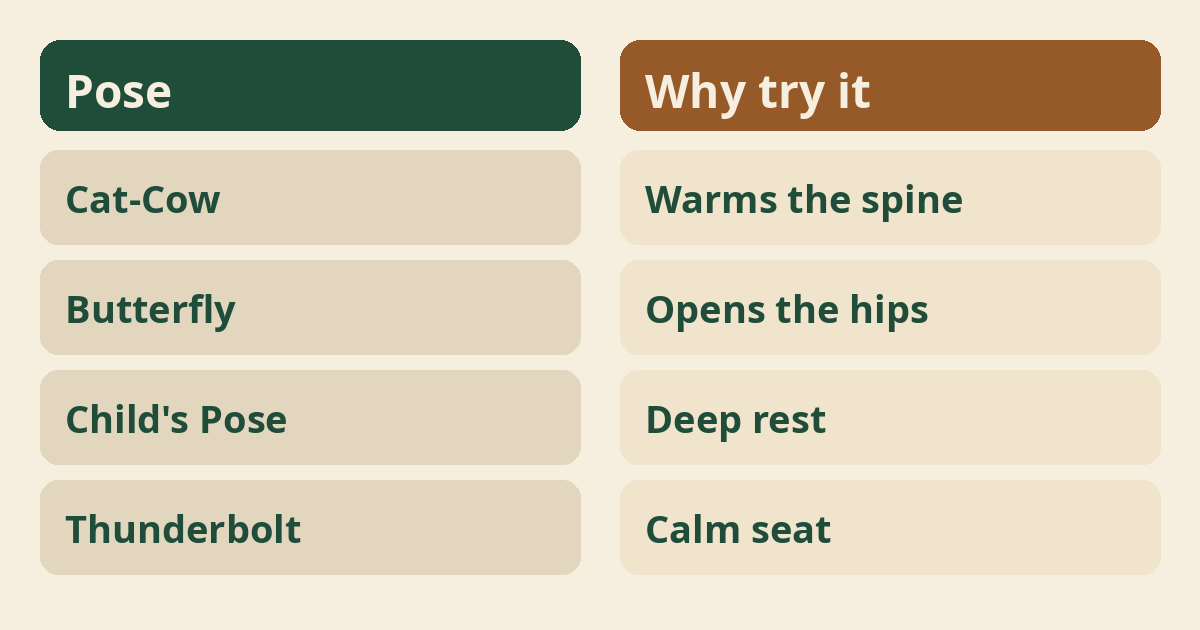
Cat-cow wakes up the spine with slow, easy movement. Come onto hands and knees. Breathe in and let your belly drop, then breathe out and round your back. Move slowly for six to eight rounds. The full steps are in cat-cow pose for beginners.
Step three: open the hips with butterfly pose
Butterfly pose is a seated stretch that opens the hips while you rest. Sit tall, bring the soles of your feet together, and let your knees fall out to the sides. Sit on a cushion if your hips feel tight, and stay for five to ten slow breaths. Full guidance is in butterfly pose for beginners.
Step four: rest in child’s pose
Child’s pose is a resting pose that calms the body and mind. Kneel, fold forward over your legs, and rest your forehead on the mat or a cushion. Breathe slowly for up to a minute. The steps and options are in child’s pose for beginners.
Step five: sit in thunderbolt pose
Thunderbolt is a simple kneeling seat you can hold after meals or anytime. Kneel with your knees together and sit back on your heels, spine tall. Breathe steadily for one to three minutes. If your knees or ankles protest, place a folded blanket under them; details are in thunderbolt pose for beginners.
Step six: finish with quiet rest
End every session with two minutes of stillness. Lie on your back, close your eyes, and let your breath settle on its own. This short rest is where the calming effect tends to land. Do not skip it, even on busy days.
What about hip openers in general?
Slow hip work suits many PCOS women because long sitting tightens the hips. Tight hips can pull on the lower back and make rest poses uncomfortable. Short, regular hip stretches usually feel good after desk work. There is a full routine in yoga for hips for beginners.
Which breathing techniques help?
Slow, easy breathing is the most useful technique for most PCOS women. Try breathing in for a count of four and out for a count of six. The longer out-breath nudges the body toward rest. Skip strong or fast breathing practices while you are a beginner.
What props do you need?
A mat, a cushion, and a folded blanket cover almost everything. Props make poses kinder on joints and help you relax into stretches. A belt or scarf can stand in for a strap. Ideas for a small home kit are in yoga props for beginners.
What are common mistakes to avoid?
The biggest mistakes are pushing too hard and skipping rest. Do not force stretches or hold your breath in poses. Do not copy advanced shapes from videos made for very fit practitioners. Comfort is the goal, not perfect form.
Who should talk to a doctor first?
Anyone with severe pain, recent surgery, or pregnancy should check with a doctor before starting. The same goes for dizziness, heart conditions, or any symptom that worries you. A doctor or physiotherapist can tell you which movements to skip. Bring a list of your medications to that conversation.
What if you are trying to conceive?
Slow yoga is usually considered fine while trying to conceive, but ask your doctor about your plan. Some women with PCOS are on fertility treatment, and that can change what is sensible. Tell your doctor about your practice. If you become pregnant, the guidance changes, and prenatal yoga versus regular yoga explains how.
What if you have a bad back?
Most easy poses can be adapted for a sore back with a few changes. Skip deep twists and strong forward folds on painful days, and keep movements small and slow. The article on yoga with a bad back has safe swaps.
Can you practice with a desk job?
Short movement breaks at your desk can ease the stiffness that builds over a workday. PCOS women are often told to exercise more, but small breaks count too, not only full workouts. A few seated stretches between meetings keep the body from locking up. Try the ideas in yoga at your desk.
How do you build the habit?
Tie your practice to something you already do each day. Roll out the mat after brushing your teeth or before dinner. Keep it short enough that you never dread it. A habit you keep beats a plan you abandon.
How will you progress over time?
After a month or two, you can hold poses longer or add one new pose at a time. Progress in yoga is quiet: breathing slows, hips loosen, and rest comes easier. There is no level to reach and no test to pass. Add challenge only when the basics feel easy.
Should you practice during your period?
Most women can practice through their period if they keep it slow and skip anything that feels wrong. Some prefer full rest on heavy days, and that is fine. With PCOS, periods can be unpredictable, so let your energy decide each day. Comfort leads.
Does yoga help with weight changes in PCOS?
Yoga is light activity, and many people find it supports an active lifestyle, but it is not a weight-loss treatment. Weight with PCOS is shaped by hormones, food, sleep, and medicine, so no single habit controls it. Many women find that moving kindly makes other healthy habits easier to keep. Results vary widely.
What about food, sleep, and the rest of your routine?
Yoga works best as one piece of a wider daily routine. Regular meals, steady sleep, and any treatment your doctor prescribes all matter more than any pose. Think of yoga as the thread that makes the whole routine feel calmer and easier to keep.
Should you learn with a teacher?
A few sessions with a qualified teacher can set you up well. A teacher can adjust poses to your body and catch habits you cannot see yourself. If you can, look for someone experienced with hormone conditions or women’s health. Online classes count if in-person is hard.
How do you keep a healthy mindset?
Treat your practice as care, not punishment. PCOS can bring frustration with your own body, and yoga should never add to that. Some days you will do two poses and stop, and that still counts. Kindness toward yourself is part of the practice.
How do you track what helps?
A simple journal can show patterns over a few months. Note your practice days, energy, sleep, and cycle dates in one place. Over time you may spot what steadier weeks look like. Bring these notes to doctor visits if you like.
When should you stop and seek help?
Stop and talk to a doctor if you feel sharp pain, dizziness, or anything unusual. Mild muscle tiredness after practice is normal. Pain that lingers, faintness, or a symptom that suddenly changes is not. Your doctor is the right first call for anything that worries you.
Where to read next
For a calm, beginner-friendly start, Ranjana Sinha’s Begin Where You Are is written for people who want simple steps. Our guide to starting a home yoga practice adds a gentle routine you can follow at home.
Frequently asked questions
Is PCOD the same thing as PCOS?
The two terms overlap heavily, and your doctor can tell you which one matches your reports.
Which yoga pose is best for PCOS?
No single pose treats PCOS, but butterfly pose, cat-cow, and child’s pose are comfortable starting points for most beginners.
Can I do yoga when my periods are irregular?
Yes, most women can practice on any day if they keep it slow and listen to their body.
Do I need to join a class to begin?
No, a mat and ten quiet minutes at home are enough to start.
Will yoga balance my hormones?
There is no guarantee it will, and any hormone treatment decisions belong with your doctor.
The bottom line
Start small, stay kind to yourself, and let a short daily practice become the calmest part of your PCOS routine.

