
A bad headache day can make light, noise, and even small movements feel like too much. Beginner yoga for migraine offers a slow, quiet way to unwind tension on your better days, with easy poses and calm breathing. It is not a cure and it cannot stop attacks, but many people find a short, kind practice helps them feel steadier. This guide walks you through safe first steps, what to skip, and when to talk with your doctor. Brand new to yoga? Start with our complete yoga for beginners guide, then come back here.
This guide is general education, not medical advice shaped to your health. If you live with migraine or any other condition, check with your doctor before starting a new movement routine.
What is beginner yoga for migraine?
It is a slow, simple yoga practice shaped for people who live with migraine. The pace stays calm, the poses stay easy, and nothing strains your head or neck. You rest more than you move. Most of the work happens on the floor, where you can stop at any moment. The goal is comfort on your good days, not pushing through pain.
Why do people with migraine try yoga?
Many people try yoga for migraine relief because stress and tight muscles often sit close to their headaches. A quiet practice gives the body a chance to soften after a tense week. Slow breathing can feel settling when the nervous system runs hot. Some people also like having one calm habit that belongs only to them. Others simply want something active they can still do on fragile days.
Is yoga a treatment for migraine?
No, yoga is not a treatment or a cure for migraine. Migraine is a medical condition that needs proper care from a doctor. Yoga can be one supportive habit next to that care, never a replacement for it. No pose or breathing exercise can stop an attack once it starts. Keep following any medicine or plan your doctor gave you.
When should you see a doctor first?
See a doctor before starting if your headaches are new, changing, or severe. A sudden worst-ever headache, weakness, confusion, or vision loss needs urgent care, not a yoga mat. Headaches that keep getting worse also deserve a proper check. New headaches after a head or neck injury belong on that list too. A doctor can rule out causes that movement alone cannot address.
How is migraine different from a regular headache?
Migraine is much more than ordinary head pain. Attacks often come with nausea, light sensitivity, sound sensitivity, or visual changes. A regular tension headache usually stays milder and steadier. Knowing which one you live with shapes how you practice. If you are not sure which you get, your doctor can help you tell them apart.
What do you need before you start?
You need a quiet spot, a mat or soft carpet, and ten unhurried minutes. Dim the lights if brightness bothers you. Keep water nearby and silence your phone. Comfortable clothes that let you breathe freely are enough. You do not need special gear, a studio membership, or any experience at all.
How do you set up a calm space?
Choose a cool, dim, quiet corner where you will not be disturbed. Strong light, heat, and noise bother many people with migraine, so soften all three. A folded blanket and a pillow within reach make resting poses easier. Keep the room slightly cool rather than warm. Let the people you live with know you need twenty undisturbed minutes.
How do you start a short session?
Begin with one minute of stillness before any movement. Sit or lie down and notice how your head, neck, and shoulders feel today. Let that scan decide how much you do. Rate the day quietly in your mind: good, fragile, or off-limits. On rough days, stillness alone counts as practice.
Step 1: settle your breathing
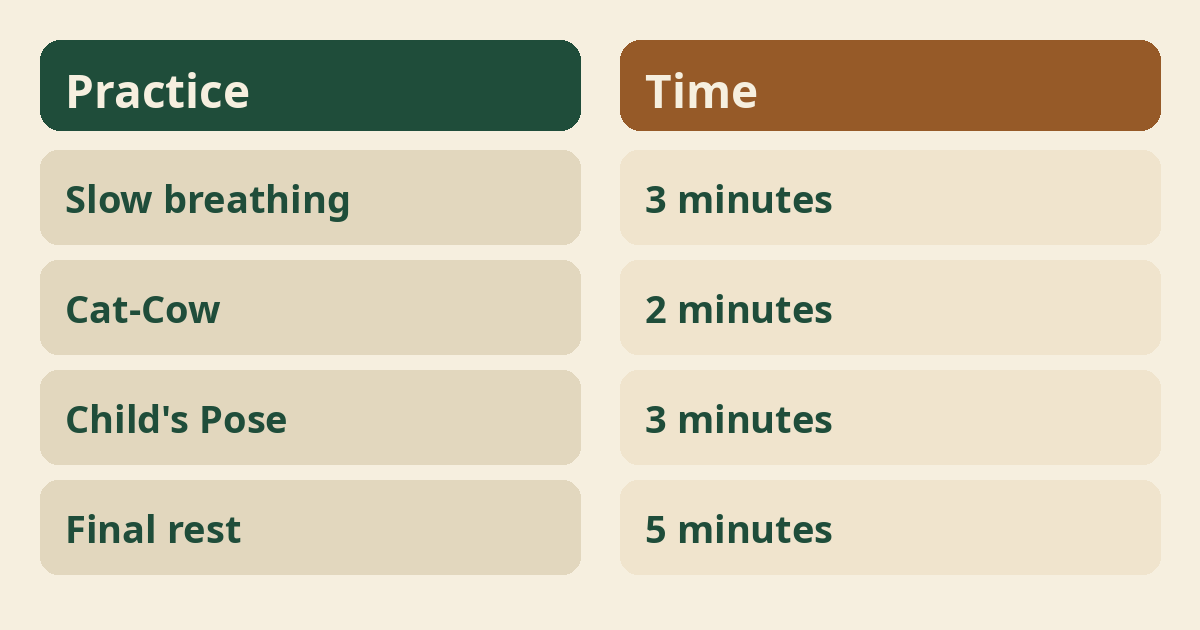
Start every session with slow, easy breaths. Breathe in through your nose for a count of four, then out for a count of six. Longer exhales help many people unwind. Keep your jaw, eyes, and forehead soft while you breathe. If counting feels like work, simply breathe slowly and softly.
Step 2: warm up your neck and shoulders
Move your neck and shoulders slowly, with a small range. Drop your chin slightly, roll your shoulders back, and pause wherever you feel tightness. Never force a stretch near your head. Small shoulder circles beat big stretches here. If you want a fuller routine later, yoga for neck and shoulders offers slow options that suit sensitive days.
Step 3: move your spine slowly
Use slow, small spinal movements to loosen your back. On hands and knees, round your back as you breathe out and soften it as you breathe in. Keep the motion small and smooth, with no jerking. Let your neck follow your spine instead of leading it. The pair of movements in cat-cow pose works well here because your head stays level the whole time.
Step 4: rest in a supported pose
Spend several minutes in a resting pose with your head supported. Kneel, fold forward, and rest your forehead on stacked hands or a cushion. Stay for eight to ten slow breaths. Widen your knees if your belly or chest feels compressed. Child’s pose is a favorite for many people because it quiets the body without any effort.
Step 5: close with stillness
End every session lying still in a comfortable position. Lie on your back with a pillow under your knees and a cloth over your eyes if light bothers you. Rest for three to five minutes. Let your attention sit on the breath without trying to change it. This quiet finish is often the part people value most.
Which breathing style suits migraine?
Slow, quiet belly breathing suits most beginners best. Place one hand on your belly and let it rise as you breathe in, then soften as you breathe out. Keep the breath silent and smooth rather than deep or forced. Skip strong or fast breathing techniques, which can feel activating. The basics in belly breathing show the simple shape of this breath.
How long should a session be?
Ten to fifteen minutes is plenty for a beginner session. Short and calm beats long and tiring when your head is sensitive. You can rest the whole time if that is what your body asks for. Ten honest minutes help more than thirty strained ones. Add minutes only when the short version feels easy.
How often should you practice?
Most beginners do well with three to five short sessions a week. Regular, easy practice tends to feel better than rare, long efforts. Rest days are fine whenever you need them. Consistency matters more than session length here. If you want help planning a rhythm, how often you should do yoga walks through simple weekly patterns.
What does a simple beginner week look like?
Three short sessions with rest days between them make a solid first week. For example, practice on Monday, Wednesday, and Saturday for ten to fifteen minutes each time. Keep every session identical at first so it becomes familiar. Familiarity lowers the effort of starting. After two comfortable weeks, you can add a fourth day if you like.
Which poses feel kind on good days?
Easy floor poses and supported stretches suit most people on headache-free days. Lying twists, supported forward folds, and slow seated stretches all work well. Keep your head level or propped in every pose. The steady standing base in mountain pose is a calm way to practice posture without strain. Skip anything that makes pressure build behind your eyes.
What should you skip during an attack?
Skip all active practice while a migraine attack is running. Movement, bending, and upside-down poses often feel worse mid-attack. Rest in a dark, quiet room instead and follow your doctor’s care plan. Even slow breathing can feel like too much for some people mid-attack, and that is normal. Yoga waits for you on the other side.
What are common mistakes beginners make?
The biggest mistake is practicing like nothing is wrong on a day your body says otherwise. Other common slips are holding the breath during stretches, craning the neck in floor poses, and practicing in a bright, warm room. Pushing for intensity also backfires. Another frequent error is skipping the resting finish to save time. Slow and small always wins here.
Which props make practice easier?
A bolster, two blankets, and an eye pillow cover nearly everything you need. Props lift the floor closer to you so no pose demands strain. An eye pillow blocks light during rest, which many people with migraine love. A rolled towel under the neck can make lying down far more comfortable. Yoga props for beginners explains what each item does and how to improvise with things you already own.
Who should be careful or check with a doctor?
Anyone with frequent, worsening, or unusual headaches should talk with a doctor before starting. The same goes for people with neck injuries, blood pressure concerns, glaucoma, or pregnancy. A quick conversation with your doctor clears the way and can shape which poses suit you. Mention how often your headaches come and what they feel like. Bring your questions to that visit.
Can yoga trigger a headache?
Yes, the wrong kind of practice can set off a headache in some people. Hot rooms, hard effort, breath holding, and upside-down poses are common culprits. Cool rooms, slow movement, and steady breathing lower the odds a lot. Dehydration and an empty stomach can also turn a session sour. Notice what your own body reacts to and adjust.
What benefits do people report?
Many people say regular calm practice leaves them feeling looser, steadier, and less wound up, though results vary from person to person. Some notice they handle stress better, and stress sits close to migraine for many. Research summaries from National Center for Complementary and Integrative Health note that yoga may help with stress and some pain conditions, while evidence for migraine itself is still limited. Others simply enjoy better sleep and looser shoulders. Keep your expectations modest and your practice pleasant.
What about yoga for migraine prevention?
Some people hope yoga can play a role in migraine prevention, but no practice can promise fewer attacks. What yoga can do is support sleep, ease muscle tension, and steady stress, all of which matter to many people with migraine. Think of it as one helpful piece of a bigger care picture. Medication, trigger management, and steady daily routines still do the heavy lifting. Your doctor’s plan stays in charge of prevention.
How do you progress over time?
Progress means slightly longer rest, slightly smoother breath, and slightly easier poses. Add one small change at a time over weeks, not days. A pose counts as progress when it feels kind, not when it looks impressive. You might hold a resting pose longer or add one new shape. If anything stirs up symptoms, step back to the last easy version.
Do you need a teacher?
A teacher is helpful but not required for this style of practice. If you join a class, tell the teacher about your migraine before it starts so they can offer easier options. Restorative or beginner classes suit you better than fast or heated ones. A good teacher will never push you past comfort. Home practice with short sessions works well too.
Are online videos okay to follow?
Yes, as long as you choose slow beginner or restorative sessions. Look for calm, short practices rather than sweaty flows. Pause freely and skip any pose that strains your head or neck. Keep the screen dim and the volume low on tender days. Your body, not the video, sets the pace.
How does stress tie into migraine?
Stress is one of the most commonly reported migraine triggers. A calm practice gives your body a regular way to come down from high alert. Over time, that settling habit may matter as much as the poses themselves. Many people notice their shoulders drop and their jaw unclench within minutes. Yoga for stress relief shares more slow practices built for unwinding after long days.
How do you build a habit that sticks?
Tie your practice to something you already do each day. Ten minutes after morning coffee or before bed works because the anchor already exists. Keep your mat somewhere visible so starting takes no setup. Mark each session with a tick on a calendar so the streak stays visible. A habit you enjoy survives busy weeks.
What is the right mindset?
Treat practice as care for yourself, not a test to pass. Some days you will move, some days you will only breathe, and both count. Letting go of performance keeps the whole thing calming. Comparing yourself to flexible people online misses the point entirely. The mat is a place to recover, not achieve.
Can you practice at your desk?
Yes, short seated pauses at your desk can ease the tension that builds over a workday. Roll your shoulders, tip your ear slightly toward one shoulder, and breathe slowly for a minute. Screen breaks matter because long focus strains eyes and neck. Even two minutes between meetings can release a tight jaw and shoulders. Yoga at your desk has more short options for work hours.
How do you track what helps you?
Keep a simple note of practice days and headache days. A few words in a notebook or phone is enough. Over a month or two, patterns sometimes appear that help you and your doctor. Note sleep, stress, and food alongside practice and headache days. Bring those notes to your next appointment.
Morning or evening practice?
Either time works, so pick the one you will actually keep. Morning sessions can set a calm tone for the day. Evening sessions help many people unwind before sleep. Fragile mornings might call for extra slowness and dim light. Try both for a week and keep the one that feels natural.
What if you feel dizzy or nauseous?
Stop moving, lie down, and rest until the feeling passes. Rise slowly from any floor pose, and sit for a moment before standing. Keep a wall or chair nearby if balance feels off. If dizziness or nausea shows up often during practice, mention it to your doctor. Your comfort always outranks finishing a routine.
How do you keep practice safe on hard days?
On hard days, reduce practice to breathing and rest, or skip it entirely. Lying still with an eye pillow and slow breaths is a complete session when that is all you have. Never push through rising head pain to finish a routine. Fragile days call for the floor, the dark, and the breath. The practice serves you, never the reverse.
Can you combine yoga with walking?
Yes, easy walking pairs naturally with a calm yoga routine. A short walk adds light cardio without jolting your head. Many people walk on rest days and keep yoga for the quieter ones. Together they cover movement, fresh air, and recovery. Start with flat, familiar routes at an unhurried pace.
How does sleep fit into the picture?
Steady sleep matters to many people with migraine, and evening practice can support it. A slow session before bed tells your body the day is done. Keep the lights low and skip screens afterward so the calm carries over. Going to bed at a similar time each night helps too. If sleep stays difficult, raise it with your doctor.
Does slow yoga count as real exercise?
Slow practice counts as movement, and it pairs well with other easy activity. Walking, stretching, and calm yoga together cover most of what a beginner body needs. You can add stronger forms later if your head tolerates them. Slow practice also builds body awareness, which helps you spot early warning signs. For now, easy and regular is the whole plan.
What should you remember before starting?
Remember three things: go slow, stay comfortable, and keep your doctor in the loop. Yoga for migraine relief works best as a small, pleasant habit on your good days. It supports your care and never replaces it. Talk with your doctor, set up a calm corner, and begin with breathing alone if you like. Start with ten quiet minutes and let the practice grow on its own.
Where to read next
For a calm, beginner-friendly start, Ranjana Sinha’s Begin Where You Are is written for people who want simple steps. Our guide to starting a home yoga practice adds a gentle routine you can follow at home.
Frequently asked questions
Can I practice during a full migraine attack?
No, rest in a dark, quiet room during an attack and save movement for symptom-free days.
Will yoga make my migraines disappear?
Yoga is not a cure, so think of it as a comfort habit that may support your wider care.
I have never done yoga, so where do I begin?
Begin with ten minutes of slow breathing and one or two easy floor poses.
Are hot yoga classes a good idea for me?
Most people with migraine do better in cool, quiet, slow sessions because heat and hard effort can feel triggering.
Should I stop my migraine medicine if yoga feels good?
Never change prescribed medicine without your doctor, no matter how good practice feels.
The bottom line
Start small, stay kind to your head, and let this quiet practice earn its place in your week.

