
A heavy, bloated belly can make the whole morning feel stuck before the day even starts. Simple yoga poses, slow breathing, and a short daily routine may help get things moving again. This guide walks you through an easy beginner practice for constipation relief, with clear steps, safety notes, and honest limits. You only need a mat, a few quiet minutes, and no experience at all. Brand new to yoga? Start with our complete yoga for beginners guide, then come back here.
This guide is general education, not medical advice, and it cannot diagnose or treat any condition. If your constipation is ongoing, painful, or comes with other symptoms, check with your doctor before trying these poses.
What is yoga for constipation?
Yoga for constipation is a set of easy poses and breathing exercises that may support healthy digestion. The poses use slow movement, mild twists, and deep belly breaths to relax the body. There is no jumping, straining, or hard effort involved. Many people use it as a daily home habit alongside water, fiber, and walking. It suits complete beginners because every pose can be softened with props and shorter holds.
What counts as constipation?
Constipation usually means fewer than three bowel movements a week, or stools that are hard, dry, and difficult to pass. Many people also feel bloated, heavy, or unfinished after going. It is one of the most common digestive complaints in the world. Occasional constipation is usually harmless and tied to routine changes. Constipation that lasts for weeks deserves a conversation with a doctor.
Why does digestion slow down?
Digestion can slow down because of low water intake, low fiber, stress, travel, poor sleep, and long hours of sitting. Busy routines also make it easy to ignore the urge to go, which trains the body to hold on. Shift work, new foods, and some medicines can play a part as well. Over time this can leave you feeling heavy, gassy, and uncomfortable. Knowing the cause helps you pick the right response, and movement is one piece of that response.
What causes that bloated feeling?
Bloating usually comes from gas, slow digestion, or swallowed air, and it often travels together with constipation. Tight clothing, fast eating, and fizzy drinks can add to the pressure. Stress matters too, because a tense belly holds gas instead of letting it move. Mild bloating after a big meal is normal and passes on its own. Bloating that is constant, painful, or getting worse is a reason to see a doctor.
Why do people try yoga for constipation relief?
People try yoga for constipation relief because it is free, low-impact, and simple to do at home. It fits into a morning routine without equipment or a gym membership. It also pairs well with the other habits doctors often suggest, like movement, fluids, and stress care. Many people like that it addresses body and mind at the same time. And unlike many remedies, the only real cost is a few minutes a day.
How might movement help your gut?
Slow, steady movement may wake up the muscles around the belly and help stool move through the intestines. Twists and forward folds add light pressure to the abdomen, which some people feel as a soft internal massage. Physical activity in general is known to support regular bowel habits. A calm nervous system also supports digestion, and yoga is good at calming the body. None of this is a guarantee, but together these effects explain why so many people find the practice helpful.
Can yoga help with bloating?
Many people find that twists, folds, and deep breathing ease the tight, gassy feeling of bloating, though results vary. Slow breathing in particular may help the belly relax so trapped gas can move along. Knees-to-chest style positions are a traditional favorite for this. The relief is often gentle and gradual rather than instant. If bloating is constant or painful, bring it up with a doctor rather than stretching through it.
Is yoga a treatment for constipation?
No, yoga is not a treatment, cure, or medicine for constipation or any digestive condition. It is a wellness habit that some people find helpful as part of a bigger routine. It does not replace fiber, fluids, movement, or medical care. Constipation that lasts, keeps coming back, or comes with pain, blood, or weight loss needs a doctor, not a yoga mat. Think of the practice as support for your body, never as a substitute for treatment.
When should you see a doctor first?
See a doctor before starting if your constipation is new, severe, lasts more than a couple of weeks, or comes with warning signs. Warning signs include blood in the stool, strong belly pain, vomiting, fever, or weight loss you cannot explain. A sudden change in bowel habits after age fifty is also worth checking. A doctor can rule out causes that yoga cannot address. Once serious causes are excluded, a gentle movement habit is usually a welcome addition.
Who should be careful with these poses?
Pregnant women, anyone healing from belly surgery, and people with a hernia or a back injury should get medical advice first. Twists and belly pressure are exactly the poses that need care in these situations. If your back is sensitive, read our guide on doing yoga with a bad back before trying them. People with dizziness or blood pressure issues should move between positions slowly. Skip any pose that causes pain, numbness, or strain.
What do you need to start?
You need a mat or folded blanket, loose comfortable clothes, and ten quiet minutes. A cushion or block makes floor poses easier on the knees and hips. A folded towel under the forehead turns a rest pose into real rest. Our guide to yoga props for beginners shows simple swaps using things you already own. Nothing on this list costs more than a few minutes of setup.
How do you start a simple routine?
Start with ten minutes of easy poses in the morning, before breakfast or your first tea. Keep the pace slow and the breath steady rather than chasing a workout. The six steps below give you a complete beginner sequence you can repeat each day. Do them in order, because the sequence moves from breathing to warming up to deeper positions. If ten minutes feels long, start with five and build up.
Should you eat before practicing?
No, practice on an empty or nearly empty stomach for comfort. Twists and belly pressure feel unpleasant on a full stomach and can trigger nausea. A glass of warm water before you start is fine and may even help. Wait two to three hours after a large meal, or about an hour after a light snack. This is one reason mornings work so well for this routine.
Step 1: settle into belly breathing
Sit or lie down comfortably and take ten slow breaths that fill your belly. Place one hand on your stomach so you can feel it rise and fall. Belly breathing relaxes the nervous system, and a relaxed body digests food more easily. Let the exhale run a little longer than the inhale for extra calm. Learn the basics in our guide to belly breathing for beginners.
Step 2: warm up with cat and cow
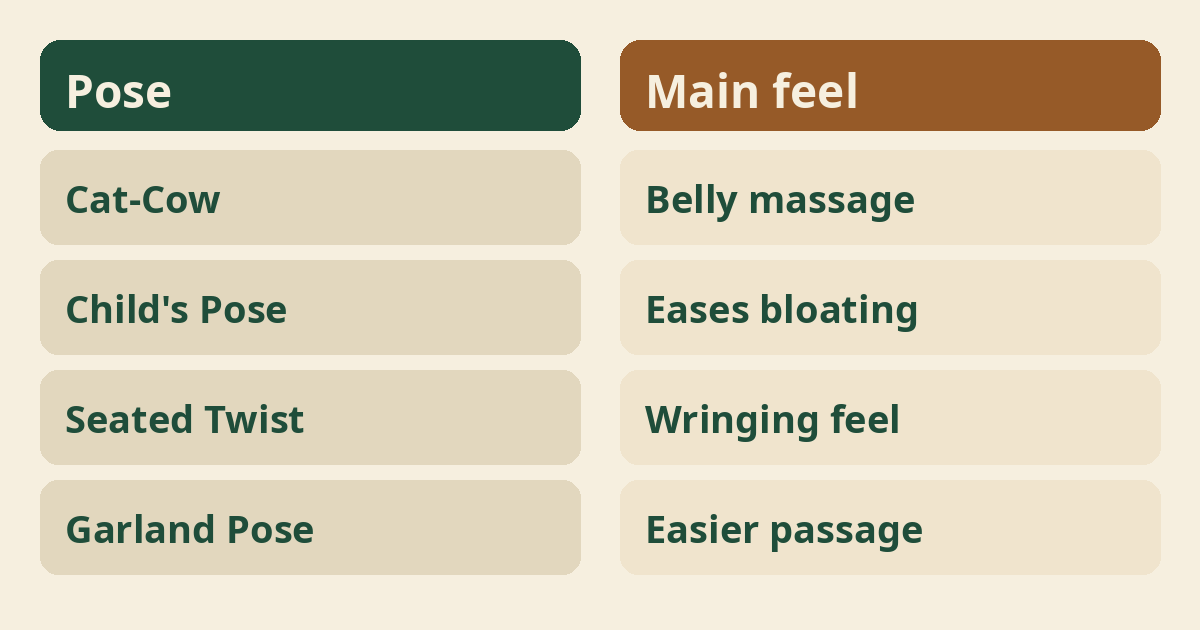
On hands and knees, slowly arch and round your back for about one minute. Match the movement to your breath, arching as you inhale and rounding as you exhale. This gentle rocking of the spine gives the belly a soft internal massage. It also loosens a stiff back, which makes the rest of the routine more comfortable. The full how-to is in cat cow pose for beginners.
Step 3: rest in child’s pose
Fold forward over your knees, rest your forehead down, and breathe for one to two minutes. Widen your knees if your belly needs more room. The light pressure of your thighs against your abdomen can feel soothing when you are bloated. Let each exhale soften the belly a little more. You will find the details in childs pose for beginners.
Step 4: try a seated twist
Sit tall, turn your chest to one side, hold for five slow breaths, then switch sides. Twists create a soft wringing feeling through the middle of the body that many people enjoy for digestion. Sit on a folded blanket if your lower back rounds when you sit tall. Move slowly and never force the turn past what feels easy. The twist should feel like a comfortable squeeze, not a strain.
Step 5: squat in garland pose
A deep, supported squat places the body in a position that may make bowel movements easier. Hold a chair or sit on a block if your heels lift or your knees complain. Keep the chest lifted and the breath slow for thirty seconds to a minute. This position lines up the body the way humans were built to eliminate. The full breakdown is in garland pose for beginners.
Step 6: finish in thunderbolt
Kneel and sit back on your heels for one to three minutes while you breathe slowly. Many families in India sit this way after meals as a traditional digestion habit. Tuck a blanket under your ankles if the tops of your feet ache. This is also a calm place to notice how your belly feels after the sequence. Learn the pose in thunderbolt pose for beginners.
Can you practice in bed?
Yes, knees-to-chest, a soft twist, and belly breathing all work lying on a firm mattress. This is useful on mornings when getting to the floor feels like too much. Keep the moves small and slow, especially right after waking. A bed routine will not replace the full sequence, but it keeps the daily habit alive. Any movement is better than skipping the day entirely.
How should you breathe during the poses?
Breathe slowly through your nose, letting the belly rise on the inhale and soften on the exhale. Long, easy exhales tell the body it is safe to rest and digest. Avoid holding your breath, even for a moment, because breath-holding creates tension in the belly. If you catch yourself straining for air, back out of the pose a little. The breath is the real engine of this whole routine.
How long should a session be?
Ten to fifteen minutes is enough for most beginners. A short daily practice beats one long weekly session for building a habit your gut can rely on. Longer is not better if it makes you skip days. Add time only when the routine starts to feel easy and automatic. On busy days, even five minutes of breathing and one twist counts.
How often should you practice?
Most people do well with a short session every day, or at least five days a week. Daily rhythm matters more than intensity for digestion. Your gut responds to patterns, so a steady routine teaches it what to expect. Miss a day and simply pick the practice back up the next morning. Our guide on how often you should do yoga helps you find a schedule you can actually keep.
What time of day works best?
Morning works well for many people because the gut is often most active soon after waking. Practicing before breakfast also means an empty stomach, which twists and folds prefer. An evening session is fine too, as long as you wait two to three hours after a heavy meal. Some people do a short morning routine and a two-minute breathing pause at night. Pick the time you can repeat without effort.
What are the common mistakes?
The biggest mistakes are forcing twists, holding the breath, and practicing right after a large meal. Rushing through poses turns a calming practice into a workout, which works against digestion. Another common error is clenching the belly instead of letting it soften on the exhale. Skipping days and then doubling up to compensate also backfires. Slow down, breathe fully, and stay within a comfortable range.
What if a pose hurts?
Come out of the pose right away and rest in a comfortable position. Mild stretching sensation is normal, but sharp, stabbing, or pinching pain is not. Try a smaller version of the pose or add a prop for support. If the same pose hurts every time, swap it for a different one from the sequence. Pain that follows you off the mat is a reason to talk with a doctor or physiotherapist.
What benefits do people report?
Many people find that regular practice leaves them feeling lighter, less bloated, and more regular, though results vary from person to person. Some also report calmer mornings and less stress around bathroom habits. Research on yoga and digestion is still growing, and resources like National Center for Complementary and Integrative Health give balanced overviews of what is known so far. The evidence supports yoga as a reasonable wellness habit, not a proven fix. Treat it as one helpful piece of a bigger routine, not a solution on its own.
What results should you expect?
Change is usually gradual, showing up over days to weeks rather than in one session. Some people notice easier mornings within the first week, while others need longer. The first sign is often reduced bloating rather than a change in frequency. Stress relief tends to arrive before digestive changes do. If nothing improves after a few weeks, that is useful information to share with your doctor.
What are signs the routine is working?
Early signs include less bloating after meals, a calmer belly, and more predictable mornings. You may also notice you look forward to the quiet ten minutes, which is its own kind of progress. Better sleep and lower stress often show up alongside digestive changes. Keep mental notes week to week rather than judging each day. Small, steady shifts matter more than one dramatic morning.
How do you progress over time?
Add one minute or one new pose each week as the routine begins to feel easy. You can also hold twists a little longer or add a second short session after dinner. Another natural step is learning new poses that target the hips and lower back. Progress here means consistency and comfort, not harder poses. If a change makes the practice feel like a chore, scale back to what felt good.
Can a teacher help?
A qualified teacher can check your form and suggest changes that suit your body. Even one or two sessions can fix small habits you cannot see yourself, like a rounded back in folds or a held breath in twists. A teacher can also adapt the routine for pregnancy, injuries, or limited mobility. Look for someone experienced with beginners and health conditions. Tell the teacher about any medical issues before class begins.
What mindset helps the practice?
Treat the routine as a small daily kindness rather than a test you can pass or fail. Tension is the enemy of digestion, and judging yourself creates tension. Some mornings will feel productive and others will feel flat, and both are fine. Show up, breathe, move a little, and let the habit do its quiet work. Patience is not a bonus here; it is part of the method.
What habits support the practice?
Water, fiber-rich food, and daily walking do more for digestion than any single pose. Yoga works best as part of this bigger picture, not as a replacement for it. Regular meal times and unhurried bathroom visits also help the body find its rhythm. A glass of water after your morning session is an easy place to begin. If your doctor has suggested diet or medicine changes, keep those going alongside the practice.
Can you do anything at your desk?
Yes, seated twists and slow breathing at your desk can ease the tight, gassy feeling that builds during a long workday. Sitting still for hours slows everything down, including your gut. Even standing up once an hour makes a difference. Try the ideas in yoga at your desk for beginners when you cannot roll out a mat. Small movement snacks through the day add up.
Which poses should you skip or change?
Skip deep twists and strong core work if you are pregnant, healing from surgery, or managing a hernia. Swap them for easy breathing and supported rest poses instead. People with knee pain can pad every kneeling pose or practice the sequence seated in a chair. Back pain calls for smaller ranges of motion and more props. When in doubt, a doctor or experienced teacher can tell you what is safe for your situation.
Does stress affect your gut?
Yes, stress can slow digestion, which is one reason a calming practice may help. The gut and the brain are closely linked, so worry often shows up as a knot in the belly. Deadlines, conflict, and poor sleep can all echo through your digestion. Slow breathing is the fastest tool you have for dialing that response down. Our guide to yoga for stress relief for beginners goes deeper on this side of the practice.
Is it normal if nothing happens right away?
Yes, it is completely normal for the first few sessions to produce no obvious change. Your body is learning a new habit, and habits take repetition to show results. The relaxation benefits arrive even when the digestive ones lag behind. Stay with the routine for two to three weeks before judging it. If weeks pass with no change at all, bring it up with your doctor.
Do you need any fitness or flexibility?
No, these poses were chosen because stiff, tired, complete beginners can do them. Every position in the routine has a supported version using pillows, blocks, or a chair. You will not be asked to touch your toes or balance on one leg. Comfort is the measure of a good session, not depth. If you can breathe and move slowly, you can do this practice.
Should you practice during pregnancy?
Only with medical approval and guidance, since deep twists and belly pressure are usually not advised during pregnancy. Constipation is common in pregnancy, which makes this question important. Prenatal classes use different poses and different rules for exactly this reason. Our comparison of prenatal yoga and regular yoga explains what changes and why. Always clear new movement with your doctor first.
Where to read next
For a calm, beginner-friendly start, Ranjana Sinha’s Begin Where You Are is written for people who want simple steps. Our guide to starting a home yoga practice adds a gentle routine you can follow at home.
Frequently asked questions
Will yoga make me poop right away?
Some people feel the urge soon after practice, but most notice gradual change over days to weeks.
Which single pose works best for constipation?
No single pose is best, though squats, twists, and child’s pose are popular choices for digestion support.
Is daily practice safe for a beginner?
Daily practice is fine for most healthy beginners as long as the poses stay comfortable and pain-free.
Can yoga replace my laxatives or other medicine?
No, yoga is not a replacement for any medicine, so follow your doctor’s advice on treatment.
Why do I feel gassier since starting yoga?
New movement can shift trapped gas around, and this usually settles within a week or two as your body adjusts.
The bottom line
Start with ten quiet minutes tomorrow morning, and let a small daily habit do the slow, steady work.

