
A heavy meal, a tight waistband, and that slow, stuffed feeling for the rest of the afternoon. Beginner yoga for digestion offers a simple way to feel more comfortable: easy poses and calm breathing that many people find help their belly settle. You do not need experience, special gear, or much space. This guide walks you through a short routine, when to practice around meals, and what to expect, so you can start tonight. Brand new to yoga? Start with our complete yoga for beginners guide, then come back here.
This article is general education, not medical advice or a plan for any health condition. If you have ongoing stomach pain, a diagnosed condition, or recent surgery, talk with your doctor before you start.
What is yoga for digestion
Yoga for digestion is a set of easy poses and breathing practices done to support everyday belly comfort. The poses use slow movement, soft twists, and upright sitting. The breathing is calm and unhurried. The goal is simple: help your body relax so digestion can do its job without extra tension. It is a comfort practice, not a fix for any illness. Anyone can learn the basics at home in a few minutes a day.
Why people try it
Most people come to yoga for digestion because meals leave them feeling heavy, gassy, or bloated. Long sitting, fast eating, and stress can all make a belly feel worse. Many of us eat at a desk, rush back to work, and never give the body a quiet moment. A short practice gives it that moment. Many people also like that it takes only a few minutes and no equipment. It fits into a lunch break or the gap between dinner and bed.
Can yoga really help digestion
Many people find that slow poses and steady breathing ease the feeling of fullness and gas, though results vary from person to person. Relaxation can calm the nervous system, and a calm body tends to digest with less fuss. Soft movement also keeps the belly muscles active and gives the middle of the body a mild, pleasant massage feeling. None of this is a promise, and research in this area is still growing. Think of it as support, not a cure. If your symptoms are strong or constant, a doctor should be your first stop.
Yoga after a meal: the ground rules
After a meal, stick to upright, easy poses and skip anything that presses or squeezes the belly hard. Wait about 15 to 30 minutes after eating before you begin. Choose poses like sitting tall or a soft kneel. Save stronger twists and bends for at least two hours after a big meal. A short walk plus a few minutes of upright sitting is a good pairing. When you are unsure, the upright option is always the safe one.
What about gas and bloating
Easy movement and upright sitting may help trapped gas move along, which is why many people feel lighter after a short session. Poses that fold or twist the middle, done softly, can create a mild massage feeling in the belly. Passing gas during practice is normal and nothing to be embarrassed about. Slow breathing also helps, because gulping air while tense can add to the problem. If bloating is constant, painful, or new for you, check with a doctor. Do not rely on yoga alone to explain it away.
How to start as a beginner
Start with five minutes of seated breathing and one or two poses, then build from there. Pick a quiet spot and wear loose clothes around the waist. Practice at the same time each day so it becomes a habit. Short and regular beats long and rare. Many beginners attach it to lunch or dinner, because the meal itself becomes the reminder. If you miss a day, simply start again at the next meal.
Before you begin: food and timing
An empty or lightly filled stomach is best for most poses, while a couple of poses work right after eating. Drink water through the day, but avoid chugging a big glass right before practice. Heavy, greasy meals tend to sit longer in the stomach, so give those extra time. Light snacks usually need only a short wait. Give your body time before any deeper bending. When in doubt, wait longer rather than shorter.
What you need
A mat or a folded blanket is enough to begin, and a cushion helps if sitting on the floor is hard on your knees. A chair works well for anyone who prefers not to get on the floor. Wear something with a soft, loose waistband so nothing digs into your belly. For a fuller look at simple gear, see yoga props for beginners. Keep it minimal; comfort matters more than equipment. Most homes already have everything this routine needs.
Step 1: sit tall
Sit with a tall spine and relaxed shoulders to give your belly room to work. Kneel or sit on a cushion with your weight even on both sides. Rest your hands on your thighs. Take ten slow breaths here, and let your belly soften with each exhale. This one position costs nothing and fits anywhere, even at the table after eating. Mountain pose teaches the same tall, easy alignment standing up, which is handy when you do not want to sit on the floor.
Step 2: belly breathing
Belly breathing is the heart of yoga for digestion because a soft, moving belly tells the body it is safe to rest and digest. Place a hand on your belly. Breathe in through the nose and let the belly rise, then breathe out and let it fall. Keep the chest quiet and go slow, without forcing big breaths. Even ten rounds can change how your middle feels. Our guide to belly breathing for beginners walks through the full method in detail.
Step 3: cat-cow on hands and knees
Cat-cow rocks the spine and belly in a slow rhythm, which many people find eases a tight, full feeling. Come onto hands and knees with your wrists under your shoulders. Breathe in as your belly drops and chest lifts, then breathe out as your spine rounds. Move with the breath for eight to ten rounds, never rushed. Details are in cat-cow pose for beginners. Skip this one right after a big meal and save it for an emptier stomach.
Step 4: child’s pose
Child’s pose gives the belly a soft fold and the mind a place to rest. Kneel, bring your big toes together, knees wide, and fold forward with arms stretched out or resting by your sides. Stay for a minute or two, breathing into your back. Wide knees make more room for the belly than knees together. See child’s pose for beginners for setup tips, and keep the fold loose after meals. If your head does not reach the floor, rest it on a cushion.
Step 5: thunderbolt after meals
Thunderbolt is the classic after meal pose: you simply kneel and sit back on your heels while you digest. Many people sit this way after eating, and it is one of the few poses considered fine on a full stomach. Sit tall for two to five minutes and breathe normally. If your ankles or knees complain, place a folded blanket under them or sit on a cushion between your heels. Setup details are in thunderbolt pose for beginners. This is the pose to build your after meal habit around.
Step 6: easy seated twist
A slow seated twist may help the belly feel less stuck, as long as you keep it soft. Sit tall, place one hand behind you, and turn your chest a little to that side. Hold for three breaths, then switch. Twist from the ribs, not the neck, and never force it. The twist should feel like a mild wring, not a squeeze. Wait two hours after a big meal before doing this one.
Garland pose for the lower belly
Garland pose is a low squat that opens the hips and gives the lower belly a mild squeeze. Stand with feet a bit wide and sink into a squat with palms together, heels down if they stay down. Hold for five breaths and keep your chest lifted. If the squat is too deep, sit on a low stool or hold a counter for balance. Tips are in garland pose for beginners. Practice this one on an empty stomach, ideally in the morning.
Butterfly pose for a calm belly
Butterfly pose is a seated hip opener that pairs well with slow breathing when your belly feels tense. Sit tall, bring the soles of your feet together, and let your knees fall out to the sides. Hold your feet and breathe slowly for a minute. There is no need to push your knees down; gravity does the work. You can find more detail in butterfly pose for beginners. Sit on a folded blanket if your lower back rounds.
Puppy pose for a long, soft stretch
Puppy pose lengthens the spine and belly without much pressure on the stomach. From hands and knees, walk your hands forward and melt your chest toward the floor while your hips stay over your knees. Rest your forehead on the mat or a block. Stay for five to ten slow breaths. The full setup is in puppy pose for beginners. Save it for an emptier stomach, since the belly hangs low in this shape.
Breathing that supports digestion
Slow nasal breathing with a long exhale helps the body shift into its rest-and-digest mode. Try breathing in for a count of four and out for a count of six. Five to ten rounds is plenty. Skip strong techniques like rapid bellows breath around meals, because they can stir the belly up instead of settling it. If you feel dizzy at any point, return to normal breathing. Calm breathing is the one part of this practice you can do anywhere, including right at the table.
How long a session should be
Five to fifteen minutes is enough for a digestion practice. A long session is not the point; a calm one is. If you only have three minutes after lunch, sit tall and breathe. Consistency does more than length. On days with more time, you can run the full pose sequence. On busy days, the short version still counts.
How often to practice
Daily practice, even a short one, tends to work better than a long session once a week. Attach it to something you already do, like after lunch or before bed. Your belly responds to rhythm, and a daily routine gives it that rhythm. For a fuller answer, read how often you should do yoga. Listen to your body and adjust as you go. Rest days are fine whenever you feel tired or unwell.
Best time of day
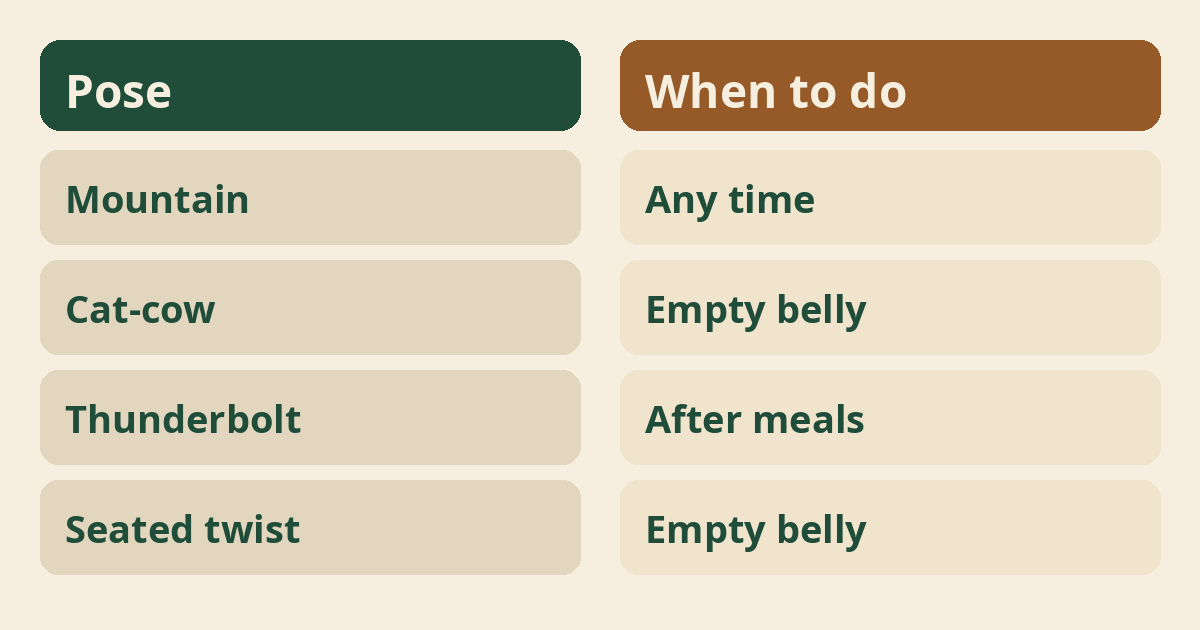
Morning on an empty stomach suits the full routine, while after meals suits only thunderbolt and sitting tall. Evening practice can help you unwind after dinner and before bed. There is no single right hour. The best time is the one you will actually keep. Many people do a longer session in the morning and a short upright sit after meals. Experiment for a week and see what your belly prefers.
Poses to skip on a full stomach
Skip deep twists, strong backbends, inversions, and hard core work right after eating. These can feel uncomfortable or bring on nausea when the belly is full. Strong poses are fine on an empty stomach, ideally a few hours after your last meal. When in doubt, choose the softer version. A good rule: if the pose presses your thighs into your belly, it is not an after meal pose. Save effortful flows for mornings or well-spaced evenings.
Common mistakes to avoid
The biggest mistakes are practicing too soon after a big meal, forcing twists, and rushing the breath. Other common slips: holding poses that hurt, skipping the slow start, and expecting instant change. Some people also clench their belly through the whole practice, which works against the whole idea. Keep the practice easy and steady. If something hurts, back off. Discomfort is a signal, not a challenge to push through.
Eating habits that support your practice
Slow eating, smaller portions, and unhurried meals pair well with yoga for digestion. Chew well and sit down to eat instead of standing or scrolling through your phone. Many people notice less gas when they eat calmly, simply because they swallow less air. Try to leave a few hours between your last meal and sleep. Yoga works best as part of this bigger picture. Small meal-time changes often do as much as the poses themselves.
Yoga versus a walk after meals
Both a slow walk and upright yoga poses are reasonable ways to spend the minutes after eating. A walk keeps the whole body moving, while thunderbolt and tall sitting keep the belly upright and still. Many people like a five-minute walk followed by a few minutes of kneeling. There is no need to pick one forever. Let weather, time, and energy decide on the day. The habit matters more than the form it takes.
A simple ten-minute routine
Here is one way to put it together: two minutes of sitting tall, three minutes of belly breathing, then cat-cow, child’s pose, and a soft twist. On an empty stomach you can add garland and butterfly pose. After a meal, keep it to sitting tall and breathing only. Write the order on a note by your mat so you do not have to think. Follow the timing rules from the sections above. Ten minutes is a target, not a test.
Who should be careful
Anyone who is pregnant, has had recent abdominal surgery, or has a hernia should talk with a doctor before doing belly-focused poses. Pregnant readers will find that practice rules change a great deal, and prenatal yoga versus regular yoga explains the main differences. People with acid reflux may want to avoid forward folds after meals and stay upright. If a pose causes pain, stop. A doctor or physiotherapist can suggest safe options for your situation. Careful is not the same as excluded; most people can keep some version of the practice.
Practicing with a sensitive back
Belly work and back comfort are connected, so protect your back while you practice for digestion. Move into twists slowly and keep them small if your back is touchy. Kneeling poses may need extra padding under the knees or ankles. The guide on doing yoga with a bad back covers the main precautions. If any pose triggers back pain, swap it for simple sitting and breathing. Your belly practice should never cost your back.
When to see a doctor
See a doctor if you have ongoing belly pain, bloating that will not settle, blood in your stool, or weight loss you cannot explain. These signs need medical care, not stretches. The same goes for vomiting, trouble swallowing, or pain that wakes you at night. Yoga can sit alongside good care, not replace it. Do not wait on symptoms that worry you. Getting checked early is always the stronger move.
Is yoga a treatment for digestion problems
No, yoga for digestion is not a treatment, and it cannot cure, heal, or prevent any digestive condition. It is a comfort practice many people enjoy alongside normal care. Conditions like IBS, ulcers, reflux, or celiac disease need a doctor’s guidance and often a specific plan. Keep yoga in the support lane and let medicine do its job. If a doctor gives you movement advice, follow that first. Yoga teachers are not a substitute for medical care.
Benefits people report
Many people say they feel less heavy after meals, pass gas more easily, and feel calmer around food, though results vary and research is still growing. Some notice better posture and less stress, which can help the belly settle. Others simply enjoy a quiet pause in the middle of the day. The National Center for Complementary and Integrative Health has an overview of yoga research worth reading National Center for Complementary and Integrative Health. Treat these as possible upsides, not promises. Your own experience over a few weeks is the best evidence for you.
What results to expect
Expect small changes first: a calmer belly after meals, easier breathing, and a steadier routine. Some people feel a difference in the first week; for others it takes a month of regular practice. Track how you feel after meals rather than chasing dramatic change. Slow progress is still progress. If nothing changes after a fair trial, that is useful information too, and worth raising with a doctor. Patience is part of the method here.
How to progress over time
Add one pose or one minute at a time once the basics feel easy. You might move from seated work to standing flows on an empty stomach, or hold poses a few breaths longer. Hip openers like yoga for hips are a natural addition, since the hips and belly share tension. Yoga for flexibility is another natural next step for many people. Growth comes from patience, not pushing. There is no finish line to rush toward.
Working with a teacher
A good teacher can adjust poses to your body and flag anything risky for your situation. Look for someone experienced with beginners who asks about health conditions before class. Tell them about any belly or back issues before you start. One or two sessions can set your home practice up well. A teacher can also spot habits you cannot see in yourself, like a held breath or a clenched jaw. Group classes are fine, but a short private session goes further for this goal.
Mindset: be kind to your belly
Approach this practice with curiosity, not judgment about your body or your digestion. Some days your belly will feel great, other days not. That is normal. A calm mind helps a calm belly, so treat the practice as care, not a chore. Notice small wins, like feeling comfortable enough to skip the post-meal slump on the sofa. Kind attention, repeated daily, is the real practice underneath the poses.
Stress and the gut
Stress and digestion are closely linked, which is one reason relaxation practices can change how your belly feels. The gut reacts to tension fast; think of butterflies before a big talk. Slow yoga and breathing give the nervous system a chance to settle. Many people find their belly behaves better on calm days and worse on hectic ones, and the practice aims at exactly that pattern. Yoga for stress relief pairs naturally with this routine. Even the breathing alone, done regularly, can take the edge off a tense day.
If you sit at a desk all day
Long sitting can leave the belly feeling compressed, so short movement breaks matter. Stand, walk, and breathe tall between meals. A few moves from yoga at your desk keep things moving on busy days. Try not to eat lunch hunched over a keyboard, because posture affects how comfortable your belly feels afterward. Even two minutes helps. Small breaks beat one big weekend session for this particular goal.
Keeping the habit while traveling
Travel often disrupts digestion, so a portable routine earns its place. Thunderbolt, tall sitting, and belly breathing need no mat and no floor space beyond a chair or hotel carpet. Practice at your usual meal times even when the clock shifts. Skip floor poses when the space or surface is not inviting. A short practice beats a skipped day. Many people find travel is when the habit pays off most.
Does it work right away
Some people feel lighter after one session, but lasting change usually comes from regular practice over weeks. The first sessions teach your body the shapes. Over time, the routine itself becomes the signal to relax. Give it a fair trial of a few weeks before you judge. A single session is a sample, not a verdict. Keep notes on how meals feel and compare week to week.
Morning or evening: which is better
Both work; mornings suit a fuller routine on an empty stomach, evenings suit winding down after dinner. Try each for a week and notice when your belly feels best. Your schedule and your body get the final say. There is no wrong choice here. Some people split the difference with a morning session and a short after dinner sit. What you keep doing is what works.
Where to read next
For a calm, beginner-friendly start, Ranjana Sinha’s Begin Where You Are is written for people who want simple steps. Our guide to starting a home yoga practice adds a gentle routine you can follow at home.
Frequently asked questions
Can I do yoga right after eating?
Only upright poses like thunderbolt and tall sitting; wait about two hours for twists and folds after a big meal.
Will yoga help with gas and bloating?
Many people find that soft movement and calm breathing ease the feeling of gas and bloating, though results vary.
Is it safe to practice every day?
Yes, a short easy daily practice is fine for most healthy people when you skip pain and heavy poses on a full stomach.
What if a pose makes me feel nauseous?
Stop, sit tall or lie on your left side, breathe slowly, and leave that pose out next time.
Do I need to be fit or flexible to try this?
No, this routine uses simple sitting and kneeling poses that most beginners can do with a cushion or chair.
The bottom line
Start with five quiet minutes after your next meal and let your belly tell you how it feels.

