
It is late, your body is tired, and your mind is still running through tomorrow’s list. Yoga nidra is a guided practice you do lying down, where you stay awake while you rest. You follow a voice or a script, move your attention around the body, and let the day settle. This guide explains it in plain words, so you can try your first session tonight.
This article is general education about a relaxation practice and is not medical advice. If you live with a medical condition, take medication, or feel unsure, speak with your doctor before you begin.
What is yoga nidra?
Yoga nidra is a guided relaxation practice done lying down, with the eyes closed and the mind kept lightly awake. A teacher or recording leads you through a set order of steps. You rest your body, follow your breath, and move your attention from one area to the next. There is no pose to hold and nothing to get right. Many people describe it as a calm space between waking and sleeping. It is simple enough for a first-timer and deep enough to keep exploring for years.
Where does the name come from?
The words come from Sanskrit, where yoga means union and nidra means sleep. People often translate the phrase as yogic sleep, though the aim is not to fall asleep. The idea is to rest deeply while staying aware of the voice and your own sensations. Modern teachers have shaped it into short, structured sessions that suit busy lives. You will also see it called guided body scan relaxation, although the two are not always identical.
Is yoga nidra the same as sleep?
No, it is a resting state where you aim to stay awake, even though it can feel close to sleep. In ordinary sleep you lose track of what is going on around you. In yoga nidra you keep a thin thread of attention on the guide’s words. Your body may feel heavy and still while your mind stays quiet and alert. If you do drift off, that is common and nothing to worry about.
Why do people practice yoga nidra?
Most people try it to rest more fully, slow down after a busy day, or learn to relax on purpose. It asks very little of the body, so it suits tired days, sore days, and days when you have no energy for a full class. Some people use it to wind down before bed. Others use it as a short reset in the middle of a hectic week. Results vary from person to person, and that is fine.
What happens in a typical session?
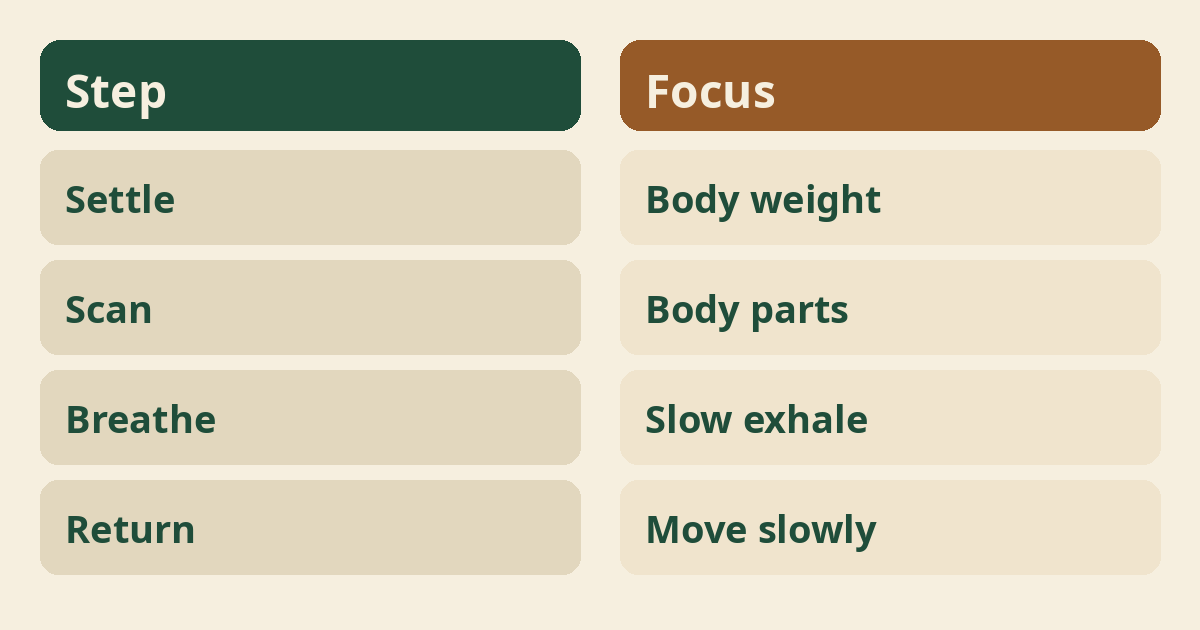
A session usually has a calm opening, a body scan, some breath awareness, and a slow return. You lie down, get comfortable, and listen. The guide may ask you to set a short personal intention, then name body parts one by one. Later there may be pairs of feelings such as heavy and light, or a simple calm image to picture. The session ends with deeper breaths, small movements, and a quiet moment before you sit up.
Do I need yoga experience first?
No, you can start yoga nidra without any yoga background, since it uses no poses at all. You do not need to touch your toes or know any Sanskrit. The only skills involved are lying still and listening. That makes it one of the easier doors into yoga for new students. If you later add movement classes, you can pair them with it, but that is optional.
What do I need before I start?
You need a quiet spot, a flat surface, about twenty minutes, and a guide you enjoy listening to. Silence your phone and tell the people at home that you are taking a short break. Wear loose clothing and keep the room a little warm, since the body cools as it rests. Choose a recording with a voice you find pleasant, not irritating. If a voice bothers you, switch to a different one without guilt.
Which props make it more comfortable?
A blanket, a pillow under the knees, and a small cushion for the head are the most useful items. Comfort matters because you will stay still for a while, and small aches can pull your attention away. A folded blanket over your body helps you feel settled and warm. A rolled towel under the neck can ease tension there. If you want more ideas, the guide to simple yoga props that make home practice easier covers what is worth buying and what you already own.
Where is the best place to practice?
The best place is a room that is quiet, dim, and free from interruptions. A bed works, but many beginners fall asleep there, so a mat or rug on the floor may keep you more awake. Close the door if you can. Dim the lights or cover your eyes with a soft cloth. If your home is noisy, headphones with a calm recording can create your own small quiet room.
When is the best time of day?
Any time works, so pick the moment when you can be quiet without rushing. Evening is popular because it fits naturally before bed. A midday session can feel like a reset when the afternoon drags. Morning practice works for people who like to start slowly. Try a few different times in your first week and keep the one that fits your life best.
How do I lie down for it?
Lie flat on your back with your arms a little away from your sides and your palms facing up. Let your feet fall open and your heels sit about hip width apart. Place a pillow under your knees if your lower back feels tight. Tuck your chin slightly so the back of the neck feels long. If lying flat does not feel right, a side-lying position with a pillow between the knees is a kind alternative.
Step 1: How do I set a simple intention?
Pick one short, positive sentence in the present tense that you can repeat quietly to yourself. Examples are “I am resting” or “I am calm and open.” Keep it small and believable, not a big goal about changing your life. Say it silently three times. Then let it go and move on, trusting that the practice does not depend on getting it perfect.
Step 2: How do I settle the body?
Close your eyes, take a few slow breaths, and let the floor hold your weight. Notice where your body touches the surface beneath you. Feel the back of the head, the shoulders, the hips, and the heels. Let each area get a little heavier on each breath out. If you notice tension, you do not need to fix it, just see that it is there.
Step 3: How do I move attention through the body?
Move your attention in a steady order, naming each body part and simply noticing it. A common route is the right hand, then the arm, shoulder, side, and leg, followed by the left side. Then you move through the back, the front, the face, and the whole body at once. The pace is slow, and a single word is enough for each stop. If your attention wanders, bring it back to the next part without scolding yourself.
Step 4: How do I follow the breath?
Simply watch the breath as it is, then let it become slow and soft if that feels natural. Place a hand on your belly and feel it rise and fall. Do not force deep breaths, since forcing can make you feel tense. Some guides ask you to count backward from a small number with each breath out. If you want to practice the belly pattern separately, a simple lesson in belly breathing is a good warm-up.
Step 5: What are the opposite sensations?
Many sessions invite you to feel pairs, such as heavy and light, or warm and cool, one after the other. You are not trying to create the feeling by force. You recall it, let it show up, and then let it fade. The practice is training your mind to notice without gripping. If a pair does not work for you, skip it quietly and go on to the next one.
Step 6: How does the calm picture step work?
The guide names a peaceful image such as a quiet shore or a still lake, and you allow it to appear in your mind. Some people see vivid pictures, and others only get a feeling or a few words. Both are normal. There is no right way to imagine something, and nothing is graded. If images feel uncomfortable, return to the breath or the sound of the voice.
Step 7: How do I come back out?
Return slowly by deepening the breath, moving the fingers and toes, and resting for a moment before you sit up. Roll to one side and stay there for a few breaths. Press yourself up with your hands, keeping your head low until last. Standing too fast can make you dizzy, so take your time. Sit for a minute and notice how you feel before you pick your phone back up.
How does breathing work in yoga nidra?
Breathing is natural and unforced, with the focus on noticing it rather than controlling it. Most guides start with ordinary breath and later suggest a slightly longer breath out. Longer exhales tend to feel calming for many people. If counting makes you tense, drop it and just follow the rise and fall. Stop any breathing exercise that causes light-headedness or discomfort and return to normal breathing.
How long should a session last?
A beginner session can run from ten to thirty minutes, and about twenty is a common starting point. Short recordings are a good way to build the habit without needing a big block of time. As you get used to it, longer sessions give you more room to settle. There is no prize for going long. Pick a length that you can actually repeat.
How often should I practice?
A few times a week is a reasonable start, and daily practice is fine if you enjoy it. Regular short sessions usually teach you more than one long session each month. Link it to something you already do, like the end of your workday. If you also practice movement-based yoga, this guide on how often to do yoga can help you plan the week. Skipping a day is okay, so just begin again.
What if I fall asleep?
Falling asleep is common, especially when you are tired, and it simply means your body needed rest. You may miss part of the guidance, and that is all right. If you want to stay awake more often, try practicing earlier in the day or on a mat instead of a bed. Keep your arms palms-up and your head on a thin cushion. Over time, many people find they stay with the voice for longer.
What if my mind keeps wandering?
A wandering mind is normal, and noticing that it wandered is the practice itself. Each time you catch yourself thinking about work or dinner, you gently return to the guide’s voice. That small return is what builds the skill. Do not judge your session by how quiet your thoughts were. Even a busy session counts as practice.
What are the most common beginner mistakes?
The most common mistakes are trying too hard, expecting a big effect right away, and choosing a bad setup. Some people grip the practice and end up tense, which defeats the point. Others quit after one session because nothing dramatic happened. A cold room, a hard floor, or a loud house can also get in the way. Fix the setup first, then give it a fair number of tries before you decide.
What if I feel restless or itchy?
Small urges to move or scratch are normal, and you can answer them kindly without losing the session. Shift your position slowly or scratch the spot, then return to the voice. Strong stillness is not the goal. Restlessness often fades after a few sessions as your body learns what to expect. If it stays strong, try a shorter recording or add a few minutes of easy movement beforehand.
Can I do it during a long desk day?
Yes, a short seated or reclined session can offer a pause between tasks. A ten-minute recording on a break is more realistic than a full session for many workers. If you sit a lot, a few stretches first can help you settle, such as those in simple yoga moves you can do at your desk. Use a spare room or a quiet corner if you can. Set a quiet alarm so you do not worry about time.
Should I move before I lie down?
A few minutes of slow, low-impact movement can help the body feel ready to rest. Many students like to ease into stillness with a short warm-up. A kind pose such as child’s pose or a few rounds of cat and cow can loosen the back before you lie down. Mountain pose is a calm way to feel your body standing and grounded first. Keep it short so you save energy for resting.
What benefits do people notice?
Many people find yoga nidra leaves them feeling calmer and more rested, though results vary. Some report that they sleep more easily on practice days, or that they feel less wound up. Others enjoy the quiet time more than any particular effect. Research on relaxation practices continues, and you can read balanced overviews at National Center for Complementary and Integrative Health for a neutral view of mind and body approaches. Think of any benefit as a possibility, not a promise.
Can it help with everyday stress?
Many people find that a regular quiet practice makes daily stress feel a little easier to carry. It teaches you to notice tension and let go of it for a while. That skill can carry over into normal life, like waiting in traffic or sitting in a tense meeting. It does not remove the causes of stress. If you want to pair it with more tools, a beginner routine for stress relief offers movement ideas.
Can it support a better bedtime routine?
It can be a calming part of an evening routine, which some people find makes bedtime feel smoother. Doing the same short practice each night sends your body a familiar signal that the day is ending. Keep the lights low and screens away. Do not expect it to fix a long-running sleep problem on its own. If you struggle with sleep for weeks, talk with a doctor.
Is yoga nidra a treatment?
No, yoga nidra is not a treatment for any medical or mental condition. It is a relaxation and awareness practice, offered for general wellbeing only. It should never replace advice, care, or medicine from a qualified professional. If you are unwell, anxious for long stretches, or dealing with low mood, please see a licensed provider. You can use yoga nidra alongside professional care, but only with their approval.
Who should be careful or check first?
Check with your doctor first if you are pregnant, have a medical condition, or take regular medication. People with a history of trauma may find that lying still with closed eyes brings up strong feelings, so a trained teacher can help. Anyone with blood pressure concerns, dizziness, or a recent surgery should ask for advice. If you are expecting, this comparison of prenatal and regular yoga explains why your needs may differ. Stop the session and sit up if anything feels wrong.
What if I have back discomfort?
Lying flat can feel uncomfortable with back pain, so adjust the position or ask your doctor first. A pillow under the knees or a rolled blanket under the thighs often takes pressure off the lower back. You can also practice in a reclined chair. If pain is sharp or has lasted a while, get it checked before you start. For more ideas, read whether you can do yoga with a bad back.
Should I use a recording or a live teacher?
Both work, and recordings are the easiest way to start at home. A recording lets you pick the time, the voice, and the length. A live class gives you a teacher who can respond to questions and offer a kind presence. Many students use recordings during the week and join a class now and then. Try a few free ones and keep the voice that makes you feel at ease.
How do I find a good teacher?
Look for a teacher who explains clearly, speaks slowly, and offers choices rather than strict rules. Ask about their training and whether they have experience with beginners. A good teacher will tell you to skip anything that feels wrong. Avoid anyone who promises dramatic results or tells you to stop medical care. Trust your own feeling about how the session leaves you.
How can I make my practice grow over time?
Grow slowly by lengthening sessions, trying new guides, or adding a gentle movement routine beforehand. After a few weeks, you might try a thirty-minute session or a script with a different focus. Some students pair it with hip openers like butterfly pose or a short hips sequence. Others add stretches for the neck and shoulders. Keep what feels good and drop what does not.
Can yoga nidra work with other poses?
Yes, the quiet practice pairs well with simple poses that ask little effort. After a seated pose such as thunderbolt pose or a deep squat like garland pose, the body often welcomes stillness. Puppy pose stretches the shoulders and makes lying down feel better. If you work on flexibility or balance, finish with a short rest. Choose one or two moves, not a long routine.
What mindset helps most?
A relaxed, curious mindset helps more than effort or expectation. See each session as an experiment, not a test. Some days will feel deep and others will feel restless, and both teach you something. Be kind to yourself when your mind wanders. Over time, that kind attitude is often the biggest takeaway.
What does a simple first week look like?
Try three sessions of about ten to twenty minutes, spaced across the week, and note how you feel after each. Day one, listen to a short guide just to learn the flow. On day three, try a slightly longer one at a different time. On day five, choose your favorite and add a short warm-up. At the end of the week, decide what to keep, and let that be your plan.
Where to read next
For a calm, beginner-friendly start, Ranjana Sinha’s Begin Where You Are is written for people who want simple steps. Our guide to starting a home yoga practice adds a gentle routine you can follow at home.
Frequently asked questions
Can I do yoga nidra in bed?
Yes, though you may fall asleep more easily there, so a mat or rug can help you stay awake.
Is it okay to keep my eyes open?
Yes, a soft gaze at one spot is fine if closed eyes feel uneasy.
What if the guide’s voice annoys me?
Switch to another recording, since a voice you like makes the practice easier.
Do I need to be silent and perfectly still?
No, you can adjust slowly when you need to and then return to the voice.
Will I feel different right away?
Some people do and some do not, so give it several sessions before you judge it.
The bottom line
Start with one short session this week, keep your expectations light, and let the practice teach you at its own pace.

