
New to yoga and full of questions? This guide answers the most common beginner questions in plain language, from flexibility and clothing to safety, classes and results. Short answers come first, with links to deeper guides.
This is general education, not medical advice. If you have an injury, are pregnant or have a health condition, check with your doctor before starting yoga.
Do you need to be flexible to start yoga?
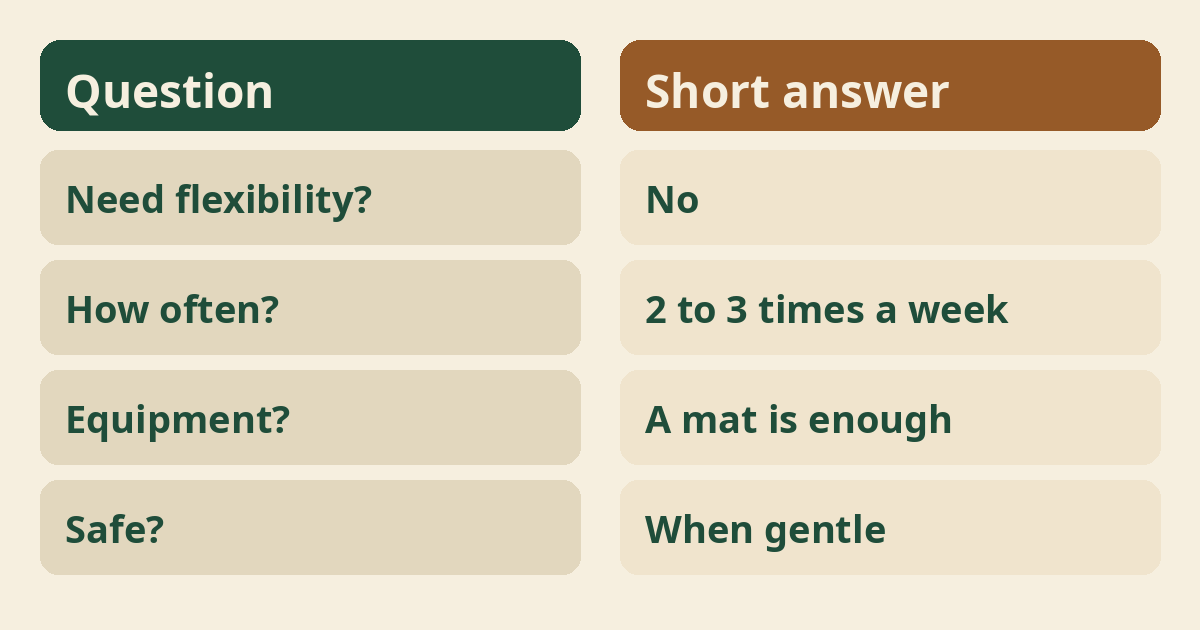
No. You do not need to be flexible, because flexibility grows slowly with regular, gentle practice. Many beginners think they are too stiff, but yoga is for every body. Props such as blocks and straps bring the floor closer. Our guide to yoga for flexibility explains how to build range safely.
How often should a beginner practise?
Two or three short sessions a week is a good start, and daily practice is fine if it stays gentle. Our guide on how often to do yoga explains a simple rhythm. Rest days matter. Listen to how you feel.
What should you wear?
Wear soft, stretchy, comfortable clothes that let you move and do not slip or pinch. Bare feet are usual. Avoid very loose tops that fall over your face. Our yoga mat guide covers the main item you need.
Do you need equipment?
A mat is enough, and props like a block, strap and blanket are optional extras. Our guide to yoga props explains what each does. Household items often work just as well.
What time of day is best?
The best time is the one you can keep, whether morning, midday or evening. Our guide to a morning yoga routine and yoga for better sleep show two options. Avoid practising right after a big meal.
Can you eat before yoga?
Eat lightly or leave about two hours after a full meal before practising. A light snack is fine if you feel hungry. Drink water, but not too much during class. Notice how your body responds.
Is yoga a good workout?
Yoga builds strength, balance and flexibility, but its intensity depends on the style and your effort. Gentle yoga is lighter than running, while flowing styles are more active. Our guide to yoga vs gym compares yoga with gym training.
Is yoga safe?
Yoga is safe for most healthy people when practised gently, with options and a qualified teacher. Pushing too hard is the main risk. Our guide to yoga with a bad back explains safe habits. Speak to a doctor if you have a health condition.
What if something hurts?
Ease off or stop, because pain is a signal and a mild stretch is the most you should feel. Distinguish between a gentle pull and sharp or pinching pain. Our guide to yoga for wrists and yoga for knees explain common sore spots.
Can yoga help with stress?
Many people find gentle yoga and slow breathing helpful for feeling calmer, but it is not a treatment for any condition. Our guide to yoga for stress relief has simple ideas. The National Center for Complementary and Integrative Health notes that yoga is widely used for relaxation.
Can yoga help with sleep?
A gentle evening routine can help some people wind down, though results vary. Our guide to yoga for better sleep shares a routine. Persistent sleep problems need a doctor.
Is yoga a religion?
Yoga has roots in Indian traditions, but most classes teach it as a physical and breathing practice that anyone can join. Our guide to the eight limbs of yoga explains the wider tradition. Take what you find useful and leave the rest.
What do the Sanskrit words mean?
Common words include asana for pose, pranayama for breathing and savasana for final rest. Our guide to yoga terms explains them in plain language. You do not need to learn them all.
What is the final rest for?
The final rest, savasana, lets the body and mind settle after practice. Our guide to savasana explains how to do it. Do not skip it, even if you feel short of time.
Should you breathe through the nose?
Nose breathing is the usual choice, but breathe through the mouth if your nose is blocked. Keep the breath smooth and quiet. Our guide to pranayama for beginners explains simple practices. Never hold the breath.
Can you do yoga at home?
Yes. A short routine, a mat and a quiet space are enough. Our guide to starting a home yoga practice shows how to set up. A class can help you learn good form.
How do you choose a class?
Look for a beginner or gentle class, a patient teacher and a space where you feel welcome. Our guide to how to choose a yoga class explains what to check. Try a few before deciding.
What happens in a first class?
The teacher welcomes you, guides gentle poses and breathing and ends with rest. Our guide to yoga class etiquette explains what to expect. Tell the teacher you are new.
Is yoga good for older adults?
Yes, with gentle classes, props and chair options. Our guide to yoga after 50 and chair yoga explain supportive options. Speak to a doctor first if you have health concerns.
Is yoga safe in pregnancy?
Speak to your doctor first and choose classes designed for pregnancy. Our guide to prenatal yoga explains the differences. Some poses are not suitable.
Is yoga good for kids?
Yes, in a playful way with short, fun sessions. Our guide to yoga for kids has ideas. Never force children into poses.
Does yoga help with weight?
It can support healthy habits, but it is rarely a fast way to lose weight on its own. Our guide to yoga and weight explains realistic expectations.
How long until you see results?
Some people feel calmer after a few sessions, while changes in flexibility and strength take weeks of regular practice. Be patient and notice small changes. Results vary. Our guide to the benefits of yoga explains what regular practice may offer.
Do you need to meditate?
No, but many people enjoy adding a few quiet minutes. Our guide to how to meditate explains a simple start. Yoga and meditation are separate but go well together.
When should you see a doctor?
See a doctor before starting if you have an injury, health condition, pregnancy or any concern. Stop if you feel pain, dizziness or breathlessness. This guide is general education, not medical advice.
What should you do if you feel dizzy?
Stop, sit or lie down, breathe normally and rest until you feel steady. Dizziness can come from standing up too fast, holding the breath, low blood sugar or heat. Come out of poses slowly. Drink water. If it happens often or feels severe, speak to a doctor before continuing.
What if you cannot keep up in a class?
Rest in child’s pose, choose the easier option or sit out a pose, and know that no one will mind. Yoga is not a competition. A good teacher expects beginners to pause. Rest is part of the practice. Do what feels right for your body today, not what the person beside you is doing.
How can you stay motivated?
Set a small goal, such as ten minutes three times a week, and notice how you feel afterwards. Practise with a friend, book classes ahead or keep your mat visible. Celebrate small wins. If you miss a week, begin again without guilt. Enjoyment is the best motivation.
Do you need to give up anything to do yoga?
No. Yoga does not require you to change your diet, beliefs or lifestyle. Some teachers share ideas about food or philosophy, but you can choose what to take. Start with the physical practice and let your interest guide you. Be wary of anyone who pressures you to change how you live.
What are the most common beginner mistakes?
Pushing too hard, holding the breath, comparing yourself with others and skipping the final rest. Go slowly. Use props and easier options. Breathe smoothly in every pose. Rest at the end of class. These small habits protect you from strain and help you enjoy the practice.
How do you know you are ready for more?
You are ready when poses feel steady, your breath stays smooth and you finish sessions feeling good rather than strained. Try a longer class, a new style or a slightly harder pose, one change at a time. If anything feels wrong, step back. There is no deadline, and many people stay with gentle yoga for years because it suits them.
Where to read next
For a calm, beginner-friendly start, Ranjana Sinha’s Begin Where You Are is written for people who want simple steps. Our guide to starting a home yoga practice adds a gentle routine you can follow at home.
Frequently asked questions
Do I need to be flexible for yoga?
No. Flexibility grows with regular practice.
How often should a beginner practise?
Two or three short sessions a week.
What equipment do I need?
A mat is enough.
Is yoga safe?
For most healthy people when practised gently.
When should I see a doctor?
Before starting if you have an injury, condition or pregnancy.
The bottom line
Every beginner has questions. Start gently, ask your teacher and enjoy the process.

