
You can start yoga in a studio, at home with videos, or both. Studios offer live feedback, while online classes are flexible and cheap. This guide helps you choose the right class, spot a good teacher and stay safe as a beginner.
This is general education, not medical advice. If you have an injury, are pregnant or have a health condition, check with your doctor before starting yoga.
Should you choose an online class or a studio?
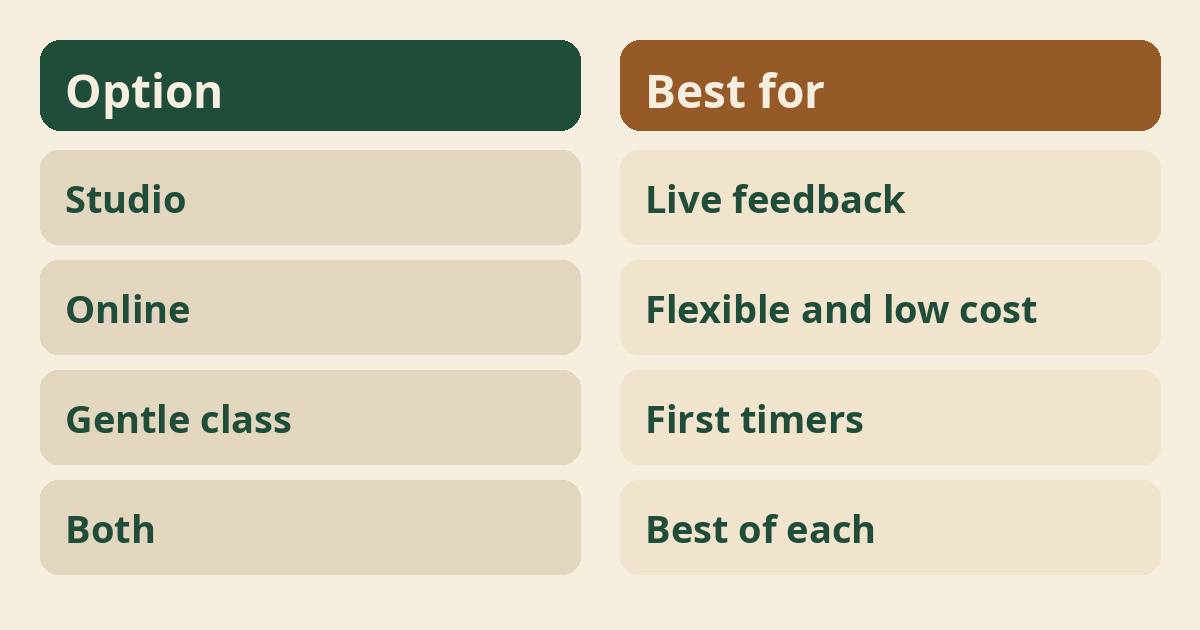
Both can work well, so choose the one that fits your budget, schedule and comfort, and feel free to try each. A studio gives you a teacher who can see you and adjust you. Online classes are flexible, private and often cheaper. Many beginners start with a few studio classes to learn the basics, then add home practice with videos. Our guide to starting a home yoga practice helps with the home side.
What are the benefits of a studio class?
A studio offers live feedback, a set time, a calm space and the company of others. A teacher can spot habits that may cause strain and offer safe options. The fixed schedule helps you keep going. You also find out what a class feels like, which our guide to yoga class etiquette explains.
What are the downsides of a studio?
Studios can cost more, need travel time and may feel intimidating at first. Classes can be crowded, and a poor fit with a teacher can put you off. Look for beginner or gentle classes and arrive early to introduce yourself.
What are the benefits of online classes?
Online classes let you practise at home, at any time, at your own pace and often for little or no cost. You can pause, replay and repeat. Short videos fit into busy days. You can choose a style, teacher and length that suits you. No one is watching, which helps shy beginners.
What are the downsides of online classes?
No one can see or correct your form, and it is easy to skip sessions or push too hard. Follow slow, clear videos for beginners and use the options shown. Our guide to yoga with a bad back explains safe habits. Stop if you feel pain.
What should you look for in a teacher?
Look for a clear, patient teacher with solid training who offers options and respects limits. Ask where they trained and how long they have taught. Notice whether they explain poses and breathing. A good teacher does not push you into poses or make claims about curing illness.
How do you pick a style?
Choose a gentle style like hatha or restorative for your first classes. Our guide to hatha yoga and restorative yoga explain two gentle styles. Faster flowing classes can wait until you feel steady.
What does a beginner class look like?
A beginner class is slow, explains each pose, offers easy options and ends with rest. Look for words like beginner, gentle, basics or foundations in the title. Avoid classes labelled advanced, power or hot until you feel ready.
How long should a class be?
Thirty to sixty minutes is a good length for most beginners, and shorter classes are fine to start. A short class you finish is better than a long one you quit. Our guide on how often to do yoga suggests a weekly rhythm.
What does it cost?
Costs vary widely, so compare drop in prices, class packs, memberships and free videos. Many studios offer a free or cheap first class. Community centres and parks may have low cost sessions. Zero cost options are available online. Avoid long contracts before you try a class.
What equipment do you need?
A mat, comfortable clothes and a water bottle are enough, and studios often lend mats. Our yoga mat guide and yoga props guide explain what to buy and what to skip.
How can you try before you commit?
Ask for a trial class, watch a few free videos or visit a studio and speak to the teacher. Notice how you feel after the class. A good class leaves you relaxed, not exhausted or hurt. You can try several teachers before deciding.
How should you prepare for a first class?
Tell the teacher you are new, mention any injuries, arrive early and go at your own pace. Wear soft clothes. Do not eat a big meal beforehand. Bring water. Our guide to yoga for hips and yoga for knees show poses that may need options.
What if you have an injury or health condition?
Speak to a doctor first and tell the teacher before class so they can offer options. Some poses need changes. A small group or private lesson may suit you better at first. Never push through pain to keep up.
What about older adults?
Look for gentle, chair or senior friendly classes with a patient teacher. Our guide to yoga after 50 and chair yoga explain supportive practice.
How do you set up at home?
Choose a quiet space with room for your mat, put your phone on silent and keep a water bottle close. Use a screen at eye level where you can see the teacher. Keep the volume low enough to hear your breath. Make it a regular time.
How do you stay safe following a video?
Choose beginner videos, move slowly, use the easier option and stop if anything hurts. Do not copy flexible poses that your body cannot do yet. Rest when you need to. Pause the video when you need extra time.
What are red flags?
Beware of teachers who promise cures, push you into poses, dismiss pain or pressure you to buy. Good classes are calm and respectful. Walk away from any class that makes you feel unsafe. Trust your instincts.
Can you combine both?
Yes. Many people attend a class weekly and practise short sessions at home. Our guide to a morning yoga routine is a good home practice. The mix gives guidance and flexibility.
How do you know it is working?
You feel more at ease in your body, enjoy the practice and want to come back. Notice small changes in breathing, mood and stiffness. Our guide to the benefits of yoga explains what regular practice may offer. Progress is not a race.
What if you do not enjoy it?
Try another teacher, style or time of day, or choose another form of movement. Yoga is not for everyone, and that is fine. The National Center for Complementary and Integrative Health notes that yoga suits many people but should be approached with care. Choose movement you enjoy.
When should you see a doctor?
See a doctor before starting if you have an injury, health condition, pregnancy or any concern. Stop if you feel pain, dizziness or breathlessness. This guide is general education, not medical advice.
What should you ask before booking?
Ask about class level, size, teacher training, the cancellation policy and whether props are provided. A few questions save trouble later. Ask whether the class suits complete beginners and whether the teacher offers options for injuries. Check the price after any trial and whether classes expire. A good studio answers happily and without pressure.
What if you feel nervous?
Nerves are normal, so go early, choose a spot near the back or side, and remember that most people are focused on their own practice. Bring a friend if you like. Tell the teacher you are new. Everyone was a beginner once. After the first class, the second feels far easier. Be kind to yourself and treat it as an experiment.
How do you keep going after the first class?
Book your next class straight away, set a regular day and time and keep a short note about how you feel afterwards. Habits form when they are easy and enjoyable. A friend or a small goal can help. If you miss a class, simply return. Over a month or two the practice starts to feel familiar.
Does the time of day matter?
Choose a time you can keep, because an easy slot beats a perfect one. Morning classes can set up the day, while evening classes help you unwind. Lunchtime sessions fit some work days. Try a couple of times and notice how you feel, then book the one that suits your energy and schedule.
Where to read next
For a calm, beginner-friendly start, Ranjana Sinha’s Begin Where You Are is written for people who want simple steps. Our guide to starting a home yoga practice adds a gentle routine you can follow at home.
Frequently asked questions
Is online yoga as good as a studio?
Both work. Studios offer feedback, while online is flexible and cheaper.
What class should a beginner choose?
A gentle, beginner or hatha class.
How much does a yoga class cost?
It varies, so compare trial offers, class packs and free videos.
Should I tell the teacher about injuries?
Yes, before class.
Can I try a class for free?
Many studios offer a free or cheap trial, and many videos are free.
The bottom line
The best class is the one you enjoy and keep going to. Try a few, stay gentle and listen to your body.

