
Yoga builds flexibility, balance and body awareness, while the gym builds strength and stamina with heavier loads. Neither is better for everyone. Pick the one that fits your goal and enjoyment, or combine both across the week with at least one rest day.
This is general education, not medical advice. If you have an injury, a heart or blood pressure concern, are pregnant or have any health condition, check with your doctor before starting or changing your exercise.
Is yoga or the gym better for beginners?
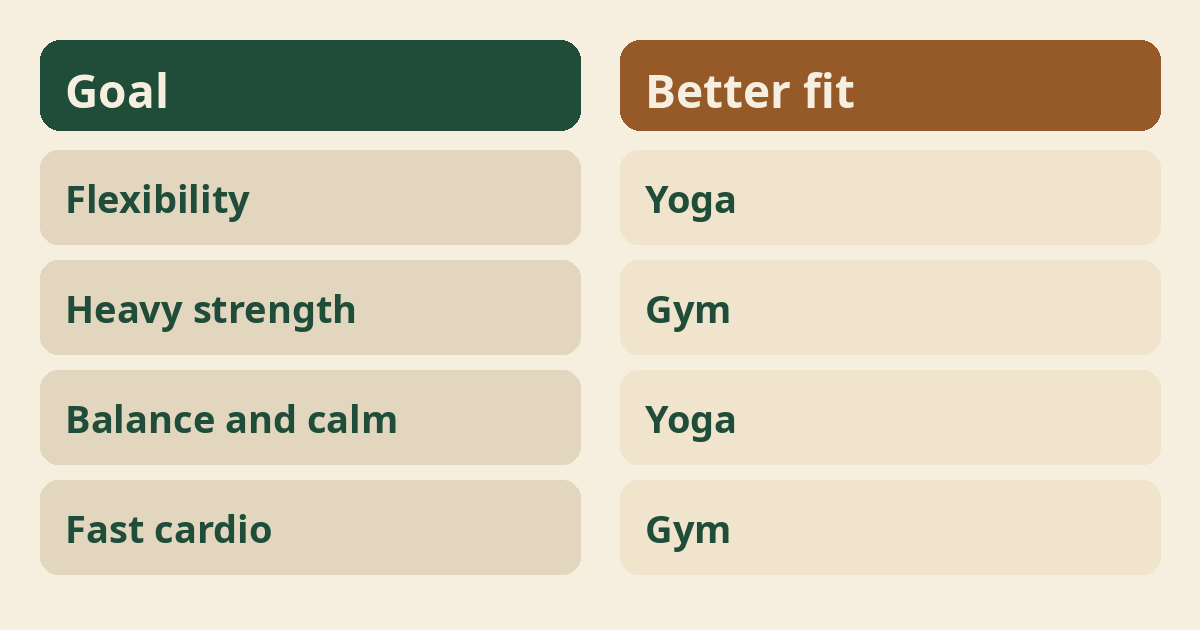
Neither is better for everyone. Yoga builds flexibility, balance and body awareness, while the gym builds strength and stamina with weights and machines, so the better choice depends on your goal. If you want to feel looser, calmer and more aware of your body, yoga is a gentle place to start. If you want to lift heavier things or build muscle, the gym is a good fit. Many people enjoy both. Our guide to the benefits of yoga explains what regular practice may offer.
What does yoga do well?
Yoga combines gentle movement, stretching, balance and breathing, and it asks you to pay attention while you move. Most classes include poses held for a few breaths, slow transitions and a rest at the end. This can help you notice tension and move with care. The National Center for Complementary and Integrative Health describes yoga as a mind and body practice. Our guide to yoga for flexibility shows how gentle stretching works.
What does the gym do well?
The gym gives you tools for progressive strength training and cardio, such as weights, cables, treadmills and bikes. You can add weight in small steps, which is an easy way to track progress. Machines can guide the movement for a beginner, and a trainer can build a plan. Gyms also offer many cardio choices when you want to raise your heart rate.
How do they differ in strength building?
The gym usually builds strength faster because you can load the muscles more heavily, while yoga builds strength using your own body weight. Poses like plank, chair and warrior ask your muscles to hold you steady. Our guide to warrior pose shows one example. For large strength gains, though, weights give more control over how hard you work.
How do they differ in flexibility?
Yoga usually gives more focus to flexibility and joint range, while the gym often leaves stretching as a short extra at the end. If tight hips or shoulders bother you, a regular yoga habit may help you move more freely. Our guide to neck and shoulder stretches is a gentle place to begin. Go slowly and never force a stretch.
How do they differ for cardio?
The gym offers more direct cardio options, while most beginner yoga classes are gentle and do not raise the heart rate much. Faster flowing styles can be more active, and our guide to sun salutation is one example. If your main aim is endurance, running, cycling or machine cardio will usually be more direct.
What about balance and body awareness?
Yoga puts a lot of attention on balance, posture and the feel of the breath, which many people find hard to get from a standard gym session. Standing poses such as tree pose train balance in a simple way. You also learn to notice when something feels wrong, which helps in any kind of exercise.
What about stress and calm?
Many people find yoga calming because of its slow breathing and quiet focus, though exercise of any kind can lift the mood. A hard workout can also leave you feeling good. The difference is in the pace. Yoga often ends with rest and breathing. Our guide to savasana explains the final rest. Results vary from person to person.
Which is safer for beginners?
Both are safe for most healthy people when you start gently, learn good form and respect your limits. Injuries can happen in both. At the gym, lifting too heavy too soon is a common mistake. In yoga, pushing a stretch too far is common. Learn the basics from a qualified teacher or trainer. If you have an injury or health condition, ask your doctor first.
Which is cheaper and easier to start at home?
Yoga needs only a mat and some space, while a gym needs a membership or equipment, so yoga is usually easier to start at home. Our guide to starting a home yoga practice covers the basics. Some people also use simple home weights or a resistance band for strength work.
Can you combine yoga and the gym?
Yes. Many people lift or do cardio on some days and add yoga on others for stretching and recovery. A short yoga session after a workout can feel pleasant, and a gentle session on a rest day keeps you moving. Our guide to yoga versus Pilates shows how another gentle option compares.
How should you split your week?
A simple split is two or three gym or strength days and two yoga days, with at least one full rest day. For example, strength on Monday and Thursday, yoga on Tuesday and Saturday, and rest on Sunday. Adjust to your energy and schedule. Our guide to how often to do yoga gives more ideas.
What if you are very stiff or very weak?
Start gently with the style that feels more comfortable, and add the other slowly. If you are very stiff, begin with easy yoga or chair work. Our guide to chair yoga is one option. If you feel weak, begin with light weights or body weight work. Progress will come with patience.
What should you think about if you have back pain?
Choose gentle movement and talk to a doctor or physiotherapist before starting either option. Yoga can be adapted, and some people find gentle practice comfortable. Heavy lifting needs care. Our guide to yoga with a bad back explains safe habits. Stop if you feel pain.
What about older adults?
Both can suit older adults when they are gentle and supervised, and balance work from yoga is especially useful. Chair based yoga and light strength work are good options. Check with a doctor first, move slowly and use support when you need it.
What about people who want weight loss?
Weight change depends mostly on overall activity, food and sleep, so both can play a part, and the gym usually burns more per session. Yoga can help you stay active in a gentle way and may help you feel more connected to your body. Do not expect yoga alone to give quick results. Speak with a doctor if you have weight or health concerns.
How do motivation and enjoyment matter?
The best option is the one you enjoy enough to keep doing. If you dread the gym, try yoga. If yoga feels too slow, try the gym. A habit you keep beats a perfect plan you drop. Try a few classes of each before you decide.
How do you pick a class or a gym?
Look for a clean, friendly place with qualified staff, a beginner option and a trial class. Ask about class size and teacher training. Tell the teacher about any injury. A good teacher or trainer will offer modifications and never push you into pain.
What should you wear and bring?
Wear comfortable clothes that let you move, and bring water and a towel for the gym or a mat for yoga. Studios often lend mats. Gyms may ask for clean shoes. You do not need special clothing for a first session.
How long until you notice changes?
Many people notice small changes in how they feel within a few weeks, but results vary and depend on how often you practise. Be patient. Keep a simple note of how you feel after each session. Progress is often easier to see over a month than over a day.
When should you see a doctor?
See a doctor first if you have an injury, heart or blood pressure concerns, pregnancy or any health condition. Stop if you feel chest pain, dizziness or sharp pain. This guide is general education, not medical advice. A doctor can tell you which activities suit you.
How can you make the choice simple?
Pick one goal for the next month, such as feeling less stiff or getting stronger, and choose the option that fits. Try it for four weeks, then review. You can always change or combine. There is no wrong answer if you move safely and enjoy it.
What common mistakes should you avoid?
Doing too much too soon, copying others and ignoring pain are the most common mistakes in both yoga and the gym. Start easy, learn good form and rest when you need to. Comparing yourself with others rarely helps. Focus on how your own body feels.
Where to read next
For a calm, beginner-friendly start, Ranjana Sinha’s Begin Where You Are is written for people who want simple steps. Our guide to starting a home yoga practice adds a gentle routine you can follow at home.
Frequently asked questions
Is yoga as good as the gym?
They do different things. Yoga builds flexibility and balance, while the gym builds strength and stamina.
Can yoga replace the gym?
For gentle fitness, it may be enough. For heavy strength or fast cardio, the gym is more direct.
Should I do yoga and the gym on the same day?
You can. Many people do yoga after a workout or on a separate day.
Which is better for stress?
Many people find yoga calming, but any exercise you enjoy may lift your mood.
Which should a complete beginner start with?
Start with the one you enjoy and feel comfortable doing, and add the other later.
The bottom line
Choose the option you enjoy and can keep doing, or mix both. Start gently, learn good form and rest when you need to.

