
Stretching lengthens muscles, while yoga combines stretching with strength, balance, breathing and attention. Both are gentle and good for beginners. This guide compares them so you can pick what suits your goals, time and comfort.
This is general education, not medical advice. If you have an injury, are pregnant or have a health condition, check with your doctor before starting.
What is the difference between yoga and stretching?
Stretching focuses on lengthening muscles, while yoga combines stretching with strength, balance, breathing and attention. Both can feel good and help you move more easily. A stretching session might be a few minutes of simple reaches and holds. A yoga class links poses with breath and often ends with rest. Many people use both. Our guide to the benefits of yoga explains what yoga may offer.
What is stretching?
Stretching means gently lengthening a muscle and holding it for some time, often to ease tightness or warm up. It can be done anywhere with no equipment. People stretch before or after exercise, after long sitting or just to feel looser. It is simple and quick. Stretching alone does not build the same range of skills as a full yoga practice.
What is yoga?
Yoga is a mind and body practice that includes poses, breathing practices and rest, with roots in ancient India. The National Center for Complementary and Integrative Health describes yoga as combining physical postures, breathing and meditation. Poses stretch and strengthen the body, while the breath and attention add a calming element.
How do the goals differ?
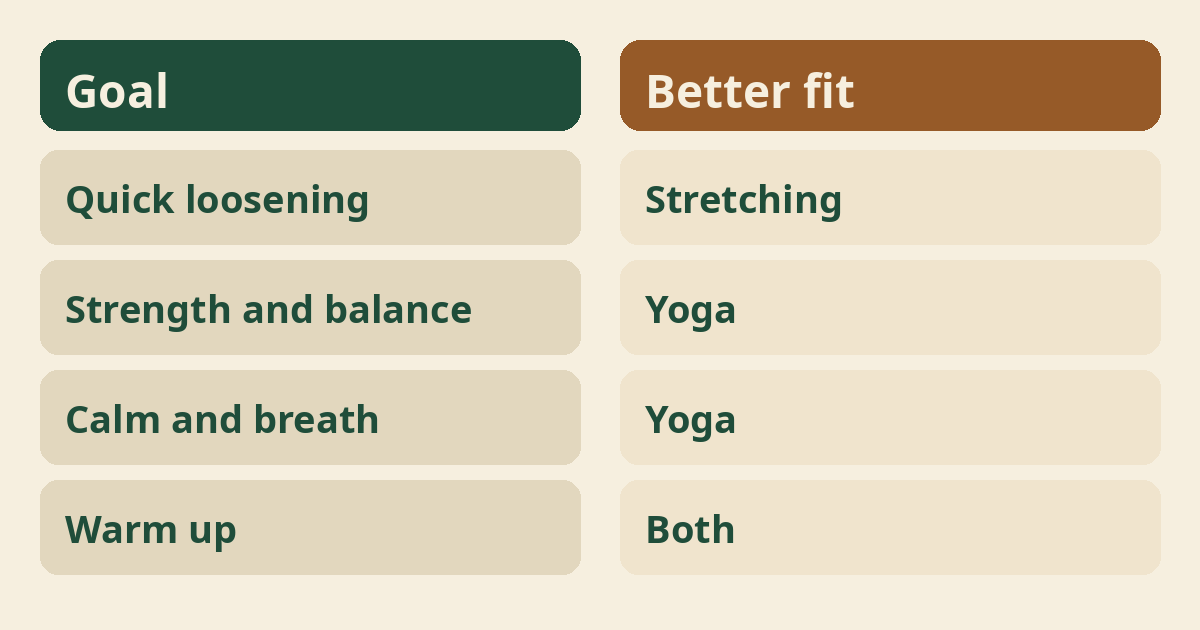
Stretching mainly aims to improve flexibility and ease tight muscles, while yoga also aims for balance, strength and calm. If you only want to loosen up after a run, stretching may be enough. If you want a wider practice for body and mind, yoga offers more. Neither is better for everyone.
Which is better for flexibility?
Both can improve flexibility, and regular practice of either over weeks tends to help most people. Our guide to yoga for flexibility explains safe ways to build range. Go slowly and never force a stretch.
Which is better for strength?
Yoga builds strength through poses like warrior, plank and chair, while simple stretching does not. Our guide to warrior pose shows a strengthening pose. Strength supports your joints and helps you move well.
Which is better for balance?
Yoga includes balance poses, which stretching routines usually do not. Our guide to yoga for balance explains simple practice. Standing poses train the legs, ankles and focus.
Which is better for relaxation?
Yoga adds slow breathing and rest, which many people find more calming than stretching alone. Our guide to yoga for stress relief explains gentle practice. Slow stretching can still feel relaxing, especially when paired with calm breathing.
How does breathing differ?
Stretching usually has no breathing plan, while yoga links poses with slow, steady breaths. Our guide to pranayama for beginners explains yoga breathing. Breathing smoothly in any stretch helps muscles ease.
How long does each take?
A stretching break can take two to five minutes, while a yoga class usually lasts thirty to sixty minutes. Both can be short. Our guide to yoga at your desk shows a five minute yoga break. Choose the length you can keep up.
What equipment do you need?
Stretching needs nothing, while yoga needs a mat and perhaps a block or strap. Our yoga mat guide and yoga props guide explain basics. You can start either one with no equipment at all.
When is stretching a good choice?
Stretching is useful for a quick warm up, a cool down after exercise or a break from sitting. It is simple and low effort. Keep stretches gentle and avoid bouncing. Our guide to yoga for runners shows post run options.
When is yoga a good choice?
Yoga suits you if you want strength, balance, calm and flexibility in one practice. A class also gives structure and a teacher who explains poses. Our guide to hatha yoga describes a gentle class.
Can you combine them?
Yes. Many people stretch briefly before exercise and do yoga a few times a week. They work well together. Our guide to yoga vs gym explains how yoga fits with other training. Plan rest days too.
What about safety?
Both are low risk when done gently, but forcing a stretch or holding the breath can cause strain. Warm up first. Move slowly. Stop if you feel sharp pain. Our guide to yoga with a bad back explains safe habits.
Should you stretch cold muscles?
It is better to warm up with a little gentle movement first, then stretch. A few minutes of walking or easy movement warms the muscles. Our guide to a morning yoga routine shows a warm start.
How long should you hold a stretch?
Hold gentle stretches for about twenty to thirty seconds, breathing slowly, and avoid bouncing. In yoga, poses are often held for three to five breaths. Stay within a comfortable range. A mild pull is fine, pain is not.
What mistakes do beginners make?
Forcing deep stretches, bouncing, holding the breath and comparing themselves with others. Go slowly and use support. Our guide to yoga class etiquette helps you feel comfortable in a class.
How often should you do each?
Short stretches can be done daily, and yoga two or three times a week is a good start. Our guide on how often to do yoga gives ideas. Rest when tired.
Which should you choose?
Choose the one you enjoy and will keep doing, and try both. If you want a simple, quick loosening, stretch. If you want a fuller practice with calm and strength, try yoga. A few classes will help you decide.
Is either a medical treatment?
No. Neither stretching nor yoga treats or cures a condition. Both are forms of gentle exercise. If you have pain or an injury, speak to a doctor or physiotherapist. Use them as part of a healthy routine.
When should you see a doctor?
See a doctor before starting if you have an injury, health condition, pregnancy or any concern. Stop if you feel pain, numbness or dizziness. This guide is general education, not medical advice.
What does a simple stretching routine look like?
Spend five minutes on gentle neck, shoulder, hip and leg stretches, holding each for twenty to thirty seconds. Start at the top and work down. Breathe slowly. Do both sides. Keep each stretch mild. A short routine done daily can ease the stiffness from long sitting and prepares the body for movement.
What does a simple yoga routine look like?
Spend ten to fifteen minutes on slow breathing, cat and cow, a standing pose, a forward fold and a short rest. Link the movements with the breath and hold poses for a few breaths. Our guide to yoga for better sleep shows a gentle evening version. Finish with quiet rest.
Which is better for stiff, desk bound days?
Both help, so use short stretches through the day and a longer yoga session a few times a week. Little breaks stop stiffness from building up, while a fuller practice builds strength and ease over time. Our guide to yoga for neck and shoulders has more ideas.
Which is better for older adults?
Both can be suitable if gentle, and chair based options help if standing is hard. Our guide to chair yoga and yoga after 50 show supported ways to start. Go slowly and tell your teacher about any limits.
What about the mind?
Yoga invites you to pay attention to your breath and body, which can feel calming, while stretching can also be mindful if you slow down. Try noticing where you feel the stretch and how your breath moves. Our guide to how to meditate explains attention practice. Any slow, quiet movement can help you pause.
How can you tell if a stretch is right?
You should feel a mild, even pull in the muscle, with no pain, pinching, tingling or numbness. If it hurts, ease off. If you feel it in a joint, change the position. Breathing should stay smooth. Over time, the range grows. Never compare your stretch with someone else’s.
Can you start today with no preparation?
Yes. Stand up, take three slow breaths, and try a gentle neck stretch and a forward fold, then notice how you feel. You need no special clothes or equipment. Pick one movement you enjoy and repeat it daily this week. Small starts build confidence and show you which style feels right.
Where to read next
For a calm, beginner-friendly start, Ranjana Sinha’s Begin Where You Are is written for people who want simple steps. Our guide to starting a home yoga practice adds a gentle routine you can follow at home.
Frequently asked questions
Is yoga better than stretching?
Not always. Yoga adds strength, balance and breathing, while stretching is quicker.
Does yoga count as stretching?
Yoga includes stretching, but it also includes strength, balance and breathing.
How long should I hold a stretch?
About twenty to thirty seconds, breathing slowly.
Can I do both?
Yes. They work well together.
Do I need equipment?
No for stretching, and only a mat for yoga.
The bottom line
Both are kind to the body. Try each and keep the one you enjoy, or combine them.

