
That sharp or aching line down your leg can make even sitting through a meal feel like work. Yoga for sciatica offers a slow, low-impact way to move that many beginners find manageable. This guide walks you through what sciatica is, which easy poses people commonly use, and how to build a short home routine without pushing your body too far. No experience is needed, just a bit of floor space and patience. Brand new to yoga? Start with our complete yoga for beginners guide, then come back here.
This article is general education, not medical advice. If you have sciatica or any health condition, talk with your doctor before starting a new movement routine.
What is sciatica?
Sciatica is pain that travels along the sciatic nerve, which runs from your lower back down through each leg. The feeling varies from person to person. Some describe a dull ache in the buttock or thigh, while others feel a burning line or a sharp jolt. It usually shows up on one side of the body. Sitting for long stretches often makes it more noticeable.
What is beginner yoga for sciatica?
Beginner yoga for sciatica is a set of easy poses chosen to move the lower back and hips without strain. The pace is slow and most poses stay close to the floor. You spend more time resting and breathing than stretching hard. The goal is comfortable movement, not deep flexibility. It suits people who have never done yoga before.
Why do people try yoga for sciatica?
Many people turn to sciatica yoga because long sitting and stiff hips often come with their discomfort. A short routine gives them a structured way to move each day. It costs nothing and needs almost no equipment. Many also like that they can do it at home on their own schedule. For some, the calm pace is a welcome break from a stressful day.
Is yoga safe for beginners with sciatica?
For many people it can be, as long as the poses stay easy and the pace stays slow. The key is choosing beginner-friendly movements and avoiding deep stretches early on. Pain that sharpens or spreads down the leg is a clear stop signal. A doctor can tell you whether movement is right for your situation. Starting cautiously is always the better plan.
How do you start safely?
Start with five to ten minutes and the easiest version of each pose. Move slowly into and out of every position. Mild muscle effort is normal and expected. Sharp, shooting, or spreading pain is not, so back off the moment you feel it. Keeping a simple note of what felt fine and what did not can help you adjust over time.
How should you set up your space?
A clear patch of floor with a mat or folded blanket is all you need. Pick a spot where you will not be interrupted for fifteen minutes. Wear clothes you can bend in comfortably. Keep water nearby and the room at a comfortable temperature. A quiet setting helps you notice how your body responds to each movement.
Should you warm up first?
Yes, a minute or two of easy movement prepares your back and hips for the poses. You can march gently in place or roll your shoulders a few times. Swaying side to side with soft knees also works well. Warm muscles tend to move more comfortably than cold ones. Skipping the warm up is a common beginner mistake.
Step 1: How do you settle your breathing?
Lie on your back with your knees bent and take five slow breaths. Let your belly rise as you breathe in and fall as you breathe out. Rest your hands on your stomach so you can feel the movement. This calms the body before the poses begin. If this style of breathing is new to you, belly breathing for beginners walks through the basics in more detail.
Step 2: How do you do cat-cow?
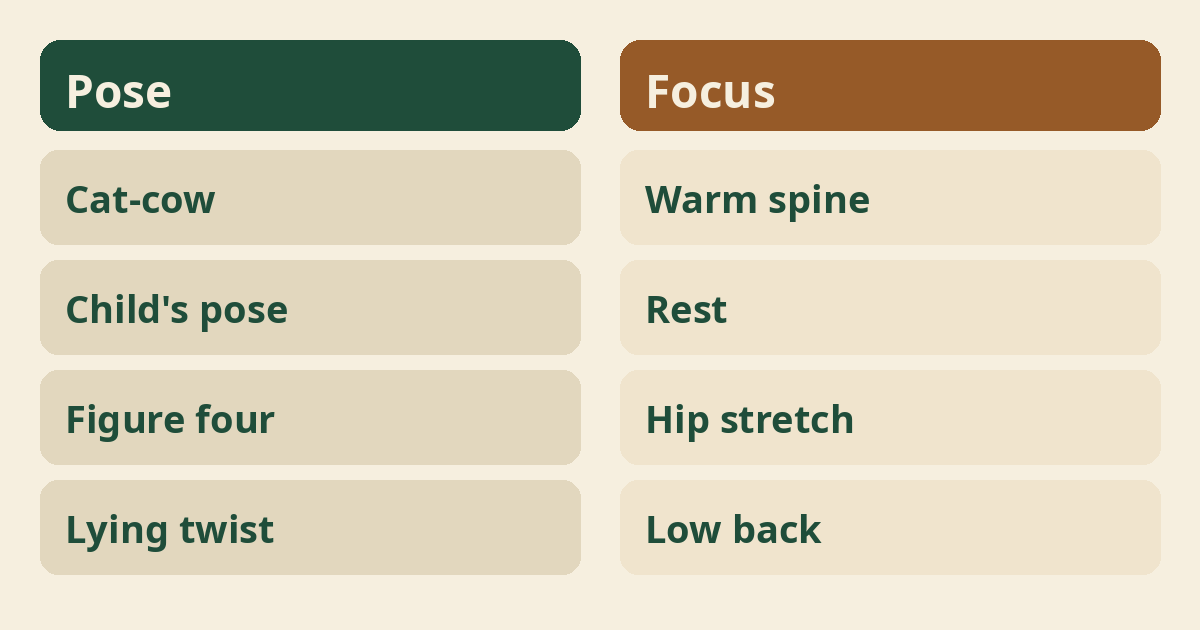
Come onto your hands and knees, then slowly round your back up and let it sink down again. Round as you breathe out and sink as you breathe in. Keep the movement small and smooth rather than big and forced. Five to eight slow rounds are enough at first. A full walkthrough with photos is in cat-cow for beginners.
Step 3: How do you rest in child’s pose?
Kneel down, sit back toward your heels, and fold forward with your arms stretched out in front. Let your forehead rest on the floor or on a cushion. Widen your knees if that feels better on your hips. Stay for five to ten slow breaths. The full setup, including ways to make it more comfortable, is covered in child’s pose for beginners.
Step 4: How do you do puppy pose?
From hands and knees, walk your hands forward and lower your chest toward the floor. Keep your hips stacked above your knees instead of letting them drift forward. This opens the upper back while the lower back stays fairly quiet. Hold for a few breaths and come out slowly. You can see the exact alignment in puppy pose for beginners.
Step 5: How do you do an easy lying twist?
Lie on your back and let both knees fall slowly to one side. Keep both shoulders resting on the floor as you breathe steadily. Hold for a few breaths, bring the knees back to center, then switch sides. Move only as far as feels easy on your back. A cushion under the knees can make this more comfortable.
Step 6: How do you stretch the hip with a figure four?
Lie on your back, cross one ankle over the opposite knee, and draw both legs gently toward your chest. Hold behind your thigh rather than pulling on your shin. Keep your head and shoulders resting on the floor. This targets the hip muscles that often feel tight alongside sciatica. Hold for five breaths, then swap legs.
Step 7: How do you do butterfly pose?
Sit tall, bring the soles of your feet together, and let your knees fall out to the sides. Sit on a folded blanket if your hips feel tight. You can stay upright or fold forward slightly if that is comfortable. There is no need to press the knees down. The full version with options is in butterfly pose for beginners.
Step 8: How do you finish a session?
End lying on your back with your knees bent or your calves resting on a chair. Close your eyes if that feels comfortable. Stay for one or two minutes and breathe slowly. Let your muscles fully release before you move. When you stand up, roll to your side first and push up with your arms.
How should you breathe during poses?
Breathe slowly through your nose and let each exhale run a little longer than the inhale. Steady breathing helps many people relax into a stretch instead of bracing against it. It also gives your mind something calm to focus on. If you catch yourself holding your breath, ease out of the pose slightly. Strain in the breath usually means strain in the body.
How long should a session be?
Ten to fifteen minutes is plenty for a beginner. Short sessions done regularly tend to work better than one long session once in a while. You can always add time as the poses start to feel familiar. Leaving a session feeling okay rather than exhausted is a good sign. Consistency matters far more than length.
How often should you practice?
Most beginners do well with three to five short sessions a week. Daily practice is fine as long as it stays comfortable. Rest days give your body time to adapt, especially early on. There is more detail on finding a sustainable rhythm in how often you should do yoga. Let how you feel guide the schedule.
Is morning or evening better?
The best time is simply the time you will actually keep. Some people like a short morning session to loosen up after sleep. Others prefer the evening to unwind after sitting all day. Try both for a week and see which fits your life. A routine that happens beats a perfect routine that does not.
What are common mistakes?
The biggest mistake is pushing into a stretch to make results come faster. Skipping the warm up is another frequent one. Many beginners also hold their breath without noticing. Copying deep poses from advanced videos can aggravate a sensitive back. Slow and small beats forceful every single time.
Which poses need extra care?
Deep forward bends and strong backbends deserve caution when you have sciatica. If you try a forward fold, keep your knees bent and the range small. Skip any pose that sends tingling or pain down your leg. Intense poses from photos and videos are not built for sensitive backs. When in doubt, choose the easier version or leave the pose out.
What about standing poses?
Simple standing poses can fit into a routine once the floor poses feel comfortable. Start with just standing tall and noticing your posture. Even that teaches body awareness that carries into daily life. Add more standing work gradually over weeks, not days. A safe starting point is described in mountain pose for beginners.
What props make sciatica yoga easier?
A cushion, a folded blanket, and a belt or scarf cover most beginner needs. Props bring the floor closer and take pressure off the lower back. A chair can also help for balance and for resting poses. You do not need to buy anything special to begin. Simple household substitutes are listed in yoga props for beginners.
What are signs you should stop?
Stop if pain sharpens, spreads down the leg, or comes with numbness or weakness. Those signs suggest the nerve may be irritated. Rest rather than pushing through. Mention what happened to your doctor before your next session. It is always fine to end a session early.
Who should be careful with sciatica yoga?
Anyone with severe pain, a recent injury, or leg weakness should see a doctor before starting. The same applies after a fall or if pain comes with bladder or bowel changes, which need prompt medical care. Pregnancy also changes which poses are appropriate, and prenatal yoga versus regular yoga explains how those differ. When your situation has extra factors, professional guidance comes first. Yoga can wait until you have a clear answer.
Is yoga a treatment for sciatica?
No, yoga is not a treatment or a cure for sciatica. It is a form of gentle movement that some people include in their weekly routine. Diagnosis and treatment decisions belong with a qualified health professional. Think of yoga as one possible part of a broader approach. It should never replace medical care when you need it.
What benefits do people report?
Many people find that regular easy yoga leaves them feeling looser and calmer, though results vary from person to person. Some say everyday movements like standing up or climbing stairs feel easier over time. Others mainly value the quiet time and slower breathing. Experiences differ, and there are no guarantees. The National Center for Complementary and Integrative Health offers an overview of what research says about yoga and back-related pain.
What if progress feels slow?
Slow progress is normal, especially in the first few weeks. Comfort tends to build gradually rather than overnight. Some weeks will feel better than others, and that is okay. Keep sessions short and steady instead of adding intensity. Judge your progress by the month, not by the day.
How do you progress over time?
Add a little time or one new pose only when your current routine feels easy. You might hold a stretch a few breaths longer than before. Or you might try a slightly deeper version of a familiar pose. Small steps keep the practice sustainable for the long run. Big jumps are where people tend to get sore and discouraged.
Does flexibility matter for sciatica?
You do not need to be flexible to start, and flexibility is not the main goal here. Comfortable, controlled movement matters far more than how far you can reach. Flexibility tends to change slowly on its own with regular practice. Chasing it directly often leads to overstretching. If it interests you later, yoga for flexibility covers a gradual approach.
Why do tight hips matter?
The sciatic nerve passes close to several hip muscles, so tight hips can add to discomfort. Long hours of sitting are one reason hips get stiff. Easy hip stretches like the figure four are a common part of sciatica yoga routines. Move slowly and never force the range. A wider set of options is in yoga for hips.
Does balance work help?
Basic balance practice can build confidence in everyday movement. Many people with sciatica move cautiously because they worry about triggering pain. Simple standing balance work, done near a wall or chair, can ease that fear. It also strengthens the legs without impact. A gentle starting routine is in yoga for balance.
Can you do anything at your desk?
Yes, seated movements can break up long sitting spells during the workday. Try slow seated twists, ankle rolls, and shoulder circles. Standing up to walk for a minute each hour also helps. These small breaks add up over a full day. More ideas are in yoga at your desk.
What if you also have a bad back?
Sciatica often comes with a sensitive lower back, so extra care makes sense. Keep twists small and skip deep bends on sore days. Choose supported poses where your body is held by the floor or props. Rest more between poses if you need to. The guide on yoga with a bad back covers pacing for tender backs.
What about neck and shoulder tension?
Pain anywhere in the body often leads to tension elsewhere, and the neck and shoulders are common spots. Slow shoulder rolls and easy neck movements can be added to any session. Keep them small and comfortable. They pair well with the breathing work at the start of practice. A dedicated routine is in yoga for neck and shoulders.
How does stress fit in?
Stress can make pain feel louder, and ongoing pain can raise stress in return. Slow breathing and restful poses give many people a way to unwind. Even a few calm minutes can shift how a difficult day feels. This is one reason some people keep practicing even on busy weeks. You can read more in yoga for stress relief.
Can a teacher help?
A qualified teacher can watch your form and suggest easier versions of poses. Look for someone with experience teaching people with back pain. Tell them about your sciatica before class begins. A good teacher will adjust the plan rather than push you into standard shapes. Even a few sessions can set your home practice on safer footing.
Is home practice or a class better for beginners?
Both work well, and many people mix the two. Home practice is flexible, private, and free. A class adds guidance and real-time feedback on your form. Some beginners start with a few classes, then continue at home. Choose whichever you are more likely to stick with.
How do you build a routine that sticks?
Attach your practice to something you already do every day. Rolling out the mat after morning coffee or before bed works for many people. Keep the mat somewhere visible as a reminder. Start with just two or three poses if time is tight. A routine you enjoy is one you will keep doing.
What kind of mindset helps?
Treat each session as exploration rather than a test. Some days your body will move easily and some days it will not, and both are fine. Let go of comparing yourself to anyone in a video or class. The habit matters more than any single session. Kindness toward your own pace is part of the practice.
Where to read next
For a calm, beginner-friendly start, Ranjana Sinha’s Begin Where You Are is written for people who want simple steps. Our guide to starting a home yoga practice adds a gentle routine you can follow at home.
Frequently asked questions
Can a complete beginner with no yoga experience try these poses?
Yes, every pose here has an easy version that needs no prior yoga experience.
Should I feel a stretch in my leg during these poses?
Mild muscle sensation is common, but sharp pain, tingling, or numbness down the leg means you should ease out.
How soon might I notice a difference?
Many people notice small changes in comfort over a few weeks of regular practice, though results vary.
Is it okay to skip a day if my leg hurts more than usual?
Yes, rest on worse days and return to gentle movement when you feel ready, checking with your doctor if pain keeps flaring.
Do I need special gear for sciatica yoga?
No, a mat or folded blanket plus a cushion and a belt or scarf are enough.
The bottom line
Start small, move slowly, and let consistency do the work over time.

