
By the end of a long day under a car, your shoulders sit near your ears, your wrists ache from the torque wrench, and your lower back feels like a rusted hinge. Yoga can give those tired spots a few calm minutes of movement. This guide shows easy poses you can do in a shop corner, a driveway, or your living room, in plain words.
This article is general education about movement and is not medical advice. If you have an injury, ongoing pain, or a health condition, check with your doctor before you try anything here.
What is yoga for mechanics?
It is a set of slow stretches and breathing habits picked for people who work with their hands, bend over engines, and lift heavy parts. You do not need special skills or clothes. The poses focus on the places a shop day tends to tighten, like the back, hips, wrists, and shoulders.
Why do mechanics try yoga?
Many mechanics try yoga because the job repeats the same bent, reaching, gripping shapes for hours. Slow stretching gives your body the opposite shapes for a few minutes. Many people find it feels like a reset after a hard shift, though results vary from person to person.
Where does the shop day leave you tight?
The common trouble spots are the lower back, neck, shoulders, hips, forearms, and knees. Leaning over fenders rounds the upper back. Crawling and squatting tighten hips and knees. Gripping tools all day leaves the hands and forearms tired. Knowing your spots helps you pick poses.
Do you need to be flexible or strong first?
No, you can start exactly as you are, even if you cannot touch your knees. Yoga meets you where you stand today. Use a smaller version of every pose and stop at a mild stretch. Over time your range may change, but there is no race and no score.
How do you start your first session?
Start with five to ten minutes on a flat floor, in clothes you can move in. Clear a small space away from tools and oil spills. A towel or mat under you is enough. Read the steps below once, then move slowly through them, keeping the effort easy.
What should you wear and where should you practice?
Wear loose work pants or shorts, take off boots, and use a clean, dry, non-slip spot. A concrete shop floor can be hard and slick. A rubber mat, folded blanket, or even a piece of clean cardboard on carpet makes a better base. Keep the area free of fluids and sharp bits.
Step 1: How do you begin with a few slow breaths?
Stand or sit tall and take five slow breaths before you stretch anything. Place a hand on your belly and feel it rise as you breathe in. This tells your body the break has started. If you want more guidance, try a simple belly breathing practice first.
Step 2: How do you stand tall after hours of leaning?
Stand with feet hip-width apart, shoulders loose, and let your arms hang. Imagine a string lifting the top of your head while your feet press into the floor. This is a calm reset for a body that has been folded over an engine bay. Mountain pose shows the full shape in detail.
Step 3: How do you ease a stiff mid-back?
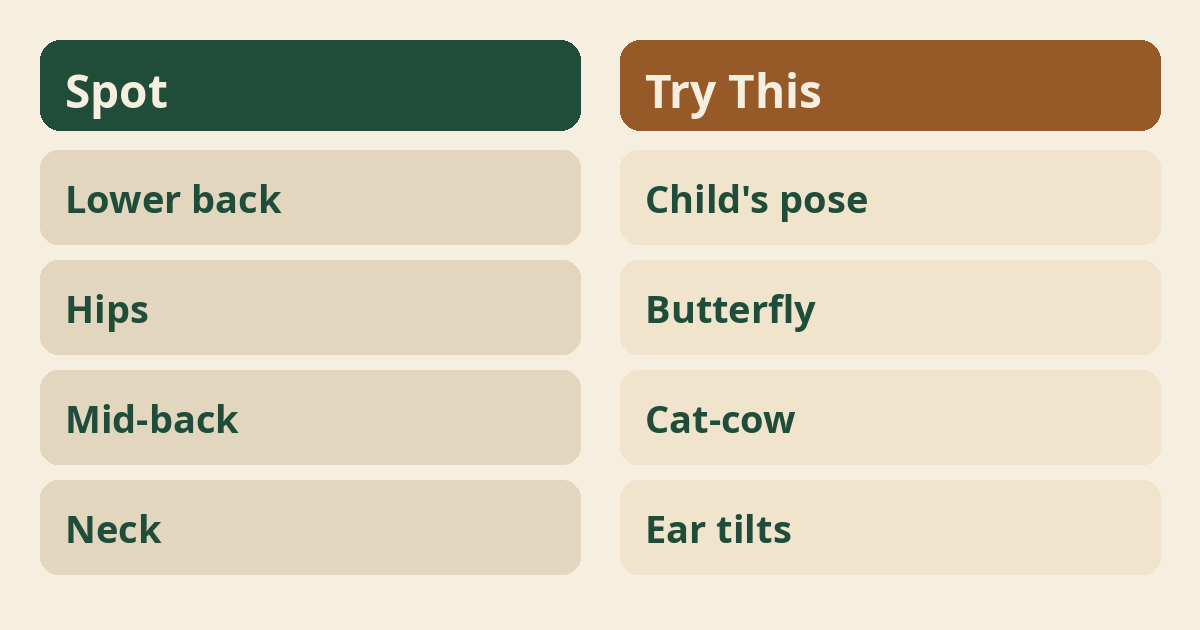
Use cat and cow on hands and knees to move your spine slowly forward and back. Breathe in as your belly drops and your chest opens. Breathe out as you round your back toward the ceiling, like a car roof. Do six slow rounds. Cat-cow for beginners has helpful cues.
Step 4: How do you rest the lower back?
Sit your hips back toward your heels and rest your forehead on the floor or a folded towel. Let your arms lie along your sides or reach forward. Stay for five to eight slow breaths. Many mechanics find this a kind way to unwind a tight back. Child’s pose has easy variations.
Step 5: How do you open tight hips from squatting and crawling?
Sit on the floor with soles of your feet together and let your knees drop to the sides. Sit on a folded towel if your knees sit high. Keep your spine long and breathe slowly. Never force the knees down. Butterfly pose is a good low-impact choice for this.
Step 6: How do you look after wrists and forearms?
Press your palms together in front of your chest, then slowly turn fingers down and back up. Add a slow open and close of your fists. Keep every move small and pain-free. These wrist shapes give hands a break from grip work. Skip any move that causes sharp or tingling feelings.
Step 7: How do you ease shoulders and neck?
Roll your shoulders back and down, then tilt one ear toward one shoulder and breathe. Hold each side for five breaths without pulling on your head. Look at the sides of your neck as a place to soften, not stretch hard. See yoga for neck and shoulders for more ideas.
How does breathing help during a shop day?
Slow breathing gives you a free, portable way to settle your body between jobs. Breathe in through your nose for about four counts and out for about six. Try this while a part soaks or paint dries. Many people find a few rounds help them feel calmer, though results vary.
Can you do yoga in the shop between jobs?
Yes, a two-minute stretch next to your bay is enough to count as practice. Stand at the bench, press your hands on it, and walk your feet back for a flat-back stretch. Roll your shoulders, shake out your hands, and breathe. Keep it short so it fits your work rhythm. See yoga at your desk for quick ideas that adapt to a bench.
How long should a session be?
Five to fifteen minutes is plenty when you are new. A short routine you actually do beats a long one you skip. Start with five minutes after work. If you feel good, add a few minutes next week. Listen to your body and stop if anything feels sharp.
How often should you practice?
Three or four short sessions a week is a realistic start for most working people. Pick days that fit your shifts. Some mechanics like a quick stretch before bed. Others prefer mornings. Find a pattern you can keep. How often to do yoga covers more options.
What are common mistakes new people make?
The biggest mistakes are pushing too hard, holding your breath, and rushing. Mechanics are used to forcing a stuck bolt. Stretching does not work that way. Back off if you feel pinching or burning. Breathe steadily, move slowly, and see each pose as a calm check-in, not a test.
Why should you not stretch cold and hard?
Cold muscles after a long rest do not like sudden deep stretches. Spend a minute walking or rolling your shoulders first. Then ease into poses by small amounts. If you have been standing on concrete all day, start with a seated or floor pose to take weight off your legs.
Do you need props?
A towel, a folded blanket, and a sturdy chair cover almost everything. Yoga blocks and straps are nice but optional. A rolled shop towel under the hips or knees can add comfort. Check out yoga props for beginners for simple home swaps.
What is a good way to protect your knees?
Pad your knees with a folded blanket and never twist them on a locked foot. Years of kneeling on garage floors can leave knees touchy. Use extra cushion in any pose on hands and knees. Come out of any pose that causes knee pain. A teacher can suggest other shapes.
Who should be careful or ask a doctor first?
Check with your doctor first if you have back problems, joint injuries, high blood pressure, numbness, or recent surgery. Also be careful if you are pregnant or have balance issues. Tell your doctor what the job involves. They can say which moves suit you. Stop any pose that causes sharp pain, dizziness, or tingling.
Is yoga a treatment for pain or injury?
No, yoga is not a treatment, and it should not replace care from a doctor or physical therapist. Think of it as a general movement habit. If you have ongoing pain, get it checked. Yoga may be one thing you add after your care team says it is okay for you.
What benefits might mechanics notice?
Many people find yoga helps them feel looser, calmer, and more aware of how they sit and lift, though results vary. Some notice better sleep or a calmer mood. These are common reports, not promises. For general facts on yoga and health, see the National Center for Complementary and Integrative Health resource, then talk to your own doctor about what fits you.
Can yoga help with posture at the bench?
Many people find yoga makes them more aware of posture, which may change how they stand at a bench. Notice when your shoulders creep up or your head pokes forward. Take a breath and let them settle. Small changes through the day can feel better than one big fix. Results vary.
How can yoga support balance and steady footing?
Standing poses ask you to find a steady stance, which many people find useful on a shop floor. Practice shifting weight from one foot to the other. Hold a wall or bench if you need it. For more ideas, try yoga for balance and keep movements small and slow.
Can yoga help flexibility?
Regular slow stretching may improve how far you can reach over time, though everyone changes at their own pace. Reaching into tight engine bays can be easier when hips and shoulders feel open. Do not chase big range. See yoga for flexibility for a slow plan you can follow.
What about stress after a tough repair day?
A few minutes of slow breathing and stretching can be a calm break from a stressful job. Some days bring rushed customers and stubborn parts. A short practice gives your mind a place to rest. Many people find it helps them switch off from work. Yoga for stress relief has more calm options.
How do you progress over time?
Progress means holding poses a little longer, adding one new pose, and breathing more smoothly. After a few weeks, add a pose like garland pose for hips. Keep what feels good and drop what does not. Small steady steps work better than big jumps.
Should you find a teacher or class?
A teacher can check your form and suggest changes for your body, which is useful if you are new. Look for beginner or slow-flow classes, and tell the teacher about your job and any sore spots. Online classes work if you are careful. Pick a teacher who respects your limits and does not push.
What mindset helps most?
A patient, curious attitude helps more than strength or skill. You already know how to pay attention to details when you work on an engine. Bring that same care to your body. Notice what feels good and what does not. There is no perfect pose and no deadline.
How do you build a habit that sticks?
Tie your yoga to something you already do, like washing up after work. Put your mat or towel where you can see it. Start with just three poses. Mark each session on a shop calendar. Missing a day is fine. Just start again the next day without guilt.
What does a simple ten-minute routine look like?
Breathe for one minute, then cat-cow, child’s pose, butterfly, shoulder rolls, and standing tall. Spend about two minutes on each, moving slowly. End with three calm breaths. You can shorten it to five minutes on busy days. Keep the effort low and stay in a comfortable range.
Where to read next
For a calm, beginner-friendly start, Ranjana Sinha’s Begin Where You Are is written for people who want simple steps. Our guide to starting a home yoga practice adds a gentle routine you can follow at home.
Frequently asked questions
Is yoga good for people who work with their hands all day?
Many hands-on workers find slow stretching a pleasant way to ease tired muscles, though results vary.
Can I do these poses in work boots?
It is better to take your boots off so your feet can spread and grip the floor.
What if my hands are too sore to press on the floor?
Rest on your forearms or use a chair, and skip any pose that hurts your wrists.
Do I need a mat to start?
No, a folded towel or blanket on a clean floor works fine.
Will yoga fix a bad back from years in the shop?
No, yoga is not a cure, so talk to your doctor about ongoing back pain.
The bottom line
Pick two poses, breathe slowly, and give your body a few calm minutes after work today.

