Yoga for hockey players is a simple way to work on the tight hips, sore backs, and stiff shoulders that skating can bring. You do not need to be flexible or experienced to start. This guide walks you through easy poses, calm breathing, and short sessions that fit around practice and games. Everything here is beginner friendly, uses little or no equipment, and moves at your pace so you can build a habit that lasts.
This article is general education, not medical advice. If you have an injury, a health condition, or pain that does not go away, check with a doctor before you start.
What is yoga for hockey players?
It is a set of easy poses and breathing drills chosen to match what hockey does to your body. Skating loads your hips, groin, and lower back in one direction again and again. Yoga moves those areas slowly through their full range. You hold shapes, breathe, and let tight spots soften over time.
Why do hockey players try yoga?
Most players come to yoga because something feels tight, sore, or stuck. Long seasons and hard skating leave hips and backs stiff. Many players say yoga helps them feel looser and more relaxed. It also gives you quiet time away from a loud, fast sport.
How may yoga help a hockey body?
Many people find that gentle yoga helps with flexibility, balance, and feeling calm, though results vary. Some players say their stride feels easier when their hips open up. Others notice they sleep better or feel less stiff in the morning. Groups like National Center for Complementary and Integrative Health note that yoga is generally safe for healthy people and may help with some kinds of back discomfort, but everyone responds differently.
Is yoga a treatment for hockey injuries?
No, yoga is not a treatment, a cure, or a fix for any injury. It is a gentle movement practice that many people enjoy. If you have a real injury, a pulled groin, or pain that stays, see a doctor or a physical therapist. Yoga can sit alongside proper care, not replace it.
Who should be careful before starting?
Anyone with an injury, recent surgery, or ongoing pain should talk to a doctor first. The same goes for back problems, hip issues, or joint conditions. If a pose hurts, stop. Discomfort from a stretch is normal, sharp pain is not.
What do you need to start?
All you need is a mat, some floor space, and clothes you can move in. A few simple props make things easier, like a block or a strap for tight hamstrings. You can read more in our guide to yoga props for beginners. A folded towel works fine if you do not own props yet.
How do you start as a total beginner?
Start with ten minutes of easy poses and slow breathing, two or three times a week. Pick a quiet spot at home. Learn three or four basic shapes before you try longer flows. Short and steady beats long and rare, especially in a busy season.
Step one, mountain pose.
Stand tall with your feet hip width apart and your arms relaxed. Feel your weight spread across both feet. Breathe slowly and let your shoulders drop. This simple standing shape, covered in mountain pose for beginners, teaches the posture you will use in every other pose.
Step two, cat-cow.
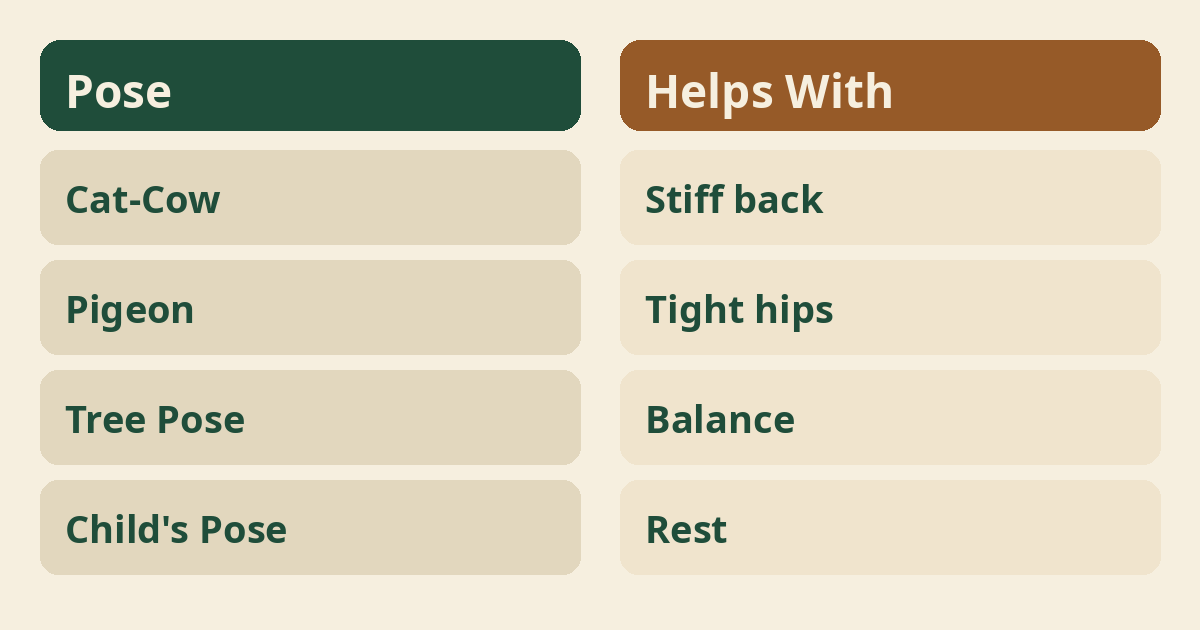
Move your spine slowly between rounding and arching while you breathe. Start on your hands and knees. Inhale, drop your belly and lift your chest. Exhale, round your back and tuck your chin. Our guide to cat-cow pose shows the full movement. It is a friendly warm-up for a stiff back.
Step three, child’s pose.
Kneel, sit back toward your heels, and rest your forehead on the mat. Let your arms stretch forward or rest by your sides. Stay for five to ten slow breaths. The full walkthrough is in child’s pose for beginners. Use it any time you need a break.
Step four, gentle hip opener.
From a low lunge, let your hips sink slowly while you keep your chest lifted. Hockey hips get tight from skating stride after stride. Hold each side for about a minute without forcing anything. More ideas live in our page on yoga for tight hips.
Step five, balance work.
Stand on one foot and hold for a few slow breaths, then switch sides. Tree pose is a good choice: rest one foot against your standing leg, never on the knee. Balance matters on skates, and these drills train it on land. There is more in yoga for balance for beginners.
Step six, cool down breathing.
Lie on your back, bend your knees, and breathe slowly for a few minutes. Put one hand on your belly and let it rise and fall. This tells your body the work is done. It is a simple way to end every session.
Breathing basics.
Breathe in through your nose and out through your nose, slow and steady. Let your belly move more than your chest. Slow breathing is the base of every pose in this guide. If you want a deeper dive, try belly breathing for beginners.
Breathing for shifts and recovery.
Calm breathing can help you settle down between shifts or after a game. Try four slow counts in and six slow counts out while you sit on the bench or lie in bed. Many athletes use this to relax. It takes practice, so start at home first.
How long should a session be?
Ten to twenty minutes is plenty for a beginner. Short sessions are easier to repeat, and repeating is what builds the habit. You can always add time later. A focused ten minutes beats a forced forty.
How often should you do yoga?
Two to four short sessions a week is a good starting rhythm. Consistency matters more than length. Some players do a few poses every day and a longer session on rest days. Our guide on how often to do yoga goes deeper on finding your rhythm.
When is the best time to practice?
Gentle yoga fits best after skating or on rest days, not right before a game. Deep stretching right before you play can leave muscles feeling loose when you need them ready. After practice or in the evening works better for most players. Test it and notice how your body responds.
Yoga for hips and groin.
Slow hip openers are the heart of most hockey yoga routines. Poses like pigeon and butterfly target the muscles your stride uses most. Move in slowly, hold, and breathe. Never bounce or push into a stretch that bites.
Yoga for shoulders and wrists.
Shooting and stickhandling load your shoulders, wrists, and forearms. Gentle shoulder rolls, wrist stretches, and poses like puppy pose can help you unwind those areas. Keep movements small and slow. Stop if anything pinches.
Yoga for skating balance.
Single-leg poses train the small stabilizing muscles skating depends on. Tree pose and warrior three are common picks. Wobbling is normal and part of the training. Hold a wall or chair when you need to.
Common mistakes beginners make.
The biggest mistake is pushing too hard into stretches. Other common ones are holding your breath, skipping the warm-up, and copying advanced poses from videos. Going slow is not a weakness. It is how you stay on the ice and off the injury list.
Chasing intensity too soon.
Yoga is not a workout competition, and harder is not better here. Long holds and deep bends before your body is ready can strain the same areas hockey already stresses. Pick the easy version first. You can grow into the harder one over weeks.
Props that make poses easier.
Blocks, straps, and folded blankets bring the floor closer to you. A block under your hands in a lunge takes pressure off tight hips. A strap around your foot helps in hamstring stretches. Props are tools, not cheating.
Can you do yoga with a sore back?
Many people with mild back tightness do gentle yoga, but check with a doctor first if pain is real or ongoing. Stick to small, easy movements and skip deep forward bends at first. Our page on yoga with a bad back covers this in detail. Sharp or spreading pain means stop and get checked.
Yoga at your desk or on the road.
A few seated stretches can loosen you up on bus rides and between games. Neck rolls, seated twists, and shoulder stretches need no mat at all. Our guide to yoga at your desk has simple options. They work in a hotel room too.
Neck and shoulder care.
Checking, looking up ice, and gear weight all add up on your neck and shoulders. Slow neck tilts and gentle shoulder stretches are a good daily habit. Move only within a comfortable range. More ideas are in our page on yoga for neck and shoulders.
Yoga for flexibility.
Flexibility grows slowly from regular, gentle practice, not from forcing. Most people notice small changes over weeks, not days. Hold each stretch at a mild level and breathe through it. Our overview of yoga for flexibility explains what to expect.
Yoga for stress and focus.
Many players use the breathing side of yoga to settle their mind before games. Slow breath and quiet holds give your nervous system a chance to downshift. Some find it helps with sleep and pre-game nerves. Our page on yoga for stress relief has more.
How does progression work?
You progress by holding poses a little longer and trying slightly harder versions over time. Add a minute here, a new pose there. Keep the base routine the same so it stays a habit. Progress is measured in months, not sessions.
Working with a teacher.
A good teacher can spot form issues you cannot feel yourself. Look for a beginner class and tell the teacher you play hockey. They can suggest swaps for tight hips and sore backs. Even a few classes early on can shape your home practice.
Yoga for goalies versus skaters.
Goalies need deep hip and groin work; skaters need hips plus balance and shoulders. The base routine in this guide works for both. Goalies may spend extra time in butterfly and low lunges. Skaters may add more single-leg balance holds.
The right mindset.
Treat yoga as recovery and maintenance, not another competition. Some days your body will feel stiff, and that is fine. Show up, move gently, and stop early if you need to. The players who benefit most are the ones who keep it easy and keep showing up.
When to stop a pose.
Stop right away if you feel sharp pain, numbness, tingling, or dizziness. Mild stretch discomfort is normal and fades when you ease off. Pain that feels wrong is a signal, not a challenge. Rest, and talk to a doctor if it keeps happening.
Where to read next
For a calm, beginner-friendly start, Ranjana Sinha’s Begin Where You Are is written for people who want simple steps. Our guide to starting a home yoga practice adds a gentle routine you can follow at home.
Frequently asked questions
Can yoga prevent hockey injuries?
No, yoga cannot prevent or cure injuries, though many players find it helps them feel looser and more prepared.
How soon before a game should I do yoga?
Keep deep stretching away from game time and do gentle yoga after skating or on rest days instead.
Do I need to be flexible to start?
No, yoga builds flexibility over time, so tight beginners are exactly who these poses are for.
Is one long session better than several short ones?
Short, regular sessions tend to work better because consistency is what creates change.
What if I feel pain during a pose?
Ease out of the pose right away, rest, and check with a doctor if the pain continues.
The bottom line
Start small, breathe slow, and let a few easy poses become part of your hockey week.