Yoga for volleyball players is a simple stretching and breathing practice that helps your body handle jumping, spiking, and quick side steps. Volleyball asks a lot from your shoulders, hips, knees, and ankles. Short yoga sessions between games and practices can help those areas feel looser and move better. You do not need to be flexible or experienced to start. This guide walks you through beginner poses, a simple routine, and easy habits that fit around your training schedule.
This article is general education, not medical advice. If you have an injury, a health condition, or ongoing pain, check with your doctor before starting any new exercise.
What Is Yoga for Volleyball Players?
It is a beginner-friendly yoga practice built around the movements volleyball demands. Volleyball players jump, dive, reach overhead, and twist fast. Yoga slows all of that down so you can stretch tight muscles and practice steady balance. Think of it as recovery and body care, not another workout.
Why Do Volleyball Players Do Yoga?
Many players use yoga to loosen tight areas and calm down after hard training. Hitting and serving load the shoulders. Digging and blocking load the hips and lower back. Slow stretching gives those spots gentle attention, and the breathing side of yoga helps many players feel more settled before matches.
How Yoga Fits Around Volleyball Training
Short yoga sessions slot into rest days and cool-downs without taking over your schedule. You do not need an hour. Ten to twenty minutes after practice or on a rest day is a solid start. Many players keep a mat near their bed or in their gym bag so it is easy to unroll.
How to Start as a Beginner
Start with a few easy poses, a quiet spot, and ten minutes. Pick three or four poses from this guide and move slowly between them. Wear anything stretchy and use a mat or a carpeted floor. If a pose hurts, back out of it and try an easier version.
Step 1: Warm Up Your Body
A short warm-up wakes up your joints before you stretch. March in place for a minute, roll your shoulders, and circle your ankles. Warm muscles stretch more comfortably than cold ones, so never skip this part, even when you feel impatient to start.
Step 2: Open Your Hips
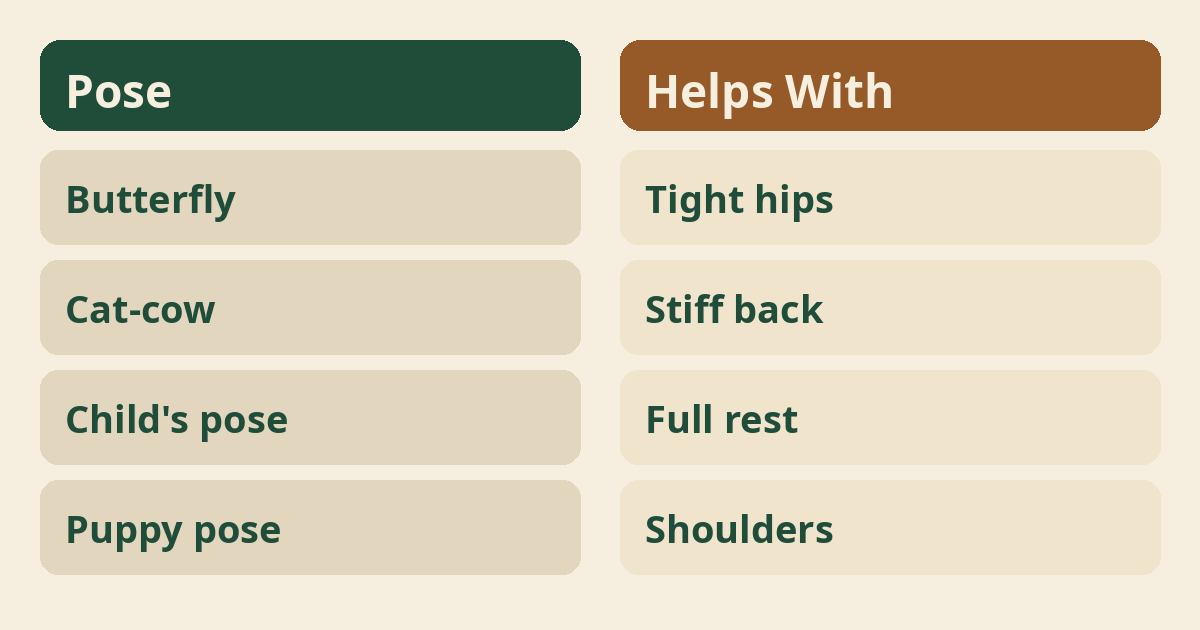
Gentle hip openers target the muscles you use for jumping and lunging. Tight hips are common in volleyball players because of all the squatting and quick lateral steps. A simple place to begin is the butterfly pose, where you sit tall and let your knees fall open. Hold it and breathe slowly instead of pushing your knees down.
Step 3: Stretch Your Shoulders
Slow shoulder stretches care for the arm you hit and serve with. Your hitting shoulder works hard every session. Thread-the-needle and gentle arm circles help it unwind. Move slowly and keep the stretch mild, never sharp or pinchy.
Step 4: Wake Up Your Spine
Gentle spinal movements keep your back moving well after blocking and diving. Try the cat-cow pose on your hands and knees. Arch and round your back slowly with your breath. This simple flow is a favorite for players who feel stiff after long practices.
Step 5: Practice Your Balance
Simple standing balance work supports stable landings and quick direction changes. Stand on one foot and hold for a few slow breaths, then switch sides. Keep your eyes on one still point. Wobbling is normal and part of how balance improves.
Step 6: Cool Down and Rest
End every session with a few minutes of lying still. Lie on your back, close your eyes, and let your breathing slow down. This rest period tells your body the work is done. Many players say this quiet minute is when they feel the session sink in.
Breathing for Volleyball Players
Slow belly breathing is the simplest yoga skill a player can learn. Sit or lie down, put a hand on your belly, and breathe so your hand rises and falls. You can practice this anywhere, including on the bench between sets. A fuller guide lives in belly breathing for beginners.
How Long Should a Session Be?
Ten to twenty minutes is enough for most beginner players. Short sessions done often beat rare long ones. A quick routine after practice is easier to keep than a big plan you skip. Grow the time only when the short version feels easy.
How Often Should You Practice?
Two to four short sessions a week is a realistic rhythm for most players. Rest days and post-practice cool-downs are natural slots. Listen to your body during heavy training weeks and scale back if you feel run down. More detail sits in how often you should do yoga.
Standing Poses for Players
Standing poses build leg strength and steady balance at the same time. Mountain pose is the simplest: stand tall, feet grounded, arms relaxed. It sounds basic, but it teaches you to notice your posture. Learn the shape in mountain pose for beginners.
Poses for Tight Hamstrings
Gentle forward folds stretch the backs of your legs, which jumping loads heavily. Sit with your legs out and hinge forward a little, or bend forward standing with soft knees. Never bounce. Mild tension is fine; sharp pain means ease off right away.
Hip Work for Jumpers and Diggers
Deep hip stretches suit the muscles behind your jump and your low defensive stance. Low lunges and squat-style holds target the hip creases that get tight in a ready position. The garland pose is a deep squat that many players find useful. Hold onto a doorframe if your heels lift.
Shoulder and Upper Back Care
Upper back stretches ease the hunch that spiking and setting can create. Puppy pose melts your chest toward the floor and opens the space between your shoulder blades. You can see the full setup in puppy pose for beginners. Keep your hips stacked over your knees as you settle in.
Neck Tension After Matches
Slow neck stretches release the tension that watching the ball builds up. Drop your ear toward your shoulder and breathe, then switch sides. Add slow half circles if they feel good. More ideas are in yoga for neck and shoulders.
Core Support Without Crunches
Gentle yoga core work supports the twisting and bracing volleyball asks for. Plank holds and slow bird-dogs teach your middle to stay steady while your limbs move. Keep holds short at first. Ten seconds done well beats a shaky minute.
Restorative Poses for Rest Days
Restorative poses are supported, restful shapes for tired bodies. On a rest day, lie with your legs up a wall or rest in child’s pose with a pillow under your chest. These poses ask nothing from you. They give your nervous system a chance to downshift.
Props That Make Yoga Easier
Simple props like blocks, straps, and pillows make poses more comfortable. A strap helps you reach your foot in a hamstring stretch. A block brings the floor closer in a lunge. You can use books and a belt from home, and yoga props for beginners explains the basics.
Common Mistakes Players Make
The biggest mistakes are rushing, bouncing, and treating yoga like a competition. Volleyball rewards speed and power, but yoga rewards patience. Do not force depth, compare yourself to flexible people online, or skip the rest at the end. Slow and easy is the whole point.
Playing Through Pain Is Not the Plan
Pain is a signal to stop, not a challenge to push through. A stretch should feel like mild pulling, never stabbing or burning. If a pose bothers an old ankle, knee, or shoulder injury, skip it. Choose a different pose that leaves that area alone.
Who Should Be Careful
Players with current injuries or health conditions should talk to a doctor first. This includes recent sprains, shoulder problems, back pain, or anything being treated. A doctor or physio can tell you which movements to avoid. Bring a list of the poses you want to try.
Is Yoga a Treatment for Injuries?
No, yoga is not a treatment, a cure, or a rehab program. It is a gentle movement and breathing practice that many people enjoy. Injuries need proper medical care and guidance. Yoga can sit alongside that care only when your doctor agrees it fits.
Benefits Many Players Notice
Many players say they feel looser, calmer, and more aware of their bodies, though results vary. Some notice easier movement in hips and shoulders. Others like the mental quiet before matches. Evidence on yoga for athletes is still growing, and the National Center for Complementary and Integrative Health page gives a balanced overview. Nothing is guaranteed, and your experience is your own.
Flexibility Gains Over Time
Slow, regular stretching may gradually improve your range of motion. Progress is measured in months, not days. A pose that feels far away today often feels reachable after steady practice. If flexibility is your main goal, yoga for flexibility for beginners goes deeper.
Balance and Body Control
Balance practice may help you feel steadier on one leg and in the air. Volleyball constantly puts you on one foot or off the ground. Standing balance poses train the small stabilizer muscles around your ankles and knees. For more ideas, see yoga for balance for beginners.
Yoga and the Mental Side of the Game
Breathing practice gives you a tool for nerves before and during matches. A few slow breaths before a serve can settle a racing mind. This is a skill you build in quiet practice so it is there under pressure. Many players find yoga for stress relief helpful for this.
A Sample Beginner Routine
A simple routine is warm-up, three poses, breathing, and rest. Try two minutes of marching, then cat-cow, butterfly pose, and a gentle standing balance. Finish with two minutes of belly breathing lying down. That whole routine takes about ten minutes.
How to Progress Safely
Progress by adding time or one new pose, never by forcing depth. When your routine feels easy, hold poses a few breaths longer or add a single new shape. Small steps keep yoga sustainable through a long season. Boredom is a better problem than a strain.
Working With a Teacher
A beginner-friendly teacher can check your form and suggest changes for your body. Look for gentle, hatha, or beginner classes rather than power styles at first. Tell the teacher you play volleyball and mention any sore areas. Even a few classes can make home practice feel clearer.
Yoga at Your Desk on Travel Days
Simple seated stretches help on long bus rides to away games. Shoulder rolls, seated twists, and ankle circles all work in a seat. They keep stiffness from building during travel. A full routine is in yoga at your desk.
Mindset for Beginner Players
Treat yoga as maintenance for your body, not another competition to win. There is no score and no finish line. Some days feel loose and some feel stiff, and both are normal. Showing up briefly and often is the real win.
When to Skip a Session
Skip yoga when you are sick, injured, or completely exhausted. Rest is training too. If your body is asking for sleep, give it sleep. A missed session never ruins your progress.
Where to read next
For a calm, beginner-friendly start, Ranjana Sinha’s Begin Where You Are is written for people who want simple steps. Our guide to starting a home yoga practice adds a gentle routine you can follow at home.
Frequently asked questions
Can beginners with no flexibility do this?
Yes, every pose here has an easier version and flexibility is a result of practice, not a requirement to start.
How soon before a game should I do yoga?
Keep pre-game yoga very gentle and short, and save deeper stretching for after play or rest days.
Will yoga make me jump higher?
Yoga is not a jump program, though many players feel their bodies move more freely with regular practice.
Do I need special equipment?
No, a mat or carpet is enough, and household items like belts and pillows work as props.
Can yoga replace my warm-up?
No, keep your team warm-up and treat yoga as extra care on top of it.
The bottom line
Start small, stay consistent, and let yoga quietly support your game one short session at a time.