Yoga for basketball players is a gentle stretching and breathing practice that helps you move better on the court and feel looser off it. You do not need to be flexible or have any yoga experience to start. This guide walks you through simple poses, easy steps, and a short routine you can do at home. Everything here is beginner friendly and takes only a few minutes of your day.
This article is for general education only and is not medical advice. If you have an injury, a health condition, or ongoing pain, talk with a doctor before starting any new exercise.
What Is Yoga for Basketball Players?
It is a simple yoga practice shaped around the needs of people who play basketball. Basketball involves jumping, sprinting, and quick direction changes, which can leave hips, hamstrings, and shoulders tight. Slow yoga poses give those areas a chance to stretch and relax. Many players use it as a calm counterweight to a fast game.
Why Do Basketball Players Try Yoga?
Most players try yoga to feel less stiff and to recover more comfortably between games. A short practice can help you unwind after training. Many people find that regular stretching makes everyday movement feel easier. Results vary from person to person, so go at your own pace.
How Does Yoga Fit Around Training?
Yoga fits best as a light session on rest days or a short cool-down after practice. Keep it gentle on days when your legs are tired from games. Even ten minutes of slow stretching can feel good after a hard session. You do not need a long class to benefit.
Is Yoga Good for Beginners Who Play Sports?
Yes, yoga is beginner friendly, and athletic beginners often enjoy it. Start with basic poses and short holds. There is no score and no competition in yoga, which many players find refreshing. Focus on how your body feels rather than how a pose looks.
How Do You Start Yoga as a Basketball Player?
Start with a quiet space, a mat, and ten to fifteen minutes of free time. Pick three or four easy poses and move between them slowly. Wear comfortable clothes you can stretch in. A short practice done often beats a long one done rarely.
Step 1: Set Up Your Space
Clear a small area where you can lie down and stretch your arms out. A mat or a folded blanket gives your knees some cushion. Keep water nearby and silence your phone so you can focus. Good lighting and fresh air make the space more pleasant.
Step 2: Warm Up Gently
Begin with two minutes of slow movement to wake up your body. Roll your shoulders, turn your head side to side, and march in place. Then try a few rounds of cat cow pose for beginners to loosen your spine. Never stretch cold muscles hard. cat cow pose for beginners
Step 3: Move Through Simple Poses
Flow through four to six easy poses, holding each for five to eight slow breaths. Mountain pose, child’s pose, and gentle lunges are good choices for players. Rest whenever you need to. The goal is steady, comfortable stretching, not depth.
Step 4: Slow Down Your Breathing
Let your breath guide the pace of every movement. Breathe in through your nose and out through your nose, slowly and evenly. If you want to build this skill, try belly breathing for beginners as a short daily drill. Calm breathing helps your body relax into each stretch. belly breathing
Step 5: Finish With Rest
End every session by lying on your back for two to five minutes. Let your arms and legs rest loosely and close your eyes. This quiet time helps your body absorb the practice. Many players say this is their favorite part.
Step 6: Make It a Habit
Pick a regular time so yoga becomes part of your week. After evening practice or on a rest day works well for most players. A short session three times a week is a good starting rhythm. Write it into your schedule like any other training.
Mountain Pose for Better Posture
Mountain pose teaches you to stand tall and balanced, which carries over to the court. Stand with your feet hip width apart and let your arms hang easily. Feel your weight spread evenly across both feet. You can learn the full shape in mountain pose for beginners. mountain pose
Child’s Pose for Recovery
Child’s pose gently stretches your back, hips, and thighs while you rest. Kneel down, fold forward, and let your forehead rest on the mat. Breathe slowly and let your shoulders soften. The steps are laid out in child’s pose for beginners. child’s pose
Butterfly Pose for Tight Hips
Butterfly pose opens the inner thighs and hips that get tight from defense slides. Sit tall, bring the soles of your feet together, and let your knees fall outward. Hold your feet and breathe slowly. Never push your knees down with force. You can read more in butterfly pose for beginners. butterfly pose
Garland Pose for Ankles and Hips
Garland pose is a deep squat that stretches your ankles, calves, and hips. Stand with your feet a bit wide, then lower into a squat with your hands together at your chest. Keep your heels down if they stay there comfortably. If it feels hard, the guide to garland pose for beginners shows easier versions. garland pose
Puppy Pose for Shoulders
Puppy pose stretches the shoulders and upper back that work hard when you shoot. Start on hands and knees, then walk your hands forward and melt your chest toward the floor. Keep your hips over your knees. A full walkthrough lives in puppy pose for beginners. puppy pose
Thunderbolt Pose for a Quiet Break
Thunderbolt pose is a kneeling seat that gives you a calm moment between poses. Kneel and sit back on your heels with a tall spine. Rest your hands on your thighs and breathe evenly. If your knees complain, sit on a folded blanket instead.
Breathing Basics for Players
Slow, steady breathing is the heart of every yoga practice. Try breathing in for a count of four and out for a count of six. Longer exhales tend to feel calming. Practice for a minute or two before and after your poses.
How Long Should a Session Be?
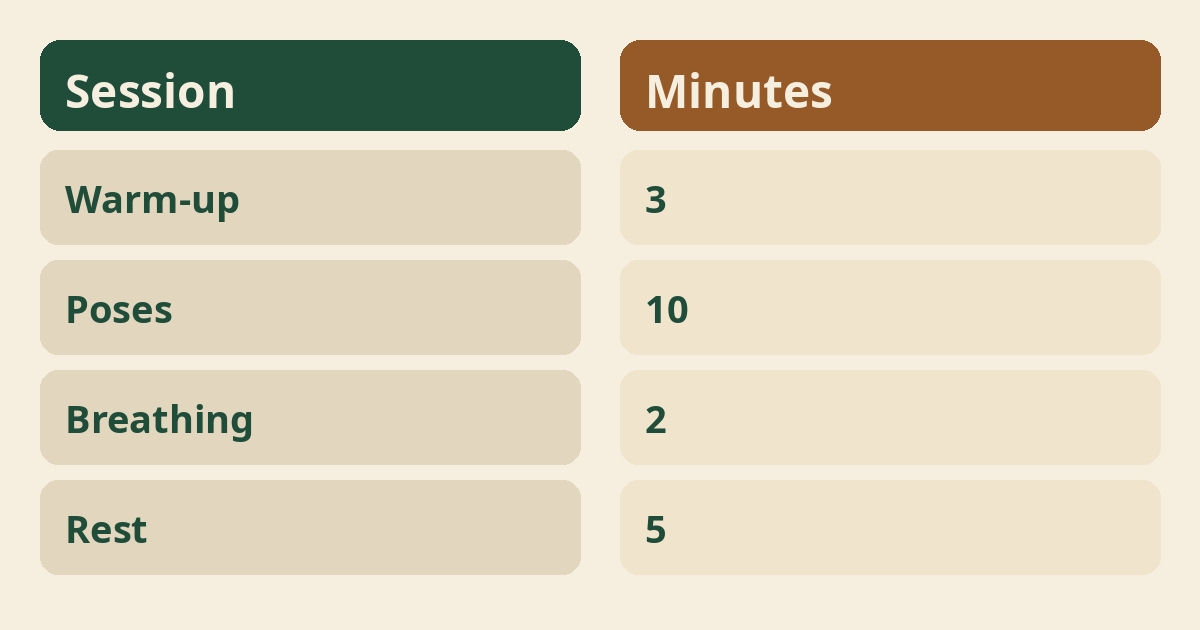
Ten to twenty minutes is plenty for a beginner session. Short sessions are easier to repeat, and repetition is what matters. If you only have five minutes, do two poses and a few slow breaths. Something small most days beats something big once a month.
How Often Should You Practice?
Two to four sessions a week is a realistic rhythm for most players. On game weeks, keep sessions shorter and gentler. On quieter weeks you can add a session if your body feels good. There is a fuller guide at how often should you do yoga. how often to do yoga
Common Mistakes to Avoid
The biggest mistake is pushing into deep stretches before your body is warm. Other common ones are holding your breath, rushing between poses, and copying advanced shapes from videos. Pain is a signal to back off, not to push harder. Slow and easy always wins here.
Mistake: Skipping Rest Days
Doing hard yoga on top of hard training every day can leave you more tired, not less. Your body adapts during rest, not during work. Keep at least one fully easy day each week. Gentle stretching is fine, but skip intense sessions when your legs are heavy.
Props That Make Yoga Easier
Simple props like blocks, straps, and blankets make poses more comfortable for beginners. A block brings the floor closer in standing stretches, and a strap helps you reach your feet in seated ones. A folded blanket cushions knees and ankles. There is a full list in yoga props for beginners. yoga props
Working on Flexibility Safely
Flexibility grows slowly with gentle, regular stretching. Hold easy stretches longer instead of forcing deep ones. If loosening up is a main goal for you, the routines in yoga for flexibility for beginners pair well with this practice. flexibility routines
Balance Practice for Court Movement
Balance poses train the small muscles that keep you steady when you cut and land. Start by standing on one foot near a wall you can touch for support. Hold for a few breaths, then switch sides. More ideas are in yoga for balance for beginners. balance practice
Neck and Shoulder Care
Shooting and looking up court can leave the neck and shoulders tight. Slow neck turns and shoulder rolls after practice can feel relieving. Keep every movement small and smooth. For a fuller routine, see yoga for neck and shoulders. neck and shoulder care
Hip Openers for Defensive Movement
Hip openers target the muscles used in slides, lunges, and low stances. Lunges, butterfly pose, and gentle squats all help. Move into each one slowly and breathe as you hold. A beginner friendly set is in yoga for hips for beginners. hip openers
Can Yoga Help With Stress?
Many people find that slow movement and breathing leave them feeling calmer. A quiet practice can be a nice break from the noise of a competitive season. Results vary, and it is not a fix for everything. There is more on this in yoga for stress relief for beginners. stress relief yoga
Benefits You May Notice
Many people find that regular yoga leaves them feeling looser, calmer, and more aware of their body. Some players say their recovery feels smoother and their sleep comes easier, though results vary for everyone. Yoga works best as a steady habit rather than a quick fix. You can read a plain language overview of what research says at National Center for Complementary and Integrative Health.
Is Yoga a Treatment for Injuries?
No, yoga is not a treatment, a cure, or a replacement for medical care. If you have a sprain, a strain, or any ongoing pain, see a doctor or a physiotherapist first. Yoga can be a gentle companion to recovery only when a professional says it is okay. Never use it to push through an injury.
Who Should Be Careful?
Anyone with a recent injury, joint problem, or health condition should check with a doctor first. This includes knee pain, back pain, ankle sprains, and anything that hurts during daily life. If a pose causes sharp pain, stop right away. A bad back needs extra care, and the guide can you do yoga with a bad back covers the basics. yoga with a bad back
How Do You Progress Over Time?
Progress by holding poses a little longer and adding one new pose at a time. After a few weeks, you might move from five breaths per pose to eight or ten. You can also try slightly deeper versions of familiar poses. Keep the pace slow so your body adapts comfortably.
Should You Work With a Teacher?
A teacher can help you learn safe alignment and pick poses that suit your body. Even a few classes, in person or online, can build a strong foundation. Tell the teacher you play basketball and mention any old injuries. A good teacher will offer easier versions without making you feel behind.
The Right Mindset for Yoga
Treat yoga as practice for your body and mind, not as another competition. There are no points and no opponents on the mat. Some days you will feel loose and some days stiff, and both are normal. Showing up kindly and regularly is the whole game.
Yoga on Game Day
Keep game-day yoga very light: a few easy stretches and some slow breathing. The goal is to feel awake and loose, not tired. Save longer sessions for rest days. A short breathing drill before tip-off can be a calm ritual.
Yoga During the Offseason
The offseason is a great time to build a steady yoga habit. With fewer games, you can practice more often and explore new poses. Many players find the habit is easier to keep once the season starts again. Think of it as quiet work that supports the loud work.
Where to read next
For a calm, beginner-friendly start, Ranjana Sinha’s Begin Where You Are is written for people who want simple steps. Our guide to starting a home yoga practice adds a gentle routine you can follow at home.
Frequently asked questions
Is yoga good for basketball players?
Many players find that gentle yoga helps them feel looser, calmer, and more comfortable between games, though results vary.
How often should a basketball player do yoga?
Two to four short sessions a week is a realistic rhythm for most players, with lighter sessions on game days.
Can yoga make me jump higher or run faster?
Yoga is not a performance guarantee; some players feel they move more freely with regular practice, but results vary.
Should I do yoga before or after basketball?
After practice or on rest days works best for most players, while game-day yoga should stay very light.
Can yoga fix my knee or ankle pain?
No, yoga is not a treatment for injuries, so see a doctor or physiotherapist for any ongoing pain.
The bottom line
Start small, stay gentle, and let a few quiet minutes on the mat support everything you do on the court.