
Yoga for surfers is a simple way to explore movement, balance, and calm breathing alongside time in the water. You do not need to be flexible or know yoga poses before you start. A short practice can include easy shoulder, spine, hip, and standing movements, with plenty of room to adjust or rest. Treat it as general movement, not a way to guarantee better surfing or avoid injury. Choose a comfortable pace and let your body guide each session.
This article is for general education and is not medical advice. If you have a health condition, injury, ongoing pain, or questions about whether yoga is suitable for you, check with your doctor before starting.
What is yoga for surfers?
Yoga for surfers is a beginner-friendly movement practice that can sit alongside surfing. It may use gentle poses, balance work, and unhurried breathing rather than a demanding sequence. You can adapt the practice to your experience, space, and energy on a given day.
Why do surfers try yoga?
Some surfers use yoga to add variety to their movement routine and practice paying attention to how they feel. Surfing and yoga are different activities, so there is no single routine every surfer needs. A few quiet minutes on a mat can offer a change of pace after time outdoors.
Is special experience needed?
No special yoga or surfing experience is needed to begin with simple movements. Start with shapes that feel steady and easy to understand. If a pose feels confusing, choose a smaller range of motion or skip it instead of trying to match a picture.
Step 1: Choose your space
Pick a clear, level place where you can move your arms and legs without hitting anything. A mat can make the floor more comfortable, but a firm, nonslip surface is more important. Avoid a wet or uneven patch of sand if it makes standing feel unstable.
Step 2: Set an easy pace
Begin slowly and choose a level of effort that lets you breathe comfortably. You might sit or stand for a moment and notice your posture before moving. Keep the session flexible; a short practice is still a complete choice when time or energy is limited.
Step 3: Warm your shoulders
Gentle shoulder circles and easy arm movements can help you notice how your upper body feels. Keep circles small and smooth, without forcing your arms overhead. You can lower your arms or pause whenever the movement feels uncomfortable.
Step 4: Move your spine
A slow, comfortable spinal movement can help you explore how your back feels through different shapes. Try a small seated or hands-and-knees movement, such as an easy version of Cat-Cow Pose. Move with control and keep the range modest rather than pushing toward a deep arch.
Step 5: Explore standing balance
A simple standing pose lets you practice steady attention without needing advanced balance skills. Stand with feet a comfortable distance apart and keep a wall or chair nearby if that helps you feel secure. For a basic reference, see Mountain Pose for beginners.
What about breathing?
Let your breath stay natural and easy while you move through a beginner practice. There is no need to hold your breath, make it unusually deep, or follow a complicated pattern. If you feel light-headed or uneasy, stop the breathing exercise and return to ordinary breathing.
How long should a session be?
A beginner session can be brief, such as five to fifteen minutes, if that suits you. There is no required minimum duration or ideal length for every surfer. Leave enough time to settle in and finish without rushing, and stop sooner if you need a break.
How often should you practice?
Choose a frequency that fits your schedule and feels comfortable to maintain. Some people prefer a few minutes on selected days, while others practice less often. You can use this guide to yoga frequency as a starting point, then adjust to your own routine.
Common mistakes to avoid
Pushing into a deep stretch or copying an advanced pose is a common beginner mistake. Avoid treating discomfort as a sign that a pose is working. Move gradually, take breaks, and leave out any movement that feels sharp, painful, or unsettling.
Which props can help?
A folded blanket, sturdy chair, or yoga block can make some positions easier to adapt. Props are options, not requirements, and they do not need to be special or expensive. Learn simple ways to use them in this beginner guide to yoga props.
Who should check with a doctor first?
Check with your doctor before starting if you have a health condition, injury, ongoing pain, or uncertainty about exercise. Ask before trying a new routine during pregnancy or after a recent procedure as well. A qualified clinician who knows your situation can help you decide what activity is appropriate.
Is yoga a treatment?
No, yoga is not a treatment for injuries or medical conditions. Do not use a yoga routine as a substitute for care recommended by a health professional. If surfing or a pose brings on new or worsening symptoms, stop and seek appropriate advice.
Possible benefits
Many people find gentle yoga useful as a way to explore mobility, balance, and relaxation, but results vary. These are possible experiences, not promises or medical outcomes. For a general overview of what research can and cannot say about yoga, see National Center for Complementary and Integrative Health and keep expectations measured.
After a surf session
After surfing, choose calm movements only if they feel comfortable for you. You could sit quietly, move your shoulders gently, or rest instead of stretching. If you are tired, cold, dehydrated, or uncomfortable, focus on your usual recovery needs rather than adding a routine.
Before getting in the water
Before surfing, keep any yoga warm-up easy and short if you decide to do one. Use movements you already know and leave time to prepare for the water safely. Yoga is not a replacement for checking conditions, using appropriate equipment, or following your usual surf safety practices.
Shoulder-friendly choices
Keep shoulder movements within a comfortable range and avoid forcing a stretch. Try slow arm raises only as high as feels easy, then lower them with control. If shoulder movement causes pain or feels restricted, stop and ask a clinician what is suitable for you.
Hips and legs
Gentle hip and leg movements can help you notice your range without aiming for a split or deep lunge. Keep your stance stable and use a chair or wall for support if needed. A comfortable seated option such as a supported Butterfly Pose can be explored without pressing your knees down.
Balance without pressure
Balance practice can be simple and supported rather than a test of skill. Stand near a wall, shift weight gently, and keep both feet down if that feels best. You can also explore beginner balance ideas without closing your eyes or making the pose harder.
Core and posture
A beginner can focus on steady posture without intense abdominal exercises. Stand tall in a comfortable way and let your ribs and shoulders stay relaxed. There is no need to brace hard, hold your breath, or compare your shape with a surfer in a video.
Progress at your own pace
Change one thing at a time as movements become familiar. You might repeat the same few poses before adding another. If a new variation feels less steady or more tiring, return to the simpler version or take a rest day.
Choosing a teacher
Look for a teacher who welcomes beginners and offers clear options to modify or pause. A teacher should not pressure you to ignore pain or promise that yoga will fix an injury. Tell them about relevant limits before class, and ask how they adapt poses for different bodies.
Practicing at home
A home practice can be as simple as a few familiar movements in a clear space. Keep a short list of poses nearby so you do not have to plan from scratch. If you are unsure about form, choose a beginner class with instruction rather than guessing through a difficult pose.
The role of mindset
Treat yoga as a chance to notice your own experience, not to compete with other surfers. Some days may feel steady and other days may feel stiff or distracted. That variation is ordinary; you can make a smaller practice, rest, or skip it without having failed.
What should you wear?
Wear comfortable clothes that let you move without slipping or getting in your way. There is no special outfit required for a basic practice. If you are outside, consider sun, temperature, and the surface beneath you, and choose a place where you can stay comfortable.
Can you practice on the beach?
You can try gentle seated movements on the beach if the conditions and surface feel safe. Loose sand may shift underfoot, and wind or sun can make a session less comfortable. Stay away from the waterline, keep valuables secure, and choose a stable spot with room around you.
Rest is part of practice
Resting or skipping a pose is a valid choice during yoga. You can sit, lie down, or end the session whenever you need to. A practice should leave you feeling able to make sensible choices, not pressured to finish every planned movement.
Can beginners use a video?
A beginner video can help explain a short sequence when it comes from a clear, suitable instructor. Choose one that gives options and reminds viewers to stop when something hurts. Keep your attention on your own body rather than trying to keep up with a fast pace.
Do you need to stretch deeply?
No, deep stretching is not a requirement for yoga or surfing. A small, comfortable movement is enough to explore a pose. Avoid bouncing, pulling on your joints, or using another person’s flexibility as a target.
What if you feel stiff?
If you feel stiff, make the movements smaller and take time between them. Stiffness can vary from day to day, and you do not need to force it away. Stop if movement feels painful, and seek professional guidance when symptoms persist or concern you.
Can yoga replace surf training?
Yoga does not replace surfing instruction, water safety, or other training suited to your goals. It can be one optional part of a broader routine, if it works for you. Ask a qualified coach or health professional about a training plan when you need advice tailored to your circumstances.
A simple session outline
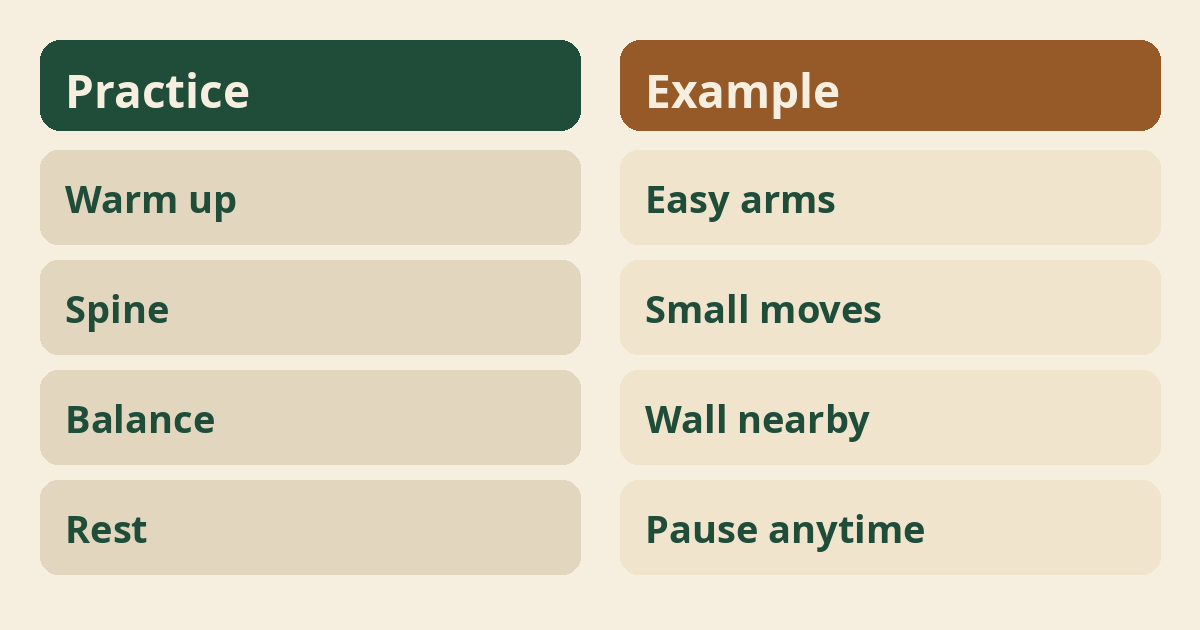
A simple session can include settling, a few gentle movements, one supported standing pose, and rest. Keep the order easy to remember and give yourself permission to stop early. For example, you might begin seated, move your shoulders and spine, stand near a wall, then finish with quiet breathing.
Making it your own
The most useful beginner routine is one you can adapt without pressure. Choose movements that feel clear, leave room for rest, and fit around your surf schedule. Over time, keep only the parts that feel appropriate and ask a professional when you need personal advice.
Where to read next
For a calm, beginner-friendly start, Ranjana Sinha’s Begin Where You Are is written for people who want simple steps. Our guide to starting a home yoga practice adds a gentle routine you can follow at home.
Frequently asked questions
Is yoga good for surfers?
Some surfers enjoy yoga as optional movement, but its value and effects differ from person to person.
Can a beginner do yoga after surfing?
A beginner can choose gentle movement after surfing if it feels comfortable and safe.
Does yoga make you a better surfer?
Yoga cannot guarantee better surfing, and surf skills depend on many factors.
Should yoga hurt or feel intense?
No, stop any pose that causes pain or feels unsafe.
Do surfers need a special yoga class?
No, a beginner-friendly class with clear modifications can be a reasonable place to start.
The bottom line
Start with a few easy movements, keep expectations realistic, and let comfort guide your practice.

