Yoga for cooking in the kitchen means taking gentle movement breaks before or after food preparation, away from heat, knives, and spills. It is not a reason to stretch while stirring a hot pan or balancing near the stove. Start with a clear, dry space and a few easy movements that feel comfortable. This guide shows how to separate cooking from practice, choose steady standing options, and keep the routine small enough to fit an ordinary day without making your kitchen another demanding task.
This guide offers general education, not medical advice or a personal exercise plan. If you have a health condition, pain, recent surgery, pregnancy concerns, or trouble with balance, check with your doctor before trying these movements.
What is kitchen yoga?
Kitchen yoga is an informal movement break linked to your cooking routine. There is no special kitchen pose sequence that everyone needs to follow. Think of it as a chance to pause in a safe space before preparation starts or after cooking equipment is switched off and put away.
Why do people try it?
People try kitchen yoga because cooking can involve long stretches in one position. Chopping, washing, and standing may leave you wanting a change of movement. A brief break offers that change without needing a full workout, special clothing, or a separate room devoted to exercise.
What matters most?
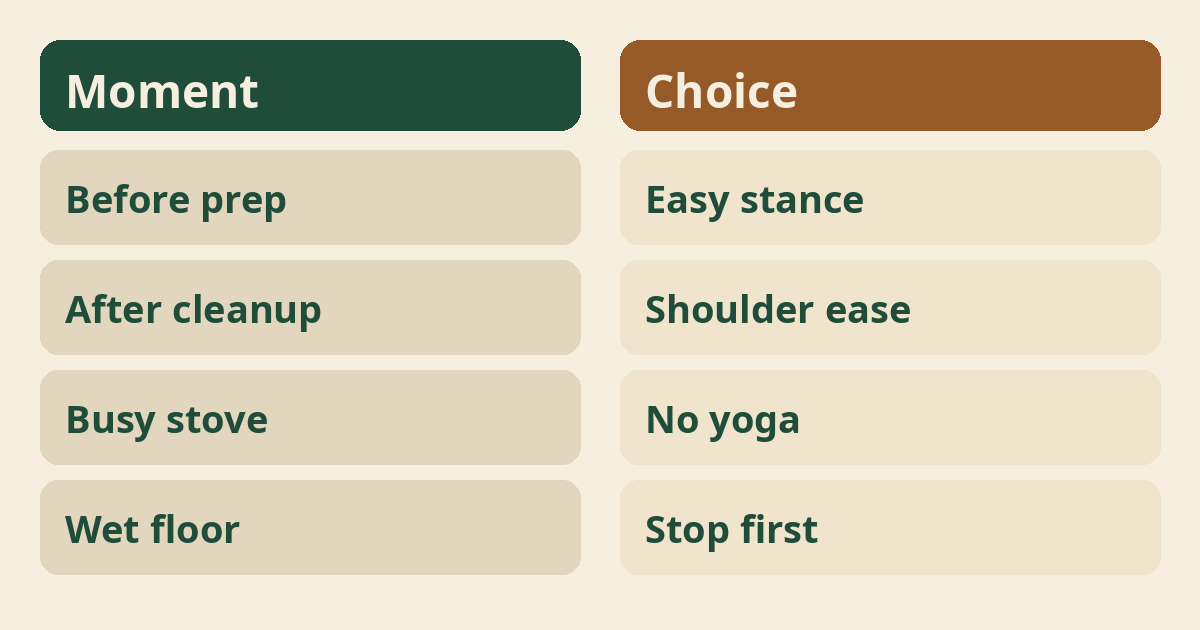
Keeping movement separate from cooking matters more than fitting in extra poses. Never divide your attention between a stretch and a knife, flame, hot tray, or electrical appliance. Finish the task safely first, and move elsewhere if food needs attention or the kitchen remains busy with other people.
How do you start?
Start by choosing a quiet moment when the kitchen is not in active use. Check that the floor is dry and that you have room to move without touching anything hot or sharp. If those conditions are missing, use another room and let the kitchen be only your reminder.
Step 1: Clear your space
Move loose objects out of your standing area before beginning. Close cupboard doors, move bags, and keep pets and children away from the space where you will move. A crowded aisle is not a suitable practice area, even if you plan to stand still for most of the break.
Step 2: Find a steady stance
Stand with your feet comfortably apart and your weight shared between them. Keep your knees easy rather than pushing them backward. Let your arms rest by your sides, and look ahead; the basic setup in mountain pose for beginners can help you explore this simple standing position without making it rigid.
Step 3: Release your shoulders
Move your shoulders gently through a small, comfortable range. Lift them a little as you breathe in, then let them settle as you breathe out. Repeat slowly without pulling your head backward or forcing large circles, and skip the movement if it brings pain, tingling, or a strange sensation.
Step 4: Open your hands
Slowly open and close your empty hands after putting utensils away. Spread your fingers without straining, then bring them back to a relaxed shape. Keep the wrists comfortable rather than bending them strongly; this is a gentle movement break, not a test of how far each joint can travel.
Step 5: Try a small side reach
A small side reach can add variety without requiring a deep bend. Stand steadily and slide one hand a short distance down the outside of your thigh. Keep both feet grounded, return upright slowly, and repeat on the other side without reaching toward a stove, shelf, or hanging utensil.
Step 6: Return to neutral
Finish by standing comfortably and checking how you feel before moving on. Let your breathing settle, look around, and make sure you feel steady. If you feel lightheaded or unwell, stop rather than returning immediately to food preparation, particularly any task involving heat, a blade, or carrying a heavy pot.
How should you breathe?
Breathe easily without holding your breath or trying to make each breath very deep. Let air move at a pace that feels natural while you stand or sit. For a separate quiet practice, explore belly breathing for beginners, but avoid forceful breathing exercises while cooking or handling food.
How long should a break last?
A brief break of one to three minutes is a reasonable starting option if it feels comfortable. You do not need to complete every movement in this guide. Choose one or two, stop before you feel tired, and remember that moving to another room is better than rushing a sequence beside cooking equipment.
How often can you practice?
Practice when the setting is safe and your body feels ready, rather than following a strict kitchen quota. One short break may be enough on a busy day. See how often should you do yoga for broader planning, and leave room for rest instead of adding a movement task to every meal.
What benefits might you notice?
Many people find gentle yoga breaks pleasant or relaxing, but results vary. You might notice your posture, breathing, or tendency to keep your shoulders lifted. These personal observations do not prove a health benefit or replace care; National Center for Complementary and Integrative Health is the authority reference slot for general yoga safety and health information.
Is this a treatment?
Kitchen yoga is not a treatment for back pain, wrist problems, anxiety, or any other condition. Do not use a short routine to explain away symptoms or delay medical care. If discomfort keeps returning during cooking, speak with your doctor and review the work setup instead of repeatedly stretching through the problem.
Who should be careful?
Ask your doctor first if a condition or recent change in health could affect movement or balance. This includes recent surgery, repeated dizziness, significant joint problems, or symptoms that have not been assessed. Your doctor may suggest different movements, a seated plan, or working with a suitable professional before you begin.
What if your back hurts?
Stop any movement that causes back pain and seek guidance for persistent or recurring symptoms. There is no need to bend deeply or twist to make this routine count. Read can you do yoga with a bad back for general questions to discuss, not as clearance to exercise through pain.
What about pregnancy?
Pregnancy calls for advice suited to your own health and stage of pregnancy. Ask your maternity clinician before adding a new routine, particularly if you have symptoms or have been given activity limits. Avoid assuming that a kitchen setting makes a pose suitable; balance, comfort, heat, and available space still matter.
Can you practice after eating?
After a meal, choose rest or easy everyday movement if stretching feels uncomfortable. Skip deep folds, strong twists, and pressure against your abdomen in this kitchen routine. There is no need to follow a fixed waiting period from this article; let comfort and any medical advice guide whether you practice later.
What props are useful?
A stable chair in a clear area may be useful when standing is tiring. Choose a chair without wheels and place it away from cooking equipment and traffic. The guide to yoga props for beginners explains basic options, but a prop should never make an unsafe kitchen location seem acceptable.
Can you use the counter?
Do not assume a kitchen counter is a suitable yoga support. Surfaces can be wet, hot, cluttered, or fitted with fixtures that cannot hold your weight. For this beginner routine, avoid leaning your body weight onto counters, cupboard doors, sinks, movable islands, or appliances, and choose a clear space elsewhere if you need support.
Can you do seated movements?
A seated break is an option when a suitable chair and safe location are available. Sit comfortably with your feet resting on the floor or a stable foot support. Try only small shoulder and hand movements; yoga at your desk for beginners offers related ideas for a separate seated setting.
Should you stand on one leg?
Keep both feet on the floor for this kitchen routine. Single-leg poses add a balance challenge that does not belong beside hard edges, breakable dishes, or cooking equipment. If balance practice interests you, explore yoga for balance for beginners in a dedicated clear space with appropriate guidance instead of adding it here.
Should you stretch on the floor?
Save floor poses for a clean, open area outside the working kitchen. Kitchen floors may be slippery, crowded, or close to hot equipment, and getting down can block a walkway. You do not need downward-facing dog, kneeling poses, or a yoga mat between the sink and stove to build this habit.
What footwear works best?
Use footwear that feels steady and suits the floor rather than assuming barefoot practice is necessary. Loose slippers, smooth socks, and wet soles can make footing uncertain. If you cannot stand securely, do not practice there; clean up spills first and avoid using a mat that curls or slides in a walkway.
What are common mistakes?
Common mistakes include rushing, stretching too far, and treating cooking time as spare exercise time. Another is pushing through discomfort because the movements look small. Keep your attention on one activity at a time, make each movement easy to stop, and leave difficult poses for a planned practice in an appropriate setting.
How do you notice posture?
Notice your position without trying to hold a perfect posture all through cooking. You may find yourself reaching too far or standing with raised shoulders. Bring frequently used items within comfortable reach where possible, change tasks when practical, and remember that relaxed variety is more useful here than forcing yourself into a stiff pose.
What about neck tension?
Use gentle awareness rather than strong neck stretches if your neck feels tight. Keep your gaze comfortable and avoid pulling your head with your hands. The article yoga for neck and shoulders offers related general ideas, but ongoing pain, arm symptoms, or headaches deserve medical advice rather than repeated kitchen stretching.
Can this replace a yoga class?
A kitchen-linked movement break does not replace a full yoga class or an individual plan. It gives you a small moment to move with attention. A class can offer more space, instruction, and choices, while a clinician or suitably trained professional can address questions that a general article cannot answer for you.
When should you find a teacher?
Find a qualified teacher if you are unsure how to adapt basic movements comfortably. Explain any medical advice or movement limits before the lesson starts. Ask for simple standing or seated options taught outside the kitchen, and choose someone who welcomes questions rather than urging you to ignore symptoms or force a pose.
How do you progress?
Progress by making the habit easier to remember, not by making kitchen movements harder. You could take your break in the same safe place before preparing a meal. If you want a longer session, move to a separate room and build a suitable routine there instead of adding deep stretches beside appliances.
What mindset helps?
Treat the break as an option, not another standard you must meet. Some days the kindest choice is to sit down or finish dinner without adding anything. A missed practice needs no correction, and a few comfortable movements are enough when they fit the day without making you distracted, sore, or rushed.
What is a simple daily plan?
Choose a safe pause, make two easy movements, and stop while you still feel comfortable. For example, stand steadily, settle your shoulders, and open your hands before food preparation begins. Check the kitchen again before resuming work, and keep any longer breathing or stretching session separate from the tasks that need your attention.
Where to read next
For a calm, beginner-friendly start, Ranjana Sinha’s Begin Where You Are is written for people who want simple steps. Our guide to starting a home yoga practice adds a gentle routine you can follow at home.
Frequently asked questions
Can I stretch while stirring soup?
No, finish handling the hot pan and move to a safe, clear area before stretching.
Do I need a yoga mat?
No, this routine uses small standing or seated movements, and a mat should not obstruct a kitchen walkway.
Can I do this if standing hurts?
Ask your doctor about the pain before trying the routine and discuss whether a seated option is appropriate.
Will kitchen yoga make me more flexible?
Flexibility changes are not guaranteed, and this short routine is mainly a chance for comfortable movement and attention.
What if my kitchen is too small?
Use cooking as your reminder to take a break in another room rather than trying to create space beside appliances.
The bottom line
Keep cooking and yoga separate, choose movements that feel easy, and let safety decide where and when your break happens.