
Chair yoga for seniors is a gentle form of yoga done sitting on a chair or holding it for support. You do not need to get on the floor or be flexible. Start with a short talk with your doctor, then try a few slow moves for ten minutes. This guide explains the basics, the safety points, and a simple way to begin at your own pace. Small steps are enough.
This article is general education and not medical advice. If you have a health condition, pain, or take regular medicine, please check with your doctor before you start.
What is chair yoga?
Chair yoga is yoga adapted so you can do it seated or standing beside a chair. The chair holds your weight, so the poses feel steadier. Many classic shapes are changed to fit the seat.
Why do seniors choose chair yoga?
Many seniors like it because it feels safe and easy to join. There is no floor work and no rush. People often enjoy the calm pace and the chance to move without worry.
Why talk to your doctor first?
Your doctor knows your health history, so ask before you begin. Share what you plan to do and ask if any move should be skipped. A short chat now can save you trouble later.
What should you ask your doctor?
Ask which movements are comfortable for you and which to avoid. Mention balance, joint pain, blood pressure, recent surgery, or dizziness. Write the answers down and bring them to class.
How do you start?
Start with five to ten minutes of slow, easy movement. Pick a quiet room and a calm time of day. Wear loose clothes and keep a glass of water nearby.
How do you choose a chair?
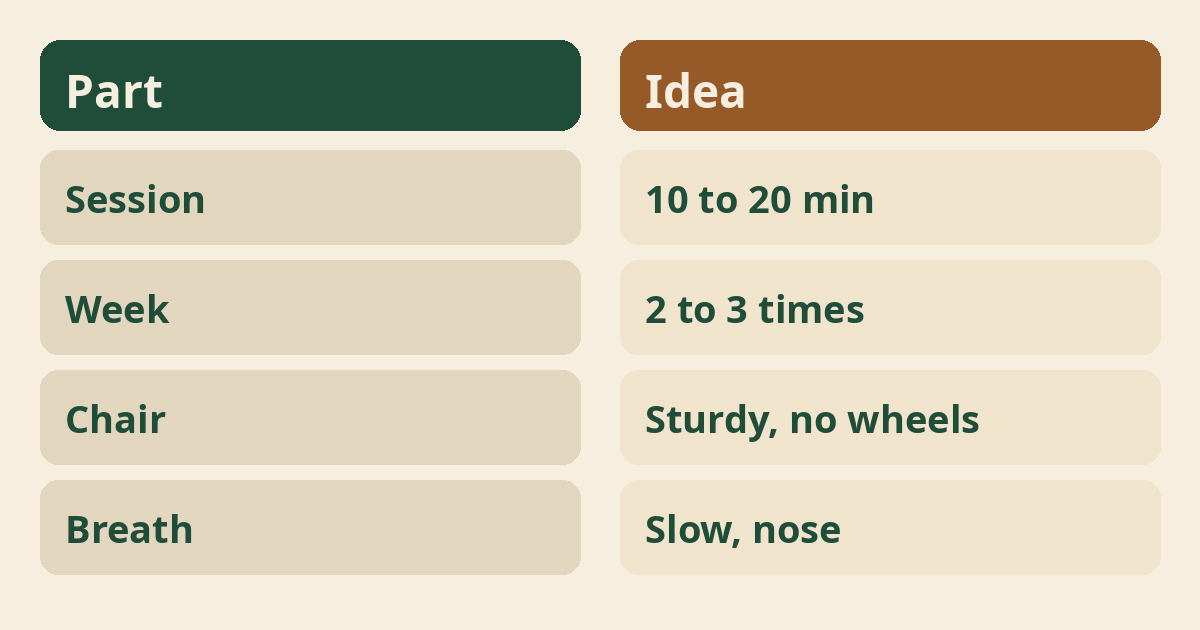
Choose a sturdy chair with no wheels and no arms that block you. Your feet should rest flat on the floor. Place the chair against a wall or on a non-slip surface so it cannot slide.
Step 1: How do you sit well?
Sit tall near the front of the seat with feet flat. Let your hands rest on your thighs. Relax your shoulders and soften your jaw. This is your home position for every move.
Step 2: How do you warm up the neck and shoulders?
Move slowly and stay well within comfort. Roll your shoulders back a few times. Turn your head gently from side to side. See also yoga for neck and shoulders for more ideas.
Step 3: How do you do a seated cat and cow?
Place your hands on your knees and gently round and arch your back. Breathe in as you lift your chest. Breathe out as you round softly. It is a seated version of cat cow pose, and it should never hurt.
Step 4: How do you do a seated side stretch?
Raise one arm and lean a little to the other side. Keep both hips on the seat. Stop where it feels pleasant. Switch sides and repeat a few times with slow breaths.
Step 5: How do you do a gentle seated twist?
Turn your upper body a little toward one side and hold the chair back. Keep your chest tall and your breathing easy. Only twist as far as is comfortable. Check with your doctor first if you have back or hip concerns.
Step 6: How do you finish?
End with a quiet minute of stillness. Close your eyes if you like and let your hands rest. Notice your breath. Then open your eyes and move slowly before you stand.
How should you breathe?
Breathe through your nose in a slow, steady way. Do not hold your breath during a move. Try belly breathing to keep things relaxed and unhurried.
What is a simple breathing practice?
Breathe in for a count of three and out for a count of four. Place a hand on your belly and feel it rise and fall. If you feel dizzy, stop and breathe normally.
How long should a session be?
Ten to twenty minutes is plenty for most beginners. Start with the short end. You can add a few minutes as you feel comfortable. Shorter and regular often feels better than long and tiring.
How often should you practice?
Two or three times a week is a friendly start. Listen to your body and rest when you need to. For more on this, read how often should you do yoga.
What props can help?
A cushion, a strap, and a wall can make chair yoga easier. A folded towel behind your back adds comfort. A non-slip mat under the chair helps. See yoga props for beginners for more.
What should you wear?
Wear loose clothes and flat, non-slip shoes or bare feet. Avoid slippery socks. Pick clothes that let you bend your arms and legs freely and keep you comfortable.
Is chair yoga a treatment?
No, chair yoga is not a treatment for any illness. It is a gentle movement and breathing practice. It does not replace medical care or medicine. Please keep seeing your doctor as usual.
Who should be extra careful?
Check with your doctor first if you have any health condition. Take extra care with dizziness, recent surgery, heart or blood pressure concerns, osteoporosis, joint replacements, or strong pain. Your doctor can guide you.
What are the warning signs to stop?
Stop right away if you feel pain, dizziness, or shortness of breath. Sit quietly and breathe. If the feeling does not pass, seek medical help. Never push through sharp or strange sensations.
What are the possible benefits?
Many people find chair yoga leaves them feeling calmer and more relaxed. Some also say their body feels looser and more at ease. Results vary from person to person. The National Center for Complementary and Integrative Health has general information on yoga and health.
Can it help with stiffness?
Some people find gentle movement makes their body feel less stiff. This is a personal experience and it varies. Slow, easy motion is the goal. Never force a stretch to chase a result.
Can it help with balance?
Many people feel steadier when they practice with a chair nearby. The chair gives support while you build confidence. When you are ready, see yoga for balance and keep a chair close.
Can it help with stress?
Slow breathing and quiet time may leave you feeling more settled. Many people enjoy this calm side of the practice. Try the ideas in yoga for stress relief when you feel ready.
What are common mistakes?
The most common mistake is going too far, too fast. Others include holding the breath, comparing yourself to others, and skipping the doctor chat. Slow down and keep it kind.
How do you stay safe on the chair?
Keep both feet planted and never lean beyond your comfort. Do not twist or reach while the chair rocks. If you stand, hold the chair back with both hands and move slowly.
How do you progress over time?
Add a few minutes or one new move once every week or two. Stay with moves that feel easy before trying new ones. A seated mountain shape, like mountain pose, is a nice next step.
Should you join a class or learn alone?
Either can work, but a class gives you a teacher to watch. At home, follow a calm video and go slowly. In a class, tell the teacher about your health at the start.
What should a good teacher do?
A good teacher asks about your health and offers easy options. They should never push you into a pose. Look for someone with experience teaching older adults and who welcomes your questions.
What mindset helps most?
A kind, patient mindset helps more than a perfect pose. There is no goal to reach and no one to impress. See each session as a gentle visit with yourself.
Can you do it every day?
Some people enjoy a few minutes daily, if their doctor agrees. Keep daily sessions short and easy. Take a rest day if you feel tired or sore. Your body is the best guide.
What if you feel tired or sore?
Rest and try a shorter, easier session next time. Mild tiredness can happen when you start. Sharp pain is different, so stop and check with your doctor.
Can you combine it with walking?
Yes, many people enjoy a short walk and a seated session in the same day. Keep each one easy. Move at a pace where you can talk comfortably, and rest when you need to.
Where to read next
For a calm, beginner-friendly start, Ranjana Sinha’s Begin Where You Are is written for people who want simple steps. Our guide to starting a home yoga practice adds a gentle routine you can follow at home.
Frequently asked questions
Do I need to be flexible for chair yoga?
No, you work with the body you have today at your own pace. Small steps are enough.
Can I do chair yoga with a walker or cane nearby?
Many people do, and a teacher or your doctor can suggest safe set-ups.
Is chair yoga only for seniors?
No, people of all ages use it when they want a gentle, supported practice.
What time of day is best?
Any calm time works, so pick the hour when you feel most at ease.
Should I eat before practice?
A light meal an hour or two before is comfortable for many people, but follow your doctor’s advice.
The bottom line
Begin with a doctor’s okay, move slowly, and let the chair keep you steady.

