A short yoga break for your eyes and neck takes two to five minutes and needs only your chair. You rest your eyes, turn and tilt your head slowly, and breathe. Many desk workers find these small pauses make long hours feel more comfortable. This guide shows simple moves, how often to do them, and how to keep them gentle and safe. No mat or yoga skill is needed, just a few quiet minutes.
This article is general education only and is not medical advice. If you have eye problems, neck pain, dizziness, an injury or any health condition, check with your doctor before you start.
What are yoga breaks for eyes and neck?
They are very short, gentle pauses where you rest your eyes and move your neck slowly with the breath. You do them at your desk, in your work clothes. There is no mat, no special pose and no need to be flexible.
Why do desk workers need them?
Long screen time keeps your eyes focused close and your head still, so many people feel tired and stiff by afternoon. A short pause gives your body a change. Many people find it also gives the mind a small reset between tasks.
Why do the eyes get tired at a screen?
We tend to blink less and stare at one distance for a long time, which can leave eyes feeling dry or heavy. Looking away and blinking on purpose is a simple habit. Yoga adds slow breathing so the pause feels calm and not rushed.
Why does the neck feel stiff at a desk?
The head is heavy, and holding it forward over a keyboard asks the neck and shoulders to work all day. Gentle movement and a better chair setup can ease that feeling for many people. Small breaks matter more than one long stretch at night.
How do I start?
Start with one minute: sit tall, relax your shoulders and take three slow breaths. Then add one eye move and one neck move. Build up only when it feels easy. A tiny habit you keep beats a big plan you skip.
How should I sit before I begin?
Sit with both feet on the floor, hips back in the chair and spine tall but relaxed. Keep your shoulders soft and your chin level. If your feet do not reach the floor, rest them on a book or a prop, see yoga props for beginners.
Step 1: Palming for the eyes
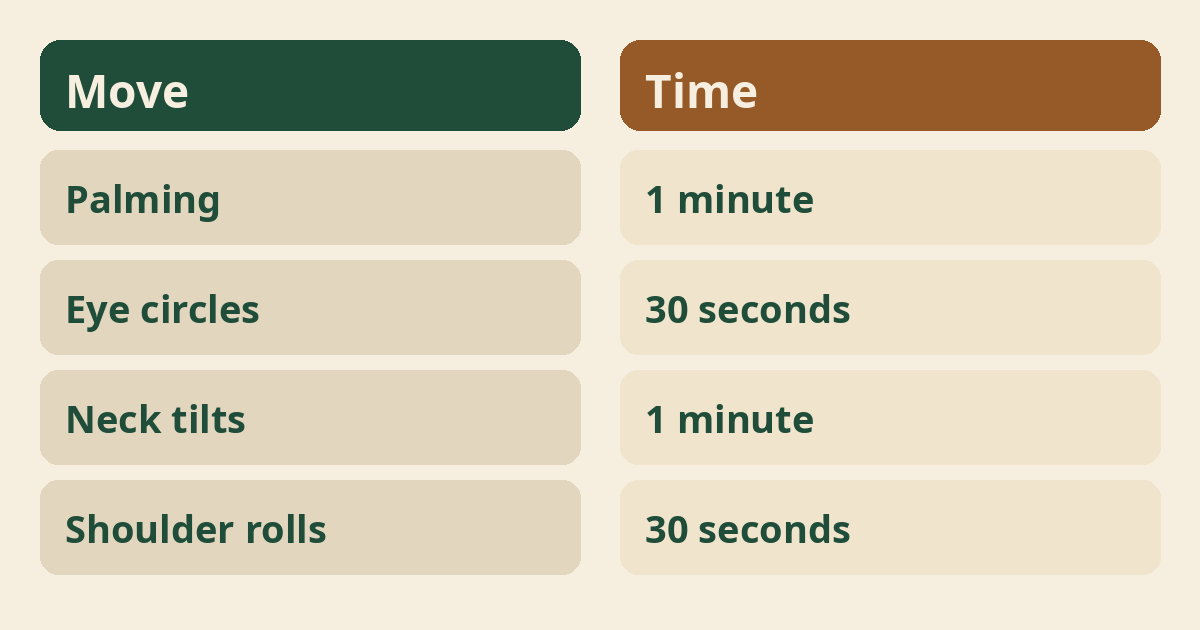
Rub your palms together until warm, then cup them gently over closed eyes without pressing. Rest your elbows on the desk if you like. Breathe slowly for five breaths and enjoy the soft dark. Lower your hands and open your eyes slowly.
Step 2: Eye circles
Keep your head still and move only your eyes in a slow circle, as if tracing a clock face. Do three slow circles one way, blink a few times, then three the other way. Stop if you feel dizzy or any discomfort.
Step 3: Near and far focus
Hold a finger at arm’s length, look at it, then look at something far away, and repeat. Switch your gaze slowly about five times. This is a gentle way to change focus. Blink softly between rounds.
Step 4: Slow neck tilts
Drop your right ear toward your right shoulder without lifting the shoulder, and breathe for three breaths. Come back to center and tilt to the left. Move slowly and stay in a comfortable range. Never force the head down with your hand.
Step 5: Gentle neck turns
Turn your head slowly to look over one shoulder, pause, and return to center. Keep your chin level and your shoulders relaxed. Turn only as far as is comfortable. Repeat three times on each side with an easy breath.
Step 6: Shoulder rolls
Roll your shoulders back and down in slow circles to loosen the area under the neck. Do five rolls backward, then five forward. Let the arms hang heavy. This pairs well with yoga for neck and shoulders.
How should I breathe during the breaks?
Breathe in and out through your nose, slowly and without strain. Let the exhale be a little longer than the inhale. If you want to learn this well, try belly breathing for beginners. Never hold your breath during a move.
How long should a break last?
Two to five minutes is plenty for one break. You can do just the eyes in one minute or just the neck in two. Short and calm is the goal. Set a quiet timer so you do not need to watch the clock.
How often should I do them?
Many people like one short break every hour or two during the workday. If that feels like too much, begin with two breaks a day. Read more in how often should you do yoga.
What is a simple desk routine?
A simple routine is palming, eye circles, neck tilts, neck turns and three deep breaths. It fits in about four minutes. Do it in the same order each time so you do not have to think. For more ideas see yoga at your desk for beginners.
Can I do this during a meeting?
Yes, some parts are quiet enough, like slow breathing, blinking and soft shoulder rolls. Save palming and big neck moves for a private moment. Looking at a far window for a few breaths is easy to do anywhere.
What are common mistakes?
The most common mistake is moving too fast or too far. Others are holding the breath, lifting the shoulders to the ears, and pulling on the head with the hand. Slow and small is the safe way.
Should it hurt or pull?
No, you should feel at most a mild, easy stretch. Sharp pain, numbness, tingling or dizziness are signals to stop. Come back to a neutral position and speak with your doctor if it continues.
What props or tools help?
A supportive chair, a small cushion or a rolled towel behind the lower back can make sitting easier. A footrest helps if your feet dangle. You do not need to buy anything. See yoga props for beginners for simple ideas.
Does screen setup matter?
Yes, a comfortable setup makes every break more useful. Many people like the top of the screen near eye level and about an arm’s length away. Adjust until your head can sit over your shoulders without strain.
Who should be careful?
Anyone with eye conditions, neck or spine injuries, recent surgery, dizziness, high or low blood pressure or other health concerns should ask a doctor first. Pregnant people and those with long term pain should also check in. A doctor or physiotherapist can tell you which moves are right for you.
Is this a treatment for eye or neck problems?
No, these breaks are not a treatment and not a replacement for medical care. They are gentle self care habits. If you have ongoing eye strain, headaches or neck pain, see a doctor or eye care professional.
What are the possible benefits?
Many people find these breaks help them feel more relaxed and less tight, though results vary. Some notice a calmer mind and easier posture awareness. For general information on mind and body practices, see [[nccih|the NCCIH guide]]. Your own experience is the best guide. The National Center for Complementary and Integrative Health notes that research on yoga is still developing.
How can yoga help with stress at work?
Slow breathing and short pauses may help you feel calmer during a busy day. Many people find that a two minute stop clears their head a little. Explore more in yoga for stress relief for beginners.
Can I add a floor pose after work?
Yes, a few gentle floor poses in the evening can follow your desk breaks nicely. Child’s pose is a calm choice, see child’s pose for beginners. Cat and cow also moves the spine gently, see cat cow pose for beginners.
What about the hips after sitting?
Long sitting also affects the hips, so a few hip moves make a good partner to eye and neck breaks. A short standing stretch or a seated twist is a fine start. More ideas are in yoga for hips for beginners.
How can I reset on my feet between calls?
Stand up, feel your feet on the floor and lengthen through the spine. Mountain pose is a simple way to do this, see mountain pose for beginners. Take three breaths and let your arms hang loose.
How do I progress over time?
Progress by adding a minute, not by going deeper into the stretch. After a few weeks you might add a longer breath or a standing pose. Keep the neck moves small and slow. Comfort always comes first.
Should I find a teacher?
A qualified yoga teacher can check your form and adjust the routine to your body. If you have any neck or eye concerns, find a teacher who is comfortable working with your doctor’s advice. Online classes are fine if the teacher gives clear, careful cues.
What mindset helps most?
Think of these breaks as kindness to yourself, not as one more task to do perfectly. You cannot do them wrong if you go gently. Missing a break is fine. Just start again at the next pause.
How do I make it a habit?
Link the break to something you already do, like finishing an email or filling your water glass. A sticky note or a quiet reminder on your phone helps. Start small and celebrate each day you do it.
What if I wear glasses or contact lenses?
You can still do these moves, but take glasses off for palming if that is more comfortable. If you wear contact lenses, wash your hands well before touching near your eyes, or skip palming. Ask your eye care professional if unsure.
Where to read next
For a calm, beginner-friendly start, Ranjana Sinha’s Begin Where You Are is written for people who want simple steps. Our guide to starting a home yoga practice adds a gentle routine you can follow at home.
Frequently asked questions
Can yoga fix eye strain? |
Short eye breaks may help your eyes feel more comfortable, but lasting strain should be checked by a doctor.
Is it safe to roll my neck in a full circle? |
Many teachers suggest slow tilts and turns instead of full circles, and you should ask your doctor if you have neck concerns.
How many minutes do I need? |
Two to five minutes per break is enough for most beginners.
Do I need a yoga mat? |
No, you only need a chair and a little space.
When should I stop? |
Stop right away if you feel pain, dizziness, numbness or tingling, and talk to your doctor.
The bottom line
Take one calm minute for your eyes and neck today, and let that small pause become a daily habit.