
It is late, your body is tired, and your mind is still racing through tomorrow. Many people reach for yoga at exactly this moment, hoping to feel a little steadier. Yoga mixes slow movement, breathing and quiet attention, and a lot of beginners find it helps them settle. This guide shows you where to start, what to expect, and how to stay safe along the way.
This guide is general education about yoga and is not medical advice. If you live with a health condition or ongoing anxiety, please speak with your doctor or a qualified professional before you begin.
What is yoga for anxiety?
It is a way of using slow movement, breathing and attention to help your body feel safer and calmer. You do not need a special style or any gear to try it. The practice simply asks you to move slowly and notice what is happening inside you. Many people find that this noticing is the most useful part. Over time it can make busy thoughts feel a little less loud.
Why do people try yoga when they feel anxious?
People try it because anxious feelings live in the body as well as the mind. A tight chest, shallow breath and clenched jaw often come with worry. Yoga gives you something practical to do with those sensations instead of just fighting them. Many people say they enjoy having a small routine they control. Results vary from person to person.
How does anxiety show up in the body?
Anxiety often shows up as tension, a fast heartbeat, shallow breathing or restless energy. Some people feel it in the stomach, others in the neck and shoulders. Learning your own signs helps you choose the right practice on a given day. A quick check in with yourself before you roll out a mat is a good habit. There is no wrong answer when you notice what you feel.
What does yoga actually do for the nervous system?
Slow movement and long exhales may nudge the body toward a calmer state. Researchers and teachers often describe this as helping the body shift out of alert mode. You do not need to understand the science to try it. What matters is how you feel during and after a session. Many people notice that a few quiet minutes leave them softer and less wound up.
Is yoga a treatment for anxiety?
No, yoga is not a treatment for anxiety and it should never replace care from a qualified professional. Think of it as a supportive habit that sits next to other good choices in your life. It does not diagnose, fix or promise any result. If your anxiety is strong, constant or getting in the way of daily life, please talk to your doctor first. Yoga can be one small part of a bigger plan that you build with help.
Who should check with a doctor first?
Anyone with a health condition, a past injury, pregnancy or ongoing anxiety should talk to a doctor before starting. This includes people with heart or blood pressure concerns, dizziness, or recent surgery. If you take medication, keep taking it as directed and do not change anything because of yoga. Share your plan with your doctor and ask which movements to skip. A short chat now saves worry later. If you are expecting, see how prenatal yoga differs from a regular class before you pick a style.
What should you know before your first session?
Start small, stay comfortable and give yourself permission to stop whenever you want. A first session can be as short as five minutes. Wear clothes you can breathe and move in. Pick a quiet corner where nobody will interrupt you. Remind yourself that nothing here is a test, and that feeling a bit awkward at first is completely normal.
Where is the best place to practice?
A quiet, warm and private corner of your home is a great place to begin. You do not need a big room. A patch of floor beside your bed works well, especially for evening practice. Turn off notifications and dim bright lights if you can. If home feels too distracting, a beginner class with a kind teacher is another good option.
What time of day works best?
The best time is whenever you can show up regularly, whether morning, midday or night. Morning practice can set a steady tone before the day gets loud. A midday break can interrupt a stressful stretch of work. Evening practice often helps people wind down before bed. Try a few times of day and keep the one that feels easiest to repeat.
How do you start with breathing first?
Begin by noticing your breath without trying to change it. Sit or lie down and place a hand on your belly. Feel it rise and fall for a few rounds. Once that feels natural, try making your exhale a little longer than your inhale. If you want a simple guide, read about belly breathing for beginners and practice it before any poses.
What is a simple breathing exercise to try?
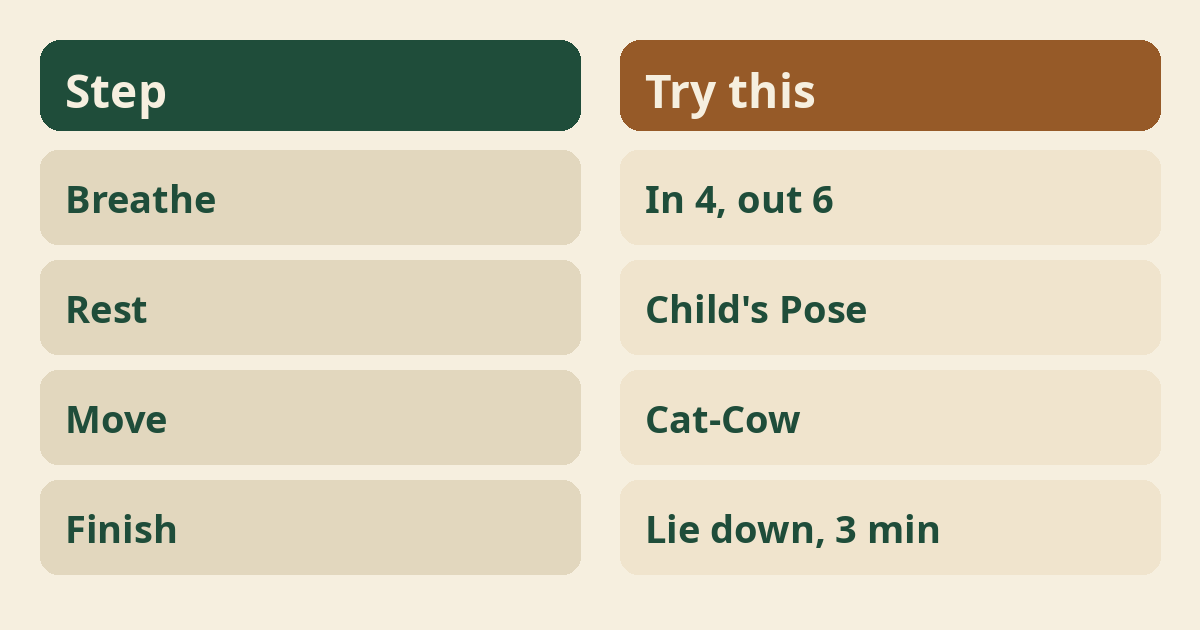
Breathe in through your nose for a count of four, then out slowly for a count of six. Repeat this for about one to three minutes, keeping the breath easy and never forced. If counting feels stressful, drop the numbers and just lengthen the exhale. Stop and breathe normally if you feel lightheaded. Many people find this small exercise a handy anchor on a hard day.
Step one: how do you settle in?
Settle in by sitting or lying down and letting your body feel supported by the floor. Close your eyes or soften your gaze toward the ground. Let your shoulders drop away from your ears. Take three slow breaths and notice where you feel tight. This short pause tells your body that the practice has begun.
Step two: how do you ease into Child’s Pose?
Child’s Pose is a resting shape where you fold forward and let the floor hold your weight. Kneel, bring your big toes together, and sit your hips back toward your heels. Rest your forehead on the mat or a pillow. Let your arms lie along your sides or stretch ahead. Many people like how Child’s Pose for beginners feels like a quiet hug for the back.
Step three: how does Cat-Cow help you move with your breath?
Cat-Cow links a slow spine movement to each inhale and exhale. Start on hands and knees. Breathe in as you lift your chest and tailbone, then breathe out as you round your back. Move at a pace that feels kind to your wrists and knees. If you want details, the guide to Cat-Cow for beginners walks through each step.
Step four: how do you use Mountain Pose to feel grounded?
Mountain Pose is simply standing tall with your feet rooted and your breath steady. Place your feet hip width apart and spread your toes. Let your arms hang and feel the ground under you. Breathe slowly for five to ten rounds. Learning Mountain Pose for beginners gives you a standing way to pause when your mind feels scattered.
Step five: how do you release tension with a forward fold?
A relaxed forward fold lets your head hang heavy and your neck let go. Stand with soft knees and fold forward from the hips. Let your arms dangle or hold opposite elbows. Sway a little if that feels good. Come up slowly, one vertebra at a time, to avoid feeling dizzy.
Step six: how do you finish with rest?
Finish by lying on your back and letting your whole body go still for a few minutes. Place your arms by your sides with palms facing up, and let your feet fall open. Breathe naturally and let the floor take your weight. Two to five minutes is plenty at first. If lying down feels uneasy, try sitting or lying on your side instead.
Which poses feel soothing for tight shoulders?
Slow shoulder rolls and neck stretches can ease the tension that worry often brings. Many anxious people carry stress high in the shoulders without noticing. A few minutes of slow movement can help you let some of that go. Keep every stretch mild and never push into pain. For more ideas, try yoga for the neck and shoulders on a busy day.
Which poses open the hips and feel calming?
Seated hip openers like Butterfly and Garland can feel quiet and grounding. The hips hold a lot of stiffness for people who sit all day. Staying in a low shape for several slow breaths gives your mind something simple to follow. Use cushions under your knees if you feel strain. You can learn Butterfly Pose for beginners first, then add Garland Pose for beginners when you feel ready.
Can you practice at your desk?
Yes, a few small moves at your desk can break up a stressful hour. Sit tall, roll your shoulders, and take five slow breaths. Turn your head side to side with ease. Stand and stretch your arms overhead if you can. There is a full set of ideas in yoga at your desk for beginners that fits into a short work break.
Can poses that rest the forehead feel comforting?
Poses that let your forehead rest, like Puppy Pose, can feel safe and quieting. Resting your head on a mat or block takes the effort out of holding it up. Many people find that this simple support helps them let go a little. Keep your hips comfortable and your breath slow. You can start with Puppy Pose for beginners when you want something short.
What about a calm kneeling pose?
Thunderbolt Pose is a steady kneeling shape that works well for slow breathing. Sit on your heels with your back tall and hands on your thighs. Let your breath be slow and even for a minute or two. If your knees or ankles complain, place a folded blanket under them or choose a chair. The guide to Thunderbolt Pose for beginners has helpful tips for staying comfortable.
How long should a session last?
Five to fifteen minutes is a good length for a beginner. Short sessions are easier to repeat, and repeating is what builds a habit. On days you have more time, you can stretch to twenty or thirty minutes. On busy days, even two minutes of slow breathing counts. Quality of attention matters more than the clock.
How often can you practice?
A few short sessions each week is a realistic place to start. Daily practice suits some people, and others prefer every second day. Choose a rhythm you can keep without pressure. If you want more guidance, see how often you should do yoga and pick what suits your life. Missing a day is fine and does not undo anything.
Do you need props?
No, but a cushion, blanket or block can make poses feel more comfortable and safe. A folded towel works as well as store bought gear. Props help you relax into a shape instead of straining. They are a smart tool, not a sign of weakness. Browse yoga props for beginners if you want ideas for what to gather first.
What are the common mistakes?
The most common mistakes are pushing too hard, holding the breath and judging yourself. Many beginners try to copy a picture instead of listening to their body. Others rush from pose to pose and miss the calming effect. Slow down and let each shape be simple. If something hurts or feels wrong, back off right away.
How do you handle racing thoughts during practice?
Notice the thought, then return your attention to your breath without scolding yourself. Your mind will wander, and that is not failure. Each time you come back, you practice a small skill. Try counting breaths or silently saying in and out. Many people find that this kind of return gets easier with time.
What if a pose or breath makes you feel more anxious?
Stop, return to normal breathing and choose something easier or stay still. Some people feel uneasy when they close their eyes or hold their breath. You can keep your eyes open and skip any breathing pause that feels bad. Practice is meant to feel safe. If strong feelings keep returning, please reach out to a doctor or qualified professional for support.
What benefits might you notice?
Many people find yoga leaves them feeling more relaxed, more aware of their body and a bit more at ease. Results vary, and nobody can promise a particular outcome. Some people sleep a little better or feel less tense after a session, while others simply enjoy the quiet time. For balanced, trustworthy information on mind and body practices, visit National Center for Complementary and Integrative Health and read what it shares. See any change as a bonus and not a goal.
How can yoga fit alongside other support?
Yoga works best as one habit among many, such as sleep, movement, time with friends and professional help when needed. You do not need to choose between yoga and other forms of support. Talking with a doctor, counselor or trusted friend can sit alongside your practice. Keep your care team in the loop about what you are doing. Together these small steps can add up to a steadier week.
Can yoga for stress also help on anxious days?
Stress and anxiety often overlap, so many stress routines feel useful on anxious days too. The slow pace, steady breath and quiet focus are similar. If you like variety, try the routine in yoga for stress relief for beginners. For related reading on this site, see our posts yoga-for-anxious-feelings-for-beginners and can-meditation-help-with-anxiety. Mixing a few of these ideas can keep your practice fresh.
How do you progress over time?
Progress means staying a little longer, breathing a little more smoothly and adding one new shape at a time. Do not rush to harder poses. Once your basics feel easy, add a few more breaths to each one. You might build up to a ten or fifteen minute flow. Some people also add yoga for flexibility or yoga for balance later on.
Can a bad back or stiff body still join in?
Yes, with care, and a good first step is to speak with your doctor about which movements suit you. Back pain can add to stress, and stress can add to tension. Choose low-impact shapes and avoid anything that pinches. Read can you do yoga with a bad back before starting, and use chairs or walls for support. Slow and modest movement is plenty.
How do you stay consistent?
Tie your practice to something you already do, like brushing your teeth or making tea. Habits stick when they have a clear cue. Set out your mat the night before. Keep a simple note of what you did and how you felt. Be kind about missed days and simply begin again the next time.
Should you work with a teacher?
A good teacher can make your practice safer and more comfortable, especially at the start. Look for someone who welcomes beginners and lets you rest at any time. A kind teacher will never push you or shame you. You can try a few classes before you decide. Online classes work too if you pick one with clear, slow instruction.
What mindset helps most?
Curiosity and kindness help far more than effort or perfection. Aim to notice, not to win. Each session is a chance to check in with yourself. Some days will feel better than others, and that is part of the journey. Speak to yourself like a friend you are trying to support.
What about flexibility and fitness worries?
You do not need to touch your toes or be strong to begin. Yoga meets you where you are today. Every pose has an easier version, and resting is always allowed. Comparing yourself with other people usually makes tension worse. Focus on how the practice feels in your own body.
A simple five minute routine to try tonight
Try three slow breaths, Child’s Pose, Cat-Cow, a standing forward fold, and a short rest. Spend about one minute on each step and breathe slowly throughout. Skip anything that does not feel right. End by lying on your back and noticing your breath. Repeat the routine a few times this week and see how you feel.
When should you seek extra help?
Seek extra help if anxiety feels intense, lasts a long time or gets in the way of daily life. Reach out to your doctor, a mental health professional or a trusted support line in your area. If you ever feel unsafe, contact local emergency services right away. Asking for help is a strong and sensible step. Yoga can stay in your life as a quiet companion while you get the support you need.
Where to read next
For a calm, beginner-friendly start, Ranjana Sinha’s Begin Where You Are is written for people who want simple steps. Our guide to starting a home yoga practice adds a gentle routine you can follow at home.
Frequently asked questions
Is it okay to try yoga if I have never done any exercise?
Yes, beginners can start with seated breathing and a few slow movements, and it is wise to check with a doctor first if you have health concerns.
Will yoga make my worries disappear?
No, yoga is not a promise of any outcome, though many people find it leaves them feeling a bit more settled.
What if I cannot sit still for long?
Start with one or two minutes of movement, then build up slowly as it feels comfortable.
Do I have to close my eyes during practice?
Not at all, you can keep your eyes open and rest your gaze on the floor if that feels safer.
Can I practice in the middle of the night?
Yes, a few slow breaths or a short supported rest in bed can be a quiet option when you are awake and restless.
The bottom line
Start small, stay kind to yourself, and let each slow breath be enough for today.

