
You get into bed exhausted, and then your brain decides to replay the whole day. A yoga nidra script for sleep gives your mind one calm job to do instead, so your body can power down. You lie still, follow a slow voice through a few simple steps, and let sleep arrive on its own. No poses, no experience, and no equipment needed. This guide walks you through each step, a sample script opening, and the mistakes to skip.
This article is for general education and is not medical advice. If you have a health condition, ongoing sleep trouble, or any concern, check with your doctor before starting.
What is yoga nidra?
Yoga nidra is a guided resting practice where you lie still and follow spoken instructions. You do not stretch or hold poses. You lie down, listen, and let your body relax one part at a time. Many people use it to wind down at the end of a long day.
What is a yoga nidra script for sleep?
A yoga nidra script for sleep is a set of calm spoken steps, read slowly, that helps you drift off. Someone reads it aloud or you play a recording. It walks you through relaxing your body, slowing your breath, and letting thoughts pass. The goal is rest, not effort.
Why do people use it at bedtime?
People use it because a busy mind is one of the most common reasons sleep takes so long. The script gives your attention one simple job at a time. That keeps your mind from spinning through tomorrow’s to-do list. Over time, the routine itself can become a cue for sleep.
How is it different from meditation?
In most meditation you sit up and stay alert, while in yoga nidra you lie down and are allowed to fall asleep. Falling asleep is not a failure here. The practice is built around deep rest. That makes it a natural fit for bedtime.
Who can try this?
Almost anyone can try a yoga nidra script for sleep, including total beginners. There is nothing to learn by heart and no pose to get right. If you can lie down and listen, you can do this. Kids and older adults often enjoy it too.
What do you need before you start?
You need a quiet spot, something soft to lie on, and about twenty minutes. A bed works fine, and so does a mat on the floor with a blanket. Dim the lights and silence your phone so nothing pulls you back. That is the whole setup.
Where should you practice?
Practice wherever you plan to sleep, which for most people means their own bed. Practicing in bed removes the need to get up afterward. If you prefer the floor, keep the session close to bedtime so the sleepy feeling carries over.
What time of night works best?
The best time is right before you want to be asleep. Starting the script as your last activity of the day works well. Some people also use it if they wake in the night and cannot settle again.
Step 1: Get comfortable
Lie on your back with your arms a little away from your body and your legs relaxed. Put a pillow under your knees if your lower back feels tight. Cover yourself so you stay warm. Small adjustments now stop fidgeting later.
Step 2: Slow your breathing
Take a few slow breaths, in through the nose and out through the nose or mouth. Let each out-breath run a little longer than the in-breath. If belly breathing is new to you, our guide on belly breathing for beginners shows the basics in a few minutes. There is no count to hit, just easy and steady.
Step 3: Set a simple intention
Choose one short, kind sentence to repeat in your mind, like “I am resting now.” Keep it in the present tense. Say it three times, then let it go. It works as a soft anchor, not a goal to chase.
Step 4: Scan your body
Move your attention slowly through your body, from your right thumb all the way to your toes. Notice each part, then let it feel heavy. If a spot holds tension, breathe out and picture it softening. Spend a few seconds on each part, not minutes.
Step 5: Rest in breath awareness
Stop directing your breath and simply watch it move on its own. Feel the cool air come in and the warm air leave. When a thought shows up, notice it and return to the breath. This quiet watching is the heart of the practice.
Step 6: Let yourself drift
From here, do nothing at all and let sleep come if it wants to. You may stay aware for a while or drift off mid-sentence. Both are fine. If you use a recording, pick one that ends quietly without ads or a loud outro.
A short sample opening
Here is a simple opening you can read slowly or record in your own voice. “Lie down and close your eyes. Feel the bed holding your weight. Take three slow breaths. With each breath out, let your body sink a little deeper. There is nowhere to go and nothing to do.” Pause a few seconds between each line.
How long should a session run?
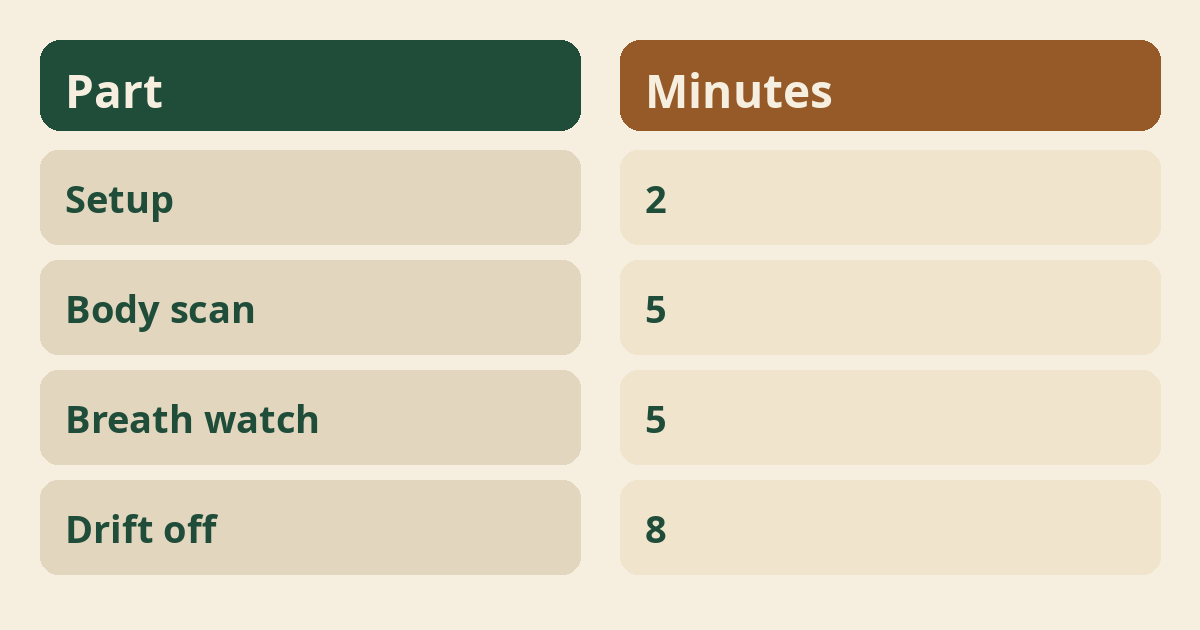
Most beginner sessions run fifteen to thirty minutes. Shorter sessions are easier to keep up every night. Longer ones give you more room to settle on hard days. Pick a length you will actually repeat.
How often should you practice?
Nightly practice works best because sleep routines grow stronger with repetition. Even three nights a week helps. If you want more detail on building a steady rhythm, read about how often to practice and apply the same thinking here. Consistency matters more than length.
Why breathing matters so much
Slow breathing tells your body it is safe to power down. Fast, shallow breaths keep you alert, while long, easy breaths do the opposite. The script leans on this again and again. Let the out-breath do the work.
Props that make it easier
A blanket, a pillow, and something to cover your eyes are the only props most people need. Warmth matters because your body cools as you relax. An eye pillow blocks hallway light. Our roundup of yoga props for beginners covers simple, low-cost options if you want them.
What if you fall asleep right away?
Falling asleep during the practice is completely fine and often the whole point. You are not missing anything. Some teachers say the resting effect still lands as you drift. If you want to stay awake for the full script, practice a little earlier in the evening.
Common mistakes beginners make
The biggest mistake is trying too hard to relax. Chasing a sleepy feeling pushes it away. Other common slips are practicing with the lights on, checking the phone one last time, and quitting after one restless night. Give it a full week before you judge it.
Benefits many people notice
Many people say they fall asleep faster and wake less often, though results vary from person to person. Some report feeling calmer at bedtime and less wound up at night. Research on yoga nidra is still early, and sources like National Center for Complementary and Integrative Health note that relaxation practices may help some people with sleep. It is not a guarantee, just a tool many find useful.
Is this a treatment?
No, yoga nidra is not a treatment, and it does not cure or prevent any condition. Think of it as a rest practice, not medicine. If you have ongoing sleep problems, pain, or another health concern, talk with your doctor first. Use this alongside their advice, never instead of it.
Who should check with a doctor first?
Check with your doctor first if you have a health condition, are pregnant, or have a history of trauma. Deep relaxation can feel unusual for some people at first. A doctor or therapist can tell you whether it suits your situation. When in doubt, ask before you start.
Can you do it with back pain?
Most people with a stiff or sore back can do yoga nidra because there is no movement involved. Comfort is the only rule. Bend your knees, support them with a pillow, or lie on your side. Our notes on yoga with a bad back cover positioning ideas that also apply here.
What if your mind keeps wandering?
A wandering mind is normal and expected, especially at the start. The script is built for this. Each new instruction gives your attention a fresh place to land. You do not need to empty your mind; you just keep returning.
Recording or reading it yourself?
A recorded voice is easiest for most beginners because you can simply listen. Many free recordings exist, or you can record yourself reading a script slowly. Keep the volume low. Choose a calm voice you actually enjoy hearing.
Building it into your night
Yoga nidra works best as the last step in a simple wind-down routine. Dim the lights an hour before bed, put the phone away, and start the script. This article is part of our yoga for sleep series, and the main guide walks through a full evening routine. Small habits stacked together do the heavy lifting.
A pose or two before the script
A few minutes of an easy pose before you lie down can help your body arrive. Something simple like child’s pose releases the hips and lower back after a long day. Keep it to two or three minutes. Then roll into bed and begin the script.
What progress looks like
Progress usually shows up as falling asleep a little faster or waking up a little easier. Change is gradual. Many people notice a difference after a week or two of steady practice. Keep a rough note of how you feel in the mornings if you like tracking.
Working with a teacher
A teacher is not required, but one live session can answer questions a recording cannot. Look for someone trained in yoga nidra specifically. Many offer online classes. Bring your questions about pace, posture, and anything you experienced.
The mindset that helps
Approach each session with curiosity instead of a pass-or-fail attitude. Some nights will feel deep and others restless. Both count as practice. The only real rule is to lie down, listen, and let the rest happen.
Stress and sleep
A calm bedtime practice can ease the stress that often keeps people awake, though everyone responds differently. Worry and poor sleep feed each other. If stress is your main blocker, our piece on yoga for stress relief pairs well with this practice. Small nightly resets add up.
When to skip a session
Skip the practice if lying still feels distressing or if your doctor advises against it. You can also sit in a chair and do a short version instead. Listen to your body. There is no streak to protect.
Keeping it simple
The whole practice comes down to lying down, listening, and letting go. You do not need special gear, perfect silence, or an empty mind. Start tonight with fifteen minutes. Adjust from there based on how you feel.
Where to read next
For a calm, beginner-friendly start, Ranjana Sinha’s Begin Where You Are is written for people who want simple steps. Our guide to starting a home yoga practice adds a gentle routine you can follow at home.
Frequently asked questions
Do I have to stay awake during yoga nidra?
No, drifting off to sleep is fine and often the goal at bedtime.
Can I practice yoga nidra in my own bed?
Yes, bed is the most common and practical spot for a sleep session.
Is there a best length for a first session?
Start with fifteen to twenty minutes and adjust from there.
What if I keep waking up at 3 a.m.?
You can replay the same script in the night to help your body settle again.
Do I need any training before trying it?
No training is needed; lying down and following the voice is the whole practice.
The bottom line
Tonight, lie down, press play, and let the script do the work while you drift off.

