
Gentle yoga and slow breathing can help some people feel calmer during everyday worry. Yoga is not a treatment for anxiety disorders, so speak to a doctor first if worry is strong or lasts. This guide shares simple, soft practices and clear safety notes for beginners.
This is general education, not medical advice. Yoga does not treat anxiety disorders. If you have ongoing anxiety, panic attacks, low mood, a health condition or are pregnant, speak to your doctor or a mental health professional first. If you feel unsafe, contact local emergency services.
Can yoga help with anxious feelings?
Gentle yoga and slow breathing can help some people feel calmer in everyday moments of worry, but yoga is not a treatment for anxiety disorders and does not replace professional care. Everyone feels anxious at times. Slow movement and steady breathing can give the mind something calm to focus on. If worry is strong, lasts for weeks or affects your daily life, speak to a doctor or a qualified mental health professional first. Yoga can then be a supportive habit alongside that care. The National Center for Complementary and Integrative Health describes yoga as a mind and body practice that many people use to relax.
Who should speak to a doctor first?
Anyone with ongoing anxiety, panic attacks, low mood, a health condition or pregnancy should speak to a doctor before using yoga as part of their routine. This guide is for everyday stress and worry, not for diagnosing or treating a condition. If you feel unsafe or in crisis, contact a local emergency number or a helpline right away. Yoga is never a reason to delay care.
What is a gentle approach?
Choose slow, soft practices, avoid strong effort and stop anything that makes you feel more anxious. Fast breathing, hot rooms and hard poses can raise the heart rate and make some people feel worse. Keep the practice calm. Short sessions in a quiet room are enough. Our guide to yoga for stress relief shares a similar gentle approach.
Start with slow breathing
Breathe in gently through the nose and let the out breath be a little longer, for one to two minutes. Our guide to belly breathing explains an easy pattern. Never force the breath or hold it. If you feel dizzy or more anxious, go back to normal breathing.
Ground yourself with the feet
Stand or sit and press the feet gently into the floor, noticing the contact and the weight of your body. Grounding turns attention to physical sensation. It can help when thoughts race. Feel the floor under you. Our guide to tree pose uses a steady stance.
Try the five senses check
Name five things you see, four you feel, three you hear, two you smell and one you taste, slowly. This simple exercise brings attention to the present moment. It can be done anywhere. Go at your own pace. Stop if it feels uncomfortable.
Gentle neck and shoulder release
Roll the shoulders back and tilt the head slowly from side to side, breathing softly. Tension often collects in the neck and shoulders. Our guide to yoga for neck and shoulders has more ideas. Move slowly and stop if you feel pain.
Cat and cow
On hands and knees, round and lift the spine slowly with the breath for six to eight rounds. The slow rhythm can be soothing. Keep the movement small. Place a folded blanket under the knees if needed.
Child’s pose
Kneel, fold forward, rest the forehead on a cushion and breathe slowly for several breaths. This is a quiet, sheltered shape that many people find comforting. Skip it if your knees hurt. Use a pillow for support. Our guide to restorative yoga shows supported poses.
Legs up the wall
Rest your legs up a wall for three to five minutes while breathing slowly. Check with a doctor first if you have glaucoma, heart or blood pressure concerns. Skip it if it feels uncomfortable. Our guide to yoga for better sleep uses it in an evening routine.
Seated twist
Sit tall, turn gently to one side and breathe for three breaths on each side. Keep the spine long and the movement easy. Never force the turn.
Finish with rest
Lie down and let the body feel heavy for a few minutes, or sit quietly with the eyes closed. Our guide to savasana explains the final rest. If lying still feels uncomfortable, sit instead or keep the eyes open.
Try a short meditation
Sit comfortably and follow the breath for two minutes, returning kindly when your mind wanders. Our guide to meditation for stress and whether meditation can help with anxiety explain what to expect. Some people find sitting still hard when anxious, so start small.
What if the practice makes you feel worse?
Stop, open your eyes, move around and speak to a professional if it keeps happening. Quiet attention can bring up strong feelings for some people. That is not a failure. Choose active movement or a walk instead, and seek support. Your wellbeing comes first.
How often should you practise?
A few minutes most days is better than a long session once in a while. Pick a time that feels easy. Our guide on how often to do yoga has ideas. Missing a day is fine.
What else helps?
Sleep, daylight, movement, time with people you trust and professional support when needed all matter. Yoga is one tool of many. Limit caffeine and late screens. Our guide to reducing screen time has ideas. Talk to someone you trust about how you feel.
A simple five minute routine
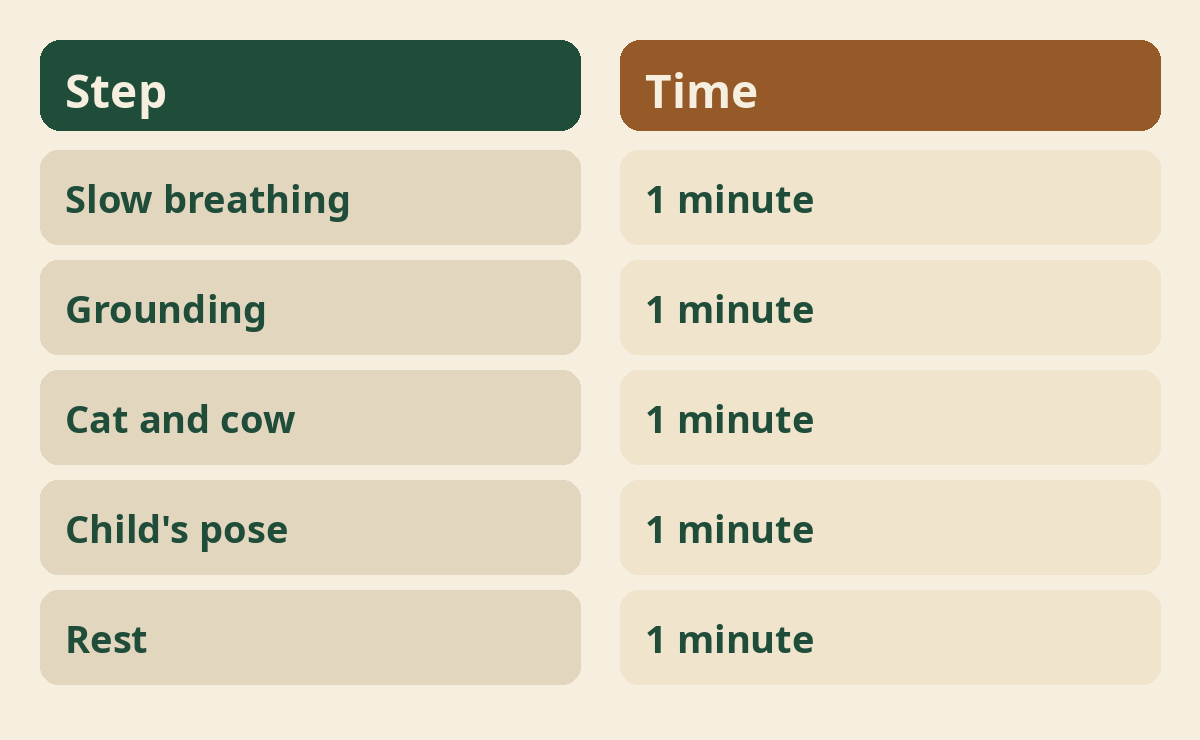
Spend one minute on slow breathing, one on grounding, one on cat and cow, one on child’s pose and one on rest. Do it slowly. Stop at any point if you wish. Repeat daily for a week and notice how you feel.
Is group class or home practice better?
Either works, but a gentle class with a kind teacher can feel supportive, while home practice is private and flexible. Look for classes labelled gentle or restorative and tell the teacher you feel anxious. Our guide to yoga class etiquette explains what to expect.
What mistakes should you avoid?
Using yoga as a substitute for care, forcing deep breaths, overdoing intense classes and judging yourself for feeling restless. Keep it small and kind. Do not compare yourself with others. If anxiety is strong, work with a professional.
What about children and teenagers?
Gentle breathing and movement can be offered in a playful way, but any ongoing worry should be discussed with a doctor or counsellor. Our guide to yoga for kids has playful ideas. Never force a child to practise.
Is it safe in pregnancy or with health conditions?
Speak to a doctor first, because some poses and breath practices are not suitable for everyone. Our guide to prenatal yoga explains special care in pregnancy. Stop if you feel unwell.
When should you seek help?
Seek help if anxiety lasts for weeks, causes panic, affects sleep, work or relationships, or leads to thoughts of harm. Speak to a doctor or a qualified mental health professional. If you are in crisis, contact local emergency services or a helpline immediately. This guide is general education, not medical advice.
How can you make your space feel safe?
Choose a quiet, warm spot with soft light and keep it free of clutter and noise. A calm place sends a calm signal. Wear loose clothing, keep a blanket close and put your phone away. If a room feels too quiet, soft background sounds can help. Choose whatever makes you feel safe and relaxed.
How can you be kind to yourself?
Speak to yourself as you would to a friend, and treat restlessness or wandering thoughts as normal. Many people feel worse when they judge their own feelings. Practise noticing without criticism. You can say quietly to yourself that this is hard and that you are doing your best. Small kindness adds up over time.
Should you track how you feel?
A short note after each session can help you see what suits you and share useful details with a professional. Write one line, such as calmer, the same or more restless. Do not worry about scores. If you notice that something increases your worry, stop it and mention it to your doctor or counsellor.
Where to read next
For a calm, beginner-friendly start, Ranjana Sinha’s Begin Where You Are is written for people who want simple steps. Our guide to starting a home yoga practice adds a gentle routine you can follow at home.
Frequently asked questions
Can yoga cure anxiety?
No. It may help you feel calmer, but it is not a treatment for anxiety disorders.
What is the best breathing for anxious feelings?
Slow, gentle breathing with a slightly longer out breath, without force.
Should I see a doctor first?
Yes if anxiety is strong, lasts for weeks or affects your life.
Can yoga make anxiety worse?
For some people, strong breathing or stillness can feel uncomfortable. Stop if it does.
How long should I practise?
A few minutes most days is enough.
The bottom line
A few calm minutes can help in daily moments of worry. Keep it gentle, be kind to yourself and reach out for professional support when you need it.

